As an elk hunter you may wish to ignore the expression “there are no shortcuts to anywhere worth going.” Truth is, shortcuts may be the only aspect keeping you in the maddening game of DIY, public-land elk hunting. If you plod ahead, accessing country and hunting elk in a traditional manner, your energy will fizzle faster than a couch potato in a marathon. Two shortcuts you certainly want to utilize are strategies when you find elk deathly high or shockingly low. Keep your options moving with these ideas.
Changing Elk Movement
Why would you find elk at high elevation in some locations and at lower elevations in others? Elk do not behave like the elk of your grandfather’s era any longer. Much of their behavioral changes correlate with the sale of large ranches being shut down to the hunting public. Montana Fish, Wildlife and Parks highlights the effects of elk refuges on behavior, habitat and hunting success.
“Many biological and social issues surround elk management. Across Montana, some elk populations are over population objective because of low harvest despite liberal hunting seasons. Many of these situations include refuge areas on private lands or inaccessible public lands where concentrations of elk result from one or more landowners limiting hunting pressure or other human disturbance. Fall refuge areas can “pull” elk from surrounding habitats, including public lands where habitat and motorized travel are often managed to maintain some level of elk presence. These refuge areas become problematic if they preclude effective population management relative to publicly developed elk population objectives.”
What this means to you is that when elk have refuge areas, whether it’s private or inaccessible public land, elk swiftly move to use it. Nearly all elk states see this as a growing issue for the public-land hunter, in addition to effectively managing elk populations. The good news is that in hunting areas where manipulated refuge is not an issue, elk seek out the most rugged country on the map to escape hunting pressure. They still, kind of, behave like your grandfather’s elk.
Ambush High
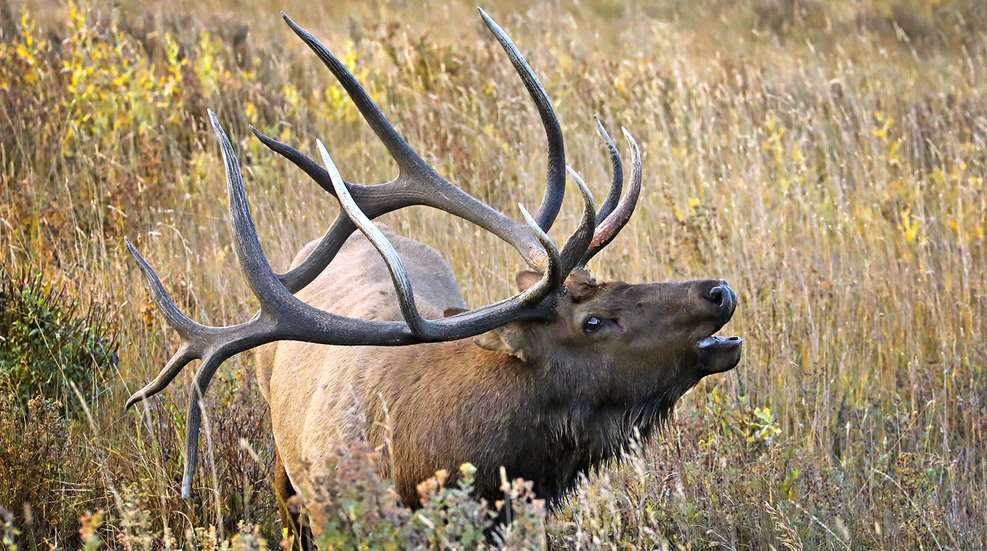
A normal pattern for elk not running to a refuge is for them to feed in valleys, parks and mountain meadows, primarily under cover of darkness. At dawn, they make a break for rugged terrain for daytime sanctuary. In September and into October, the bugles of elk in the breaking dawn sucker hunters everywhere to begin their hunt with the elk. Getting elk to respond to calls is fun, right? That approach may work in some scenarios, but you may be better served by being where the elk want to be. Why?
Elk have long legs designed to travel efficiently over long miles in challenging terrain. You do not. Instead of trying to catch up to an elk herd all morning with high odds of losing the race, determine the end point of the elk trek. Wait for them there. That is your shortcut.
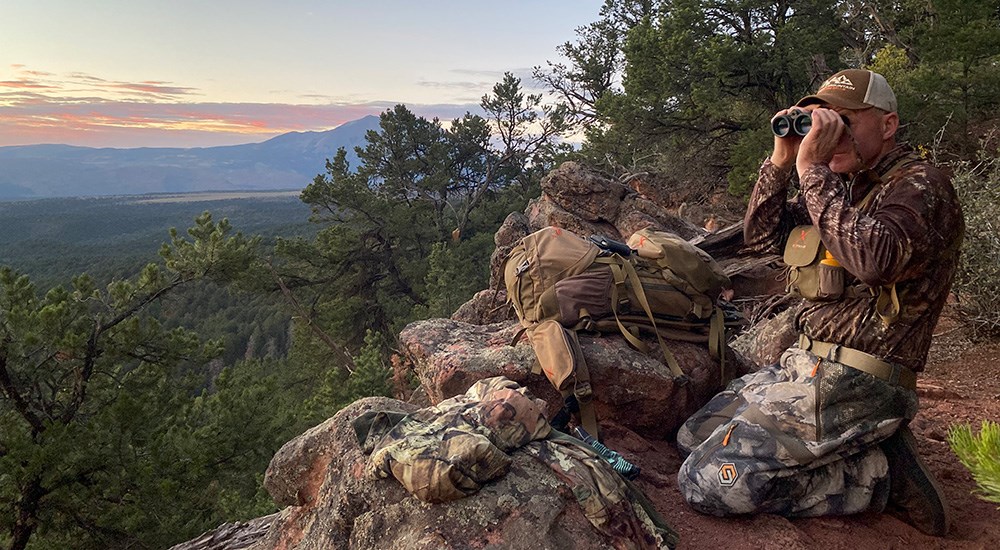
You likely will lose a day or two trying to determine that ending point, but once you determine a mountainside, bench or mesa they prefer, be there when they arrive. Start high instead of chasing them uphill from low elevation.
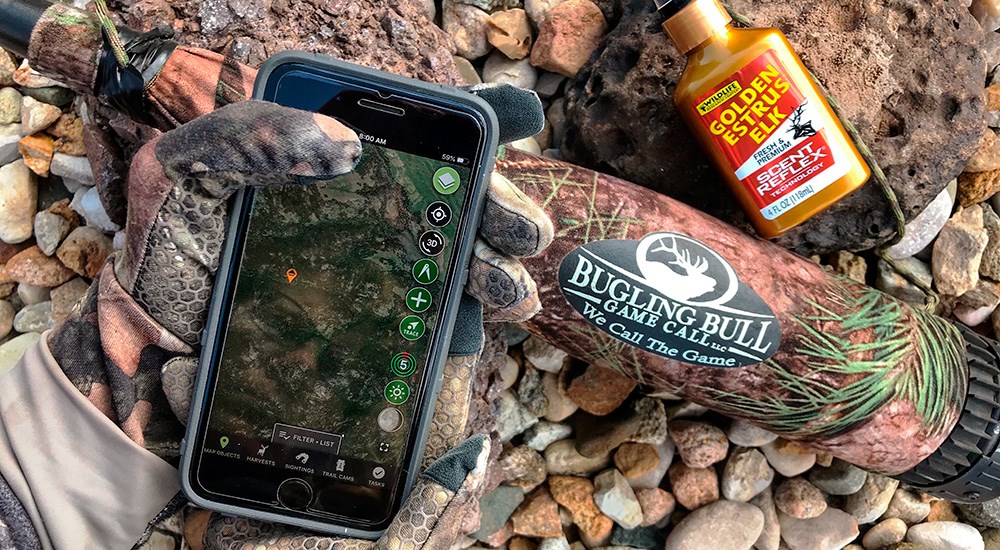
This head start means that elk may still be bugling when they arrive instead of quieting down as you run out of steam pursuing from below. And elk may show themselves earlier in the afternoon as they creep from cover to begin feeding slowly back down to a prime food source. Although this shortcut puts you where the elk want to be, it still requires some sweat equity to be in place before the elk arrive. Use your hunting app to search for routes to reach elevation locations via offroad vehicle access and then hike on relatively level ground to the elk retreat. If early-season weather allows, a spike or bivy camp could be the accommodations to your shortcut success.
My hunting experience in finding elk not escaping to private refuge is that the trail to them will either be steep or long, or both. Accessing those areas requires being fit, properly equipped and focused mentally. A hotspot I discovered in Montana several years ago produced two good bulls for me, but the access was brutal. Using the start-high approach, every morning I would do 1,500 feet of climbing in the dark. At daybreak I was above the elk as they slowly climbed to my perch. I typically had to shift locations by a mile or less to be in the pathway of the ascending elk and maintain control of my scent on shifting thermals. Elk calling kept me aware of their shifting fluid ascent. Nonetheless, the elk were coming to me and I was never huffing behind them in a race I knew I would lose to the long-legged cruisers.
Ambush Low
With elk leaving tracks to every off-limits tract available, you will also require a shortcut in the lowlands. Why low elevation? Characteristically, most private ranches include valleys and sprawling basins. This land was homesteaded for the grazing and farming opportunities while more rugged topography has continued to be managed by the government. These holdings not only represent a safety aspect, but also include quality feed, plus cover. What’s not to like for elk? In fact, they like it so well they often abandoned migrations of old to stay in digs free of migratory caloric burn and hunting pressure.
Your mission to find a shortcut into the adjacent public domain or corridors connecting a series of refuges where elk may leapfrog between requires determination. Landlocked public land via corner connections, easement vacations and other methods shut off many public lands encircled by private holdings. Hunting apps highlighting property information allow you to explore possible avenues into public holdings flanking or near artificial refuges.
Once you discover a possible doorway, remember to assess with distance measurements and a topographical overlay. Either could terminate your route due to extreme difficulties. Again, it may be doable, but only via a spike or bivy camp. Rights of way, navigable water designations and even a willing, adjoining landowner who appreciates hunters may grant access to landlocked public connecting to larger private elk refuges. Hunters with determination and expendable income are even utilizing helicopter insertions to hunt privately landlocked public lands holding masses of elk.
Two seasons ago I devised a way to hunt along the border of a private elk refuge via a series of connecting public lands. The daily route in required a 1,000-foot ascension followed by 3 miles of hiking over jagged country. I killed one of my top 10 bulls after two days of exhausting access.
Take into consideration the elk refuges of old and new. The old escape haunts still require strength and cunning to land success. The new refuges, typically low, also require that same physical fitness teamed with prowess of access flexibility. Regardless, shortcuts in both situations could be your pathway to success.