One of the most common reader inquiries that we receive here is “How do I skin an elk?” Well, I was fortunate to shoot bulls in two different states this year, which provided ample opportunity to answer the question. There are probably as many ways to answer this question as there are elk hunters, but the method described below is the way that I know. In this situation, we were preserving the front half of the hide for a shoulder mount, but the basics apply whether you’re quartering a trophy bull, a raghorn or a cow. Let’s get after it.
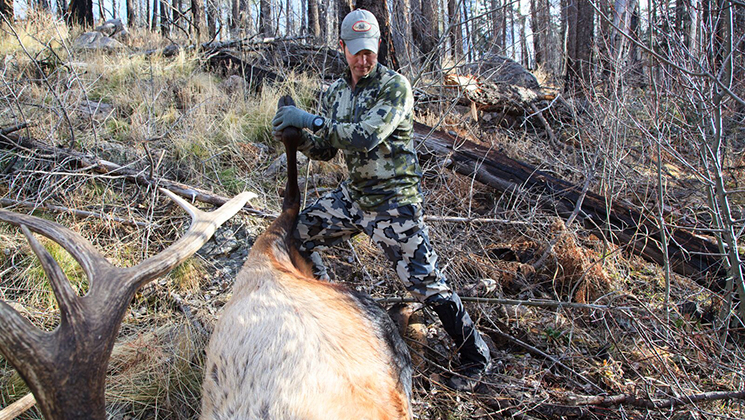
Start by rolling the elk onto his side. Elk are big animals—a big bull can come close to half a ton, so manipulating a carcass can be a great deal of work. Having a friend (or three) along to help is a great asset—if you don’t have a helper, a length of rope or 550 Cord is a must. While one person holds the hid leg upward (a solo hunter can tie the leg off to a tree with the aforementioned rope), the knife man begins the process by making an incision under the hide at the elk’s pelvis.
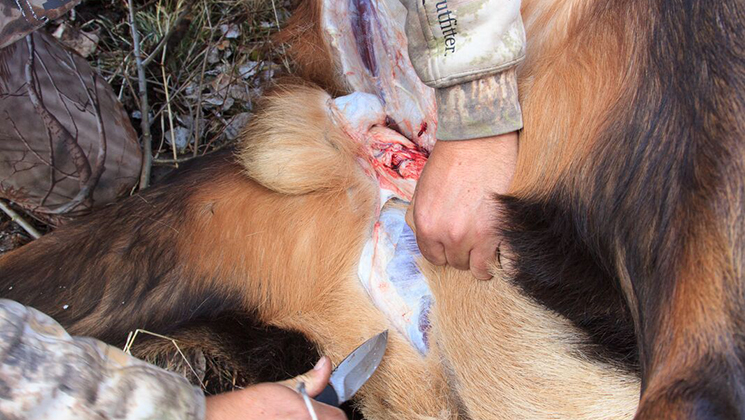
The cut continues past the genitals and a cut is made around the anus as if you were coring an apple.
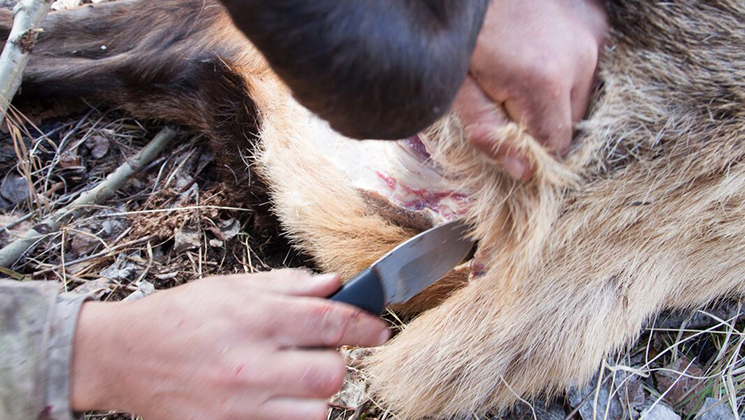
Cut forward and expose the elk’s abdomen, being careful to cut the skin without breaking through the membrane that encapsulates the guts. Holding your finger along the top edge of the knife and cutting from the inside of the skin outward is a good way to prevent piercing the guts.
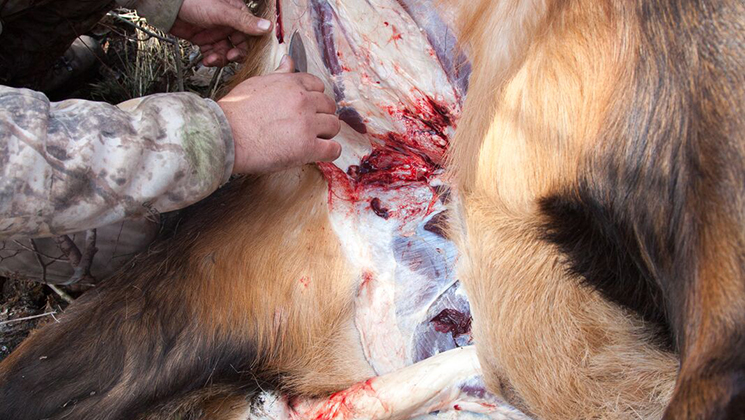
A cut is then made up the inside of the elk’s thigh, continuing to a point past the knee joint. A 360-degree cut is made around the leg below the knee, and the knife is used to peel the skin away from the leg. This skinning process continues forward toward the abdomen and above the elk’s rump until the entire rear quarter is skinned and exposed.
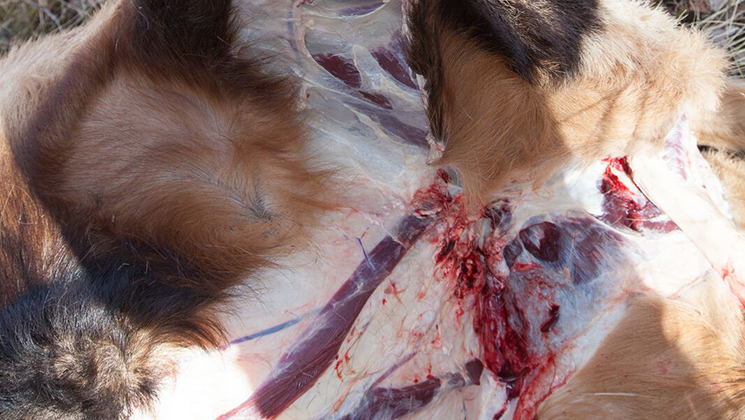
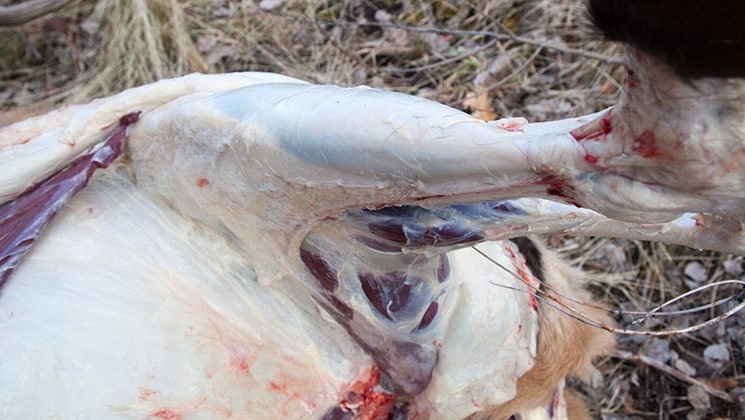
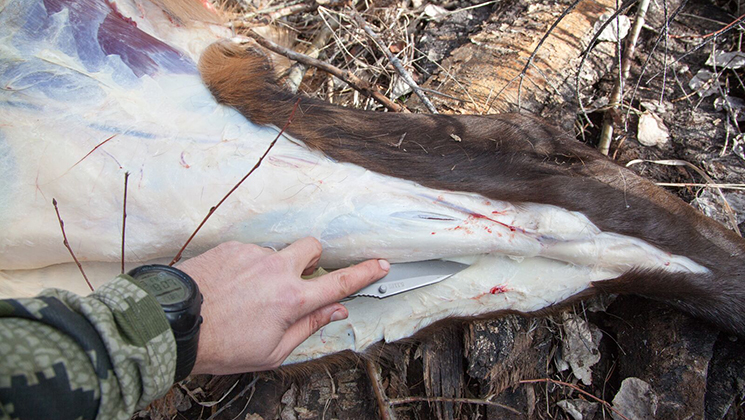
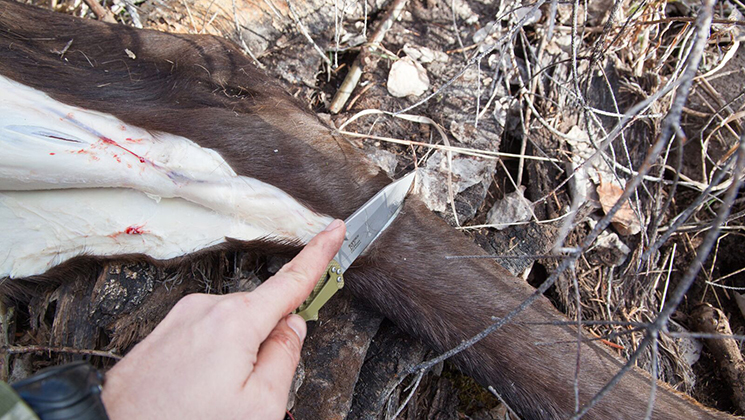
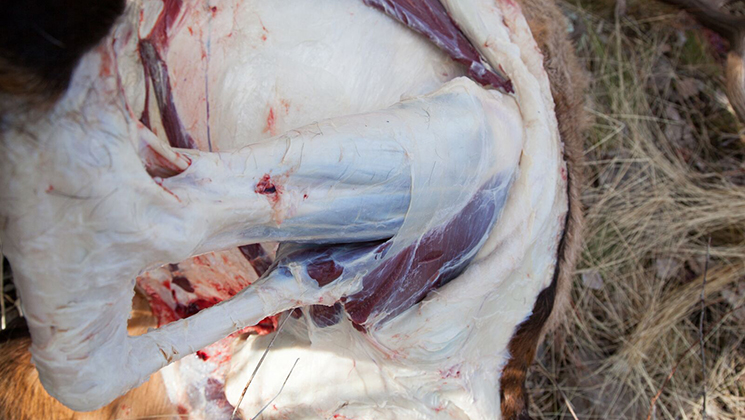
At this point, it is time to separate the rear leg from the carcass. Starting at the inside of the leg nearest the centerline of the body, cut toward the leg bone until the joint is reached. Continue that cut around the circumference of the leg, following the natural line of the leg muscles. At this point, the leg should separate easily from the body—hang the leg in the shade where air can circulate around it, cooling the meat. With the rear leg removed, you can decide whether to move forward to the front shoulder or to repeat the process with the other rear leg—personal preference or the particulars of the terrain may dictate the order in which you proceed. You may also choose to de-bone the quarters if you are going to backpack the meat a great distance—in this situation, our packing distance was short enough that we did not remove the meat from the bones.
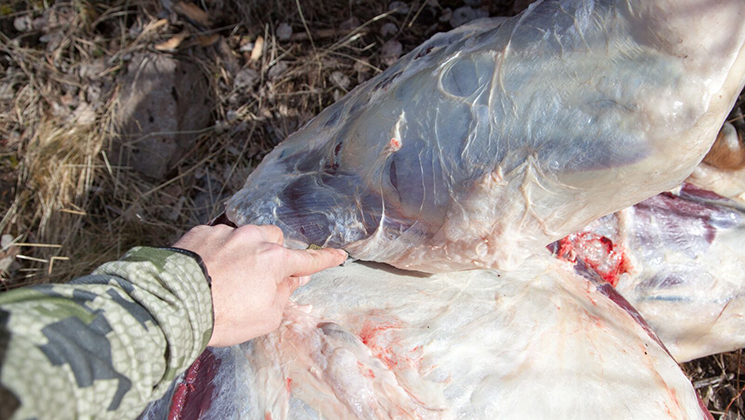
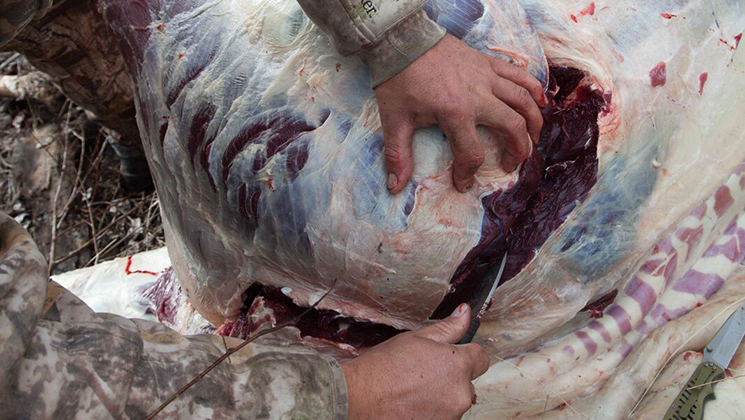
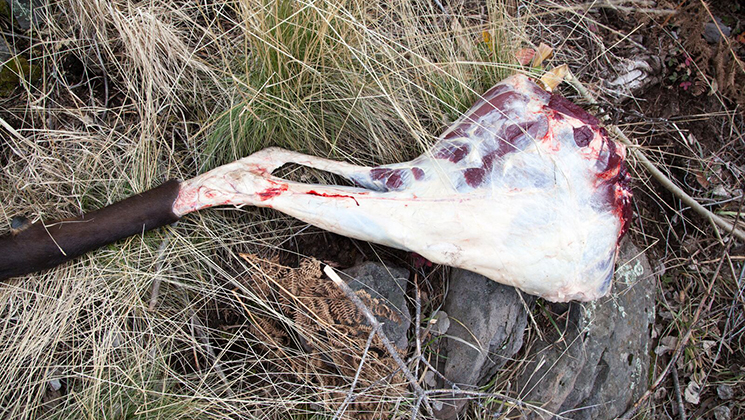
Now we will move forward to the front leg. Keep in mind that we are skinning this elk for a shoulder mount. In doing so, we will make a cut that runs all the way around the trunk, approximately halfway down the elk’s body—better to give the taxidermist too much skin to work with than not enough. From this circumferential cut, we will skin forward until the front shoulder is exposed. The front legs are removed in a similar manner to the rear but there is no shoulder joint to contend with. Lift the front leg away from the body and make a cut at the elk’s armpit. Continue this cut around the shoulder muscles until the front leg can be separated from the body. Hang the meat to cool and repeat the process on the opposite shoulder.
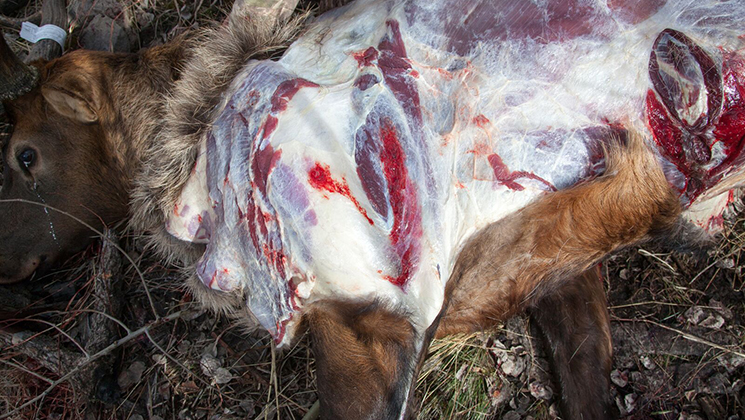
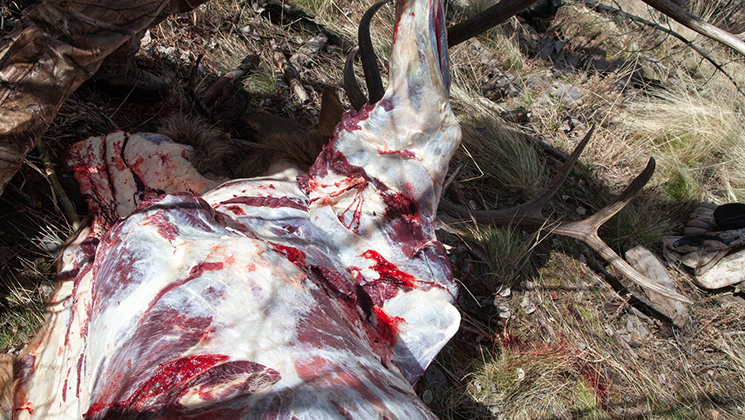
You may have noticed that we have not removed the intestines, stomach and other internal organs from this bull—we are using what’s referred to as the “gutless method” wherein the animal is processed without piercing the abdomen. If you want to harvest the heart or liver for cooking, by all means get in there and get it.
Now we go after the “good stuff,” the backstraps and tenderloins (also called the “hanging loins”). With this area already skinned, we simply make a cut along the outside of the spine and follow the line of the backstrap all the way around with the blade until it can be removed. With the gutless method, we would now make a cut just behind the top of the rib cage and reach inward to remove the tenderloins. Unfortunately, we cut a bit too deeply at some point in the process and the intestines are forcing their way out of this incision. If that happens to you, your easiest path forward is to gut the animal and relieve the pressure on the intestines. Once the intestines are removed, it is a simple process to reach into the top of the chest cavity and remove the tenderloins.
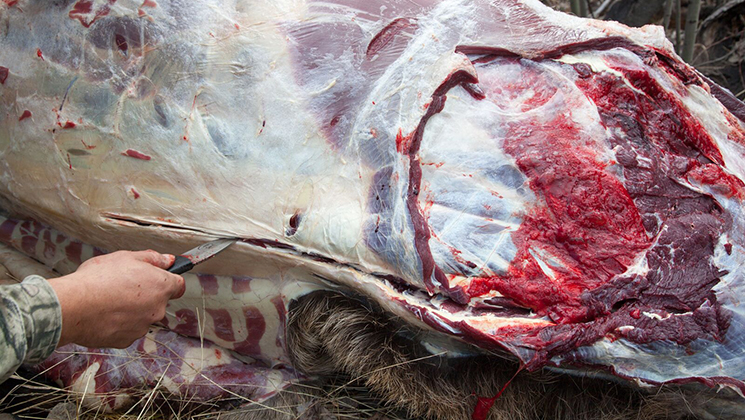
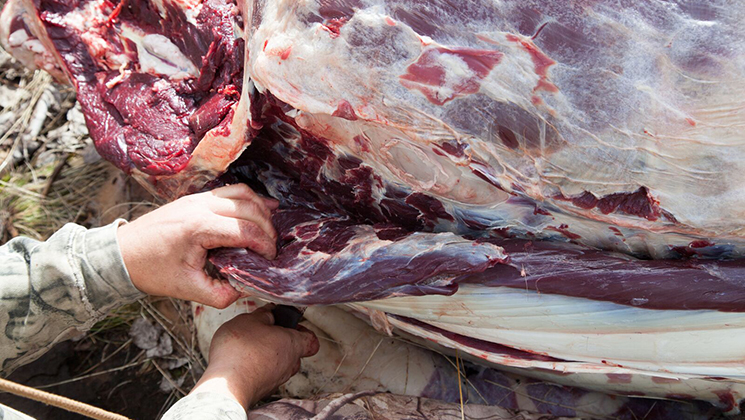
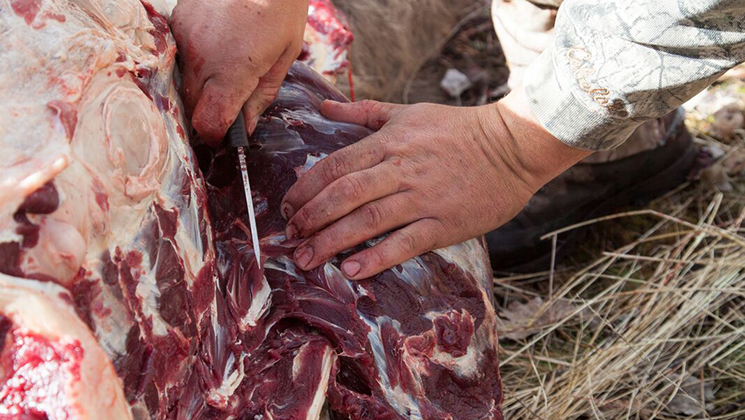
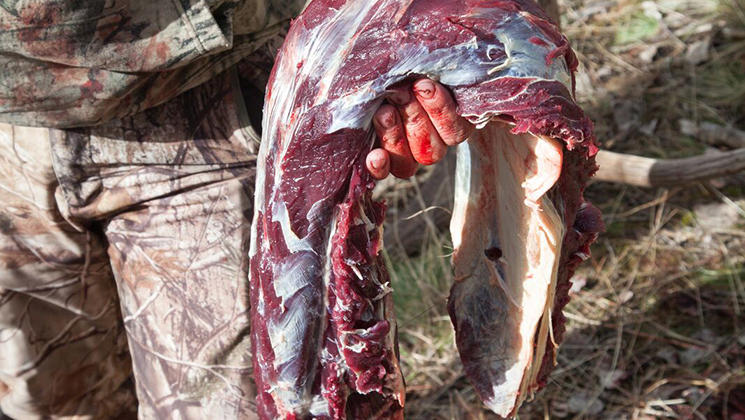
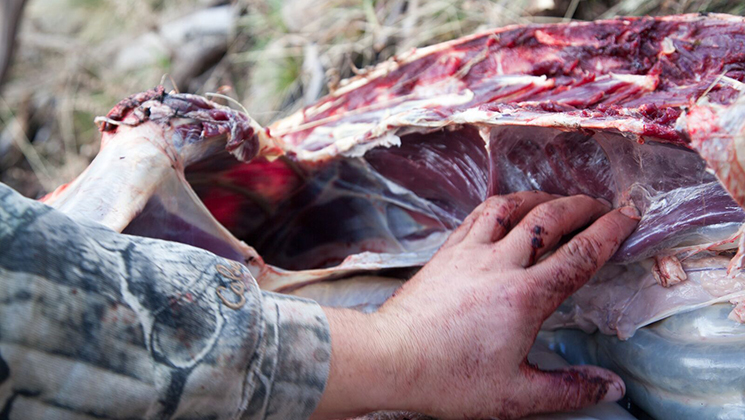
At this point, whether or not you're finished is entirely up to you. If you wish to obtain meat from the ribs or neck, take your time and remove those cuts of meat from the bone. If you are going to shoulder mount the animal, you will need to continue the skinning process until you’ve exposed the neck and can separate the head from the body. With the skin removed as far up the neck as possible, find the space between two vertebras with your knife and make a 360-degree cut. This can take a bit of work and, if you have a bone saw, now is a good time to use it.
We now have eight primary meat components to contend with: two rear legs/hams, two front legs/shoulders, two backstraps and two tenderloins. Wrap each of these parts separately in game bags and get them to a cooler as soon as possible. If the air temperature is in the 30s or below, hanging them in a barn or shed is probably sufficient. I prefer to hang game meat at temperatures just above freezing for at least a week before processing, but that is a matter of personal preference and individual situations such as air travel may dictate your options.
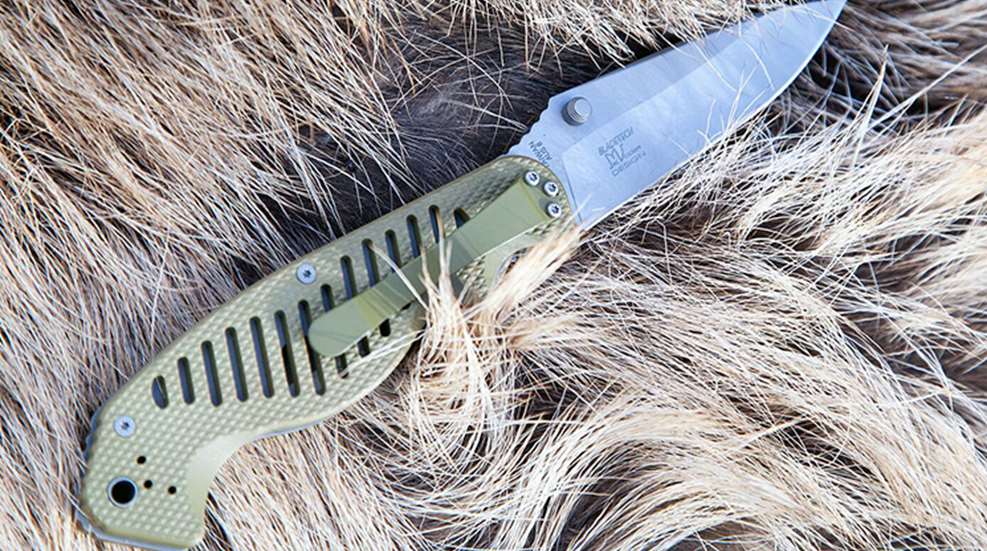
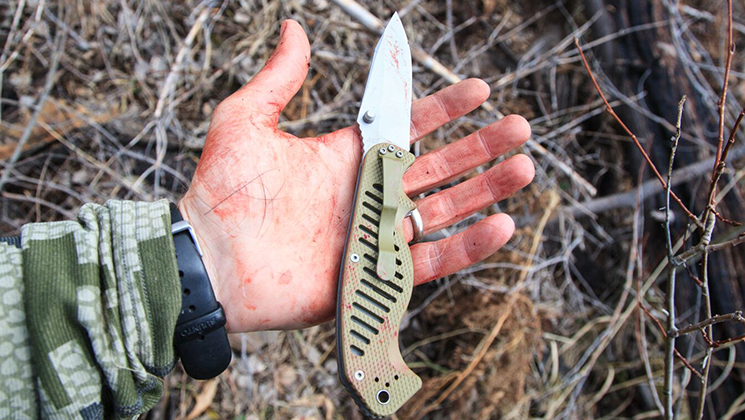
A quick point on gear—I’ll be honest, I’m not much of a knife guy. To me knives are tools—tools that I’m prone to losing. I’m sure volumes have been written about the best knives for cutting up an elk. If you want to buy a fancy knife, have at it, but it’s not a must for turning an elk into dinner. I have come to love Havalon knives with their interchangeable blades but I flew in late the night before this hunt and neglected to put my skinning knife into my daypack before we headed out the door. I did my part of the skinning with a regular folding knife from 5.11 and it did the job just fine.
Take your time, think before you cut, and cool the meat as soon as you can. An elk can provide well over 100 pounds of delicious protein; proper field care ensures that your meat is as safe and tasty as possible.