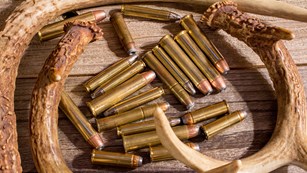
The 6.5 Creedmoor. If you’ve made it this far, and haven’t run shrieking at the very mention of the name, you’ll admit that this little cartridge has undoubtedly earned a place among some of the greatest cartridges ever developed. Though the cartridge is certainly one of the darlings of the long-range shooting crowds, many have embraced it as one of the most potent deer cartridges of the modern era.
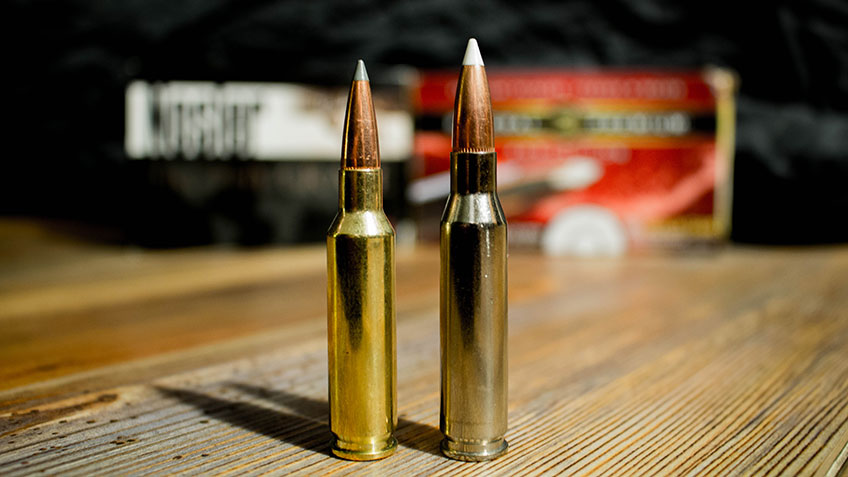
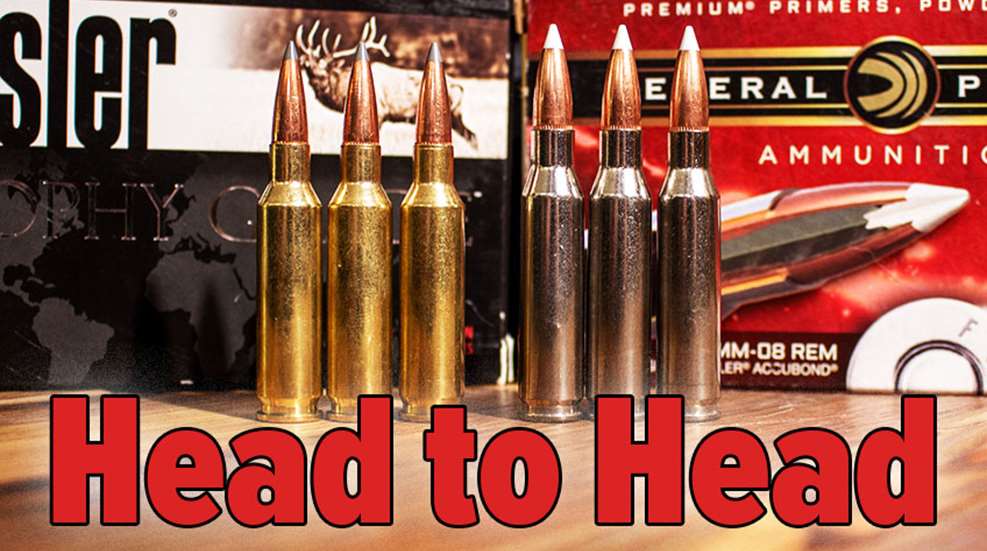
Likewise, a good number of hunters, shooters and gun writers alike have touted the 7mm-08 Remington as one of the best cartridges for deer hunting that has ever been developed, stating the opinion that this derivation of the .308 case offers the best balance of case capacity, bullet choice and efficiency available.
For the hunter, which of these cartridges represents the wisest choice? And why should the hunter prefer one over the other?
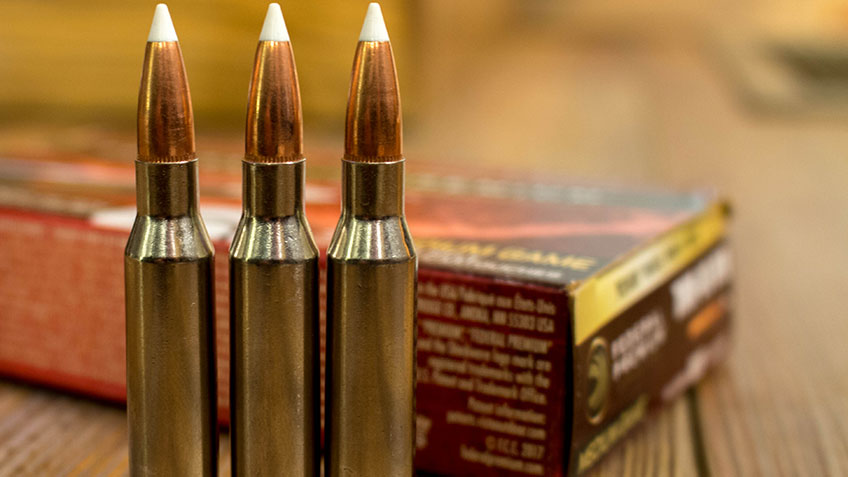
Starting with the older design, we find the aptly named 7mm-08 Remington. The design dates back to the wildcat 7mm/308 Winchester—developed some time in 1958—which was simply a .308 Winchester necked down to hold .284″-diameter bullets. It would spend over two decades in wildcat status, until Remington (has anyone else noticed how Remington has a knack for picking the best wildcat cartridges to adopt? Think .22-250, .35 Whelen, .257 Roberts … ) legitimized the cartridge, releasing it to the public in 1980. The cartridge was, assumedly, another attempt by Big Green to bring the 7mm bore diameter to the shooting public, coming behind the .280 Remington (1957) and their 7mm Remington Magnum (1963). I find the 7mm-08 Remington to be an excellent cartridge, its offers a wonderful selection of bullets—from 100 to 175 grains—sits comfortably in a short-action receiver, and its recoil is noticeably less than that of the .308 Winchester. I've had the best accuracy results with bullets weighing between 140 and 160 grains; my own rifle—a Tikka T3x—will print sub-MOA groups with several factory loads. The heaviest factory loads will utilize a 175-grain bullet, and that will comfortably handle all of North America’s game animals, save the bison and the great northern bears.
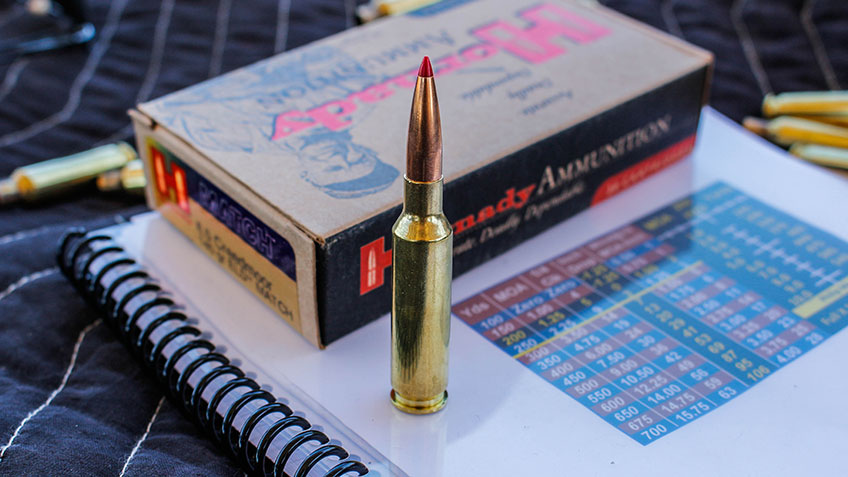
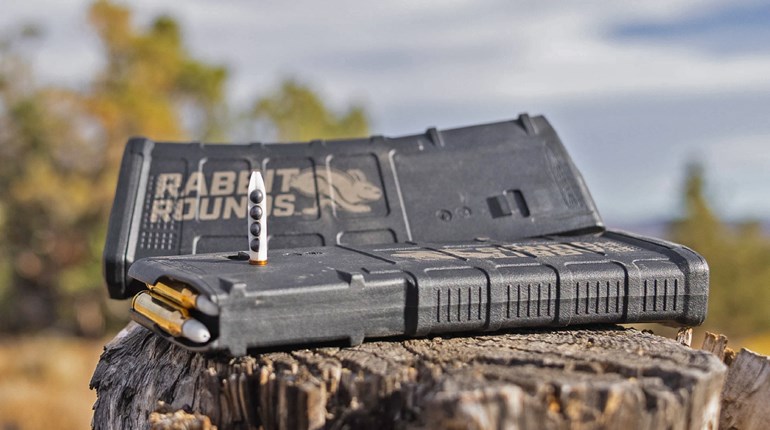
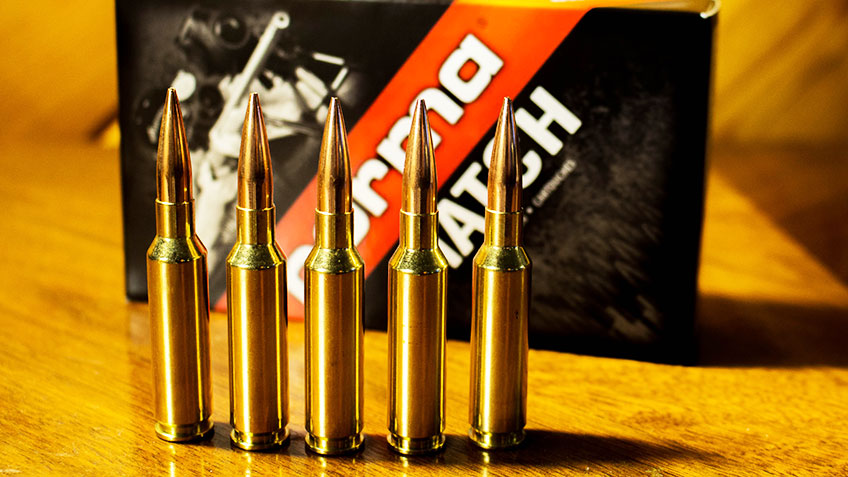
The 6.5 Creedmoor is the offspring of the .30 T/C cartridge—which itself was a shortened .308—and offers a wonderful low-recoil experience with the capability of being a long-range cartridge that will fulfill the needs of almost all shooters. The Creedmoor case is shorter than the .308 family—1.920″ vs. 2.035″ for our comparative purpose—in order to best function in the AR-10 magazine while allowing the longer, higher B.C. bullets to be properly seated. Though Remington had released a true 6.5mm/308 cartridge in the .260 Remington, the restrictions of the common short-action magazine posed an issue with seating those bullets that perform so well at longer ranges. For better or for worse, I feel we have to accept the fact that the 6.5 Creedmoor has become a benchmark, somehow eclipsing many other older, and well-respected designs like the 6.5x55 Swedish Mauser and the .260 Remington in popularity.
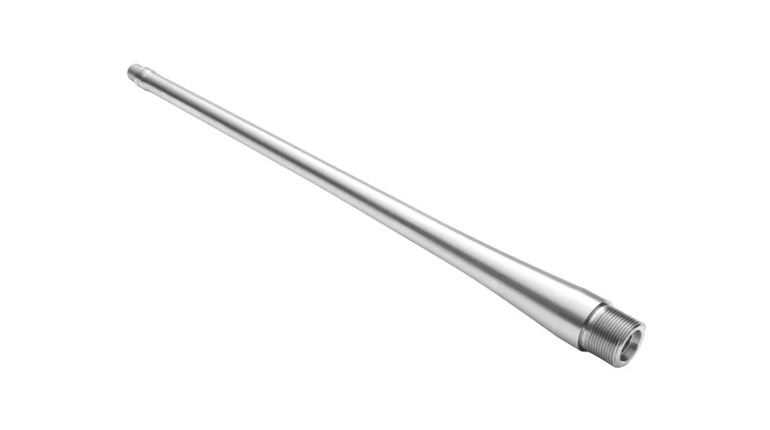
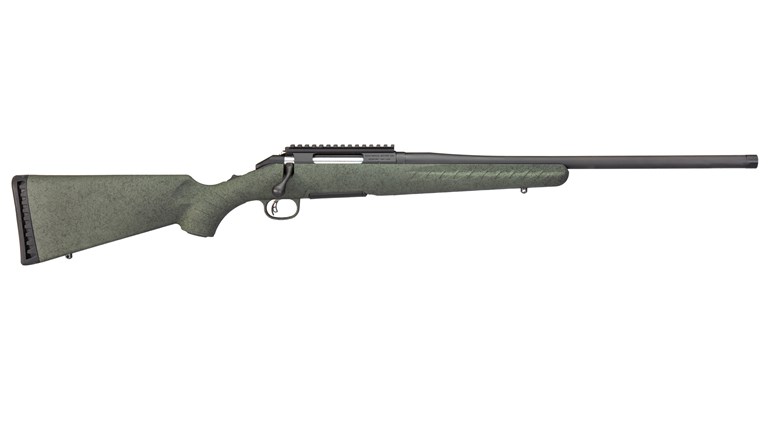
The Creedmoor runs best—in the opinion of this author—with bullets of 140 grains. I’ve used lighter bullets with good results, especially those of monometal construction, but the best combination of accuracy, velocity and energy have come with the 140 and 143-grain bullets. My own Creedmoor rifle—a Legendary Arms Works bolt gun—will print sub-MOA groups with a variety of 140-grain factory loads, but not all of the lighter bullets will do the same. On the other end of the spectrum, I’m certain that the 156 and 160-grain bullets would be stabilized by the 1:8″ twist of the Creedmoor’s barrels, but I’ve yet to see a factory load utilizing either of those bullet weights, and that sort of limits the versatility of the cartridge.
As a hunter, which of these cartridges makes the most sense? I suppose the list of species to be hunted will dictate which of the two will best serve you. If you’re a deer hunter and a deer hunter only, I can see no reason why the Creedmoor wouldn’t suffice; the accuracy of the Creedmoor and killing capabilities of a 140-grain 6.5mm bullet seem to be a magical combination. But, if you want to hunt bigger and/or tougher species like elk, moose, big-bodied black bears, and the like, I feel the 7mm-08 Remington has a bit more versatility than does the Creedmoor design. When mated with premium 160- or 175-grain bullets, like the Barnes TTSX, Swift A-Frame or Nosler Partition, the 7mm-08 will handle the larger ungulates and African plains game species without issue. There are many hunters who’ve been testing the limits of the 6.5mm cartridges on large game of late, and while most come back with a trophy, I’m the kind of hunter who realizes how hard one has to work for a hunting trip abroad, and who also likes to hedge my bets.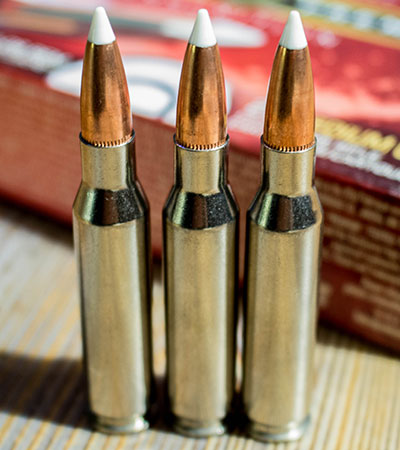
When comparing the same bullet weight, the 6.5mm bullet will always offer better Sectional Density than any 7mm, just as any 7mm will show a grain-for-grain advantage over the .30 calibers. At 140 grains, the 6.5 has an S.D. figure of 0.287, and the 7mm an S.D. of 0.248, and though the 7mm-08 offers a velocity advantage of 115 fps or so, the penetration advantage would still go to the 6.5 Creedmoor. But that must be taken with a grain of salt, as not each situation will be the same, and an elk or moose will be best handled by the heavier 160 or 175-grain 7mm bullet better than it will by a 6.5mm 140-grain bullet, irrespective of paper figures.
I was raised to judge a cartridge by its flexibility and its universal appeal, and in this instance I feel that a big game hunter who owns one rifle in 7mm-08 Remington has more options than the hunter who owns one Creedmoor rifle.
Looking for previous installments of our "Head to Head" series? We've got you covered.
• 8x57 Mauser vs. .318 Westley Richards
• .358 Winchester vs. .350 Remington Magnum
• .22-250 Remington vs. .220 Swift
• .270 Winchester vs. .270 WSM
• .26 Nosler vs. 6.5-300 Weatherby Magnum
• .458 Win. Mag. vs. .458 Lott
• 7mm Rem. Mag. vs. .300 Win. Mag.
• .243 Winchester vs. 6mm Remington
• 7x57mm Mauser vs. 7mm-08 Remington
• .25-06 Remington vs. .257 Weatherby Magnum
• .338 Winchester vs. .375 H&H Magnum
• .30-30 Winchester vs. .35 Remington
• .257 Roberts vs. .250-3000 Savage
• .270 Winchester vs. .280 Remington
• .35 Whelen vs. 9.3x62mm Mauser
• .416 Rigby vs. .416 Remington Magnum
• .308 Winchester vs. .30-06 Springfield
• .22 Nosler vs. .224 Valkyrie
• .300 Win. Mag. vs. .300 WSM
• .223 Remington vs. .22-250 Remington