The whitetail doe crept along at the head of the group; once glance indicated she was equally wise, weathered and ancient. “That’s the one we want to take, put it just at the base of her neck and squeeze.” The Savage rifle settled quickly, and the trigger broke crisply; even in the rifle’s recoil I could see the doe fall out of the scope. Despite the concerns of Ben ‘Brother’ Lawrence and the other guides at the Vatoville Ranch in Texas, the .338 Federal had not blown the whitetail doe to pieces.
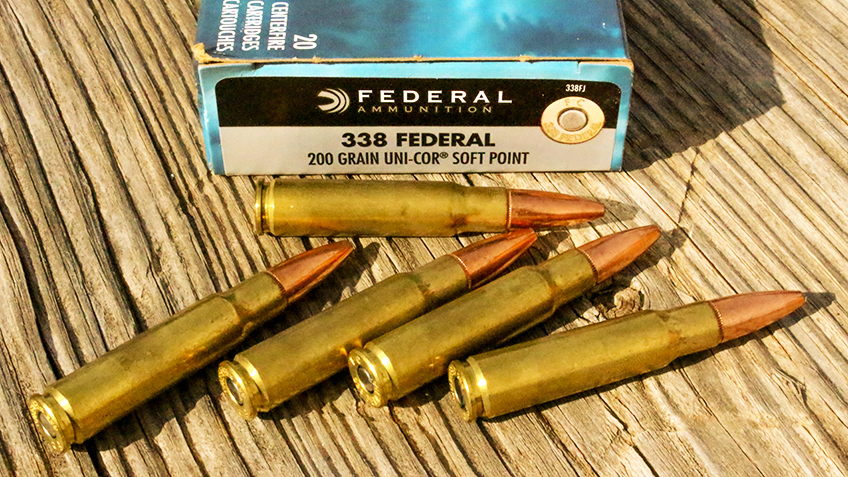
Looking at the cartridge—with its immediate resemblance to the .308 Winchester—it made perfect sense as to why the meat damage was minimal; a short, compact case pushing a sensible projectile at moderate velocity has long been a recipe for deer hunting success. The .308 Winchester and all of its offspring have been both highly successful and efficient in the deer woods and fields alike, with the speedy .243 Winchester becoming a favorite choice of those who want a cartridge to do double duty on varmints/predators and deer alike, the .260 Remington riding the front end of the 6.5mm wave. The 7mm-08 Remington has been a great choice for an all-around cartridge for forty years, as it is a bit easier on the shoulder than the .308 Winchester, yet has a very attractive bullet weight range. Sadly, the .358 Winchester—which works so well at woods ranges—has all but faded into obscurity.
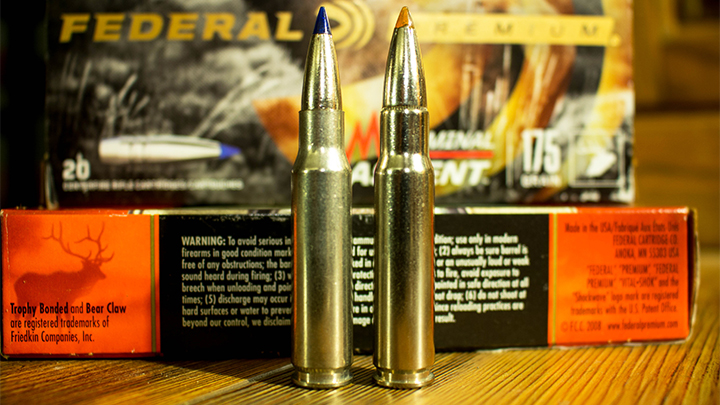
The .308 Winchester was chosen as the U.S. Army’s replacement for the back-to-back World War champion: the .30-06 Springfield. The constant comparison between the two (excellent) cartridges hasn’t slowed down since the release of the .308 Winchester in 1952; for most situations the two cartridges run so close in performance the argument is nearly irrelevant, unless you are enamored with the heaviest of .30-caliber bullets.
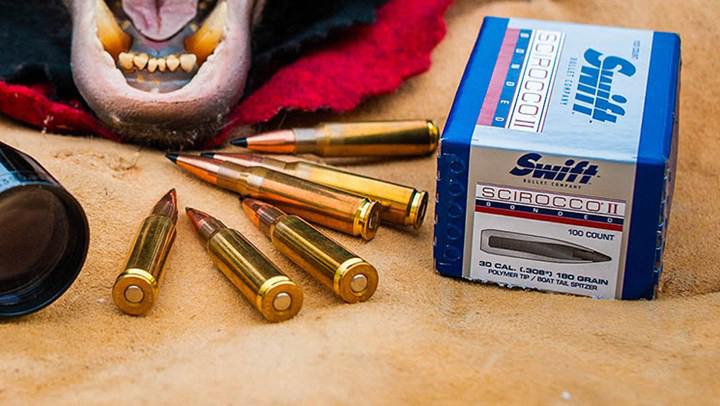
In fact, like the .30-06 Springfield, the .308 Winchester makes a wonderful choice for an all-around cartridge; it is easy on the shoulder, economical to shoot and can be housed in a light, rigid short-action rifle. For almost 70 years, a hunter equipped with an accurate .308 Winchester was well-suited in most big game scenarios, save the heavyweight, dangerous game animals. With bullet choices generally running between 125 and 200 grains, the .308 remains one of our most popular cartridges.
The .338 Federal is the youngest of the .308 family, and is nothing more, and nothing less, than the .308 Winchester necked up to hold .338-inch-diameter bullets. It was released in 2006 as a result of a joint collaboration of Federal and Sako. It has the same .473-inch diameter case head as the .308 Winchester and shares the same 20-degreee shoulder. Like its parent, the .338 Federal has a case length of 2.015 inches, but the .338 Federal has an overall length 0.01 longer than the .308, at 2.820 inches versus the .308’s 2.810 inches. Where the .308 has a neck length of 0.303 inches—just under one-caliber—the .338 Federal’s neck comes in at 0.340 inches, just over one-caliber; both give excellent neck tension, and really don’t require any crimping, unless you’re using them in an autoloader.
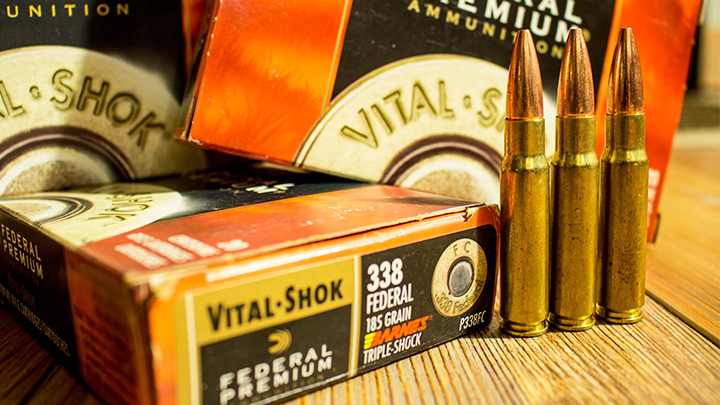
How do the two compare? Perhaps the better question is “does the .338 Federal have the goods to compete with the .308 Winchester?” In my opinion, the .338-inch bore diameter is the next logical step upward from .30-caliber; 8mm is very close in performance, and the bullet weights between the two are similar. The beauty of the .338-inch bore is the option of using heavy bullets, namely the 250-grain, and there are 275-grain choices as well. But, just as the .308 Winchester is rarely seen using the 220-grain bullets—a limitation brought on by twist-rate—the .338 Federal doesn’t mate well with bullets heavier than 225 grains, and to me that removes some of the allure of the cartridge.
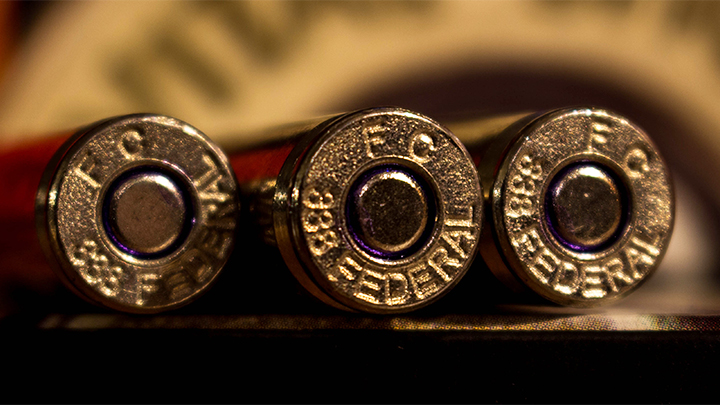
The velocities of the .338 Federal aren’t shabby at all, with a 200-grain bullet leaving the muzzle at 2700 fps, compare that to the 200-grain .308 Winchester load at a velocity of 2550 fps. At the time of this writing, the vast majority of available ammunition in .338 Federal uses a 200-grain bullet; there is a 185-grain Federal Fusion MSR load, but all the rest are 200-grain loads. And, all the ammo currently produced is from Federal. Looking at the incredible variety of both bullet weights and varying companies producing ammunition for the .308 Winchester, the decision is almost made for you.
So, is the .338 Federal destined for obscurity? I am sad to say that it does indeed look that way. While I really like the concept of a light-recoiling cartridge, the fact that the 250-grain .338-inch bullets aren’t on the menu make me shy away from the .338 Federal. Where I really like the .338-06 A-Square as a lighter alternative to the .338 Winchester Magnum—primarily because it uses the full complement of bullets from 185 grains up to 275 grains—the .338 Federal just comes up a little short, even when handloaded.
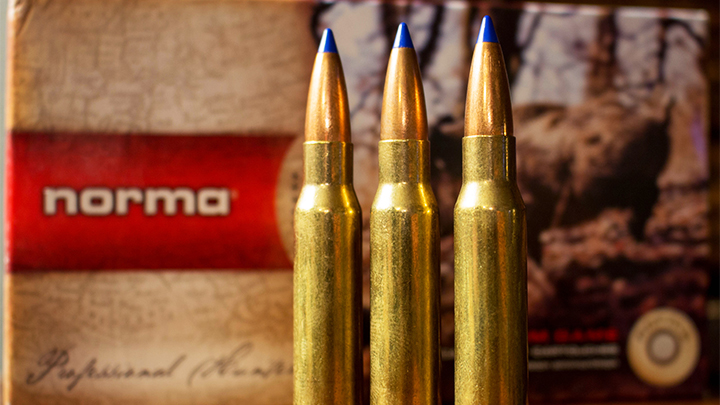
In my opinion, the cartridge may be a good choice for the forests of the northeast, where whitetail deer and black bear are the primary species available, but I can easily cover that ground with a .308 Winchester. And even with the 225-grain bullets handloaded to 2450 fps or so, I just don’t see enough of an advantage to overlook the incredible flexibility of the .308 Winchester. It’s certainly difficult to beat .30-caliber unless you can offer a bullet weight clearly out of its range, and the .338 Federal doesn’t quite get there. I wouldn’t turn it down if it were offered on a hunt, but I also wouldn’t choose to buy a rifle chambered for it over the .308 Winchester.
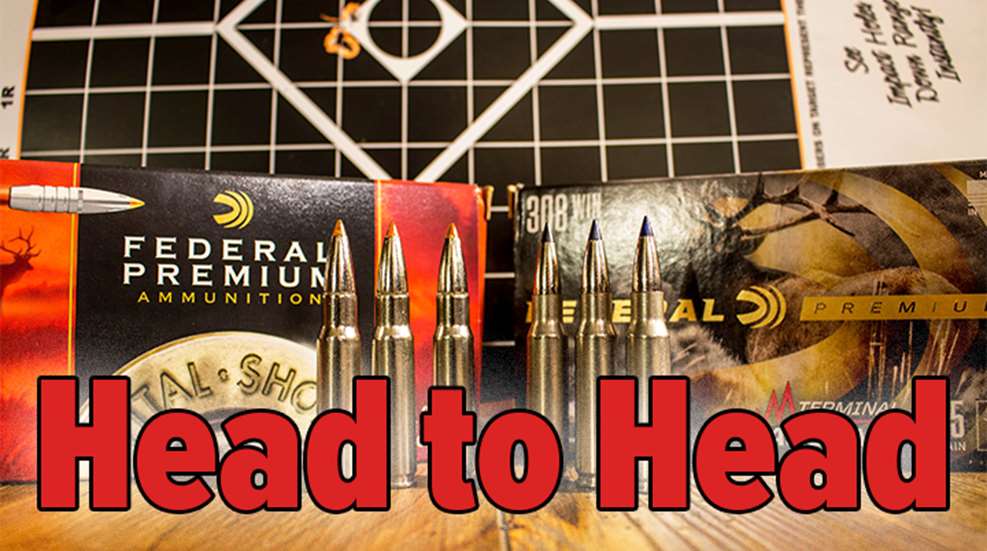
Looking for previous installments of our "Head to Head" series? Click here.