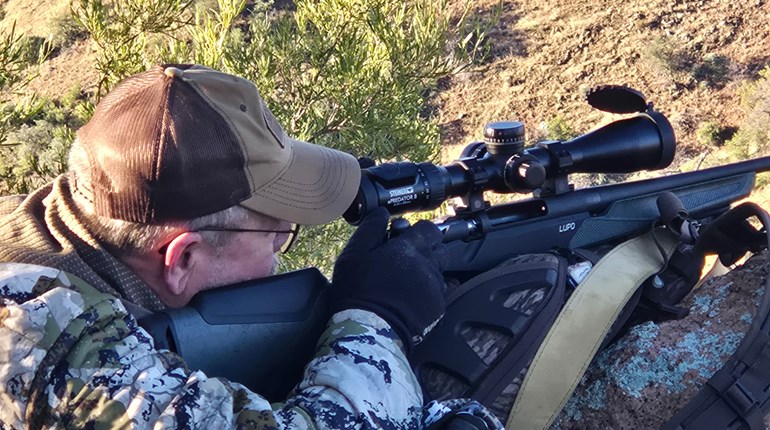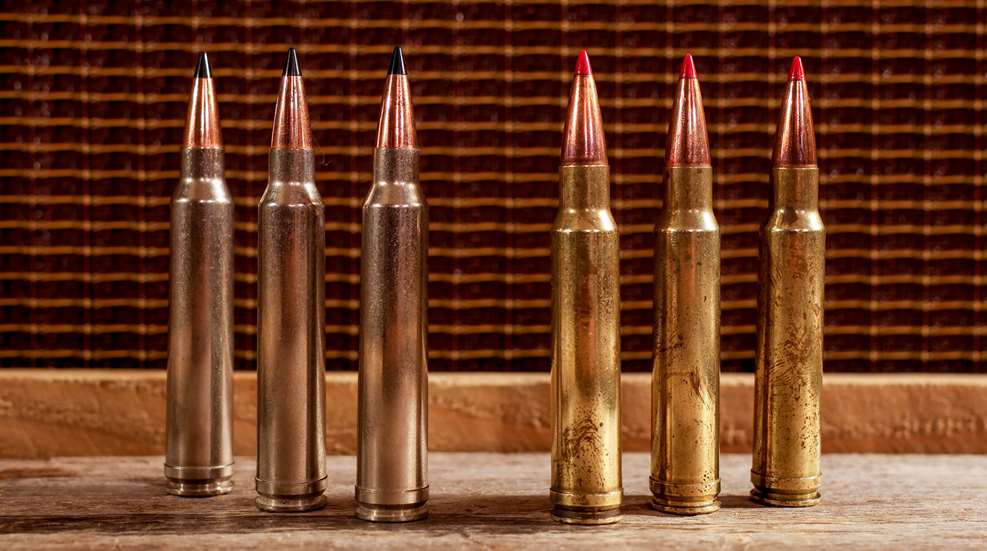
Hunters headed to Alaska and Africa often ask whether or not their .300 Winchester Magnum is too small, and if they should move up to the .338 Winchester Magnum. Given the size of the animals pursued in both of those places, the idea of larger bore with heavier bullets isn’t out of the question. But whether or not the .338 Winchester Magnum offers such an undeniable advantage is debatable, and warrants a comparison between these two popular belted magnums.
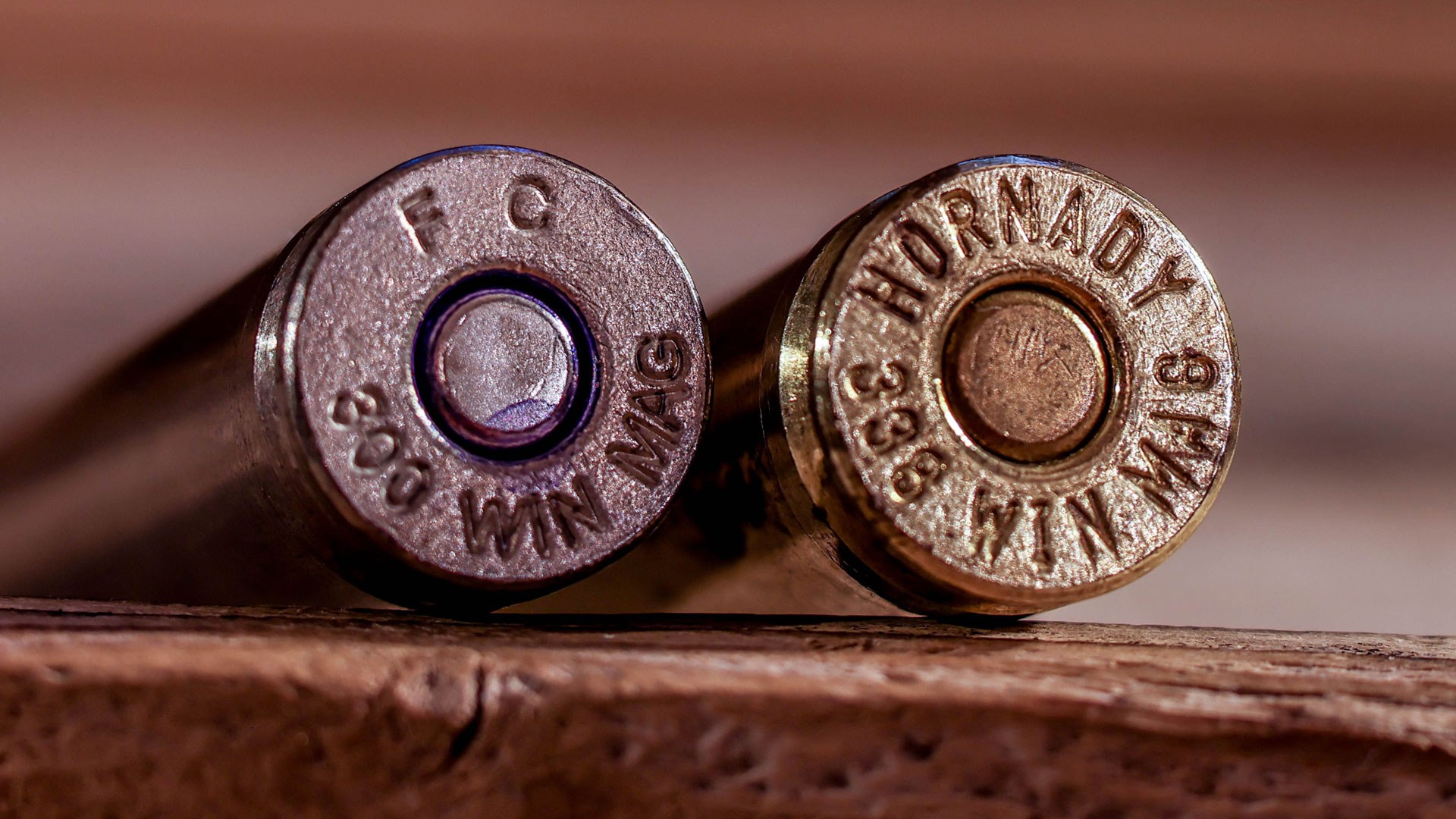
In the 1950s, Winchester brought out a trio of magnum cartridges, based on the belted .375 H&H Magnum case, shortened to fit in a .30-06-length receiver. The .458 Winchester Magnum was designed for the thick-skinned and heavy-boned dangerous-game species, to fill the void left by the lack of so many of the Nitro Express rifles, and the .264 Winchester Magnum was intended for the longer shots of the West, using the (then not so popular) 6.5mm projectiles at a high velocity to resist wind deflection and give a flat trajectory. But in-between those two sat the .338 Winchester Magnum brought to market in 1958, offering the flexibility a travelling hunter would want. The bore diameter–though not nearly as popular as it is today–is a carryover from the .33 Winchester; one can only assume that as Winchester was tooled up to make bullets of .338-inch diameter, they chose this for their “middle-of-the-road” magnum.
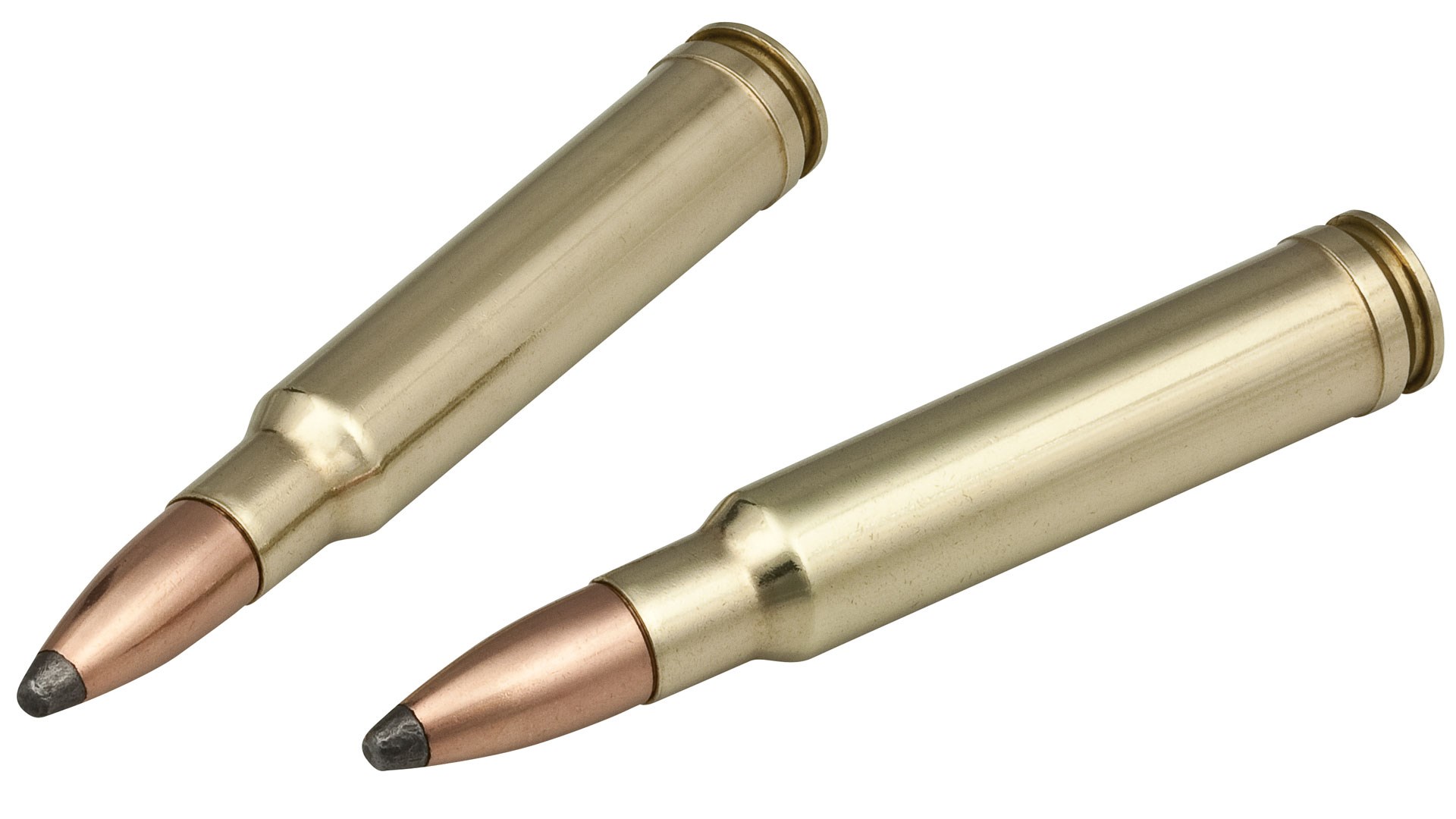
With a 2.500-inch long case, and a maximum overall length of 3.340 inches—the same as the 30-06 Springfield—the .338 Winchester Magnum uses the belt of brass at the base of the case for headspacing. The case has a slight taper, and uses a 25-degree shoulder to step down to the neck—which measures .330 inches—just under the oft-desired one caliber in length. The original .338 Winchester ammunition offered 200-, 250- and 300-grain bullets; though the 300-grain load wasn't very popular, the 200- and 250-grain loads proved very effective in the field. With a respectable trajectory and plenty of striking power, the .338 Winchester Magnum was a hit among hunters.
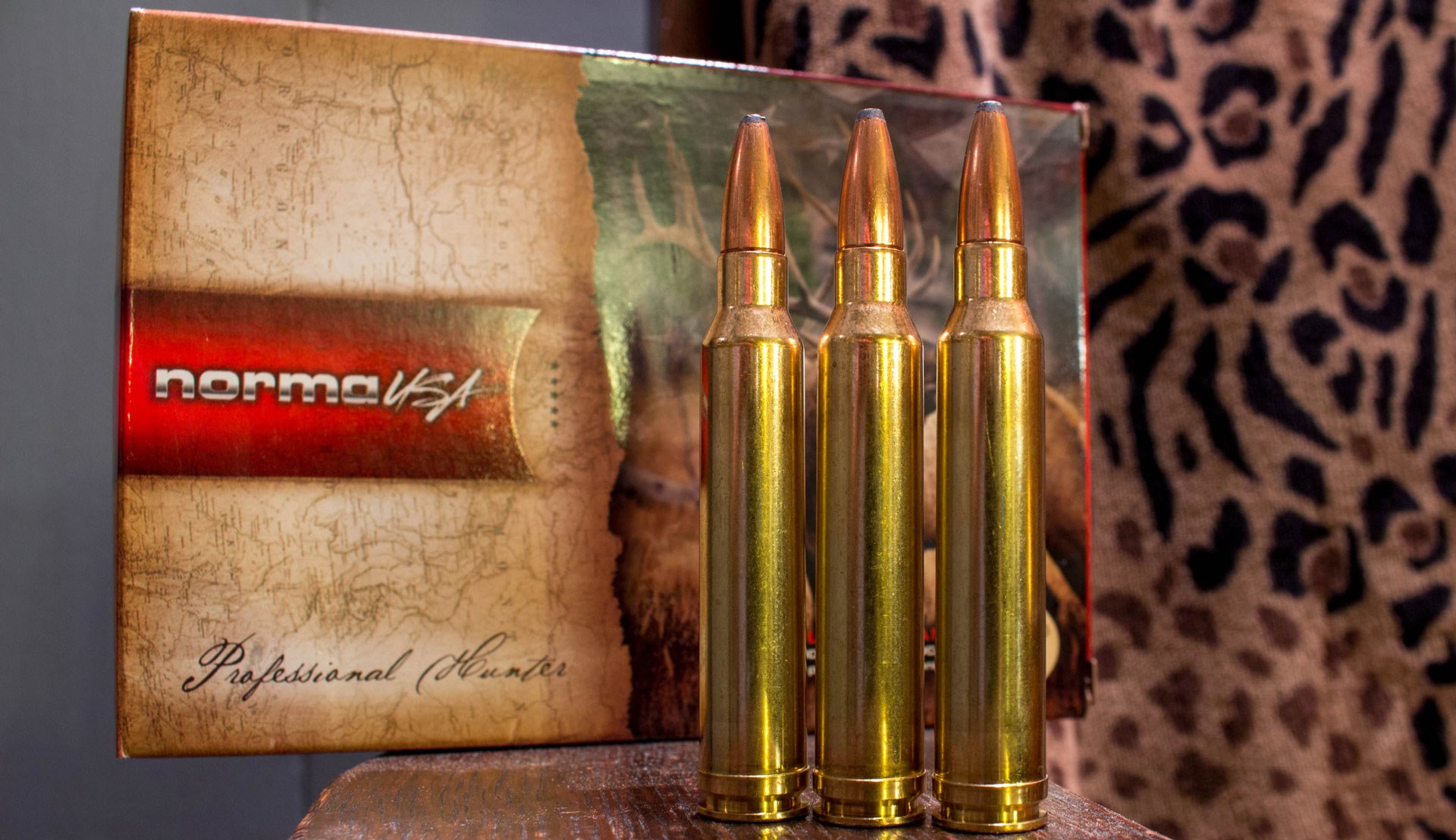
As is a common practice among most cartridge case designs, they are soon mated with both 7mm and .30-caliber bullets. It was Norma of Sweden who brought out the first commercially successful .30-caliber cartridge based on the 2.500-inch belted case, with the 1960 release of the .308 Norma Magnum; then Remington released the 7mm Remington Magnum in 1962. To counter, Winchester developed the .300 Winchester Magnum in 1963, but it didn’t use the 2.500-inch case, instead elongating it to 2.62 inches and using a shorter neck length of .264 inches, while maintaining the 3.340-inch overall length. The .300 Win. Mag. bettered the velocities of the older .300 H&H Magnum, while again being housed in a rifle which was a bit shorter, lighter and easier to manufacture. Driving a 180-grain bullet to a muzzle velocity of 2,960 fps, it gave a definite advantage over the popular 30-06 Springfield, and gave hunters the wide selection of .30-caliber bullet weights at what was the highest commercial velocity available at the time.
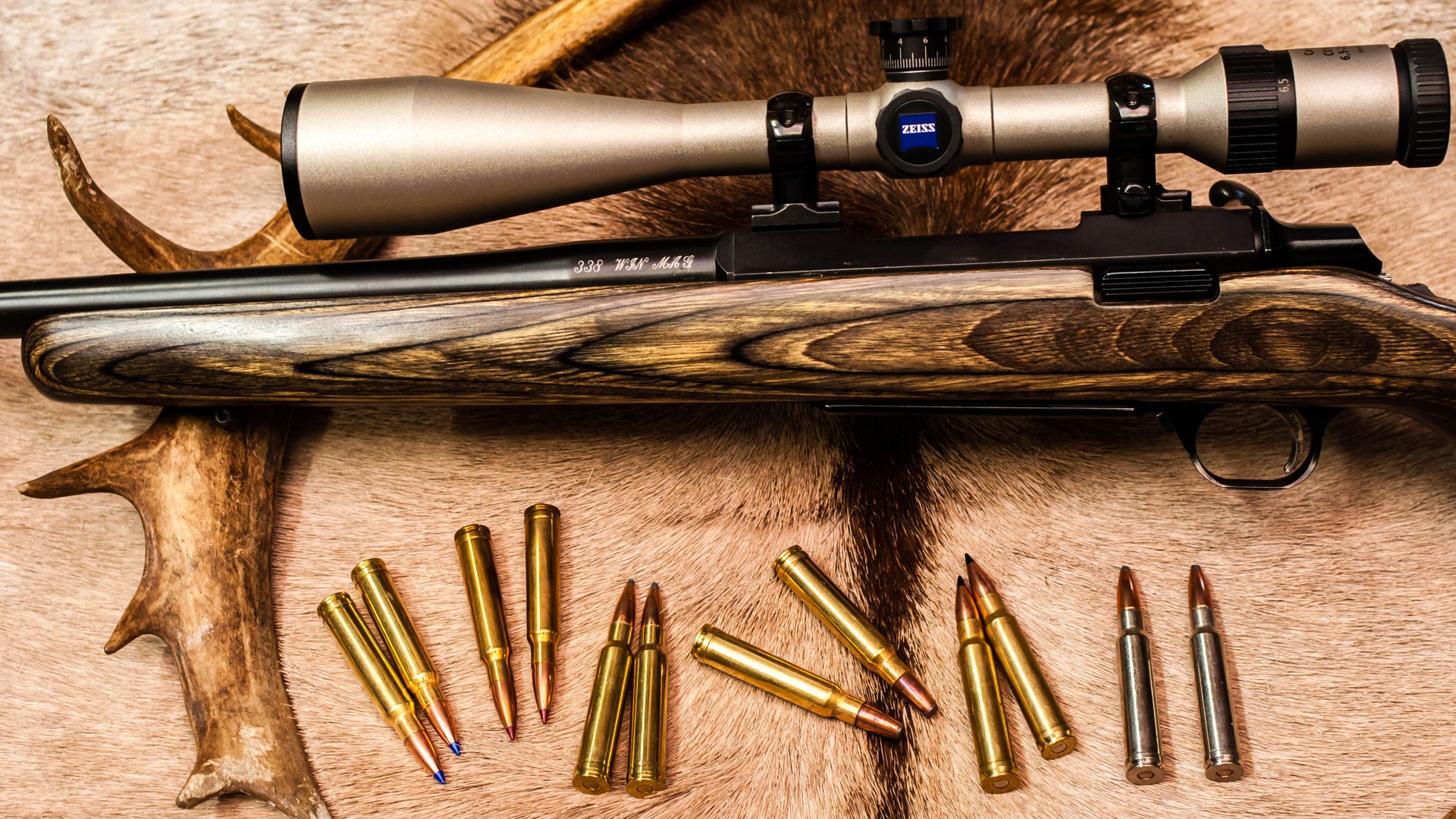
Now it seems logical that the heavier bullet weights and larger frontal diameter of the .338 Winchester Magnum would be the better choice for the heaviest and most dangerous species of game animals, while the .300 Win. Mag. would certainly shine as a choice for the more common species like deer, antelope and black bears. To an extent this is true, especially when considering the projectiles available to us in 1963, but the construction of modern bullets has proved to be an absolute game changer.
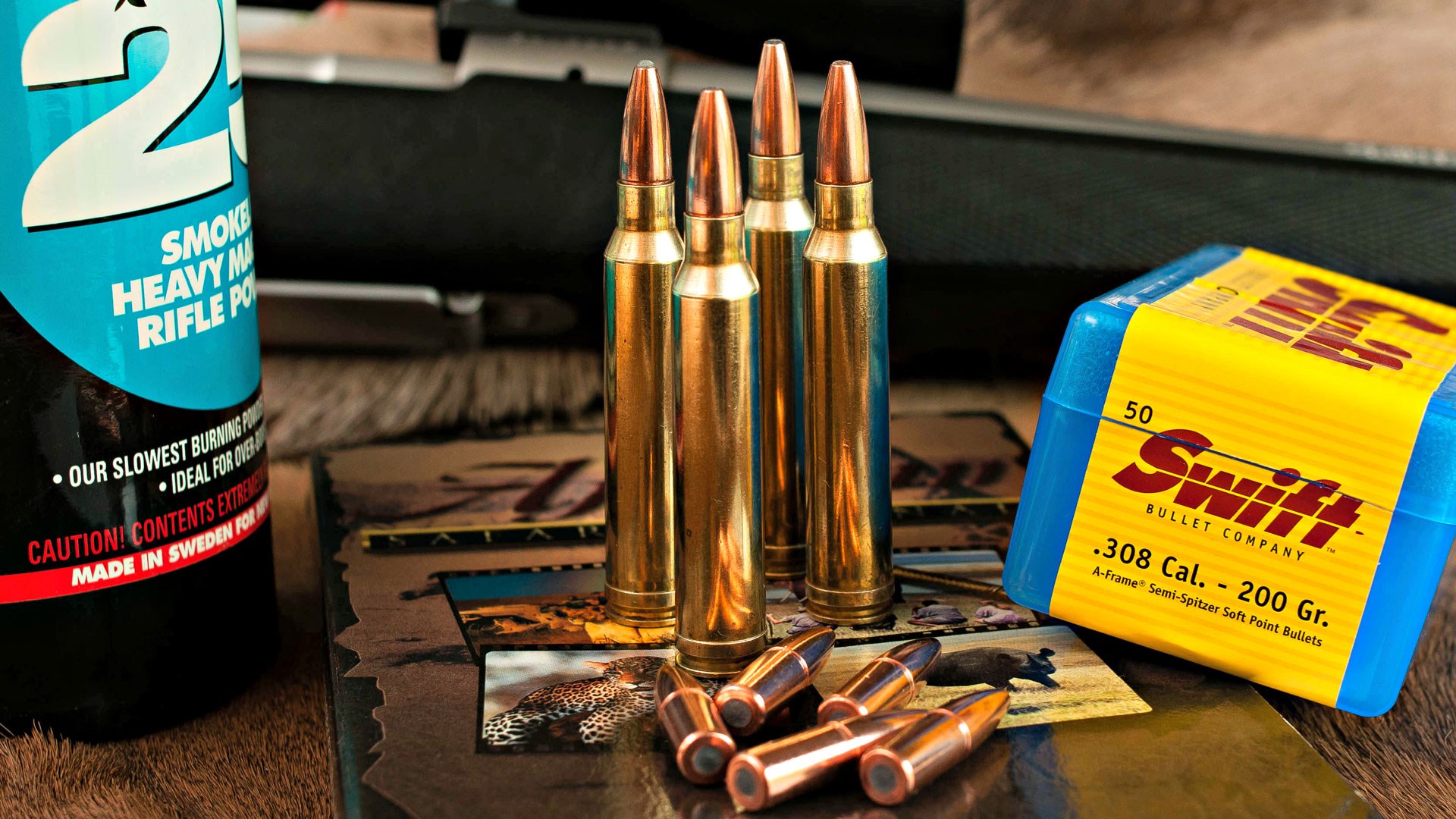
While the .338 Winchester Magnum can definitely handle the 250-grain bullets—and even heavier—it seems that the majority of factory ammunition is centered around the 200- and 225-grain bullets. The .300 Win. Mag. ammunition is generally centered around 165-, 180- and 200-grain bullets, though there are examples of bullet weights between 125 and 220 grains. Looking at two of the most popular bullet weights for comparison purposes, we can find the Hornady CX monometal bullet loaded at 180-grain for the .300 Winchester Magnum, and at 225 grains for the .338 Winchester Magnum. The .300 Win. Mag. delivers a muzzle velocity of 2,960 fps, for 3,500 ft.-lbs., where the .338 Win. Mag. gives 2,800 fps for 3,917 ft.-lbs., When zeroed at 200 yards, the .300 Win. Mag. hits 6.8-inches low at 300 yards and 19.8-inches low at 400 yards, while the .338 Win. Mag. hits 7.6-inches low at 300 and 22.1-inches low at 400 yards. The .338 Win. Mag.’s 225 has a G1 B.C. of .490, and a Sectional Density of .281, where the .300 Win. Mag.’s bullet is slightly inferior, possessing a G1 B.C. of .469 and a Sectional Density of .271. The .300’s additional muzzle velocity results in a flatter trajectory, though not by much at all. At 400 yards, the .338 Winchester Magnum still has an advantage in the energy department, retaining about 250 ft.-lbs. more than the .300 Winchester Magnum load (2,208 ft.-lbs. for the 338, and 1,949 ft.-lbs. for the 300). These two are so close on paper that the difference seems negligible.
The .338 Winchester Magnum offers a larger diameter bullet, and therefore a larger wound channel. It also has an increased level of felt recoil, and I’ve found that the .338 Winchester Magnum has a faster and snottier recoil than does the .300 Winchester Magnum, especially at the bench. In fact, there have been a couple of light rifles chambered for the .338 that were just plain nasty at the bench. If you are recoil sensitive, I might suggest other cartridges. If you find yourself dealing with large, dangerous beasts like grizzly bears on a routine basis, I would recommend the .338 Winchester Magnum over the .300 Winchester Magnum; though being completely honest, I’d recommend a .375 H&H over either.
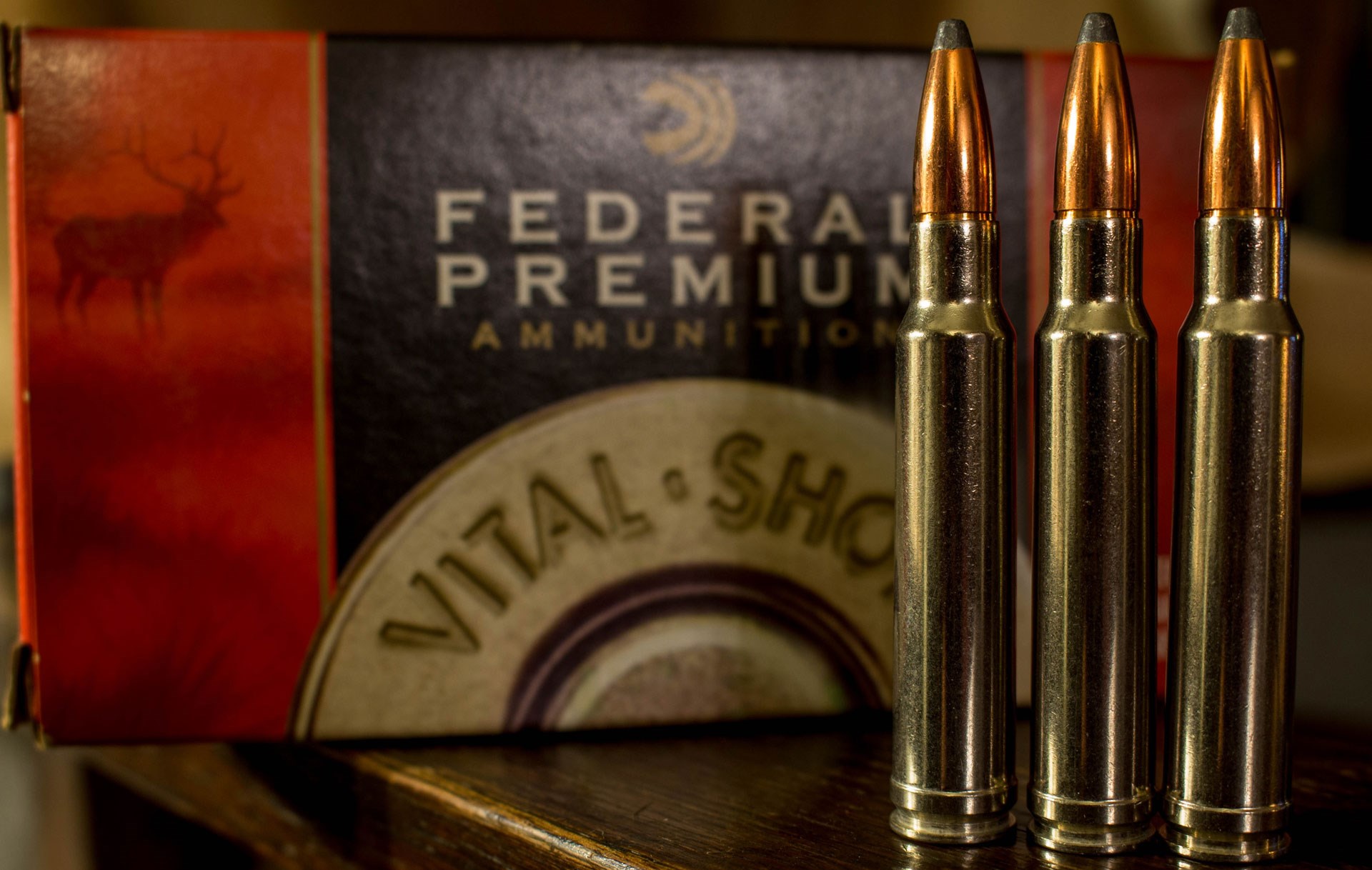
The .30-caliber cartridges have always been praised for their flexibility, and that statement is true, but the .338 Winchester Magnum can be surprisingly flexible as well. Good hunting bullets weighing between 160 and 300 grains have been available to the reloader, so if you wanted to use your .338 Winchester Magnum as a deer gun, there are lighter bullet options. I don’t know many hunters using the 275- and 300-grain bullets in a .338 Winchester Magnum anymore, so the 250-grain stuff tends to be the top of the scale. And though I've handloaded a bunch of the 220-grain round nose bullets in my .300 Winchester Magnum, few factory loads exceed 200 grains these days.
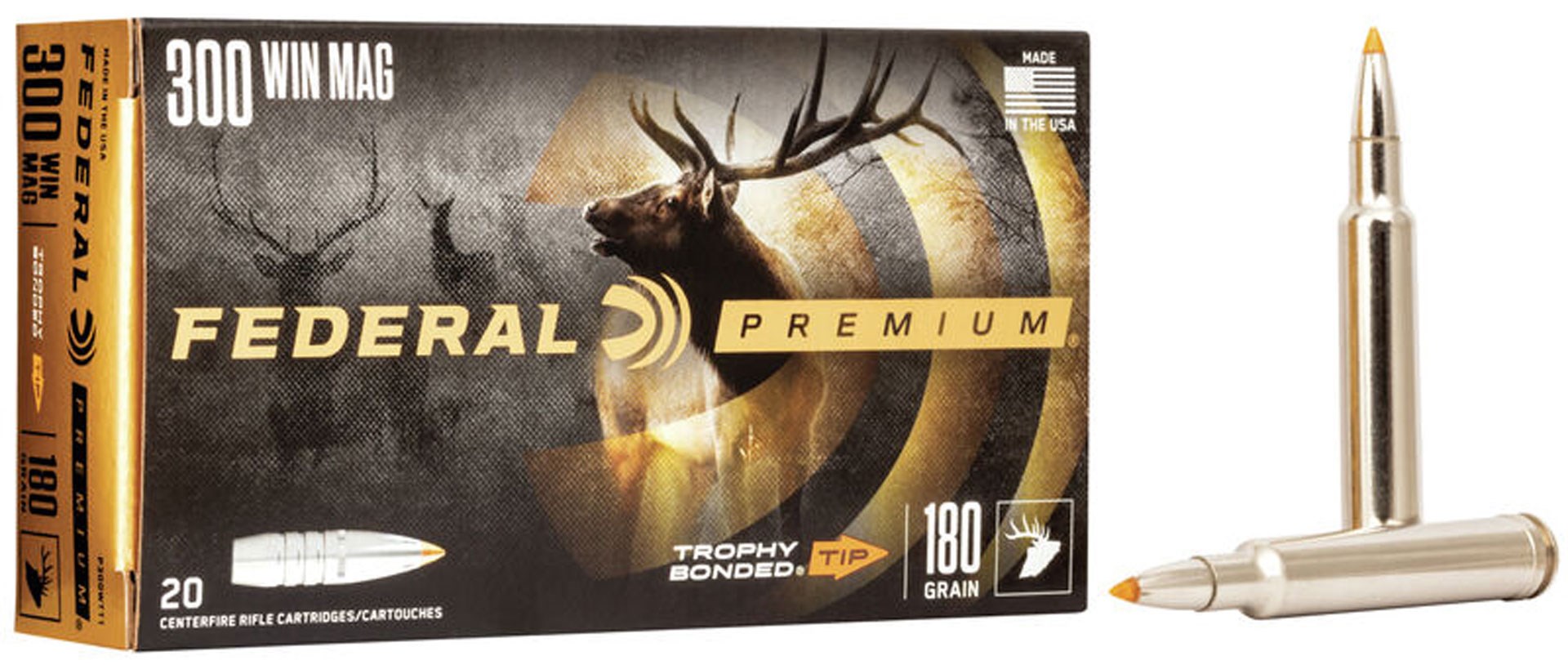
If of premium construction, the 200-grain .30-caliber bullet is a very effective hunting tool. The Nosler Partition, Barnes TSX, Swift A-Frame, and Federal Terminal Ascent are all examples of tough bullets which will offer deep penetration on larger animals, as well as work very well in open, windy conditions. I feel that the sportsman who will make occasional trips to Alaska or Africa is better served by a well-fitting .300 Winchester Magnum, as it offers a bit more flexibility among the common game species, is a bit easier on the shoulder, and being .30-caliber will ensure that the production of projectiles will not only continue, but take priority. I like the .338 Winchester Magnum, and it has certainly proven itself over the last six-plus decades, but the .300 Winchester Magnum offers a bit more flexibility, especially when loaded with today’s premium projectiles.