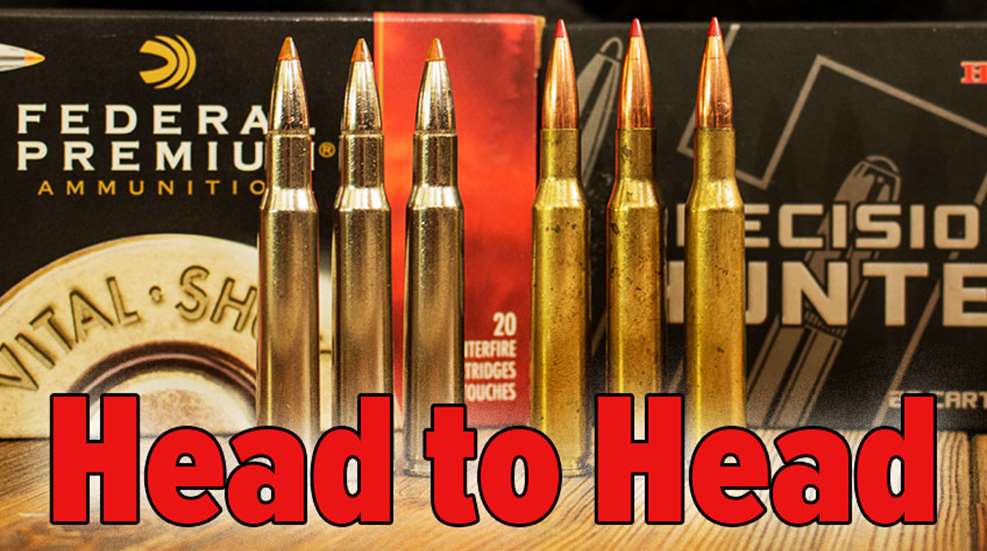
Here we have a couple of undeniably classic cartridges that have been putting meat in hunter’s freezers and smiles on their faces for generations. Most of us have probably hunted with one or both of them at one time or another, but which is ultimately the better choice? I think the answer will depend on your particular choice of species to be hunted, but it warrants a closer look at each to best determine the proper choice between the two.
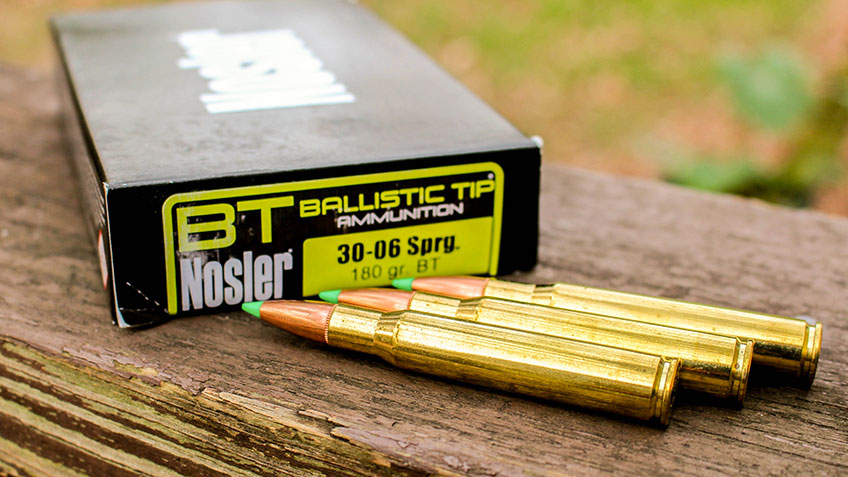
The .30-06 Springfield is one of the most popular hunting cartridges ever produced, though it was designed for the battlefield. Sharing the same case head diameter as the 7x57mm Mauser, the Springfield’s first iteration was the .30-03, using a 2.540-inch long case and the 220-grain round nose bullet carried over from the Army’s previous cartridge, the .30-40 Krag. But in order to compete with the European military cartridge which had adopted lighter spitzer bullets to increase the effective range of the soldier’s rifle, three years later in 1906, the Army shortened the case to 2.494 inches, topped it with a 150-grain spitzer bullet, and the .30-06 Springfield was born.
As a military cartridge, it effectively gave American soldiers an advantage in both World Wars, as well as in Korea. But in the hunting fields, it offered all kinds of flexibility, using bullets from 150 grains up to 220 grains with a flat trajectory—especially for the time. It would go on to become one of the world’s most popular hunting cartridges, receiving praise from many gun writers, and to this day it is the benchmark against which .30-caliber cartridges are measured.
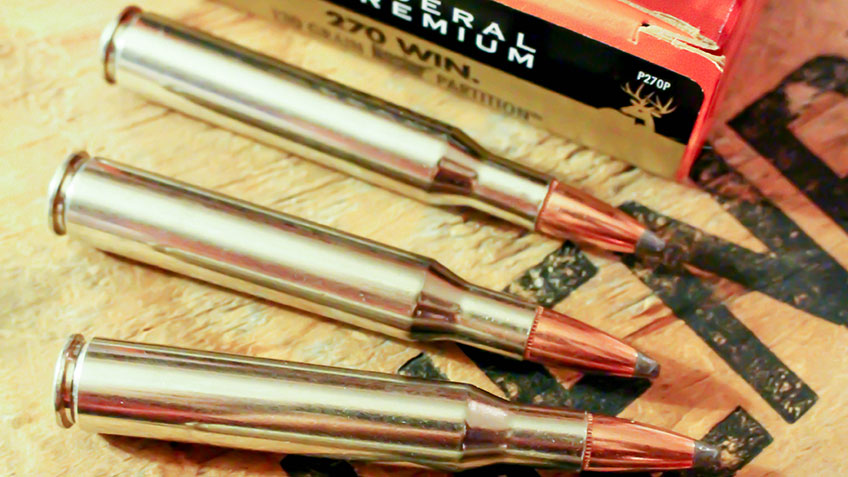
The .270 Winchester came along in 1925, released in the Winchester Model 54 rifle. Using a .277-inch diameter bullet and the case length of the .30-03, the .270 Winchester gave high velocities and a flat trajectory. The 130-grain bullet—at 3140 fps—generates all sorts of hydraulic shock, and that load became an instant hit with deer, antelope and sheep hunters. A constant endorsement from Jack O’Connor in the pages of Outdoor Life didn’t exactly hurt the cartridge’s reputation either, and the ensuing debates between O’Connor and Elmer Keith regarding velocity versus bullet weight clearly divided the hunting world; that debate rages on to this day. The .270 Winchester has an effective bullet range of 90 to 160 grains; though the cartridge can certainly handle heavier bullets. The common twist rate of 1:10″ precludes most any bullet above 150 grains, with the exception of a few 160-grain bullets.
Both cartridges have been adapted to just about every type of rifle action ever conceived, and a huge selection of hunting ammunition is available for both cartridges, just about anywhere ammunition is sold. Both cartridges fit perfectly in a long-action receiver (the .30-06 case length actually defined the long-action receiver), and can be housed in a rifle light enough for mountain hunting. Both will headspace off the well-defined shoulder—17˚-30′ for each—and both are relatively easy on the shoulder, especially in comparison to the hotter magnum cartridges. So what’s the deciding factor going to be?
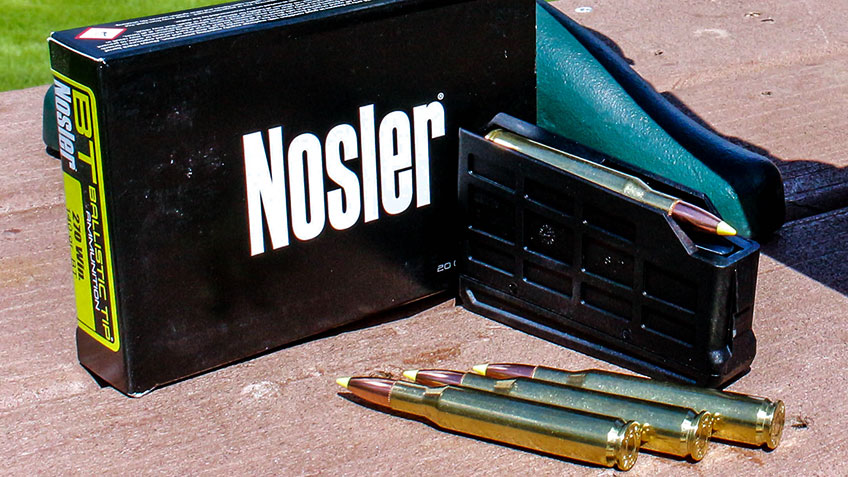
In my personal opinion, if the list of game animals you intend to hunt tops off at elk, I see nothing wrong with choosing the .270 Winchester, especially considering the premium 150-grain bullets available. If you want to do some predator hunting with your deer rifle, the 90- and 100-grain bullets make a great choice. The .270 Winchester always has been, and always will be, one of the best deer cartridges ever made. The 130-, 140- and 150-grain bullets shoot flat, and will handle any deer that has ever walked, whether whitetail, blacktail, mule deer or Coues deer.
But the .30-06 Springfield may be the most versatile cartridge ever invented, neatly handling all game species with the exception the African heavyweights, and it has been used to take all of them as well, including elephant. With lighter bullets like the 150-grain spitzers at 2900 fps, it shoots flat enough for sheep, antelope and distant deer, yet with a stiff 180- or 200-grain bullet, it can handle the large ungulates of North America very well. Alaskan brown bear guide Phil Shoemaker has long sung the praises of the .30-06 loaded with a premium 220-grain bullet, as the penetration of this bullet is phenomenal. If you wanted even more, the Woodleigh 240-grain Protected Point Soft Nose can be pushed to nearly 2400 fps (that bullet has a SD of 0.361) and Barnes offers its Original bullet at 250 grains. Both those heavy slugs can be stabilized by the standard 1:10″ twist rate, as they’re semi-spitzers, and if you wanted one rifle for most of the game species on the planet, the .30-06 Springfield is one of the best choices available.
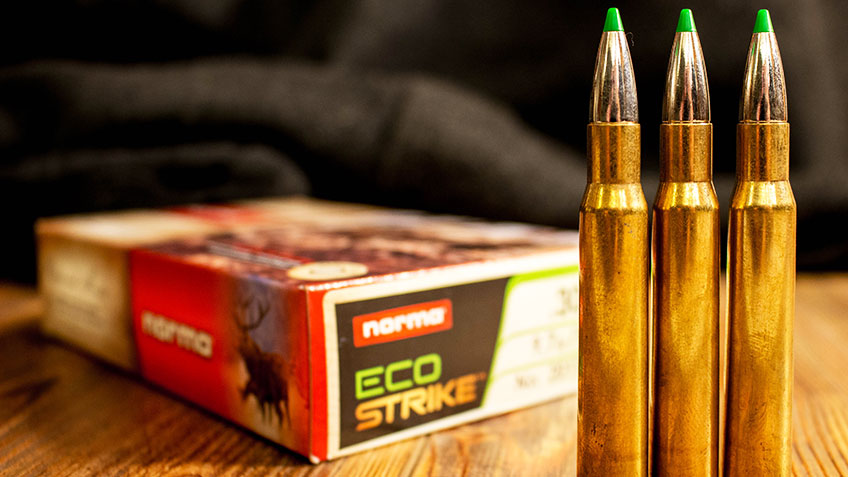
Even Jack O’Connor admitted that the .30-06 Springfield was more versatile than his beloved .270 Winchester; it is just one of those designs that was done right from the beginning. Again, in many instances the .270 Winchester is enough gun for the job, but as Dr. J.Y. Jones proved—he hunted all the North American game species with the same Remington .30-06 rifle—the versatility of the .30-06 Springfield is its strongest virtue.
Looking for previous installments of our "Head to Head" series? We've got you covered.
• 6.5 Creedmoor vs. 7mm-08 Remington
• 8x57 Mauser vs. .318 Westley Richards
• .358 Winchester vs. .350 Remington Magnum
• .22-250 Remington vs. .220 Swift
• .270 Winchester vs. .270 WSM
• .26 Nosler vs. 6.5-300 Weatherby Magnum
• .458 Win. Mag. vs. .458 Lott
• 7mm Rem. Mag. vs. .300 Win. Mag.
• .243 Winchester vs. 6mm Remington
• 7x57mm Mauser vs. 7mm-08 Remington
• .25-06 Remington vs. .257 Weatherby Magnum
• .338 Winchester vs. .375 H&H Magnum
• .30-30 Winchester vs. .35 Remington
• .257 Roberts vs. .250-3000 Savage
• .270 Winchester vs. .280 Remington
• .35 Whelen vs. 9.3x62mm Mauser
• .416 Rigby vs. .416 Remington Magnum
• .308 Winchester vs. .30-06 Springfield
• .22 Nosler vs. .224 Valkyrie
• .300 Win. Mag. vs. .300 WSM
• .223 Remington vs. .22-250 Remington