The .22 centerfires of the 21st century are nothing like those of 20th century—and that’s a good thing. When compared to the varmint classics of the last millennium, bullets are getting longer and heavier, twist rates are getting faster, and long range performance is improving. You’d think that our fastest .22 centerfires—the .22-250 Remington and the classic .220 Swift—would have been adopted for long-range work, but the ugly fact is that the twist rate of their rifling precludes them from using the high B.C. bullets that deliver the goods at four figure distances. In addition, the AR-15 platform that has become so popular in the last half-century also continues to evolve, as we’ll see shortly.
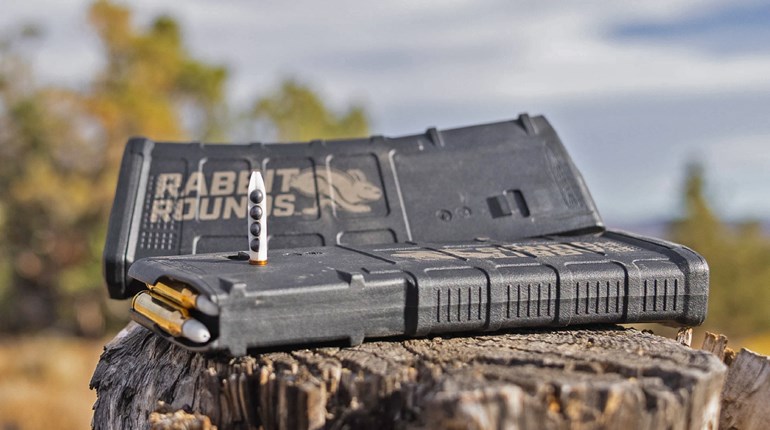
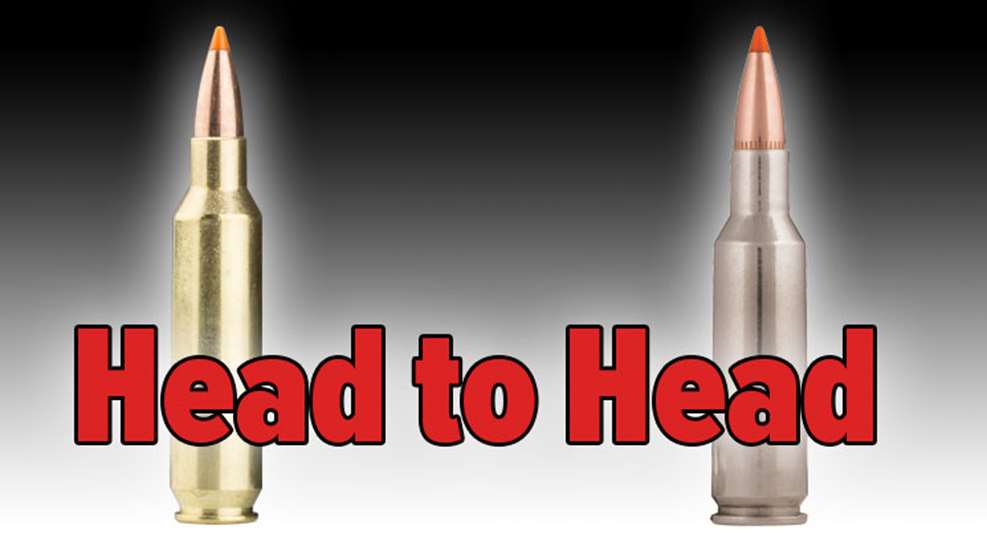
Designed in conjunction with the 5.56 NATO cartridge, the platform is limited to cartridges of a particular case head diameter—0.378-inch for the 5.56mm—in order to function properly through the magazine. Two companies have developed cartridges based on that case head: Nosler and Federal, with their 22 Nosler and .224 Valkyrie, respectively. Both are designed as a long-range cartridge, offering a definite advantage over the ballistics of the 5.56mm/.223, both utilize long, heavy-for-caliber bullets which have the highest ballistic coefficients. They have similar features and similar performances, so let’s compare and contrast the two and see if one holds an advantage over the other.
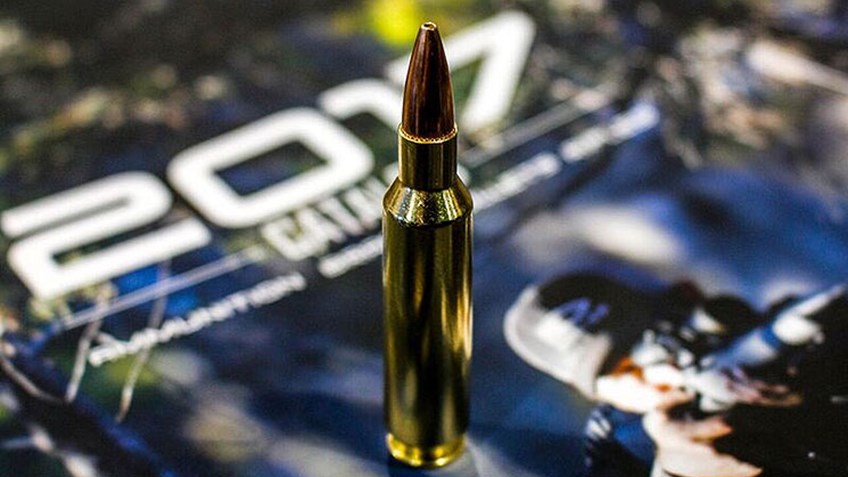
The 22 Nosler is the elder of the two, being released at the 2017 SHOT Show. Using a rebated rim—to maintain the same case head diameter of the .223 Remington (0.378″), so as to maintain the same bolt face—the .22 Nosler uses a wider case dimension for additional case capacity. In addition, the shoulder has been pushed slightly rearward in order to prevent a .223/5.56mm cartridge from chambering in a .22 Nosler chamber. The larger Nosler case delivers approximately 36 grains of water at overflow—compared to the .223 Remington’s 28 grains—for what generally equates to a 14-15 percent increase in case capacity. It also equates to a healthy bump in velocity, somewhere in the 350-400 fps range, depending on barrel length. The .22 Nosler is a proprietary design, having no parent case—and thereby eliminating the possibility of creating it from another source—and is only available as produced by Nosler. The concept is simple; switch out the barrel of your AR-platform rifle, use a 6.8 SPC magazine (as the Nosler cartridge has similar outside dimensions) and you’ll see a definite increase in long-range performance. The .22 Nosler will use bullets between 55 grains and 85 grains, with the heavier bullets giving the high ballistic coefficient that long-range shooters are after. With a 30 degree shoulder, it offers a good blend of clean feeding and positive headspacing, and has shown excellent accuracy.
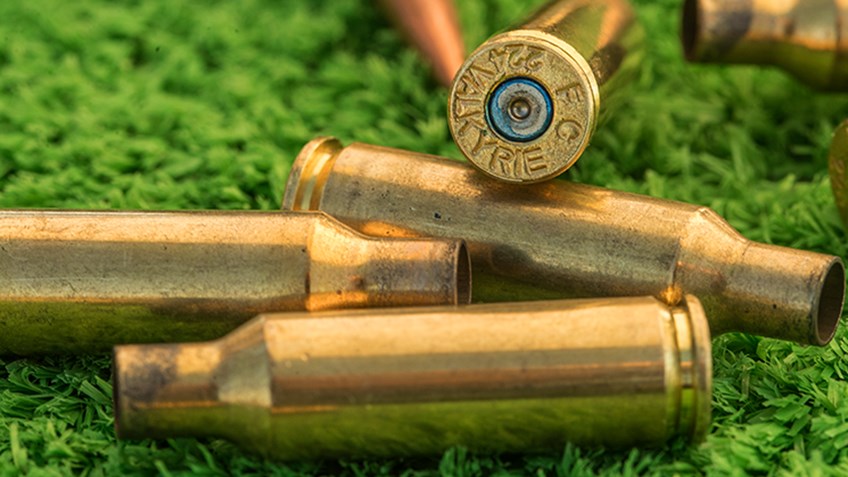
The .224 Valkyrie is a similar concept, and will give similar performance. It was unveiled at the 2018 SHOT Show, with much fanfare. Based on the 6.8 Remington SPC (with a 0.422″ case head), the .224 Valkyrie is designed to run in the AR-15, albeit with a larger bolt face, and was designed around the 90-grain Sierra MatchKing bullet. Driving that heavy bullet to a muzzle velocity of 2,700 fps, the .224 Valkyrie makes a perfectly viable cartridge for 1,000-yard shooting. Federal offers a varmint load, using the 60-grain Nosler Ballistic Tip, a 75-grain FMJ load in the American Eagle line, the aforementioned 90-grain Sierra MatchKing and a 90-grain Fusion load for hunting larger game. The case holds about 34.5 grains of water—just a bit less than the .22 Nosler—and in a pinch, can be made from 6.8 SPC brass by a competent handloader. It uses the same 30 degree shoulder as the Nosler case, but the case length is just a bit shorter. It too requires a 6.8 SPC magazine.
Both cartridges offer fantastic trajectories, and will certainly handle almost all the prairie dog/woodchuck/coyote shots you can muster. Both cartridges are mild in the recoil department, with hardly a noticeable difference from the benchmark .223 Remington. However, there are some slight differences that may influence your decision. While both with stay supersonic out to 1,000 yards, the twist rates in the rifles chambered for each of them.
The .22 Nosler uses a 1:8″ twist rate in its barrels, restricting bullet weight to 85 grains or less. The .224 Valkyrie uses a faster 1:7″ twist, thereby giving the ability to properly stabilize that 90-grain MatchKing, and I believe there are 100- and 105-grain models that will be stable with that twist rate. If you’re serious about using a .22 caliber cartridge for true long range shooting, that makes a difference. If you’re looking for a coyote and prairie dog rifle, at ranges out to 500 or 600 yards, I doubt you’d see much of a difference.
So, both are viable for long-range shooting—again, depending upon your ranges—and both run at very similar velocities, so which gets the nod? I have to give the edge to the .224 Valkyrie, for two reasons. One, the twist rate allows for ridiculously heavy bullets to be used, and makes it a viable deer cartridge. The 90-grain Fusion has been used in the field with very good effect, and I’d say that it truly brings the Valkyrie into the 6mm class. Two, the sheer availability of good Federal ammunition and the possibility of creating your own brass in a pinch are worthy reasons to lean toward the Valkyrie. There’s absolutely nothing wrong with the Nosler design—I’ve shot it and it functions very well—but the sheer amount of Federal ammunition, especially the American Eagle load selling at less than $14 per box, is going to make a difference. Some folks have cited the Nosler’s rebated rim as being an issue, though I don’t agree with that.
The Valkyrie’s shorter case will make seating those long bullets a bit easier, and my own shooting experiences with it were nothing but positive. I got to take it out to 800 yards at the SHOT Show’s Industry Day at the Range, and I can report very mild recoil in the gas gun, and the ability to see my own vapor trail and call my own shots in the desert air. I think the .224 Valkyrie will be with us for quite some time, and create quite a few converts.
Looking for previous installments of our "Head to Head" series? Click here.