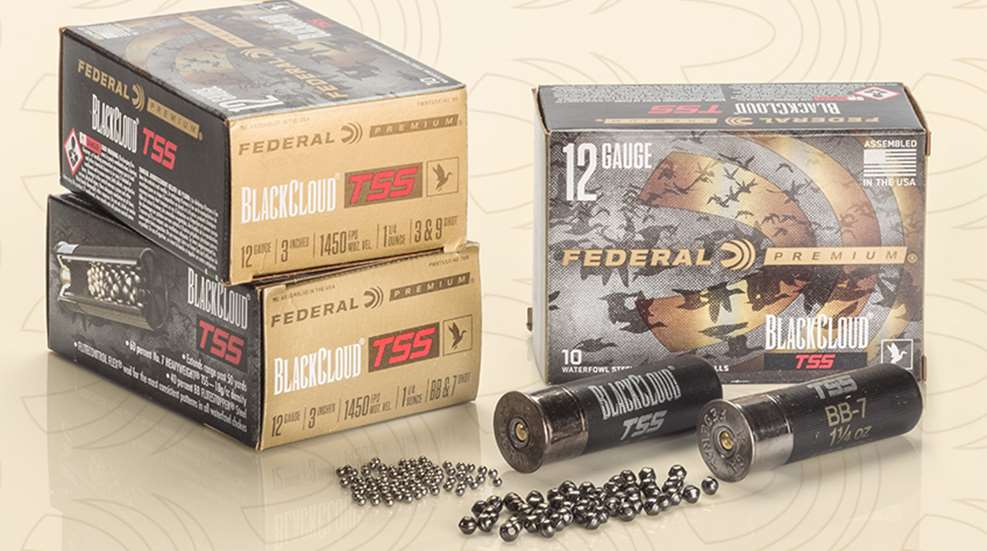
There’s no question that tungsten-based pellets are superior to steel for killing ducks and geese. Tungsten is 56 percent denser than steel (7.8 g/cc for steel compared to 18 g/cc of tungsten), and so to have the same downrange energy when going the same velocity, a steel pellet must be about four shot sizes bigger. In other words, a No. 3 steel pellet weighs about the same as a No. 7 tungsten pellet, and therefore delivers about the same energy. (At longer ranges the disparity grows due to wind resistance slowing down the bigger pellet even further.) But the two still aren’t equal. That’s because the No. 7 shot are smaller in diameter, therefore an ounce of No.7s consists of many more pellets than an ounce of the larger diameter No.3s.
It doesn’t take the proverbial rocket scientist to know which would be the better load for ducks. But it takes one to develop them, and so in 2018 Federal’s engineers introduced the company’s super-dense, non-toxic Heavyweight Tungsten Super Shot (TSS) for waterfowlers. This is the same stuff Federal packs in its TSS turkey loads, and let me tell you, it’s deadly. But tungsten is expensive, and few duck hunters would want the cost, brutal recoil or ultra-tight patterns of full-fledged TSS turkey loads for ducks where going through 25 rounds in a morning isn’t unheard of.
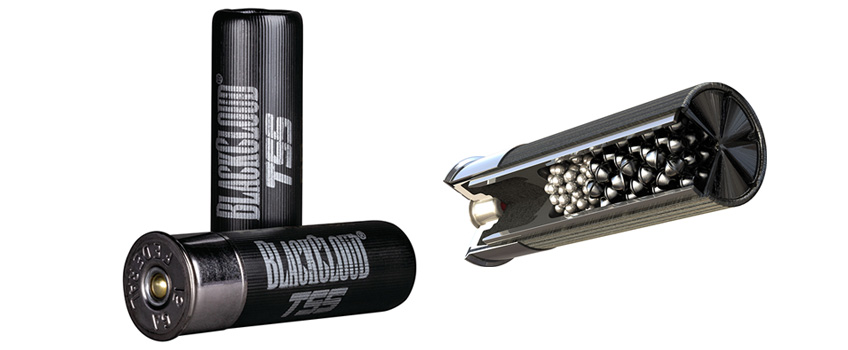
Rather, Federal blended some of these Heavyweight uber-pellets with its existing Black Cloud steel FliteStopper (FS) pellets to give waterfowlers the best of both worlds. The resulting Black Cloud TSS 12-gauge load is currently available in two versions: a 3-inch, 1¼-ounce 3x9, (No. 3 FS pellets ahead of No. 9 TSS pellets) and a 3-inch, 1¼-ounce BBx7 load (BB-size FS ahead of No. 7 TSS pellets). A 20-gauge version is expected. Here’s how it works.
Federal’s FliteStopper steel pellets feature a little bladed edge around their circumference, and as such, they aren’t perfectly cylindrical. Federal says these little sharp crests cut duck flesh, but I’m not so sure. I am sure the pellets catch wind and do not pattern as tight as perfectly round pellets. They aren’t my first choice for long-range shots, but for close-range shots on ducks tight over decoys they’re excellent.
Meanwhile, the TSS pellets tend to hold tight patterns if so choked and deliver massive energy and many more pellets on target. As a result, the Black Cloud TSS load delivers a deadly swath of pellets across the range spectrum for close-, mid- and long-range ducks. It’s the most advanced waterfowl load ever produced.
To test them, I cut open several shells to look at the pellets, count them and inspect the wad. The FS pellets were located in the top of the shell. There were 97 of them in the 3x9 load. Behind them and mixed with polymer buffering were 174 much smaller No. 9 Heavyweight TSS pellets. This totals 271 pellets, 36 percent of which are FS, and 64 percent TSS. That’s better than Federal claims (it claims 60/40), and is important because it’s kind of like the crabcakes at a seafood joint: you want a bunch of real crab in there rather than just cheap stuffing.
The payload fits into Federal’s FliteControl Flex wad that holds the shot in the column and protects it from initial setback forces, although it’s doubtful the hard steel and super-hard tungsten wouldn’t be affected either way. Tabs on the tail-end flare out after leaving the barrel; slits in the side expand and catch wind; both slow down this thick, heavy wad during flight so the shot eases out of it with minimal disturbance. What all of this means is that it produces tighter patterns than cheap wads, and I’ve proven this on patterning boards.
Behind the wad is the powder. Federal is one of only a handful of companies in the world that makes advanced small-arms powder (under its Alliant brand), and the powder used in the Black Cloud TSS load is cutting-edge. It’s ultra-clean burning and doesn’t require as much volume as traditional powders, which leaves space for polymer buffering material that protects shotgun barrels. Still, like all steel and tungsten loads, it is not to be used with full chokes.
The powder is ignited by Federal’s Catalyst primer that isn't made from traditional lead-styphnate that’s been around for a century, but a lead-free, cleaner-burning compound with the same pressures and heat.
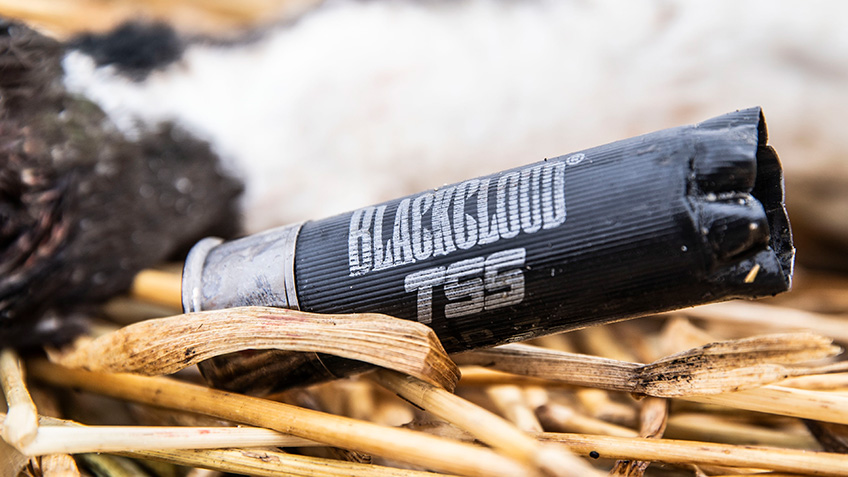
Finally, the Black Cloud TSS load is sealed at both ends, making it waterproof. I know this because I left five shells soaking in the bottom of my johnboat overnight, and they fired as if they’d been in my gear bag instead.
Both 3-inch, 1¼-ounce loads are launched at 1450 fps, which translates to serious firepower downrange. On a patterning board, I could clearly see the imprint of the two types of pellets, and it affirmed the hypothesis: The smaller No. 9 and No. 7 tungsten pellets tended to pattern tighter in the center of the spread, while the larger BB and No. 3 FliteStopper pellets were found throughout the pattern but dominated the edges, especially as the range extended.
The load’s only downside? Tungsten is expensive. Due to environmental laws the ore is not mined in America, so it must be imported—mostly from China. As you know, there are heavy tariffs on Chinese imports right now that add greatly to tungsten’s $100-$350 per-kilo price. Yes, the load is expensive—just under $40 for a box of 10, or $4 per shot, but when I used them this year on ducks, and especially geese, I found I didn’t cripple as many, so I used fewer shells. Primarily, if you’ve booked a unique hunt for a special bird, this is the load you want in your shotgun. It won’t turn a bad shot into a good one, but it definitely hammers ducks at long range better than anything I’ve ever shot ... that’s still legal.
Technical Specifications
• Type: nontoxic shotshell
• Gauge/Length: 12/3ʺ
• Payload: 1¼ ozs.; No. 3 FS steel (60%) and No. 9 TSS (40%); BB FS steel (60%) and No. 7 TSS (40%)
• Pellet: FliteStopper steel; tungsten-alloy Tungsten Super Shot
• Muzzle Velocity (advertised fps): 1450
• MSRP: $39 per 10-rnd. box; federalpremium.com