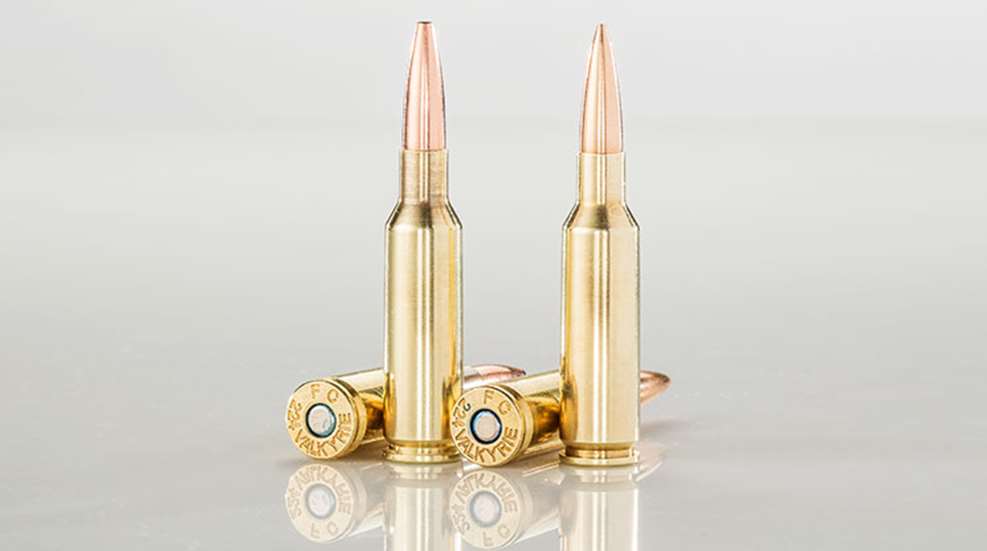
Whenever a new cartridge developed specifically for the AR platform is released, there’s usually a huge boom in interest. Excitement eventually wanes, however, leaving the cartridge relegated to a few articles scattered across the Internet, never to be seen again except in the basements and garages of a cult following of handloaders, the niche group solely responsible for keeping said cartridge “alive” on an online forum or two. There’s a list of nearly 50 cartridges compatible with the AR-15 on Wikipedia alone, and several of those no longer see the commercial light of day. That list is hardly complete.
So how does an AR-15 cartridge stay afloat in the sea of throwaways? For starters, it has to be significantly better than the standard .223 Rem./5.56 NATO in some way, and then it can’t be bested a short time after its introduction by the next hot new AR round. The .224 Valkyrie cartridge, recently developed by Federal Premium, certainly meets the first requirement. Taking that performance into account, the company doesn’t appear to have any concern for the latter issue, either.
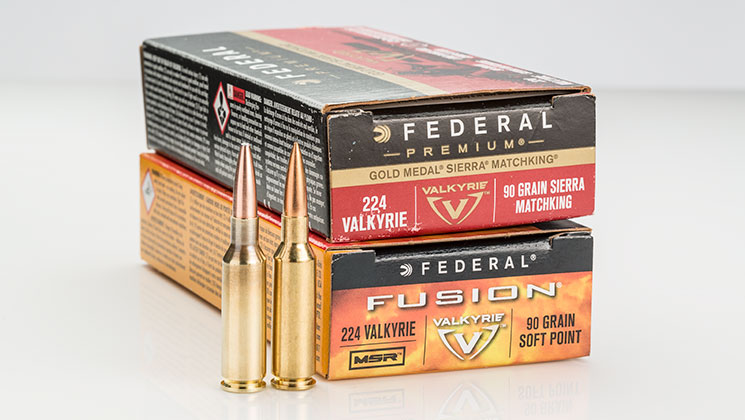
The list of advantages held by the .224 Valkyrie start with ballistic performance that’s more like the .22-250 Rem. than the .223 Rem. Yet the .224 Valkyrie doesn’t suffer the .22-250’s shortcomings, such as a propensity to be chambered in cumbersome rifles with long barrels utilizing slow twists. This gives the .224 Valkyrie—or more specifically the rifles chambered for it—the ability to shoot much heavier .224-caliber bullets quite well.
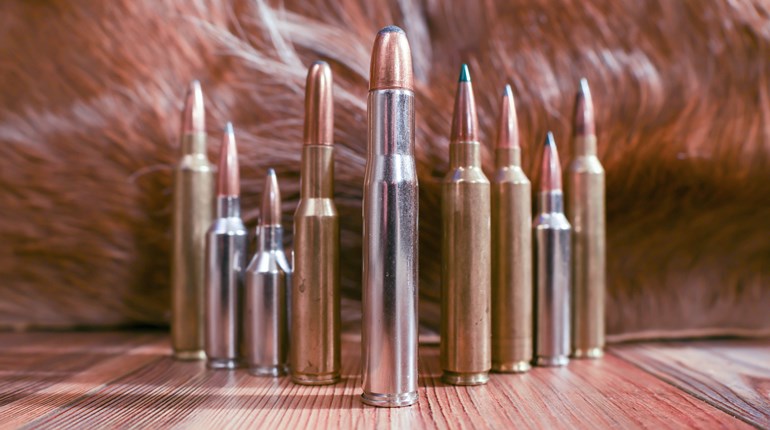
While the Valkyrie’s ballistics are similar to those of the classic .22-250, the more obvious comparison is to Nosler’s own .22-caliber offering. The .224 Valkyrie and the .22 Nosler are similar in size, but a key difference is the Nosler variant uses proprietary brass. Nosler is the sole supplier of brass and can only provide so much product to meet demand, so it may be somewhat difficult to find .22 Nosler ammo on store shelves. The .224 Valkyrie is based on the far more common 6.8mm Rem. SPC case, essentially necked down to hold .224-caliber bullets. While 6.8 SPC brass isn’t as common as .223 Rem. brass, it’s far more prevalent than the Nosler one-offs. Factory ammo shouldn’t be difficult to find, and handloaders will have many more components available to them. In a worst-case scenario, .224 Valkyrie cases can be made from 6.8 SPC brass in four steps, though commercial brass from Federal is available.
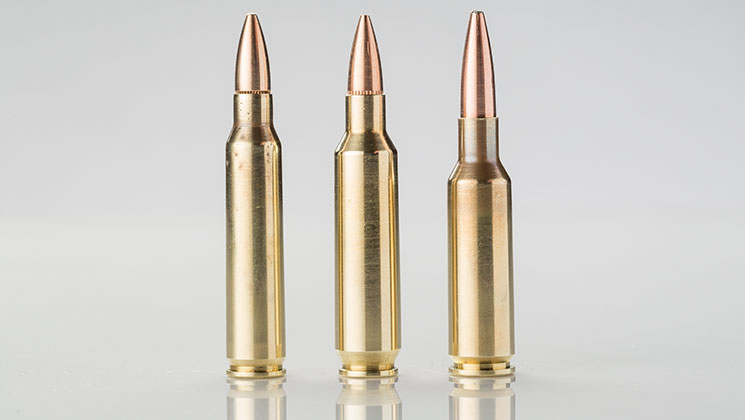
There are other benefits to the .224 Valkyrie aside from the availability and component standpoints. The cartridge feeds from a 6.8 SPC magazine and requires a 6.8 SPC bolt—parts that are common and easy to place in an AR-15. Other aspects of the case design make the round desirable, too. Measuring 1.6 inches long, the .224 Valkyrie case is .16 inch shorter than both the .223 Rem. and the .22 Nosler. Yet, the .224 Valkyrie case’s extra neck length of .025 inch allows for more flexibility in bullet lengths and changes in seating depth. This aids in fine-tuning loads and allows for more bullet weight options while keeping the jump to the lands minimal. The .224 Valkyrie willingly accepts long, heavy bullets with high ballistic coefficients, while keeping overall cartridge length within the dimensional limitations imposed by the AR-15 magazine. Most case dimensions are very similar to the 6.8 SPC, including body taper, so magazine capacity is not inhibited in any way. Federal recommends a 1:7-inch twist rate to stabilize the 60- to 90-grain bullets typically loaded in the cartridge.
The case’s water capacity is 31.6 grains when filled to the top of the neck. This places .224 Valkyrie case capacity at just slightly more than the .223 Rem. (30.7 grains of water at the top of the neck) but well below the .22 Nosler (36.8 grains of water at the top of the neck). The .224 Valkyrie is an efficient performer by delivering velocities similar to the .22 Nosler, while using charges closer to the .223 Rem.
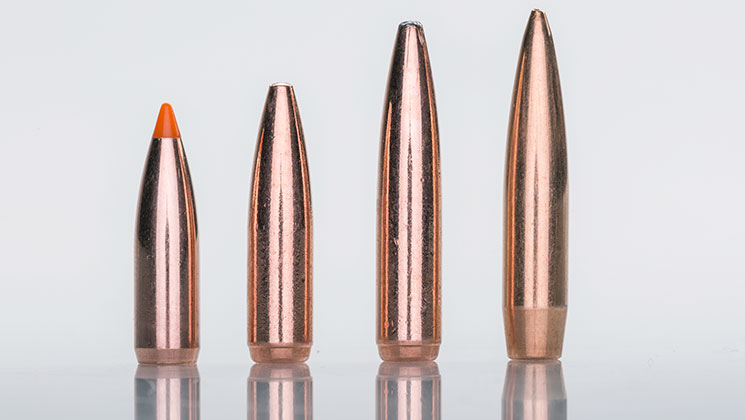
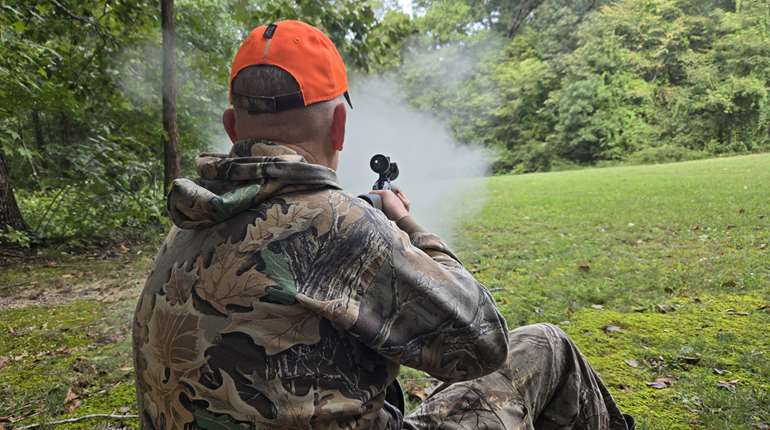
Federal says its .224 Valkyrie 90-grain factory loads, one with a Fusion soft-point bullet and the other with a Sierra MatchKing, reach muzzle velocities of 2700 fps from a 24-inch barrel. I used a rifle with a shorter, 18-inch barrel while on a predator hunt in Texas, and out of that barrel, both bullets chronographed only 20-30 fps slower than factory claims. While I wasn’t able to test Federal’s claim of the 90-grain match round remaining supersonic out to 1,300 yards, I regularly pounded steel at 400, which is plenty far enough for me. The performance of the round was impressive, but even more surprisingly, the cartridge produced so little recoil I could trigger accurate follow-up shots very quickly, placing consecutive hits on those steel targets with ease. The round shot flat, and that was after losing 25 percent of the barrel length needed to really push the bullets to their peak-performing velocities. As for the 90-grain Federal Fusion ammo, I can attest to what it will do to coyotes as well as feral pigs: With proper shot placement, they won’t take a step.
As this issue went to press, Savage Arms was offering four versions of its MSR 15 chambered for the .224 Valkyrie. In addition, CMMG had complete ARs and upper assemblies, while JP Enterprises had barrels. By the time you read this, other manufacturers likely will have joined the list.
The new .224 Valkyrie has proven its value to me both in the field and on the range. Although it’s impossible for me to predict how other hunters will respond, I think this is one AR-15 cartridge that’s here to stay.
Technical Specifications
• Caliber: .224
• Bullet: 60-gr. Nosler Ballistic Tip, 75-gr. American Eagle TMJ, 90-gr. Fusion SP (tested), 90-gr. Sierra MatchKing (tested)
• Ballistic Coefficient: .450 (90-gr. Fusion SP), .563 (90-gr. Sierra MatchKing)
• Muzzle Velocity: 2700 fps (advertised w/24″ barrel, 90-gr. bullet)
• Muzzle Energy: 1,457 ft.-lbs. (advertised w/90-gr. bullet)
• MSRP: $13.95-$31.95 per 20-rnd. box; federalpremium.com