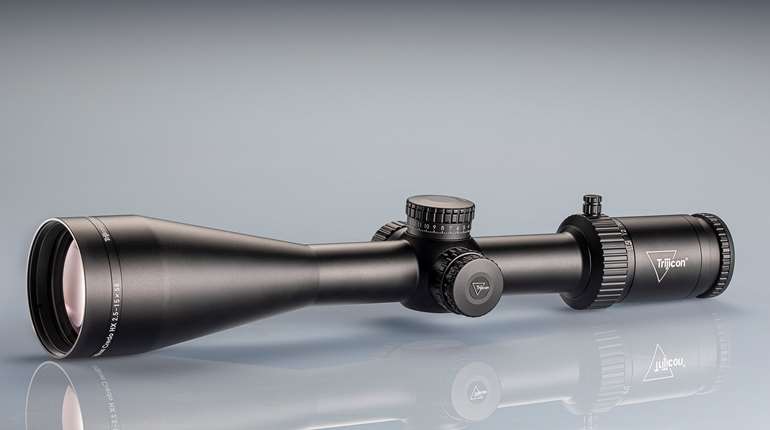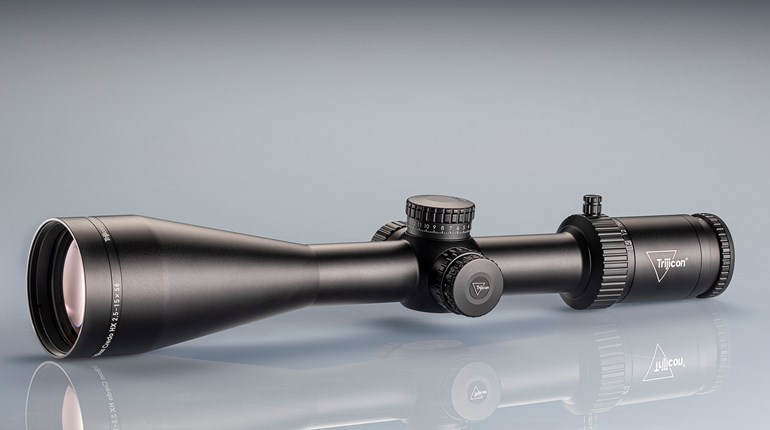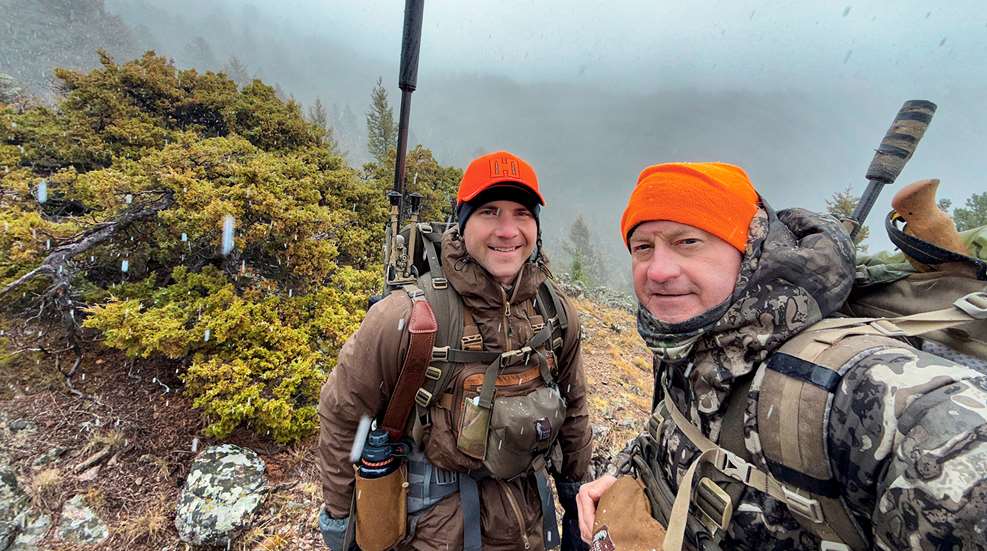
At shooting light, I’d turned on the lighted reticle of my riflescope only to discover its get-up-and-go had got up and went, so I fumbled for the spares I kept in my warm pocket. Then, numb from teen temperatures driven to single digits by winds blasting beyond 40 mph and driving snow, my exposed frozen fingers fumbled the nickel-sized lithium battery, as my son, Cole, kept watch for any elk escaping the basin during the surprise blizzard that worked overtime to obscure our view.
We were halfway through our family-style elk hunt. Cole had flown from North Carolina where he and his wife lived with their growing family while providing for our nation’s security via roles at the U.S. Army’s post at Fort Bragg. Escaping for a week was undoubtedly a break from the hecticness of the East Coast lifestyle and North Carolina’s 10 million-plus population (shocking for a Wyoming boy). More than that, the trip was planned to fill his family’s freezer. He flew to Wyoming with a truck already rented to drive home and fingers crossed, toting coolers stacked with elk meat. Worryingly, we had only seen one elk, miles away through a spotting scope. Except for one vertical park that held a hint of bull activity, elk clues were as elusive as those left by the hide-and-seek champion Bigfoot.
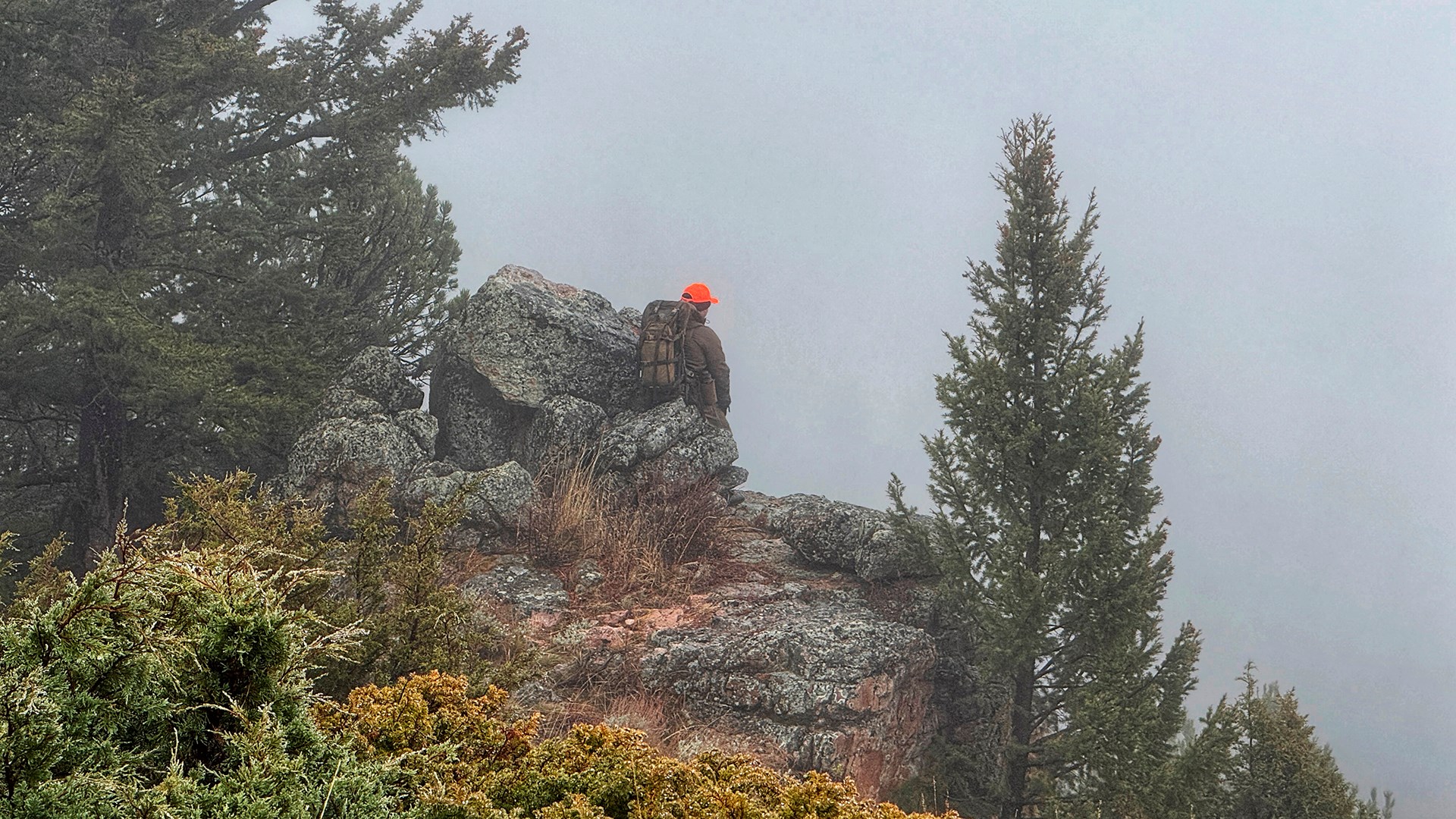 By the midpoint of the hunt the father-son duo had seen only one elk, miles away through a spotting scope. Bad weather continued to obscure their vision. Would they find any elk, let alone two to shoot?
The new, toasty warm batteries did the trick as my lighted reticle glowed bright in the scope. Now, between shivers, we hatched a plan.
“Do you want to go high in the basin or low?” I asked. Cole said he would go high, hunting between stands of pines leading him to a band of timber elk often used to bed while escaping weather and hunting pressure. I’d go low, following a creekside slope the elk often used to access another dark timber hideout guarded by beetle-killed deadfall roadblocks every few yards. With communication systems confirmed, we set noon and a rock pile we often used as a glassing vantage point as a time and place for a rally point.
Marching into the fresh snow with a creek crossing imminent, I almost tripped over the sight in front of me. Fresh elk tracks! Although the tracks were windswept and filling fast, I knew they were from this morning, and I confirmed that as I edged into the dark timber where wind was blocked and tracks stood out with morning crispness. Was I about to get the break I needed to fill Cole’s freezer or lose the bulls in the vertical slopes ahead that was likely their waypoint ending for the day?
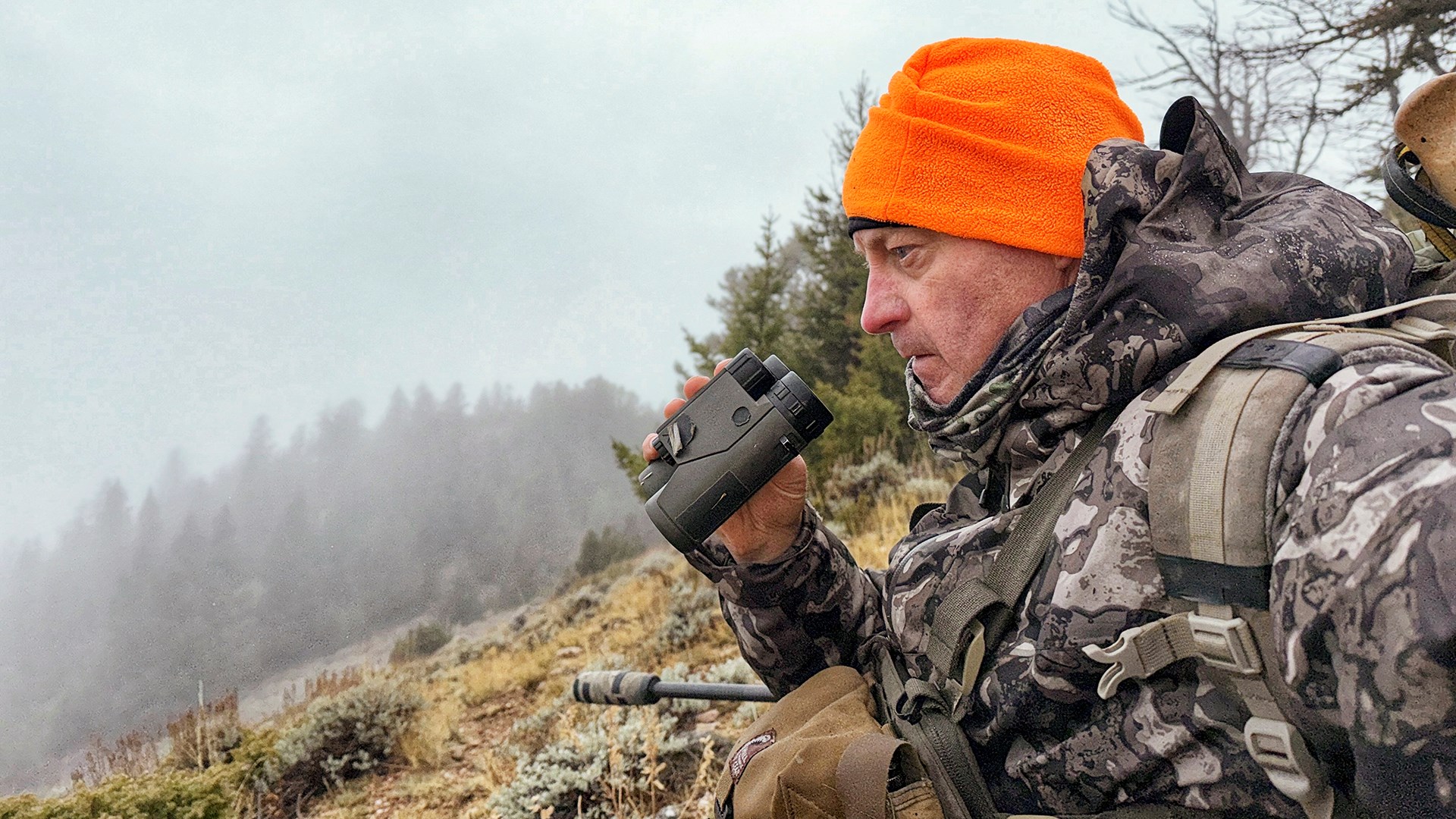
Leave the Crowd Behind
Common sense emphasizes that elk avoid hunting pressure, and although we would hunt the opener, for up to a week earlier, camps were being set up, ATVs buzzed the trail system and the woods permeated with the smell of campfires from dozens of elk camps scattered across the unit. The night before the season I hedged a bet where I’d gambled the previous season on catching elk in an open valley before the opening volley. It worked then, and led to a day of deboning and packing on one of my best Wyoming bulls to date. The location was well known, but hunters often avoided it due to the long hike and nocturnal habits of the elk using it. Over several seasons the valley gave up three mature bulls to me, however, all were shot within minutes of shooting light as elk were quickly exiting in the pre-sunrise dimness. Going under cover of darkness early in the hunt paid off for two bulls, and revisiting the area 10 days into the season at dawn after other hunters left panned out for a third mature bull. The early bird gets the worm, and patience is a virtue. Elk strategies to note.
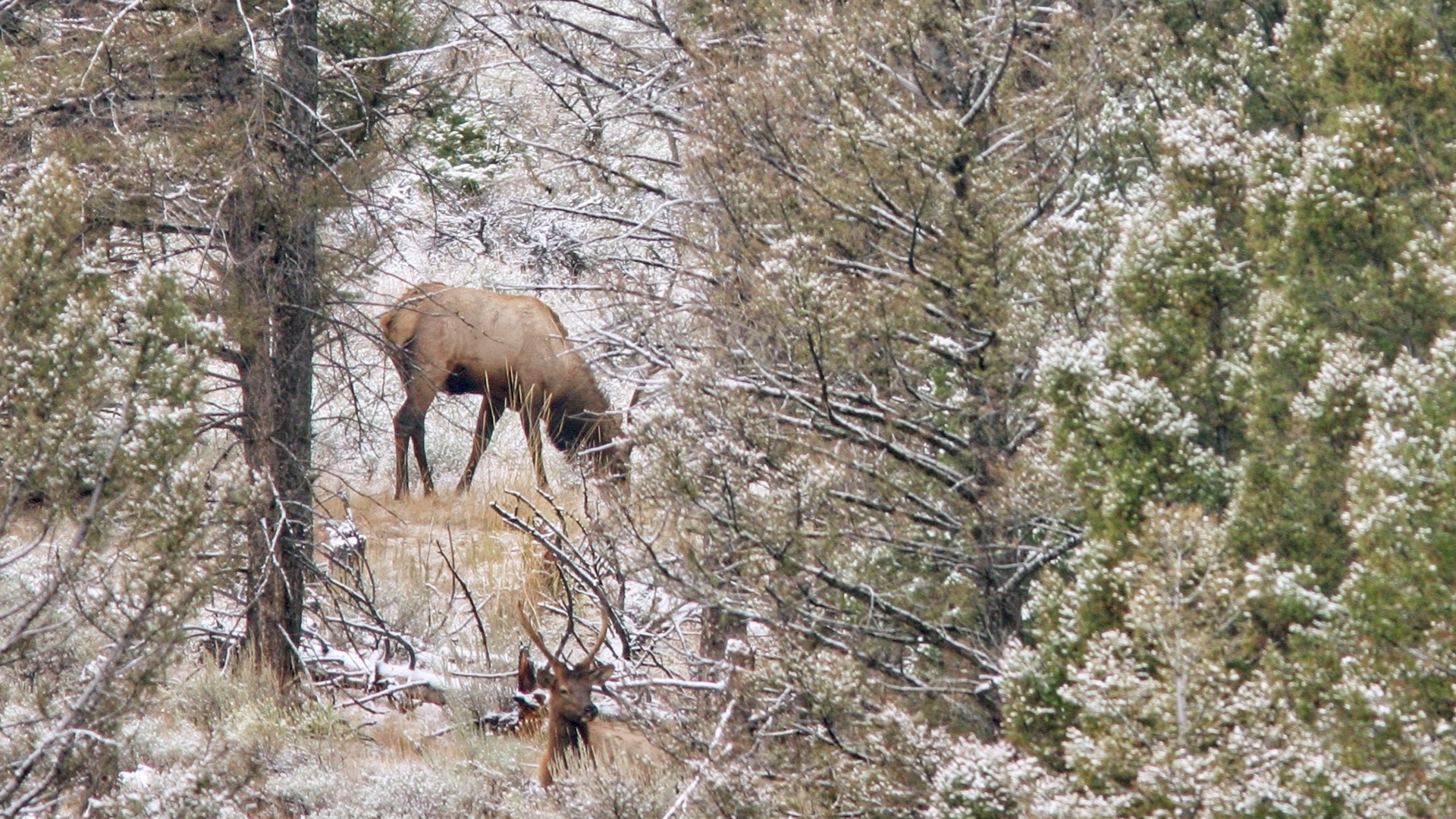
Cole and I made the hike under complete darkness with no obvious flashlight visuals following us or bouncing ahead. Once settled on a rocky plateau, we adjusted our rifles on bipods and catnapped until shooting light. Unfortunately, there would be no replay as the valley was ominously empty. Still-hunting up the valley, we soon ascertained elk had not been using the hideout as there was no fresh sign. At shooting light, it was obvious not only were there no hunters in the area but the valley was also devoid of elk. Climbing high into a rocky precipice, we found unlimited views for miles and saw two specks of distant orange but, again, no elk. Our hunting discontentment was uplifted a bit when I dug a vintage Coors Banquet beer can from a rocky crevice that sported the old-style triangular opening from an antiquated beer can opener. Someone celebrated elk success—or drowned their elk sorrows—from the rock pile prior to the early 1960s.
As noon approached, I suggested Cole drop 1,000 feet in elevation and scout another ridge and slope that elk routinely used in the area while I ascended higher to investigate a section of timber elk periodically retreated to at first light. We’d convene at a lower trailhead at dark.
My reconnoiter revealed several moose tracks and only one old set of bull elk tracks in the canopy-protected snow. Cole fared a bit better as he described his findings bouncing down the trail in our warm side-by-side: “The ridge didn’t hold any new sign, but when I hiked down to the open slope, I could smell elk immediately and found fresh droppings, plus tracks.”
Knowing the elk rarely exposed themselves for long on that slope, I hatched a plan to rise early and hike in the dark to a rock pile I knew well after sniping two bulls from its natural benchrest qualities.
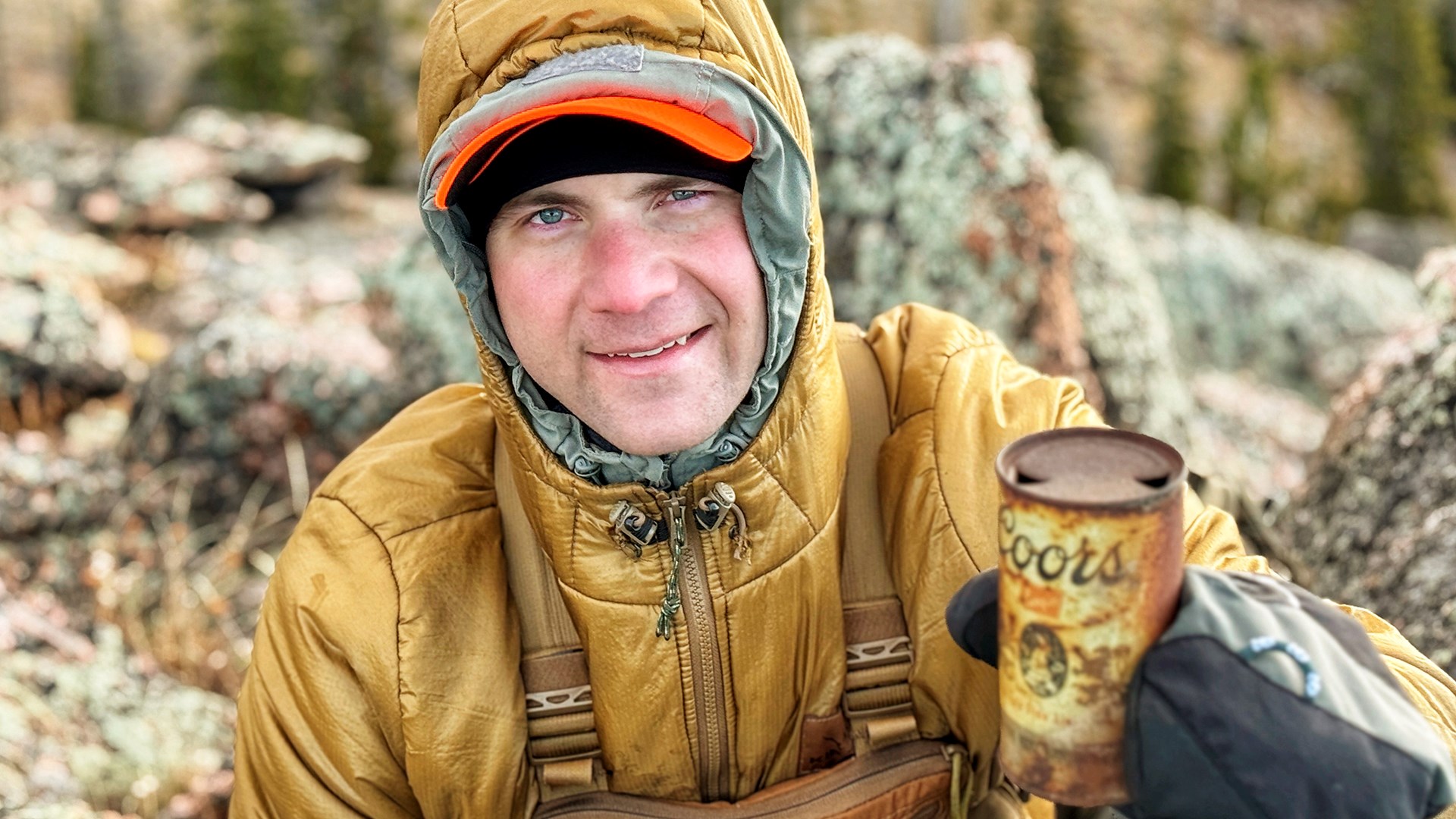 A can of Coors Banquet beer enjoyed in the backcountry thanks to a can opener indicated another elk hunter had celebrated success here sometime in the early 1960s.
Survive Hypothermia
“We’re definitely not on the trail any longer,” I expressed between labored breaths as Cole and I bushwhacked through stands of doghair-dense pines with only our headlamps to illuminate the point-blank landscape. We were sopping from the rain-soaked and dripping limbs of the pines, not to mention our own sweat from a laborious hike that suddenly turned into a grueling backcountry ironman event to scale 1,500 feet before shooting light.
Somehow, we reached the familiar rocky perch before shooting light and added puffy layers to ward off the certainty of shivers hinting of possible hypothermia. Once kitted up, we crawled to the rock and peered into the predawn for signs of tan bodies above. After 30 minutes at the no-show venue, we dropped down the rocky slope to peek into another opening below. I suggested Cole keep watch here and I’d return to the sniper rock pile in case a straggler crossed the high slope. Then it began to rain … again. As seasoned veterans of near hypothermia, we had already donned our raingear to capture heat escaping from traditional layers so only our hearing was affected by the pelting raindrops hitting our heads.
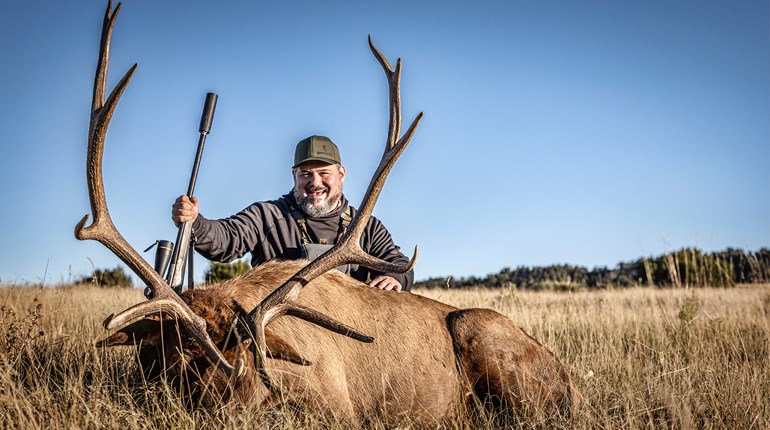
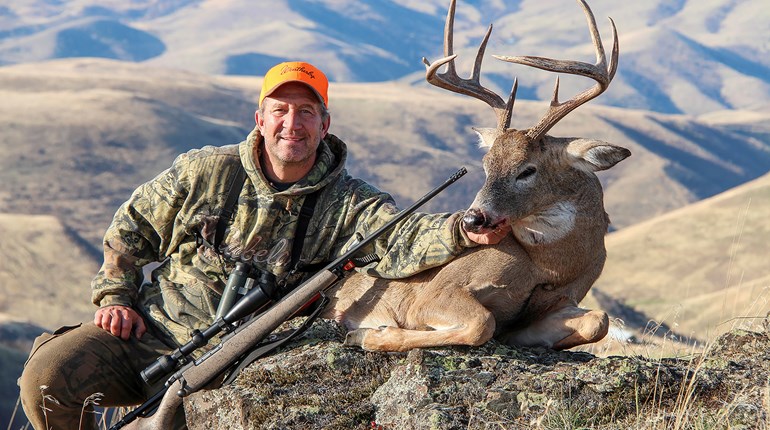
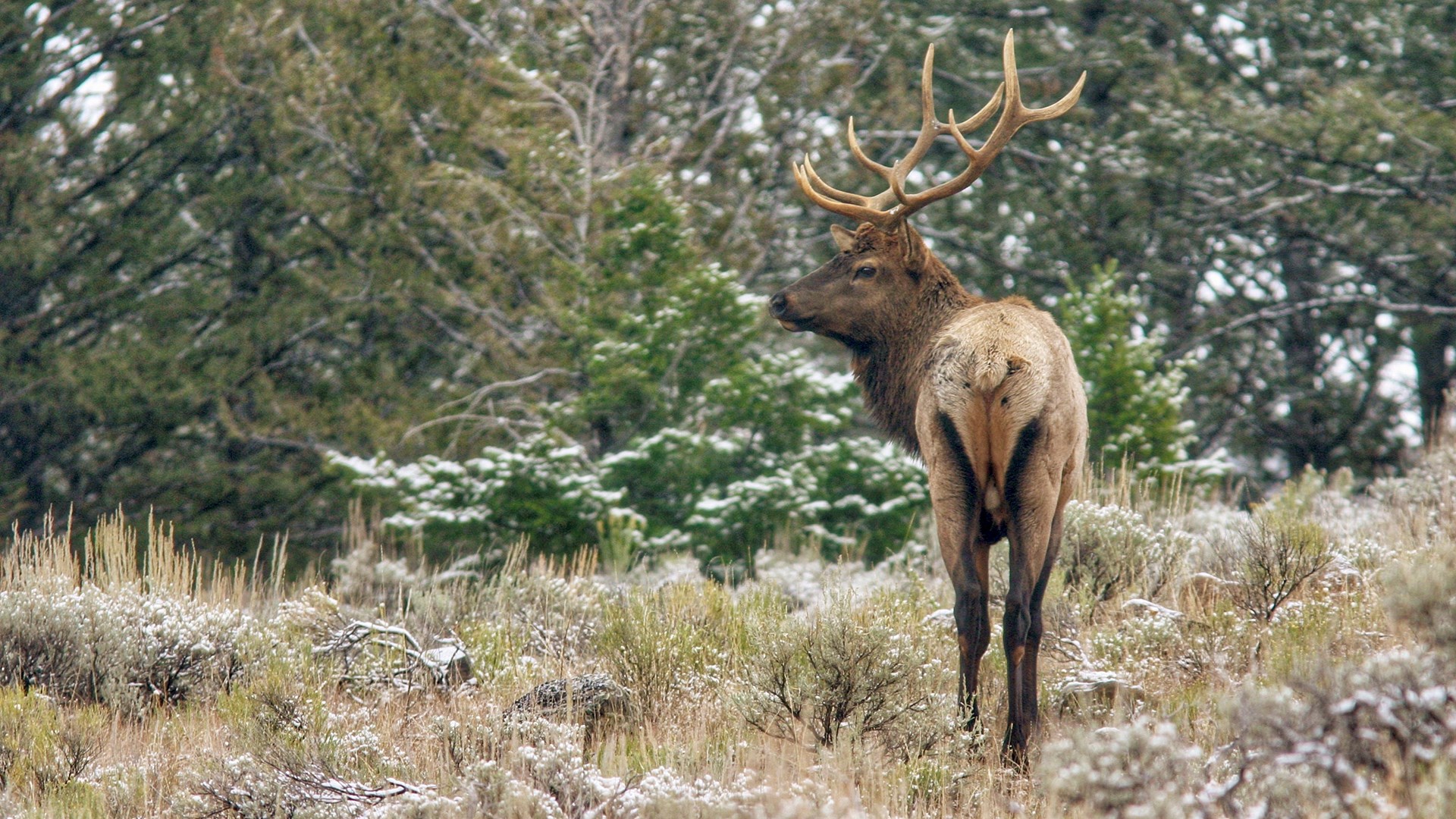 As Kayser navigated through deadfall he noticed four bulls ahead—none were great ... but this was a meat hunt! He stopped second-guessing and got to shooting, and dropped one at 52 yards.
That only lasted an hour as at the high elevation where we posted the rain soon turned to snow boosted by an influencing cold front. Big flakes whisked by our faces, decreasing visibility to just a couple hundred yards and, again, our bodies fought against hypothermia. But still we kept our watch. We knew elk had visited the slope again due to fresh sign. Unfortunately, it appeared all nocturnal. The elk were diving into adjacent canyons strewn with deadfall in the dark timber. Entering the vertical sanctuaries added up to a small chance of success, plus possibly blowing them out of the country. We had a few days, so a wait-and-see approach for them to mess up with a delayed dawn departure or pre-dusk showing held the best promise. My early hunting career focused on whitetails, so patience directs many of my hunting strategies from elk to coyotes and everything in between. If a targeted species does not show halfway through the hunt then you still maintain a window to get aggressive and boldly make it happen.
As the snow increased along with our shivering, we called it a day and hiked out slowly with darkness shrouding our descent. Camp never looked so good as we strung our wet gear and boots on every possible hanger to dry important items before another early-morning departure.
The next couple of days were spent hopscotching between the sniper rock pile and new areas for a look-see to find elk clues. Nothing positive stood out, and we once again sat in camp munching on cold pizza and fried chicken. The generator hummed out the warmth of electric heaters for a cozy atmosphere in our old horse trailer camp as our thoughts wandered.
“Let’s try the high valley again,” Cole quietly offered between bites of dinner. “It’s been a few days, and elk may have moved in there since the snow is not deep, and hunting pressure could have moved them farther away from the ATV trails.” I agreed, and we set our alarms for extra-early again. The side-by-side ascent would take approximately an hour followed by another hour and a half of hiking to make the main valley before dawn. One last check of the forecast indicated a chance for overnight snow. Regardless, we agreed on the morning hunt. High it would be!
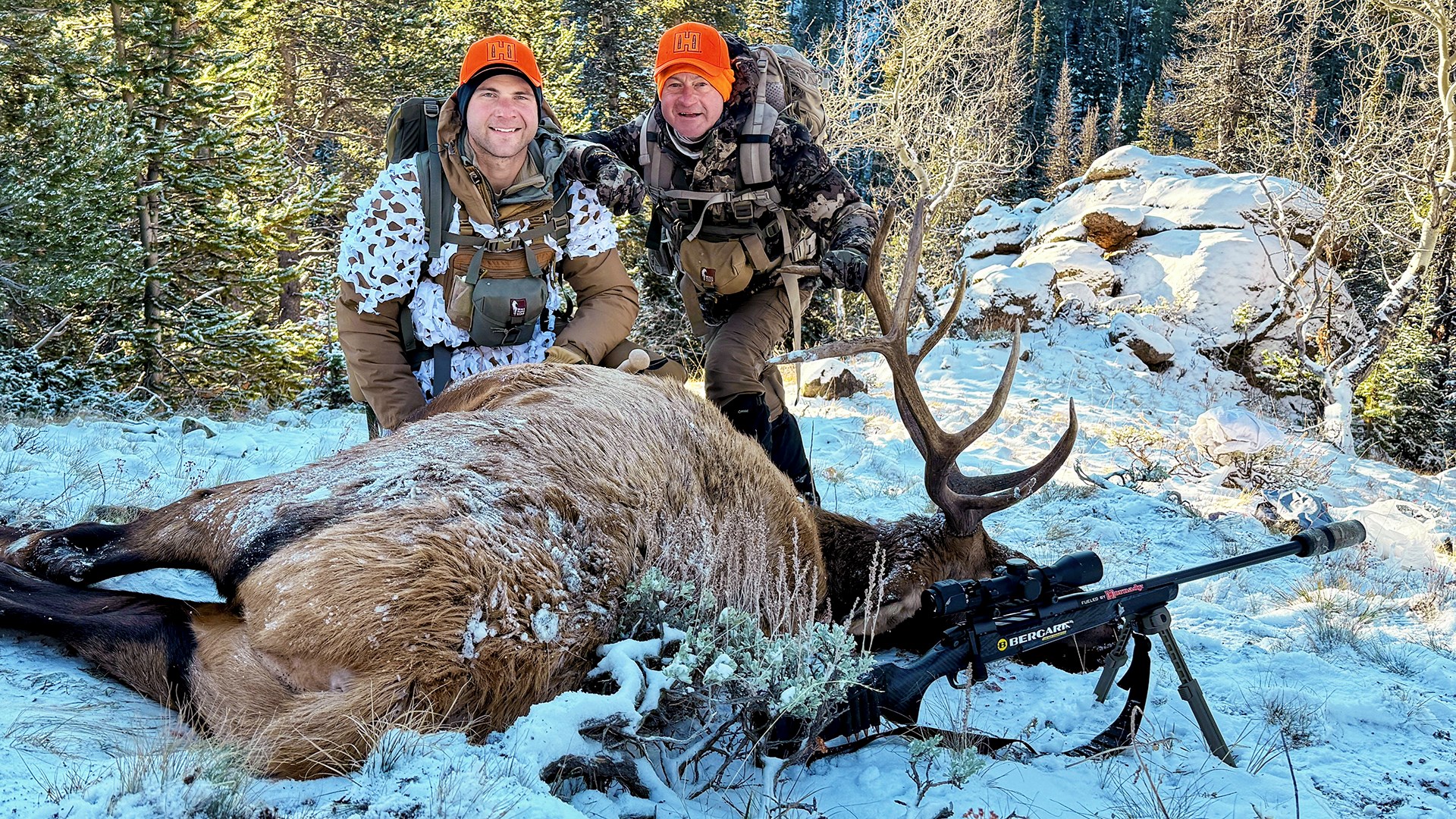
Finally, Success!
Despite the stinging blizzard conditions, I stumbled upon fresh elk tracks. The meandering tracks revealed three or four elk, and I knew a group of this size was likely bulls. Regrettably, they were moving away from Cole’s position and into dark timber that led to a slope so vertical that ski slope developers would take a second look, then walk away for the wreckage of deadfall clogging up the forest. My hope was the elk would choose the milder slope in the initial advance into the timber for a rest stop and not jog to the timber waste abomination beyond. Nevertheless, a tangle of deadfall lay dead ahead. Even on the gentler slope I’d be straddling logs for much of the hike.
Once I entered the timber I fell into whitetail mode, still-hunting with purpose at the pace most tortoises could overtake. Every three to four steps I’d stop, lift my binocular and intently and slowly scan the woods in a 180-degree or more sweep. After the scan and another brief pause, the slow-motion advance would resume.
Approximately 20 minutes into the tortoise-pace hunt, a trio of deadfall snags blocked my course. As I slowly sized up possible routes out of the tangle, an odd color appeared ahead through the puzzle of branches. I lifted my binocular slowly and the tan color transformed into the body of an elk … a bull elk! Timber blocked my view to the right although I knew another elk was there as the motions indicated sparring. Soon two more bulls appeared in the backdrop and a total of four moved in and out of view.
All were younger bulls, and I knew with enough time in this area a mature bull would surely show. Nonetheless, we were at the midpoint of the hunt, and I wanted Cole to be able to return home with fresh, natural meat from Wyoming. That meat source was 52 yards away and broadside. I quit thinking and started doing.
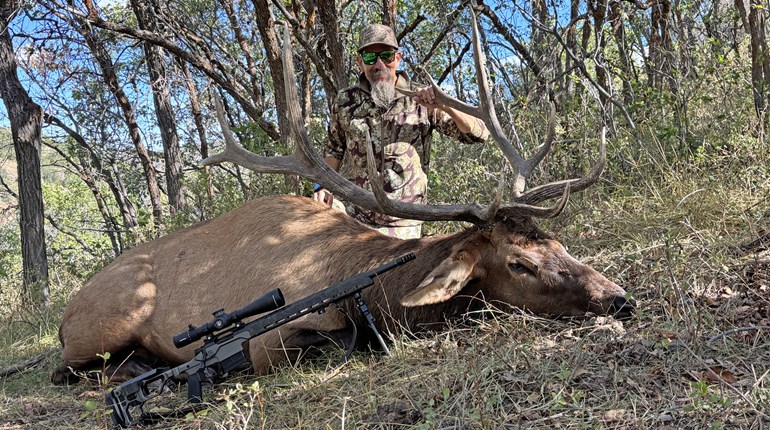
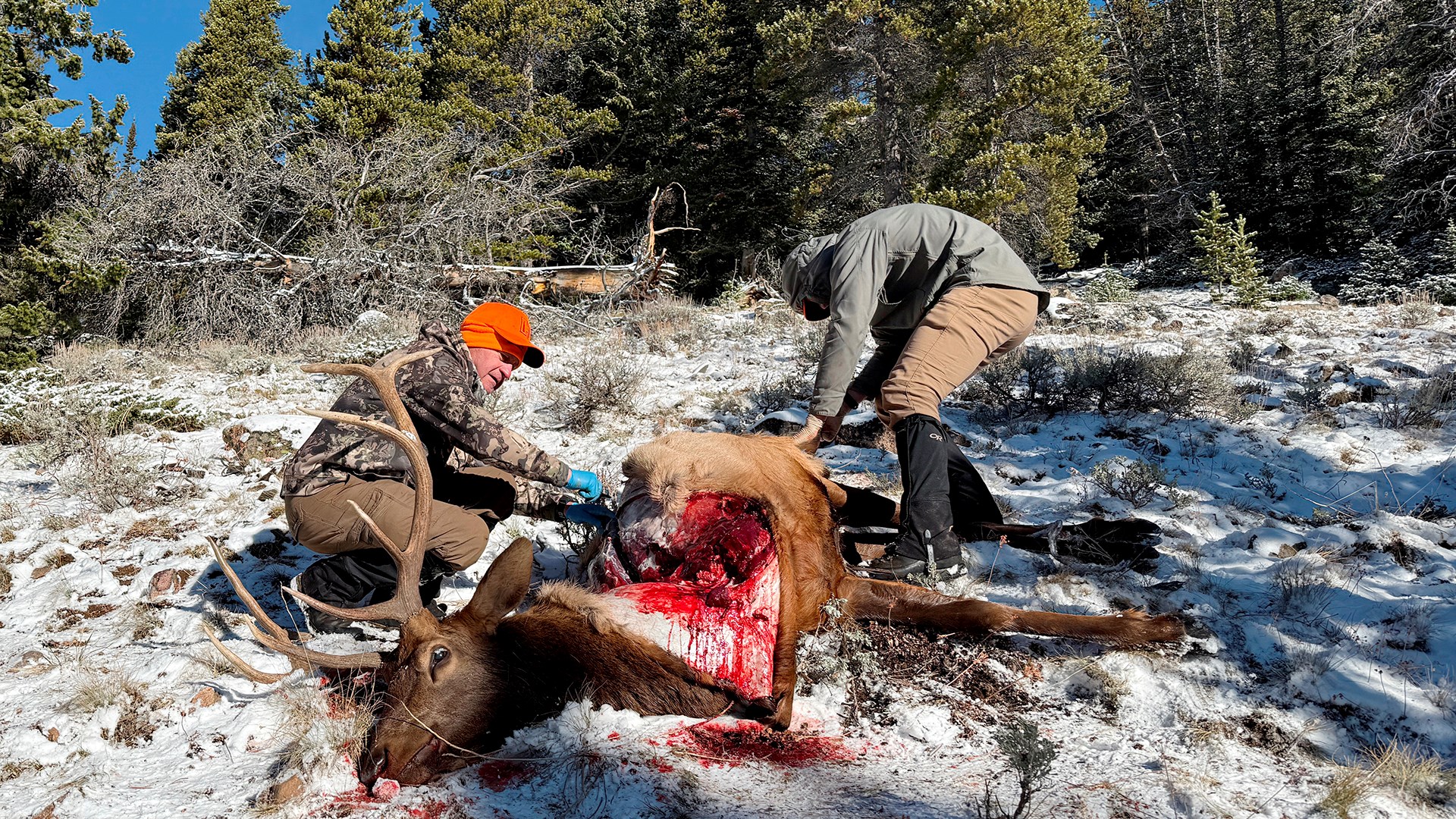 The author’s bull died in the most beautiful setting for field-dressing, one of the few openings in deadfall that offered elbow room and a view of Wyoming. Thereafter, 8 miles of roundtrip packing got the meat and antlers back to camp by sunset.
Slowly lifting my lightweight Bergara Cima to my shoulder, I settled the reticle on the nearest bull, by chance the biggest, and fired. The 180-grain Hornady CX rocked the bull, and the forest swallowed him up in a flash. Pausing for a moment to recoup my wits, I cycled a second cartridge and began to slowly weave through the downed timber. I was greeted by a dead bull in the most beautiful setting ever for field-dressing. Instead of dying in an entanglement of dead timber, he’d staggered into one of the few openings on the slope and expired a mere 20 yards from a cliff edge. And to top it off, I could see the vastness of Wyoming’s backcountry splendor through several openings in the timber.
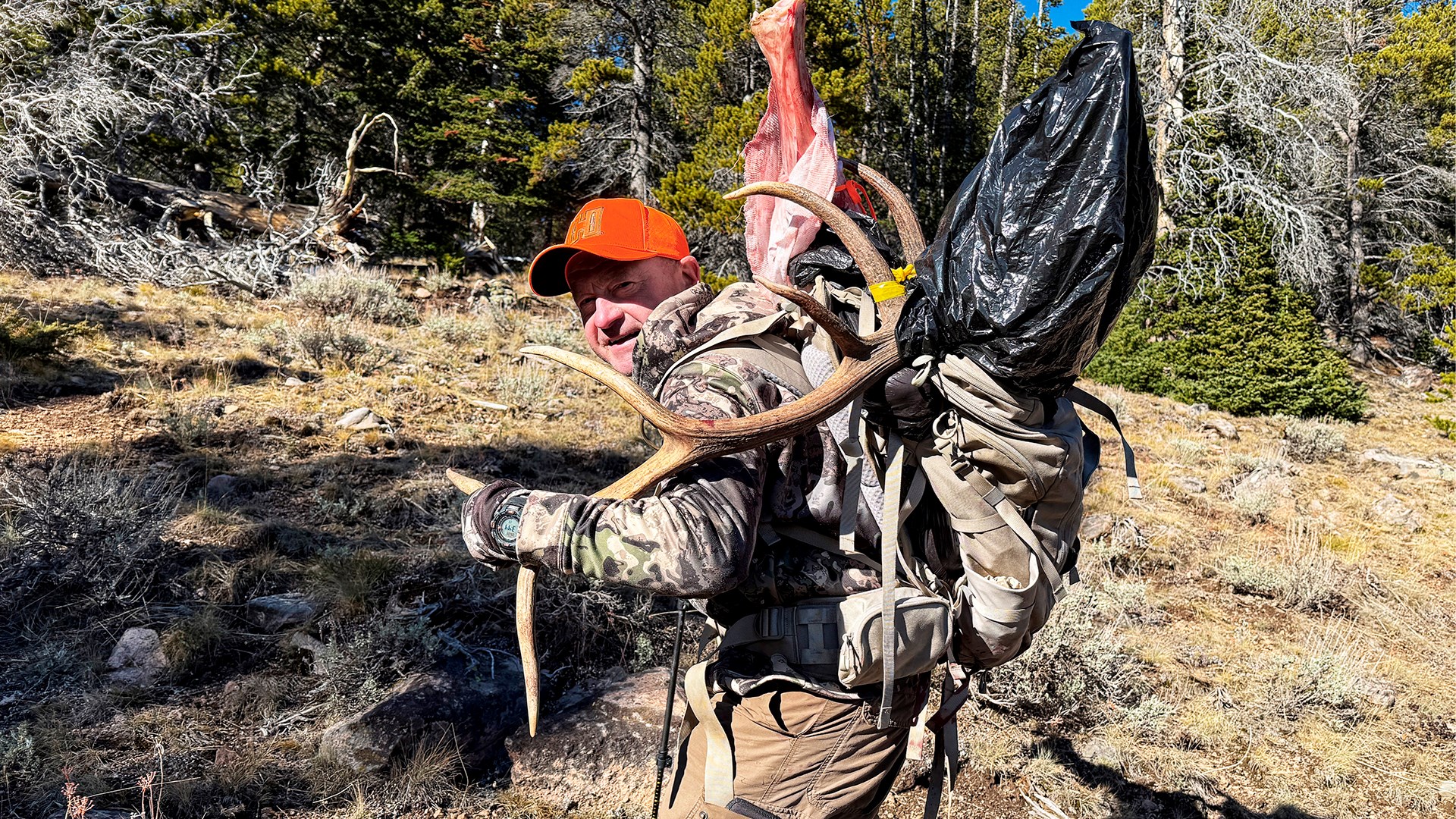
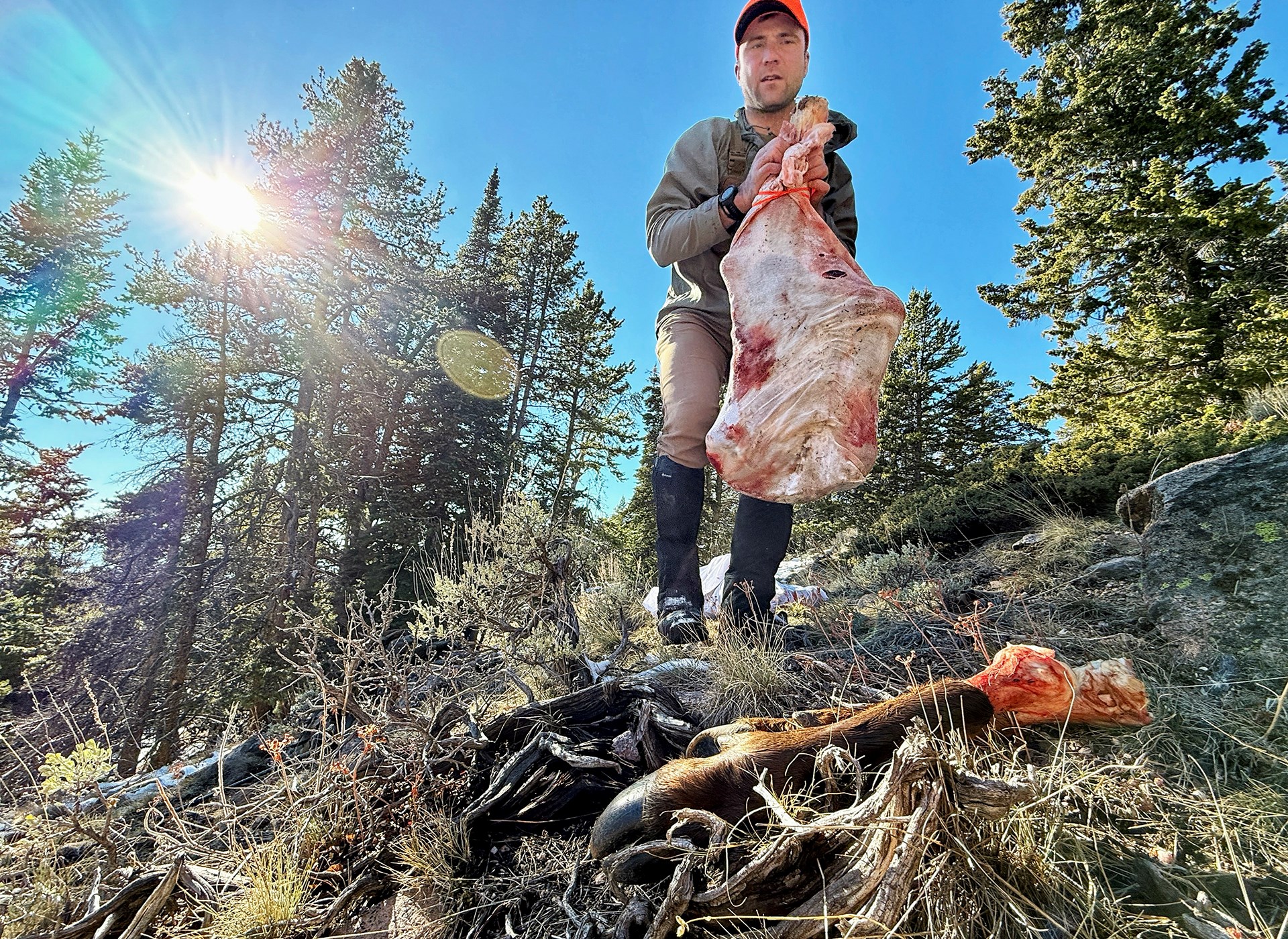
Cole arrived shortly after hearing the shot and we commenced to breaking down the bull. In more than a dozen years and more bulls than that, I have only had help with one other bull to prepare it for packing. Cole’s youthful energy made the breakdown and packing a breeze. Eight miles of roundtrip packing—two trips—led to a complete retrieval before sunset. Early in the dark the next morning Cole headed off for a chance to fill his tag. I headed to a meat processor two hours away to quickly process my bull for him to take back to the East Coast. But before I arrived at the meat processor Cole texted me: He had a bull down—but that’s another great story. All the same, our meat journey was complete for the year and cemented further the many reasons to be on the hunt, especially family-style!
* Would you like to see where Mark Kayser is hunting next? Follow along for more hunting tactics and adventures on Instagram @kaysermark and Facebook @markkayseroutdoors.
Tools of the Trade for Dark Timber Assaults
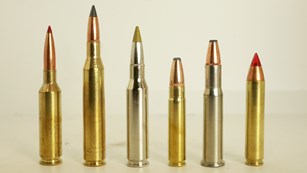
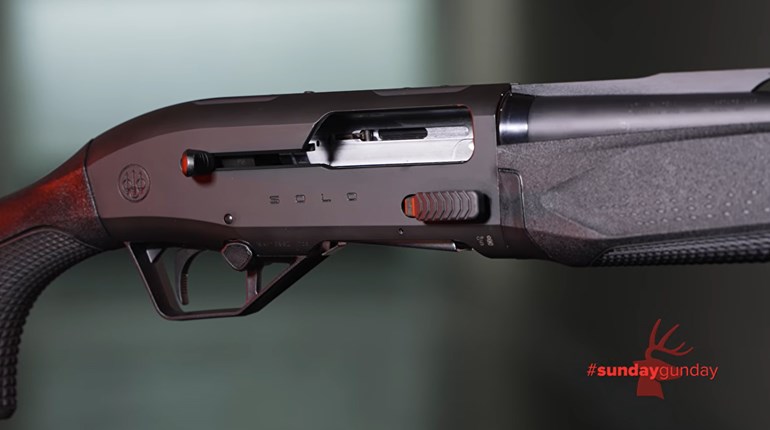
On this hunt I was testing the new Bergara Cima CF (carbon fiber). It weighs from 5.8 to 6.2 pounds, caliber dependent, and attributes its stylish figure to a carbon stock and the CURE barrel, a proprietary manufacturing process that weaves carbon and stainless steel together for a lightweight, yet rigid barrel. Hornady’s Outfitter Ammunition in .300 Winchester magnum fed the unit with accuracy. bergara.online/us/; hornady.com
In tight quarters of dark timber, scent control is a must. My shot was only 52 yards. I am convinced that laundering my hunting clothes, plus spraying down everything with Scent Killer Gold products helped erase my scent footprint in the woods. wildlife.com
Moving slowly through the timber equals heat loss as your body is not generating ample heat to ward off the chills. With snow on the ground and windchills galore, I wore my Muddy Outdoors DV8 Cyclone 3L rain jacket and pants to trap heat. It’s great for precipitation and to avoid hypothermia. gomuddy.com
I always keep a cow call around my neck to lure a bull from the shadows or quickly stall an escape from my blunder. Rocky Mountain Hunting Calls makes the perfect lightweight, open-reed call named Lil Flirt. rockymountainhuntingcalls.com
Lastly, when I dive into dark timber I carry a downloaded map of the area on my HuntStand Ultimate hunting app. It gives me a precise location, view of what’s ahead and many features to analyze the terrain ahead. huntstand.com