 Of the two, which would you rather do: shoot or clean your gun? If you answered the latter, go onto another article. Virtually all of us would prefer to send rounds downrange than perform the tedious but necessary chore of cleaning our guns. Of all the sub-chores in the cleaning process, removing bullet-metal fouling is the most tedious and ornery.
Bullet-metal fouling is the result of pushing a relatively soft metal (or metal cased) object down a relatively hard bore at high speed. Metal—lead from cast bullets or copper from jacketed bullets—is rubbed off the surface of the bullet and is left inside the barrel. The amount of fouling is directly proportionate to the speed of the bullet being driven. Fouling is a mechanical plating process; there are no chemical bonds that must be severed to remove it. Left uncleaned, fouling can destroy accuracy, and if left for a long time it can result in a pitted bore that will never shoot as well as it originally did and will constantly foul to an even greater degree.
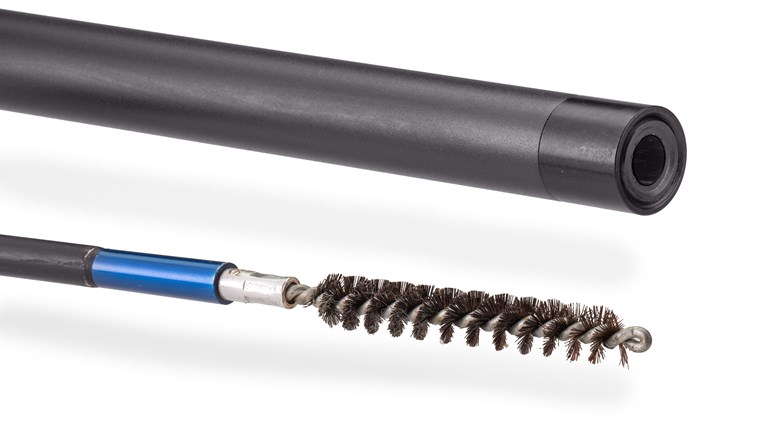
Lead fouling from cast or swaged lead bullets is most often removed by mechanical means—scrubbing. There are some cleaning compounds that assist this process by utilizing the capability of the compound to “crawl” between the lead and barrel, thus wetting both and serving as a lubricant during the scrubbing process. A time-honored method is to use a tight fitting piece of brass screen to scrape to barrel of the lead fouling. The Lewis Lead Remover is the most popular tool for this, and every magnum revolver shooter should have one. Brass is harder than lead, and the screen literally scrapes it from the bore. The brass screening is much softer than barrel steel and will not harm it. Combined with the modern lead solvents like Montana’s Cowboy, it makes this disagreeable task considerably shorter than it was in years’ past.
Copper or gilding-metal fouling is another matter. Depending upon the interior finish of the barrel, the speed of the bullet, the hardness of the jacket or bullet in the case of monolithic bullets and the rate of fire, copper fouling can be anything from a nasty inconvenience to a chore that would try the patience of Job. My experience, especially with cartridges that send their bullets downrange at 3,000 fps or more is that it leans toward the latter. Cleaning often takes hours instead of minutes and involves dozens of patches and pungent ammonia-based solvents, an accidental whiff of such can knock you to the floor. These solvents will find every fissure of skin in your fingers and make them feel as if they were on fire. It is a long and unpleasant chore, not so different from a requisite business dinner with your boss and his new wife who also happens to be a former girlfriend of yours.
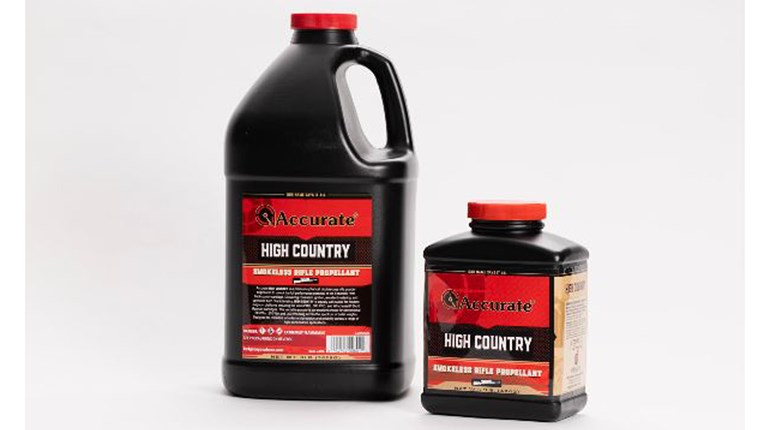
But modern technology has come to our rescue. Hodgdon has come out with a couple of powders—CFE 223 for rifles and CFE Pistol for handguns—that allows us to shoot more without the consequences of fouling, thereby considerably shortening the cleaning process. CFE stands for Copper Fouling Eraser. The additive is, of course, a proprietary secret and was developed for use in military small arms to minimize the fouling of weapons in the field. I have not seen any definitive research that claims that “X” amount or percentage is eliminated, however I have seen two identical barrels—one shot with more conventional powders and one with CFE 223—and there is clearly less fouling with the CFE 223 barrel. My own initial experience with CFE 223 has meant that cleaning time is reduced by more than 50 percent in both my AR barrels and a 26-inch .22-250 Remington barrel in my Savage LRPV rifle.
Velocities are at the top of these cartridges limits. In my 20-inch barreled AR I am getting 3,219 fps with a 55-grain Berger Varmint bullet. That is with a SureFire FK223 suppressor attached. In the Savage the same bullet is clocking 3,978 fps. Terminal performance on varmints like prairie dogs or ground squirrels is—as one might expect—spectacular. Accuracy is on par with more conventional powders. Because the CFE powders are small-grained, spherical powders they meter very consistently through a volumetric powder measure.
Because its performance has been so positive and its consistent metering shortens the time to load several hundred rounds, combined with the substantially shorter time it takes to clean a barrel after a day of shooting CFE 223 has earned a prominent place in my powder supply. It will be one of the first powders I’ll try in any new .223 or .22-250 Remington I might acquire. I might even resurrect an old .204 Ruger that historically gave me fits with fouling and see whether it can have a new life. Now my friend Chris Hodgdon, please see if you can do the same for magnum rifle powders like those we use in the .300 Win. Mag.