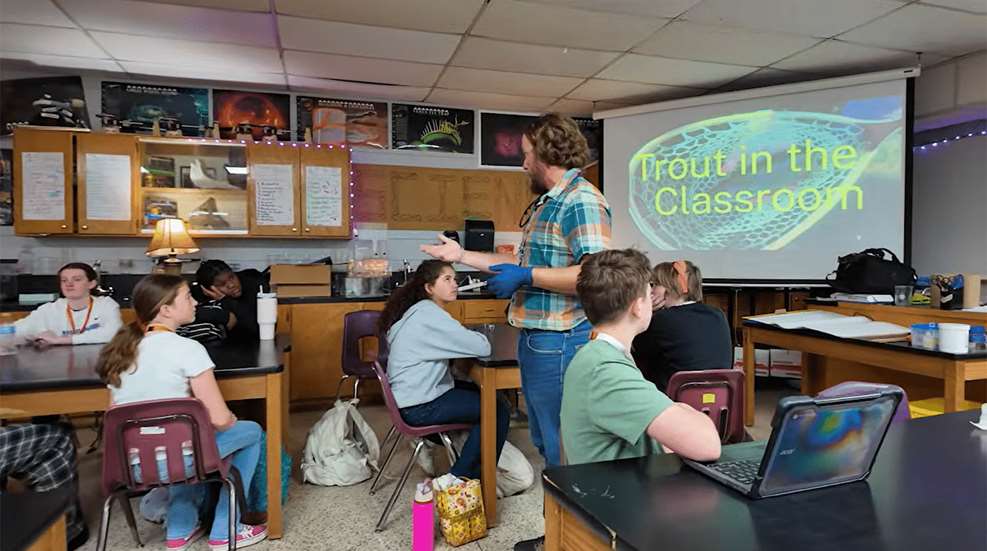
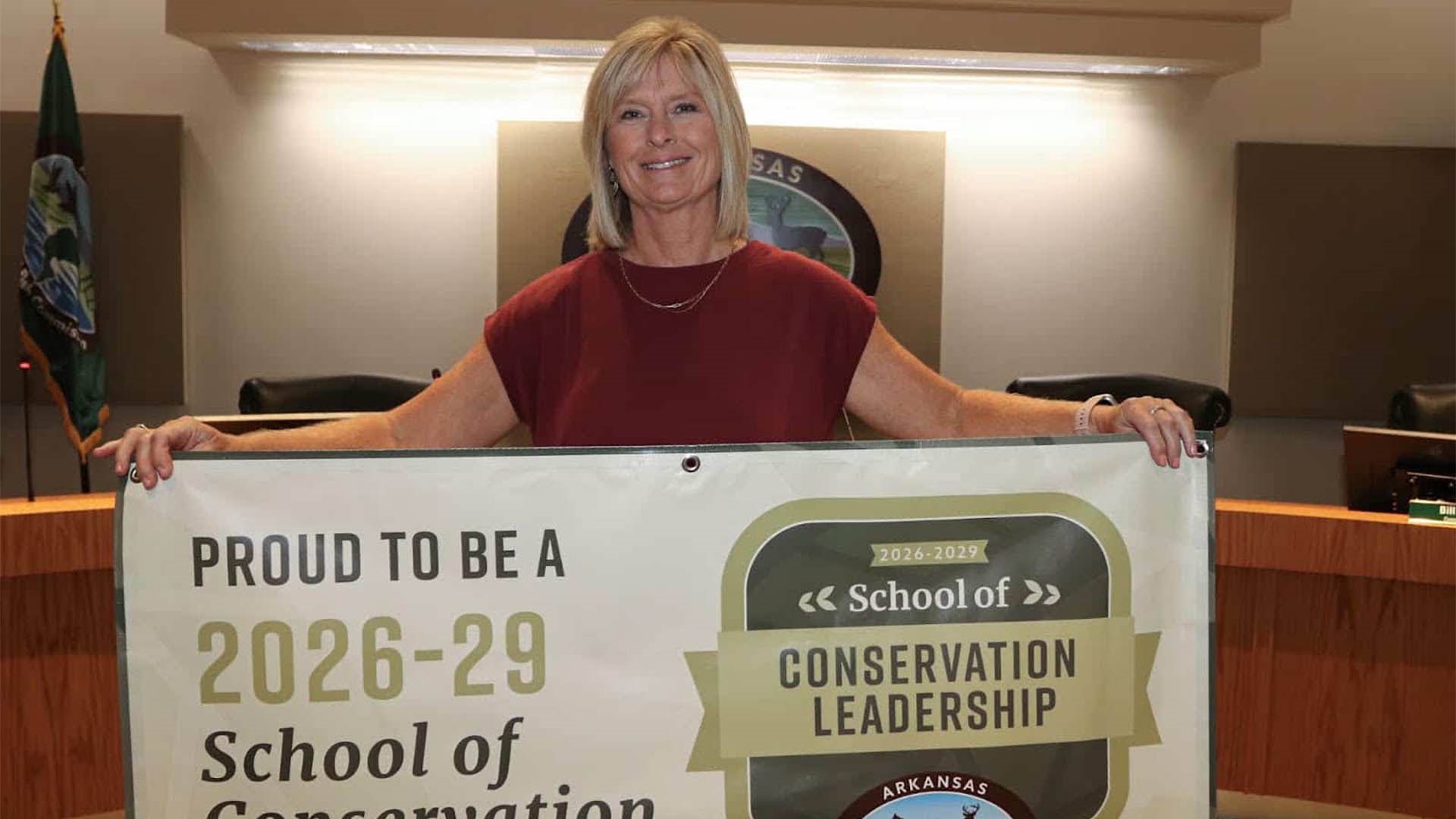
True outdoor curriculum is being offered to thousands of students in Arkansas, thanks to rededicated efforts under the Arkansas Game and Fish Commission’s (AGFC) outdoor education partnership with the Arkansas Governor’s Office and Arkansas Department of Education. Thirty-one schools in the state, ranging from Pre-K to 12th grade, have been designated as a School of Conservation Leadership for 2026-29.
“Every single grade level earned a designation,” said Derek Ratchford, AGFC outdoor education initiative manager. “It proves conservation education has a place no matter how old they are, no matter what types of learning environments, no matter what types of classes you offer. It fits, it’s impactful and it matters.”
In the first year for achieving School of Conservation Education designation, 21 schools went through the program. The program drew interest from 65 schools, with 56 reaching the site-visit stage. From that, 31 achieved the designation.
“What I often get asked,” Ratchford said, “what about the ones that didn’t (receive designation)? The reality is, they all built a very strong foundation of conservation education that only needs to be grown. They’ve built something special that we’re going to continue supporting as they continue trying to build it. They’re not going away.”
The program grew in one year from nine counties represented to 25 of Arkansas’ 75 counties in 2025-26. Each region of the state produced new designees. Every type of school—from virtual to public, private or charter—was represented. The biggest story is that Arkansas went from not having a conservation education program two years ago to one that now impacts 33,709 students.
“We continue to work with groups and organizations, colleges even out of state, that say ‘I did a little research and a little looking at it, and I don’t see any other states doing this,’” said Mary Beth Hatch, AGFC chief of education. “They’re not. It’s not just a brag, but there truly are no other states in the United States of America that are being this intentional when it comes to conservation and outdoor recreation in the K-12 education system.”
Access to outdoor recreation costs money, and the program receives funds through the Arkansas Game and Fish Foundation, the sale of conservation license plates and from the state’s conservation sales tax, which allows the agency to provide experiences, equipment and supplies at little or no cost to the schools. “We want to remove as many barriers as we can to outdoor recreation and conservation education,” Hatch said.