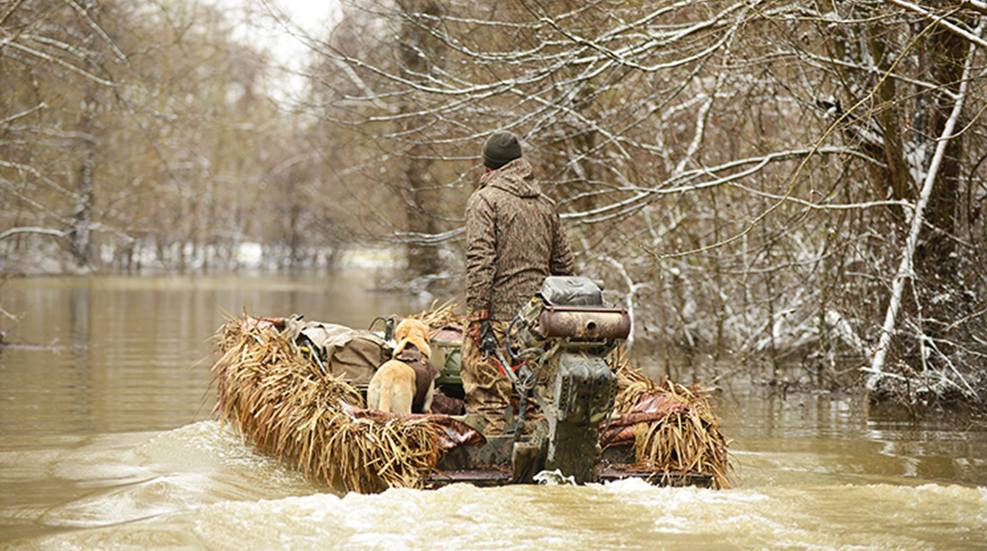
Duck hunting is easy. Just be in the right location, at the right time, with the right wind, the right light and the perfect hide, and everything falls into place. The birds glide into the decoys at less than twenty yards. Shooting is perfect, the dog makes every retrieve, and the limits are reached in no time at all. High fives and smiles abound after another glorious hunt. Wait, what’s that noise? It grows closer and louder. Alarm clocks are cold and distant things—no regard for the magnificent dreams they disturb.
In reality, every experienced waterfowl hunter knows that the easy days are few and far between. Most hunts require a lot of hard work before success is realized. That is never truer than when the weather throws a curve. Those that adapt succeed, those that don’t seldom have duck for dinner. Here are some scenarios that arise and how to overcome them.
Southern Deep Freeze
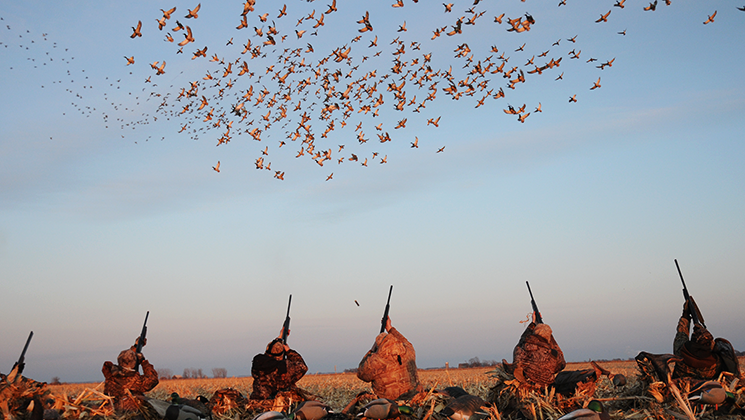
Temperatures in the teens are common in Montana winters, and downright strange in Mississippi. Northern hunters are equipped with a trick bag to handle frigid weather. Southern hunters are often left scratching their heads when their favorite spot is now a big block of ice. Modern equipment has made it possible to keep water open—a great option for private lands. These machines utilize propellers to move water and prevent cold air from turning it solid. Even then it is not easy, requiring a generator to run the machine throughout the night.
Blake McWilliams owns and operates Mallard Estates Outfitter in Brownsville, Tennessee, just east of Memphis. He is very familiar with trying to keep holes open and attracting ducks for his hunters. “We don’t have to deal with ice that much thankfully, but when it happens, we’re ready to handle it. We turn on the ice preventing machines at dark and come back to refuel around 1:00 a.m. It’s tough, but that open water is key to luring birds into range.”
However, what McWilliams does outside of “normal,” is hunt dry fields during prolonged cold snaps. “We use a combination of Canada goose and full-bodied mallard decoys—a typical field set up used in the North where dry field hunting is common,” he explained. His hunting area is located adjacent to the Hatchie National Wildlife Refuge, and home to thousands of wintering ducks. “Those ducks will keep water open, but they run out of food. Hunger will put them in the air and searching for anything they can find.” McWilliams often bags non-traditional field species. Mallards attack dry corn in the North, but gadwalls and wigeon will hit soybean fields with green vegetation growing through down South.
Northern Heat Wave
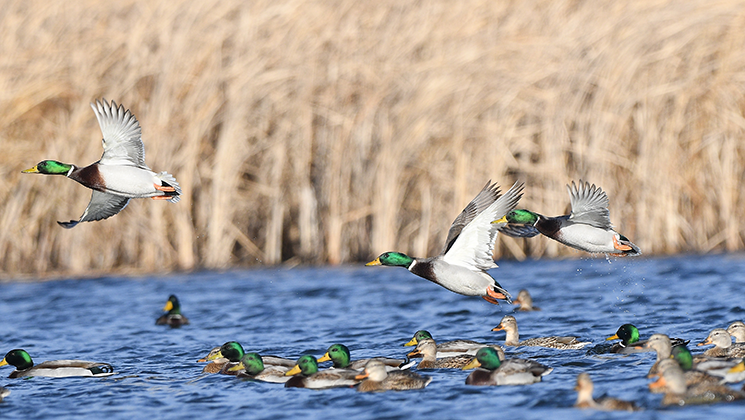
Cold temperatures waterfowl can handle, it’s the warm weather that requires a different hunter approach in northern waterfowl haunts. Wayne Salem ran the hunting department at SCHEELS All Sports in Mankato, Minnesota, for many years, and has hunted and guided for ducks and geese for nearly four decades. Up there, ice and snow are a mainstay of his hunting. When it’s 50 degrees though, he heads back into the cover, looking for pockets of ducks in their summer haunts.
“Ducks in Minnesota are used to the shallows being iced in and head for deeper open water during the fall and winter,” he said. “It’s not always the frozen tundra up here, though. We have a big resident population that lives and breeds in the heavy reeds and cattails ringing the marshes in spring and summer months. They feel comfortable there, hidden from predators. When I see a warm spell coming, that’s where I go. Look for small areas in the backwaters—little ponds in the cover, that’s where the ducks will be.”
Salem loves aggressive calling, but he throttles back when temperatures climb. “I normally will stay on the call unless the ducks tell me otherwise, but I seldom call much in warm weather. In those small potholes, the hens are more tight lipped. Not many decoys are needed, either, and be sure to keep them loose. This simulates a content flock on warm water. Cold ducks like to huddle!”
Inland Ocean
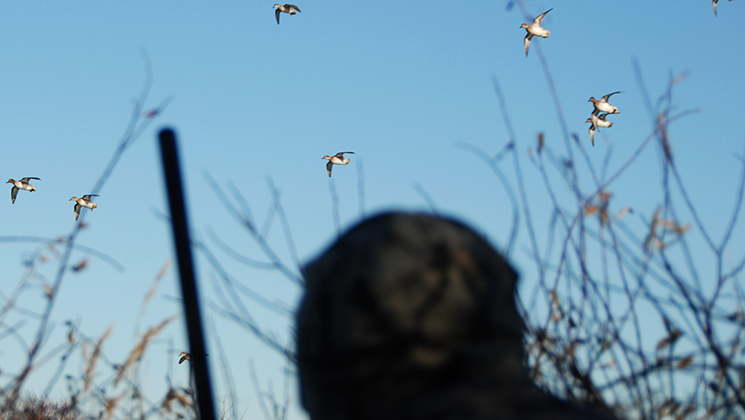
Prolonged rainfall or a big storm can hit at any time during the waterfowl season. Newly flooded areas are everywhere, opening up untapped food sources and resting and roosting waters. Relentless scouting pays off big here. On public land, burn some motor fuel and search previously dry stretches. On private ground, check the nooks and crannies for new pockets holding birds. The birds will scatter—those putting in the time and effort to find where the ducks went will fill straps.
Winter storms will have ducks and geese relocating, and previously vacant spots can fill up in a hurry. Look for high flying groups to see where they’re heading. If they’re not exactly on your spot, you’ll still benefit from increased traffic. Migrating birds are looking for concentrations, so a large decoy spread with plenty of motion is the way to go. Also, lean on your call aggressively—tell those birds that this is the place to be. Several strong callers are even better. Really make some noise, and convince these new ducks and geese to join the party.
Duck hunting is easy after all. Just spend countless hours finding birds, be ready to get up in the middle of the night to fight ice, be able to hunt at a moment’s notice and have multiple decoy types to cover every situation. Simple!