The U.S. Fish and Wildlife Service (USFWS) recently released its “Waterfowl Population Status, 2024” report, and for the first time since 2015 it reflects a rise in numbers. Its estimates indicate a five percent increase in total breeding ducks in its traditional survey area. In 2023, USFWS estimated there were 32.3 million in the study region. The figure improved to 34 million in 2024. The latest results, however, are four percent below the long-term average dating back to 1955.
Mallards increased to 6.6 million in 2024, eight percent better than 2023. This year’s number, however, is among the lowest recorded since the 1990s and 16 percent below the long-term average.
Wigeon numbers improved by 55 percent year-over-year, and green-winged teal breeding population is up 20 percent. Scaup figures for 2024 rose by 16 percent when compared to 2023.
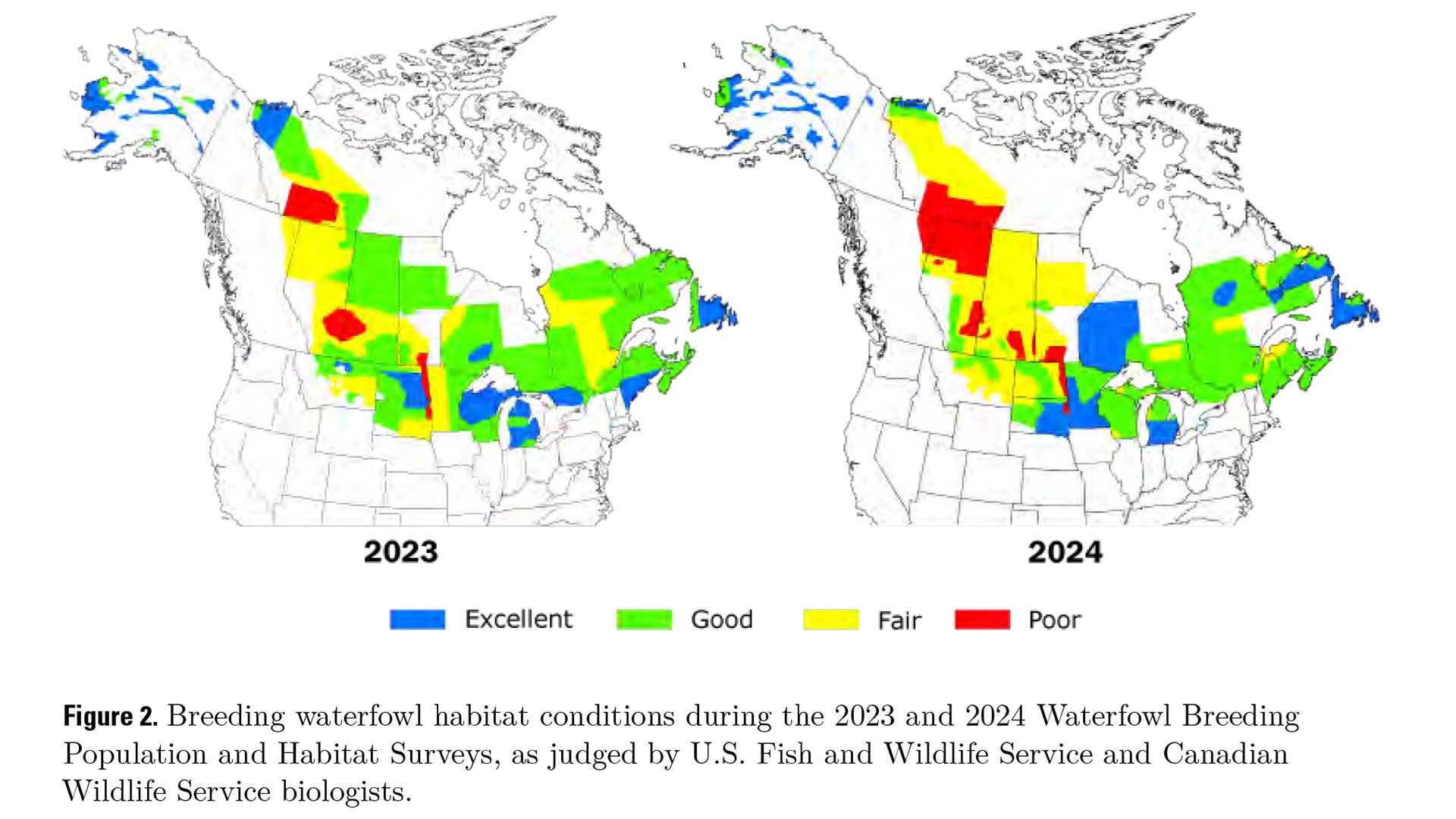
Despite the good news, researchers noted, “Habitat conditions during the 2024 Waterfowl Breeding Population and Habitat Survey (WBPHS) generally declined over a large portion of the surveyed area relative to 2023. The majority of the decline was in the traditional survey area of the interior Canadian provinces and portions of the northcentral U.S. Despite above- to well- above-average winter temperatures across the Canadian prairies winter precipitation was below average and continued into early spring. Well-above-average spring precipitation had fallen but most of this arrived too late to benefit initial nesting.”
In addition, the pintail estimate for 2024 declined by 11 percent when compared to 2023. Also down were Gadwall (11 percent), blue-winged teal (12 percent), northern shoveler (seven percent), northern pintail (11 percent), redhead (16 percent) and canvasback (eight percent).
Survey results and estimates are a coordinated effort between the USFWS, Canadian Wildlife Service and other state and provincial partners. Waterfowl breeding surveys began in 1947, and today have evolved into what is now considered the world’s most comprehensive wildlife survey. This year’s results are available in the “USFWS Waterfowl Population Status, 2024” [PDF] report.