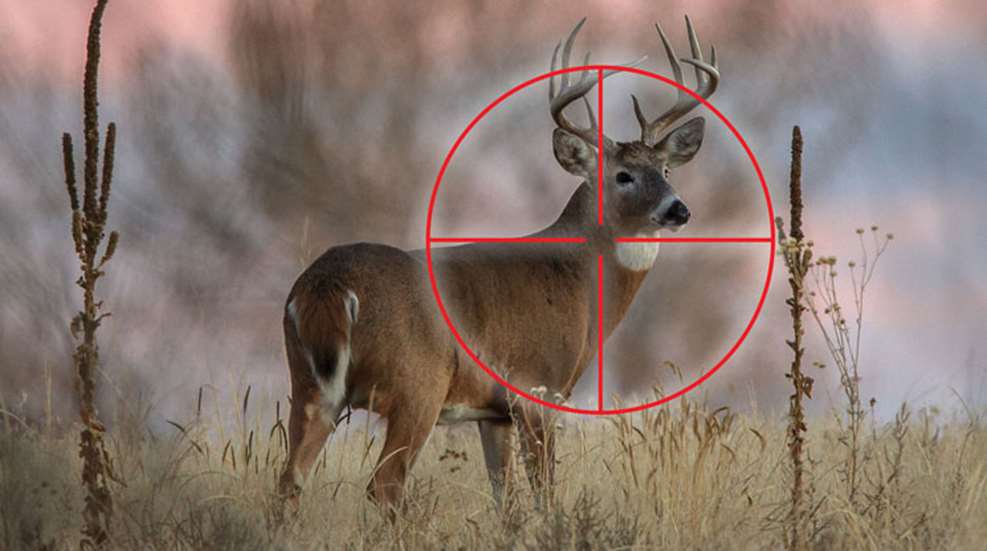
A common item of discussion among big-game hunters, especially those fairly new to the sport, is proper placement of the bullet. All of us agree that a vital area must be the target, but that includes several options. To be safe, the majority of hunters will strive to put the bullet in the chest area where it strikes one lung, preferably two. Some intentionally shoot a bit lower to hit the heart. Some shoot higher to hit the spine. And then there are those who like a neck shot, and like it for two reasons. First, when the spine is successfully hit, the animal drops in its tracks. Second, not much meat is wasted with a neck shot, especially a high-neck shot, though there is a considerable amount of meat on the neck. From the top of the neck to the brisket, neck-meat from an elk can weigh up to 30 pounds or more.
There are a couple reasons why I feel neck shots aren’t typically a good idea, though I’ll explain later when I do feel it is acceptable. If the spine is missed, you can hit the nape (or scruff), the windpipe, the esophagus or any other meaty, vital-free area. In any of these instances, the quarry can survive long enough to successfully elude you, or can make a complete recovery.
I’ll never forget a Wyoming antelope hunt with a friend who was new to big-game hunting. He shot a nice buck that went down immediately. As we approached, it appeared the animal was about to expire, but it wobbled to its feet, and with difficulty, ran over a rise. My friend shot just before it disappeared, and missed. We searched for the animal most of the day. The sparse blood trail disappeared completely, so we scoured the countryside. Early in the afternoon, when we were taking a break, we saw a small herd of antelope walking across a gully, angling toward us. With my binoculars, I looked them over carefully, and saw that a buck had a discoloration on its neck. It didn’t look like blood, it looked wet—something wasn’t right.
It seemed to struggle a bit as it walked, but it kept up with the herd. Finally, as they made a turn and the sun hit the buck just right, I was sure I saw a slight crimson hue. Then I was positive. My friend dropped the buck with a bullet behind the shoulder, and I was dumbfounded when we walked up. His first bullet hit the neck squarely in the windpipe with a hole that would accommodate a tennis ball. I couldn’t believe how far that animal had traveled.
In another instance, I was hunting moose in Utah after applying for 21 years for the once-in-a- lifetime permit. I had planned to hunt the entire season solo, staying in my camper. I knew the area fairly well, and knew it had big bulls. Then the Twin Towers were struck that fateful day on September 11th. At that point, all I wanted to do was get any bull and return home as soon as possible. I waited a few days after the attack and drove to the area. On the first afternoon, I saw a smallish bull in a willow thicket. His antlers were barely 30-inches wide, but I didn’t care. I wanted to get home as soon as I could. All I could see was his head and part of his neck. He was looking to the side, not directly toward me.
Impatient, I held for his neck. He dropped instantly, and I was figuring on walking up to a dead moose. But he wasn’t there. I saw some blood, and then heard him in a different part of the willows. He walked to a small opening, just big enough for me to see the neck blood and confirm it was the moose I’d shot. Part of his chest was exposed, and I dropped him with a bullet through both lungs. My first bullet hit him in the nape of the neck. It was a poor shot. I had to make it offhand, standing on a log in order to see his head above the willows, and I wasn’t as steady as I should have been.
When I drew a mountain goat tag in Montana, I chatted with some outfitters who were savvy about goat hunting. It was my first goat hunt, and I didn’t know what to expect, though I knew I was in for a dangerous hike up a steep mountain covered with ice and snow. One bit of advice that I hadn’t anticipated was the need to drop the goat in its tracks if at all possible if it was on a steep slope or ledge, which is typically the case. A perfectly-hit goat that’s shot through both lungs may run off and expire, and then slide off the slope into a deep abyss or canyon where recovery might be dangerously challenging or completely impossible. With that in mind, I looked at skeletal sketches of goats, because I knew a spine shot was in order. A goat’s anatomy is different than that of most big game animals. During the hunt, I spotted a billy bedded out on the end of a sloping ledge. The mountain was treacherous, every inch covered with ice. I climbed by gingerly stepping on the cracks in the rocks, and couldn’t remember a more perilous hunt. The wind was right and the goat never saw me. A shrub as big as a bathtub was directly below him. Below that there was a cliff that dropped straight down 300 feet. With no access, save for mountain climbing gear, I knew that I had to put him down instantly, and hoped he’d slide into the shrub. I aimed for the spine, high in his body, at the base of his neck, and was both amazed and ecstatic when he did exactly what I had hoped. The shrub held him solidly when he slid into it. With ropes, my companion and I were able to drag him off the slope to a spot where we could field dress, cape and bone the carcass.
There’s no question that a properly-placed bullet in the neck can be extremely effective, but the target is small. Depending on the animal species you’re looking at, it’s a couple inches wide or a bit more. I’m a proponent of a double lung shot, but there are exceptions, as with the mountain goat. I hunt antelope and whitetail does every season. These are meat hunts, and I obviously want the least amount of damage as possible. If I have a solid rest, and the quarry is reasonably close (100 yards away) and looking directly at me, I’ll aim squarely under the jaw and put the bullet high in the neck. To do that, the animal must be stationary and you must have the utmost confidence in your rifle. That’s where practice at the range and precision shooting comes in.
If I don’t have that perfect neck shot, I’ll take the chest shot, holding just an inch or so behind the crease of the shoulder and putting the bullet through the lungs. If possible, I’ll wait until the quarry is perfectly broadside, so the bullet doesn’t strike the off-shoulder, causing considerable damage. In these cases I’m considering meat animals. If a nice buck deer or bull elk is in range, my sole thought is getting the bullet into the lungs. If a shoulder or two are damaged. I’ll deal with it when I process the animal, though I try to avoid hitting either shoulder whenever possible. Of course, the type of bullet you use ultimately determines the amount of damage.
Each hunter has his/her personal opinions on where to hold for the shot. The bottom line is to put the bullet into a vital spot, and drop the animal as humanely and quickly as possible. We’ve all heard of proper bullet placement. When you shoulder the firearm, it’s entirely your call. We owe it to the quarry to make it right.