I grew up on a single-shot shotgun. I don’t claim to be the only one, but I am among those ranks. In my neck of the woods, kids usually graduated from a BB gun, to a .22 rifle with open sights and then to some form of shotgun, usually a single-shot. We shot squirrels, sitting rabbits and whatever else we needed to with the rifle, but when we moved on to running rabbits, grouse and crows buzzing the cornfield we needed a shotgun.
No doubt there were a lot of different brands of single-shot shotguns around that you could hand a kid back then. It might have been a Harrington & Richardson 12-gauge that kicked like a rented mule, or just as likely an Iver Johnson, named for its Norwegian-born founder; in my part of the world it was usually called an “Ivy Johnson.” Both of these were perfectly serviceable firearms that went boom when they were supposed to, which is all these simple shotguns needed to do. However, my family members were staunch followers of the Winchester Model 37 single-shot.
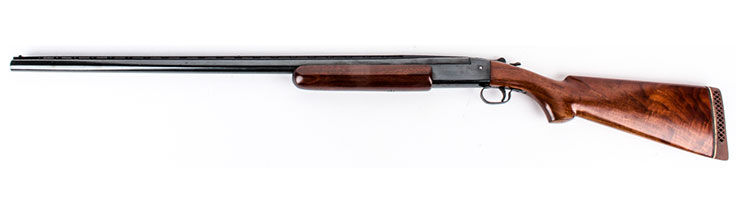
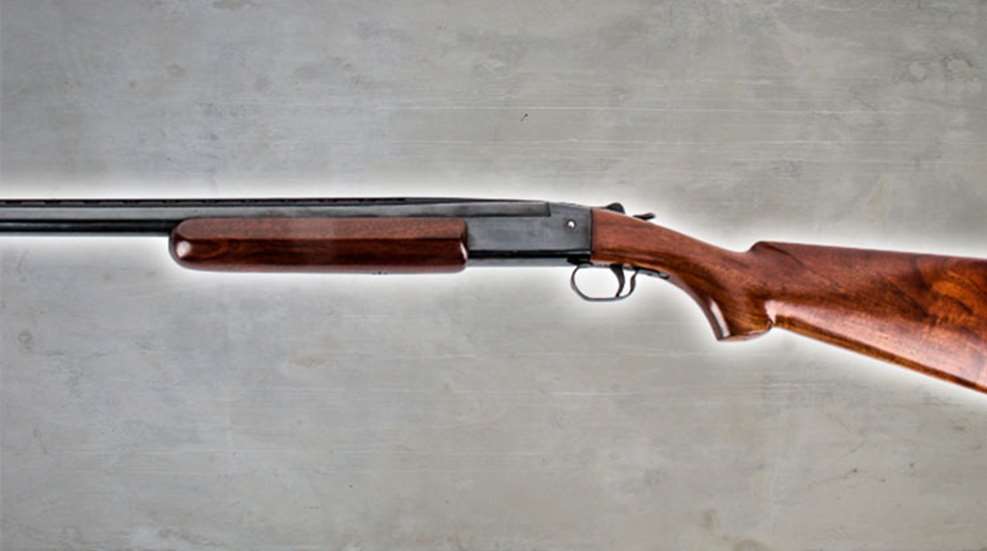
Winchester made the Model 37 from 1936 to 1963 with over one million sold. There were two basic models of the 37; the standard and the Boy’s Model, which was first offered in 1958. The shotgun was made in 12-, 16-, 20- and 28-gauge, as well as .410-bore—the .410 was my first Model 37, and boy, do I wish I still had it. I always thought that Winchester making this shotgun in 28-gauge showed a certain sense of style, something a gun company would almost surely not do today.
A couple of interesting things about Model 37 history; the shotgun in its entire production run had no serial numbers or date of manufacture stamp, and there are no records of yearly production. Until 1948, Model 37s were produced with red enamel paint in the stamped lettering, and became known as “red letter” Model 37s. Also fascinating to me is that some National Guard units were issued the Model 37 during World War II.
The Model 37 was, I thought, a perfect shotgun for a kid to carry as far as safety concerns go. It’s a break-action with a cocking hammer—no other buttons or actions to worry about. When starting out with a new hunter, the careful parent could have the kid walking around without any shells, and could dispense ammo to the little hunter when the opportunity arose. In this way, Dad didn’t have to worry about accidental discharges or his little buddy shooting in the wrong direction.
Some of you old shotgunners are way ahead of me here, but the single-shot and doling out ammo to the shooter in a stingy manner also teaches the new hunter to be careful, take their time, not shoot too quickly and make every shot count—basic principles that all hunters and shooters need to be taught.
Winchester doesn’t make the Model 37 anymore (more is the pity), but there are a few single-shot shotguns around, I ran into one not long ago in the form of the Stevens 301 shotgun.
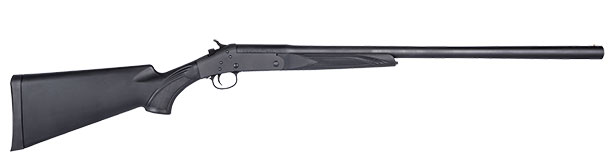
The Stevens 301 is a break-action shotgun with a black matte finish and synthetic stock and forearm. The shotgun has an exposed hammer for cocking, and a safety mechanism we will come back to in a minute. This stock is going to take most anything you or your kids can dish out. It comes either a standard and compact configuration, the compact version sports a 22-inch barrel and the standard features a 26-inch barrel. The compact version has a reduced length of pull as well—this is important for kids, ladies and smaller statured shooters. Right about here is where the internet experts usually start preaching to me about light shotguns, synthetic stocks and what a pounding the young shooter will take if you shoot heavy loads in this gun.
Here is an idea for you; who said you had to start your kids or any new shooter with heavy loads? Is it really necessary to shoot magnum turkey loads on clay targets or the odd rabbit or squirrel? No, I don’t think so. In fact, when dealing with young or tender shooters, I don’t think it’s ever necessary to load up with nuclear shotgun shells. Light field loads may be all you need; Aguila Ammunition makes a really cool half-size round called the MiniShell, perfect for kids and timid shooters.
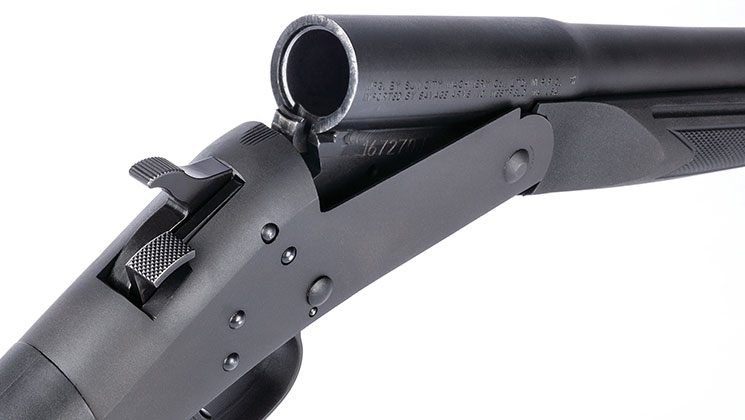
Here is something I really like about the Savage 301 shotgun: screw-in choke tubes on an inexpensive, single-shot shotgun. Insert a modified or improved cylinder for doves or clays, full or extra full when you go after turkeys.
I think we may see some resurgence in single-shot shotguns, if nothing else for the use of the new TSS loads (tungsten super shot) on turkeys. More hunters will be looking for .410-bore shotguns for young hunters and for pursuing a Grand Slam on turkeys, as this is becoming more popular with the .410.
If only for old times’ sake, it would be nice to see more young hunters out there with a single-shot shotgun. The sight of a kid with one of these guns in the squirrel woods or trailing behind a couple beagles in a briar patch can take you back to a time when things were a whole lot simpler.