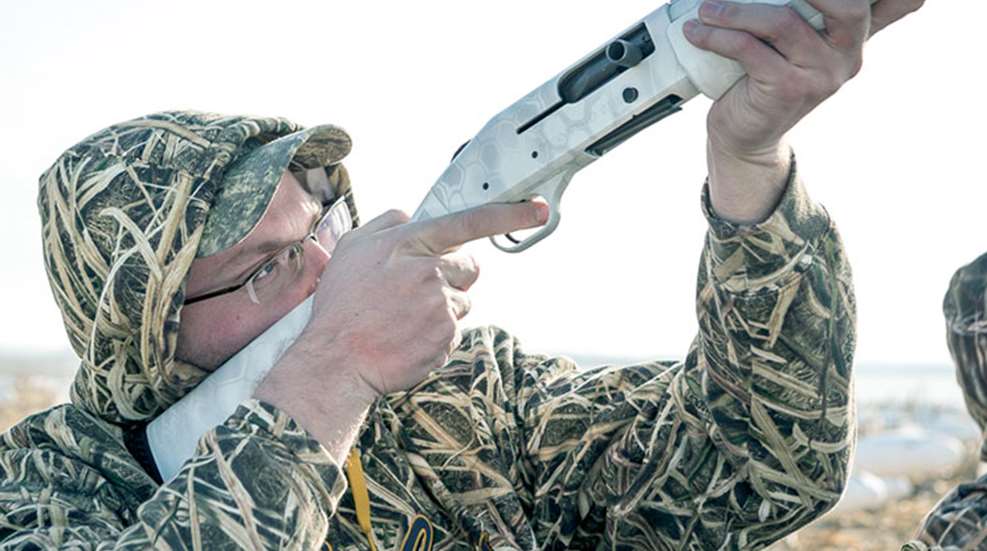
When it’s going right, swinging a shotgun at a moving target is as simple as pointing your finger at one. It really is as natural as that. Or should be. The problem is we humans have a tendency to develop some bad habits. Habits that, once introduced, can make it easier to miss a bird than hit one. Even when everything feels right on the sporting clays range or in the field, things can go wrong. If you’re in a slump, chances are you’re making one of the following mistakes and don’t even realize it. Here’s are five of the most common reasons shotgunners miss and how to correct them.
You Peeked
It’s cool to watch a clay crush or feathers fly when a shot column connects. In fact, it’s such an awesome sight many shooters want to see it happen—so they lift their head off the stock immediately after they pull the trigger. The problem is, if you’re peeking, that load is more than likely going to miss its target. Instead, concentrate on keep your head down on the stock and stare intently at the target. Do this from the time the target leaves the house until well after you pull the trigger and not only will you get to watch the target break, you’ll see it happen a lot more often.
You Changed Focus
There are a lot of products on the market touting the ability to make you a better wingshot. Most of them are brightly colored beads of one form or another that affix to the end of a shotgun barrel. These are great if you’re aiming at a stationary target like a turkey, but for a streaking bird, whether clay or feathered, they cause more problems than they solve. Why? Because the last thing you should be looking at as you track a bird in flight is your barrel. A brightly colored bead can cause your focus to shift from the bird to the barrel, sometime several times before you pull the trigger. The second you look at the barrel, you stop your swing. Instead focus on one thing only—the target.
Spot Shooting
The incoming target seems like an easy shot. The bird is getting closer after all. Unfortunately, these targets are missed more often than they should be because shooters have a tendency to point the barrel at a spot in front of the target’s trajectory and pull the trigger. This might work if the bird is coming directly at you and it runs into the pattern, but that’s rarely the case. Instead, the target is approaching at a quartering angle, even if slightly, and either the pattern just clips the target or misses completely. Instead, track the incoming target and keep the barrel moving. You’ll hit it every time.
No Follow Through
Doubles, either crossing or as a pair, vex even the most experienced shooters. The trouble is most people are thinking about breaking the second bird before they’ve even pulled the trigger on the first. This rush to get on target leads to premature barrel movement at the initial shot, that is, the shooter pulls the trigger, then instantly starts to swing on the second bird. Like golf, follow through is important, so make sure your barrel swings through the first bird before moving on to the second. The best way to practice is to exaggerate your follow-through by continuing the swing well after the shot. This, along with a concentrated focus on the bird and not the barrel, should stop you from shooting behind the target.
You Flinched
Everyone knows flinching is the rifleman’s worse nightmare, but people tend to forget it can be just as aggravating to the shotgunner. When a wingshooter flinches, he lifts his head up and away from the recoiling stock, causing his hands to naturally follow the motion and pull the barrel well off the target. Because this occurs within milliseconds, it’s possible to not even realize it’s happening. This makes it all that more troubling as it’s tougher for the wingshooter to identify why he’s missing when it feels like he’s doing everything right. To overcome a flinch, focus hard on the moving target and resolve to watch the target break. If you’re not seeing it, you’re probably closing your eyes in preparation of the recoil. If the problem continues, consider switching to a lighter load, or investing in a recoil pad to minimize shock.