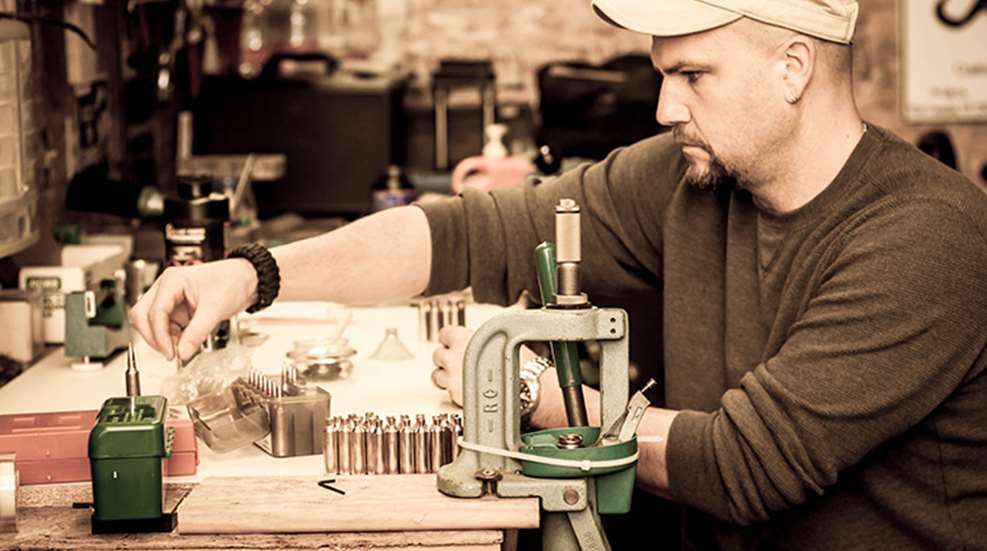
I’ve been a handloader for over two decades—initially out of financial necessity, and subsequently because of the benefits of rolling my own—and I've come to rely upon my own ammunition in a wide and diverse range of hunting situations. I’ve been told I was insane for using handloaded ammo on dangerous game hunts in both North America and Africa; I’ve been told that in no way, shape or form could I match the potential of factory ammo; and I’ve been told that reloaded ammunition is dangerous. I wholeheartedly disagree on all points.
Undeniably, today’s factory ammunition is better than it’s ever been. Companies like Federal Premium and Winchester have come to embrace a good selection of standard and premium bullets, as well as offering the self-defense ammo—for both training and real-world situations—that may just save your life. There are other choices—both Norma and Nosler come quickly to mind—that will provide excellent hunting ammunition that can be nothing short of utterly reliable. While I use and enjoy these factory offerings, I have come to prefer, and rely upon, my own handloaded ammunition for many reasons. Please allow me to explain.
1. Reliability
As I've stated, the factory ammunition available today is the best it’s ever been, but it’s still loaded by machines, and things can and will malfunction. Without delving into the horror stories that we’ve all seen with ammunition that was improperly loaded at the factory, they do happen. I like the ability to carefully prepare and inspect every single component of my ammunition, especially when a dangerous hunt or situation presents itself. Should I find a bullet, primer or case to be suspect, I simply reject it. I can use reloading tools to make sure the case dimensions and flash holes are uniform. With my handloads—if I’ve done my part as the loader—I know I can count on the ammo. Yes, you can run across a bad primer, but I feel you can also experience that with factory ammo.
2. Consistency
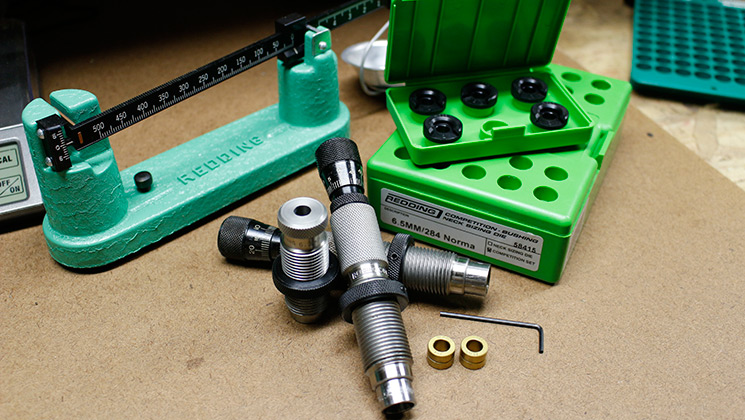
Because handloaders use ‘canister-grade’ powders, the formula (in theory at least) needs to stay the same. Yes, the benchrest crowd may see very slight variations from lot to lot of powder, but for all intents and purposes, the IMR4350 or H4831 of today is designed to give the same performance it did 30 years ago. Factory ammunition companies can, have and will change the powder type or charge weight without notice. I’ve had shooters believe their rifle has changed because it’s not shooting Brand X ammo with the weight and type of bullet they’ve used for years. It’s not the rifle, more often than not the powder charge has changed, and that barrel doesn’t like the load. Not the shooter’s fault, but it is a dilemma that we all face. Using a canister-grade powder, you’ll be assured that the same charge weight of that particular powder will deliver the same results in the future.
3. Control
Handloading your ammunition gives you the opportunity to experiment with bullet/powder/primer combinations that are simply unavailable from the factories. These minute differences can really make a significant change in the accuracy of your rifle or pistol, and the ability to control those parameters will allow you to maximize the potential of your firearm. I’ve seen a couple of rifles in my life that would shoot factory ammunition better than any handload, but those were an exception. You can easily vary the velocities, to either maximize accuracy or help reduce recoil, and that ability can easily help a new shooter become familiar with a normally hard-kicking gun without developing bad habits, while working up to full-house velocities.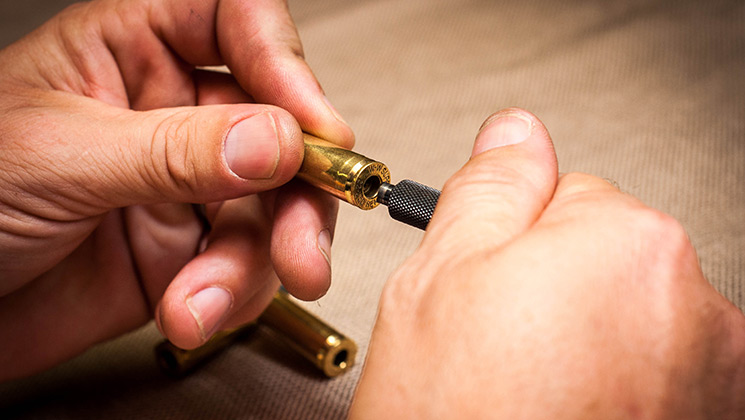
4. Availability
You all remember the great ammunition crunch of 2013-2014, and frankly, it sucked. Hunters were grabbing any ammunition they could, simply because there was very little available. Rifles that were normally tack-drivers were shooting 2-3 MOA when forced to use Brand Y instead of Brand Z, and there were many disgruntled shooters. Depending upon your level of ammo consumption, it isn’t difficult to obtain a good supply of components for your rifle, and provide the ammo your rifle or pistol likes best. In addition, handloading your ammunition gives you the ability to use cartridge/bullet combinations that are simply unavailable in factory form. As the head of Massaro Ballistic Laboratories, I get many calls for ammo that has been discontinued by the factories, or for obsolete cartridges. Sometimes the ammo was not available in the first place; for example the .375 RUM was never available with ‘solids’ for truly dangerous game, and while it wasn’t extremely popular, those that bought a rifle chambered for it really liked it. Only through handloading—or hiring a custom ammunition company—could a hunter get what he or she wanted. I revived old calibers—like the .33 Winchester—and provided ammo for some oddballs—like the .35 Whelen Ackley Improved—with good success.
5. Increased Time Spent
When you handload your own ammunition, you’ll immediately develop a better understanding of how and why it works, as well as get a better feel for your firearm. During ‘load development’ you’ll spend more time behind the trigger, and as a result you’ll develop a more intimate relationship with your gun. I know too many hunters who fire two or three shots the week before season, and proudly declare “Good to go!” I spend a whole lot of time at the range developing loads, checking velocities, and other additional side effects of handloading my ammunition; it helps me become very familiar with all the aspects of my rifles and pistols. During the off-season, I spend the idle time loading my hunting rounds, and it makes for a great hobby, as well as allowing me to make friends with other handloaders. We all compare notes, and try different tools and techniques; it makes for a great hobby, but beware, it can be addictive. Testing your loads will give an increased understanding of how the various factors involved in the process will affect the performance of the ammo, and that will help you to become a better shot in the end.
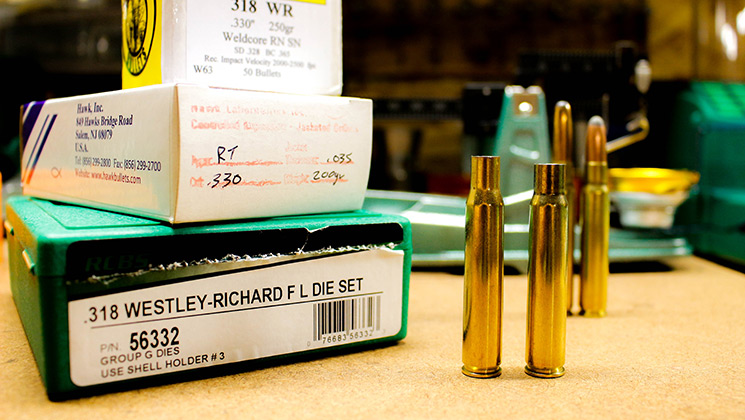
I’ve left a couple of things off the list here, purposely. It used to be that handloading ammunition was much cheaper than buying premium ammo; in fact it was that reason that got me into handloading in the first place. However, that isn’t necessarily the case any longer. Components have increased in price, but that’s the market we’re in. The other aspect I've left off is the desire to outperform the factory velocities. The phrase “hot-loads” infuriates me; the concept is simply wrong-minded, and dangerous. Reloading ammunition is about safety, consistency, and responsibility; stick to the published procedures and data. Keep that rule in mind and you’ll have a rewarding hobby for life.