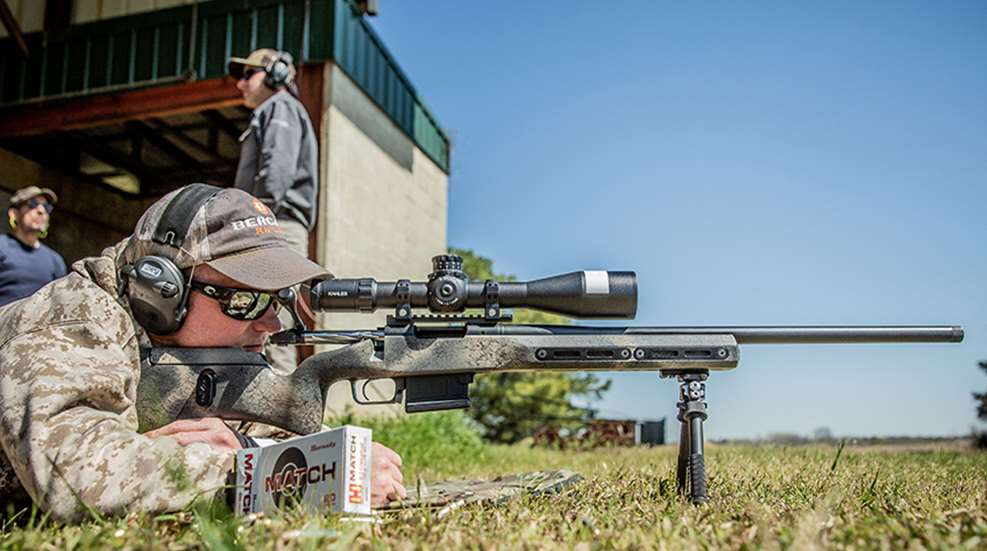
Game time experience is always better than practice, but can you imagine if Tom Brady only got one chance to throw the pigskin per game? That’s about what big-game hunters can expect during a hunt; one shot at scoring in one pressure-filled situation. But, of course, Brady throws 40 or more passes per game in addition to his daily, year-long practice regimen. So why should big-game hunters expect to hit what they’re aiming at with very few real shooting opportunities and no practice during the offseason?
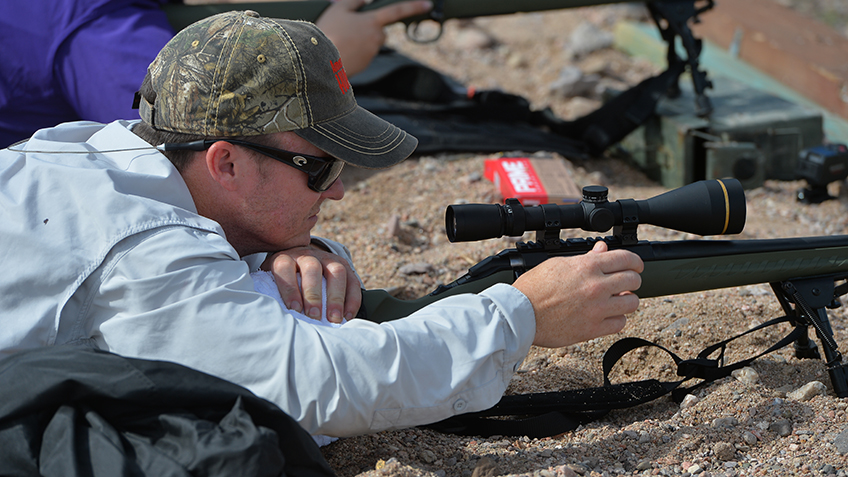
Reality is, if hunters never practice—and they can’t count zeroing or shooting off the bench as practice because it’s not even close to the real thing—they shouldn’t expect to hit anything more than chip shots come fall. Therefore, to become a deadly game shot at all practical distances, you should shoot steel now, in the offseason. Hunters should be able to find a target, range it, lock into a solid field position and hit that target within 30-seconds or faster.
Here are a few drills to make you the guy who wants the ball on fourth and goal—or when that buck of a lifetime is standing 350 yards away and the sun is fading fast.
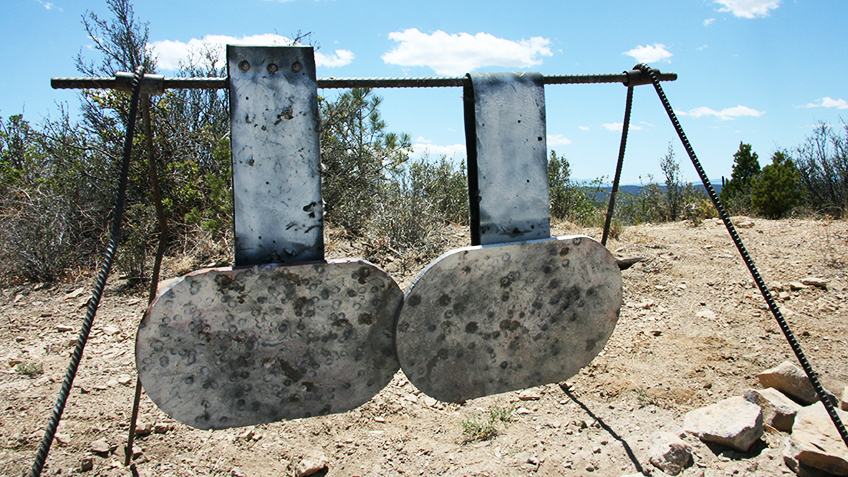
Setup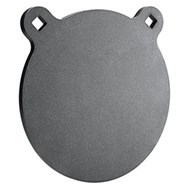 If you have access to a 300- to 500-yard range, or even a field you can turn into a temporary range—perfect! If not, you still have some options. (See below, “No 300-Yard Range?”). Assuming you do, and if it’s a private range, bite the bullet and order (or make) three to five AR500 steel plate targets that are thick enough to handle your rifle caliber—Champion Target makes affordable ones. Or, as a lower-budget option, build several scrapwood stands with cardboard or plywood backing and staple paper plates to them. The advantage of the steel targets is that they immediately provide feedback if you hit the target or not, so you’ll know to shoot again without having to walk up to it and check. This means you’ll spend more time shooting and less time sweating in the summer sun.
Place your targets at random intervals on your range while holding one back for your zeroing target, then number them with spray paint. If you must place the targets in front of pre-set berms of a public range, that’s fine, too.
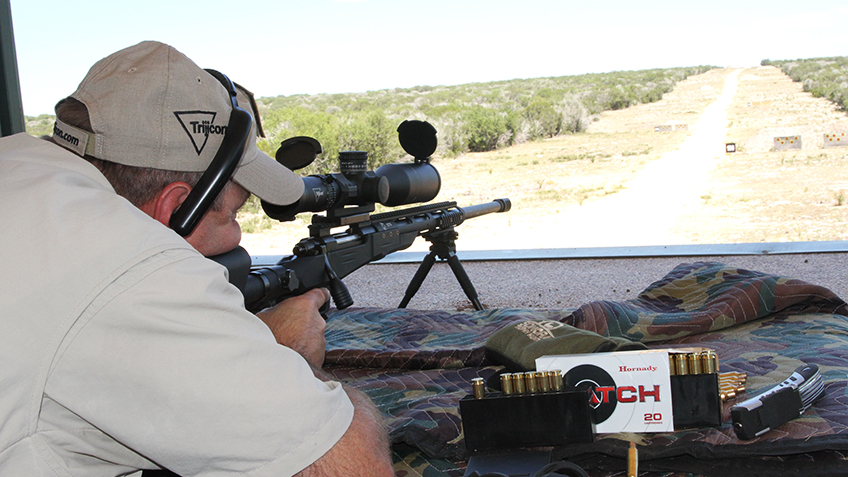
Find Your Maximum Point-Blank Range Rifle Zero
Maximum point-blank range is the maximum distance at which you can hold dead-on a given-sized target and still hit that target despite your bullet’s drop. To do this, first you must figure out a target size that simulates the game you intend to hunt. Because the average deer has a vital zone of about 8 inches, I use a 6-inch diameter target so it will allow a 2-inch margin of error if I don’t deliver a perfect shot. Elk hunters might choose a 14-inch diameter target.
Next, go to shooterscalculator.com/point-blank-range to calculate the mathematically perfect distance at which to zero your specific rifle and load. (You may have to play around with this number slightly if real-world shooting doesn’t bear it out.)
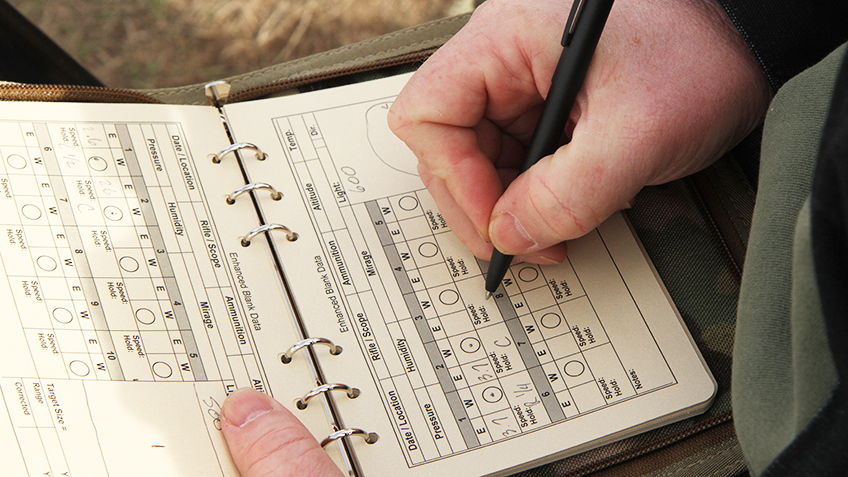
For example, when I enter my 6.5 Creedmoor’s dope into the program and input a 6-inch vital zone, it indicates I must zero the rifle at 236 yards in order to reap a maximum point-blank range of 278 yards. This means that if I zero perfectly at 236 yards, I can hold dead-center on the 6-inch target and never go more than 3-inches above the target or 3 inches below the target from 0 to 278 yards, respectively. Rather, I can simply aim at the center, pull the trigger and kill the animal cleanly—if I do my part. However, for shots farther than 278 yards with my 6.5 Creedmoor, I’ll have to hold over the target or dial the scope, and I’ll practice this later. But first, figure out your maximum point-blank range by using the above website, place a steel target at the “far zero” that it lists, and zero your rifle from a solid rest at that distance.
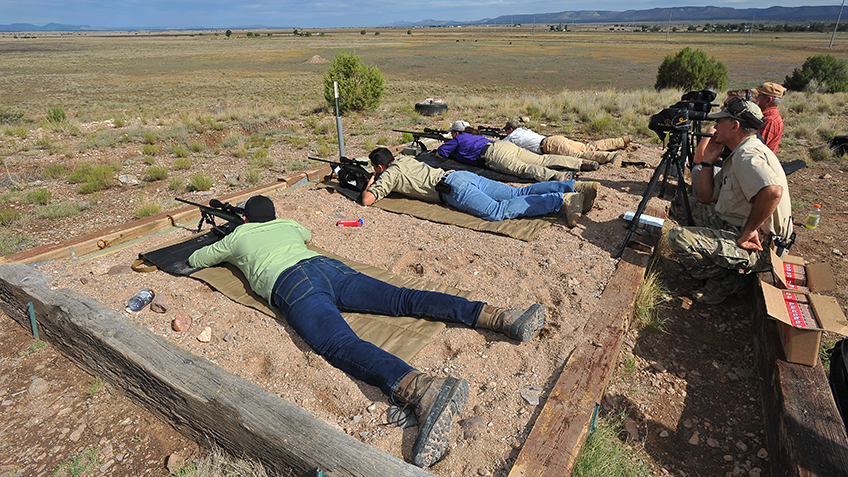
Practice for Fun and Purpose
Now, here’s where it gets fun. With a shooting buddy, take turns as a spotter and a shooter. Bet .25 cents (or $1 if you’re a real fat cat) on each shot, as this will apply just enough pressure to raise the heart rate slightly and add a fraction of the realism you’ll feel while hunting. While standing and holding the rifle, have the spotter randomly call a target number and start the stopwatch. The shooter must then locate the target, range it with a rangefinder if needed, get into a comfortable shooting position using shooting sticks, a backpack, a tree stump, whatever—and deliver a shot within a 6-inch vital zone in less than 30 seconds. When the spotter hears the ping of the target, he’ll stop the watch. Record the time, then trade roles and shoot the same target. Whomever records the fastest time wins that round. Mark the money owed on a ledger before calling another target and repeating, or move to a different position.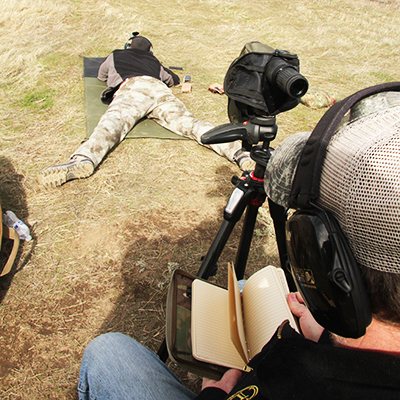
The point here is not to see who can hit closest to the bullseye like most precision rifle games—but rather to see who can deliver a killing shot to the target in the least amount of time. The drill will force you to take a good rest—but perhaps not a perfect one—and to find a balance between speed and precision—which is useful for hunting scenarios wherein animals can and will run off if you fail to shoot quickly. The drill will let you know how fast is too fast, and how steady you must be to hit at various ranges. It will also reveal your personal limits.
Next, if possible, choose a target farther than your max point-blank range—say 388 yards, for example. For these shots, allow yourself two minutes of figuring out your dope via a ballistic app or dope chart, making the corrections, then delivering an accurate shot in the least amount of time. By having fun shooting for practice, you’ll quickly become a deadly shot. After all, if you expect to be a game-winning quarterback on Super Bowl Sunday, you must practice during the dog days now.
Shooting Solo
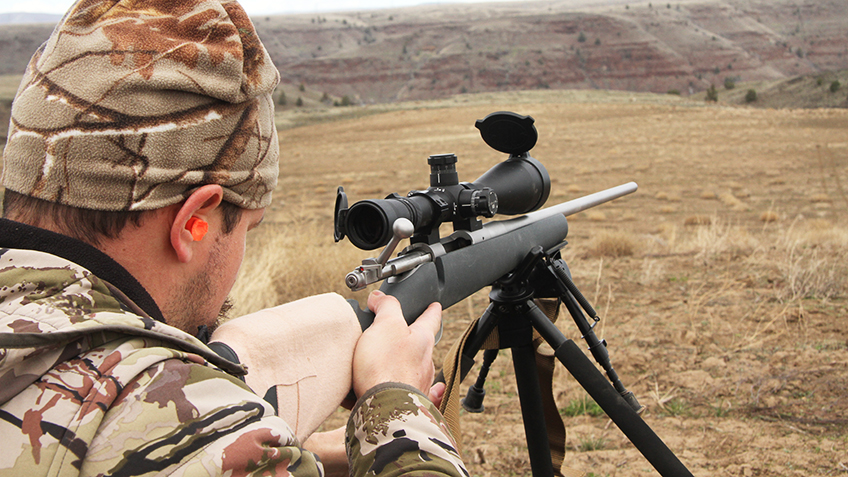
If you must shoot alone, maintain the element of engaging unknown-distance targets by placing numbers in a hat and randomly drawing them for yourself. After you draw a number, hit the stopwatch on your phone, then snap into position and shoot the target as quickly as possible. Try to beat your prior time each time you shoot. When you begin missing, you’ll know you’re going too fast, so slow it down some. Over time, you’ll become fast, accurate and deadly at any reasonable range.
No 300-Yard Range?
While a true, long-range centerfire rifle range is best, you can simulate long-range shooting by using a rimfire rifle (with its scope set on lowest power) and scaled-down targets. It’s not perfect, but it’s better than not practicing at all. A good rule of thumb is to half the target size as the range is halved. For example, if your 300-yard target is 6 inches in diameter, a 3-inch target at 150 yards will simulate the look and challenge of a 300-yard shot with your hunting rifle. At 75 yards, use a 1.5-inch target; at 37.5 yards, use a .75-inch target, and so on. (Also, a .22 LR rimfire will exhibit much more bullet drop and wind drift than will a heavier centerfire bullet, so it will add to the realism as well.) And if you only have a 25-yard range in the suburbs? Try hitting bottle caps with a precision airgun—offhand!