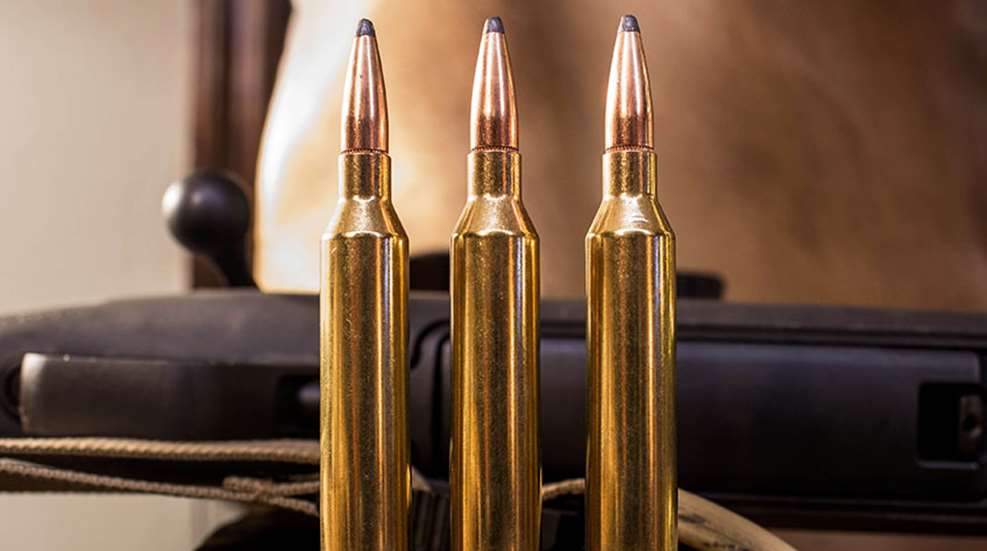
The late 1950s saw a time of prosperity in the wake of World War II, and hunters began to travel again. While the supply of the classic British cartridges from the pre-World War I era began to dwindle, the American market was burgeoning with all sorts of developments. One of the landmark releases was Winchester’s quartet of .30-06-length belted magnum cartridges; the third—and smallest—of which was centered around a bullet diameter rather unpopular in the U.S., at least at that time: the 6.5mm.
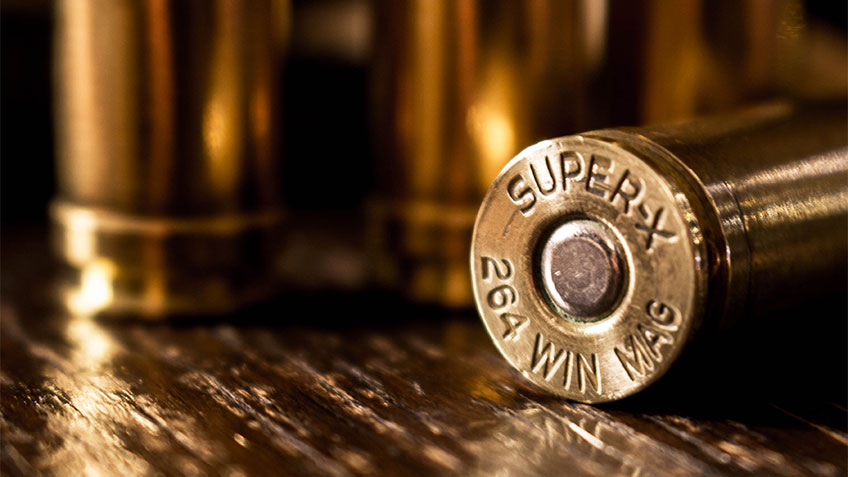
The 1958 release of the .264 Winchester Magnum in the Model 70 Westerner rifle, with its 26-inch barrel, saw a flat-shooting, hard-hitting voluminous case, perfect for deer, elk and more. While Winchester and its massive marketing machine held much sway in the industry, the idea of shorter 2.500-inch case (in comparison to the 2.850-inch case of the .375 and .300 H&H Magnums) wasn't exactly revolutionary. Holland themselves released the .275 H&H Magnum in 1912—the same year the .375 H&H saw daylight—with a 2.500-inch case, looking suspiciously close to Remington’s 7mm Magnum, which would be released over a half-century later. Winchester, in fact, was producing cases for Roy Weatherby’s creations—developed during WWII on shortened and blown-out .300 H&H cases—and decided to produce their own designs with a conventional shoulder in lieu of Weatherby’s radiused shoulder.
Metric cartridges have traditionally struggled in America—with the exception of the 7mm Remington Magnum and, quite obviously, the barrage of 6.5mms of late—but even in the 1950s, the engineers at Winchester saw the benefits of the 6.5mm bore diameter. Winchester advertised the .264 Winchester Magnum (note the Imperial bore measurement) as driving a 140-grain spitzer bullet at a muzzle velocity of 3200 fps; this gives quite the flat trajectory and will handle almost all North American big-game animals, though I’d certainly want more bullet weight for the big bears, bison and even Alaskan moose. Unfortunately, most shooters and hunters found that the advertised velocity figures published by Winchester were a bit on the optimistic side, and that 3100 fps was closer to the mark, even with the longer barrel. In the shorter 22- and 24-inch barrels, the velocity figure drops to below 3000 fps, and one began to question whether there was any advantage over the more popular .270 Winchester, and rightly so.
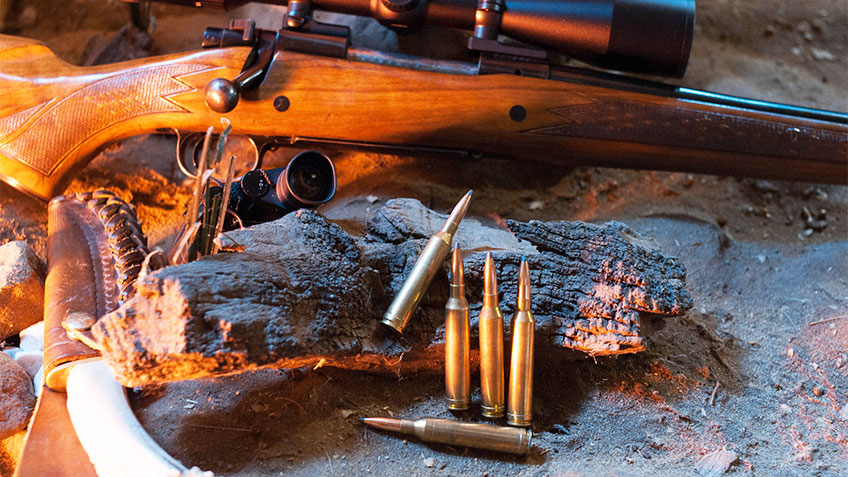
Remember that in the late 1950s and early 1960s, we didn’t have the high B.C. bullets we have today, and the average shot distance was surely less than it is today, even on the prairie and in the mountains. Yet, the .264 Winchester—even today with Hornady’s modest muzzle velocity of 2935 fps—will give nearly the same trajectory as the .300 Winchester Magnum gives with a 180-grain bullet; with a 200-yard zero, you’ll see six inches of drop at 300 yards, and 20 inches at 400 yards.
Winchester gave the .264 a 25-degree shoulder angle, which will give good headspacing. The belt—a carryover from the Holland & Holland designs—serves no actual purpose on this cartridge; I believe the H&H case was chosen for its higher case volume than any of the .30-06/8mm Mauser family, making higher velocities possible. The case is certainly overbore, and I’ve found the best performance comes in longer barrels. Taking care to avoid overheating the barrel will give the owner of a .264 Winchester much longer barrel life, as the throat can easily be eroded by velocities this high, especially the older rifles with chrome-moly barrels.
Though the 6.5mm bore diameter offers bullets from 85 to 160 grains, the most popular ammunition choices have been centered around the 120-, 130- and 140-grain bullets. I have handloaded both ends of the spectrum, with the 160-grain round-nosed bullets slowing down to around 2800 fps, and I’ve broken the 3700 fps mark with the light-for-caliber 85-grain hollow-point bullets, but I’ve also seen that 1:9" twist spin the core out of some of those bullets, sending shrapnel downrange instead of a projectile. If I were serious about hunting with a .264 Winchester Magnum, I’d look to a premium bullet, especially if there were any chance of a close shot with high-impact velocities.
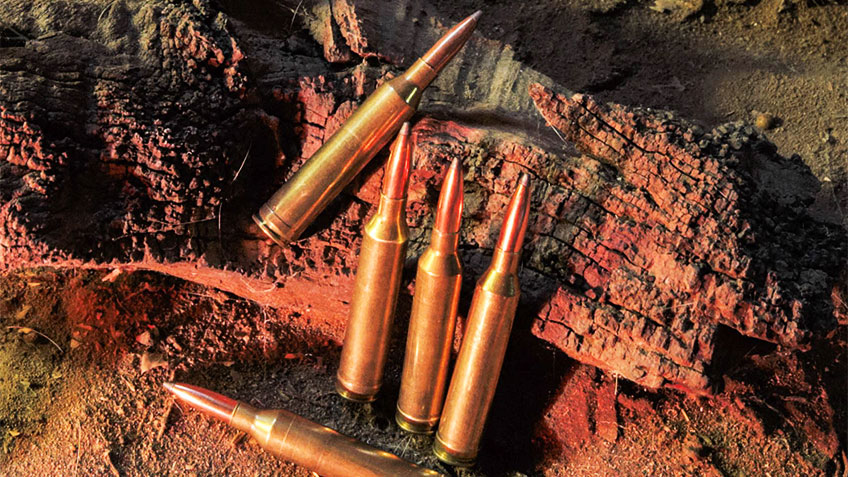
The .264 Winchester—like almost all of the 6.5mm cartridges—is wonderfully accurate, and achieving MOA groups isn’t a difficult prospect at all. In spite of the magnum moniker, the recoil of the .264 Winchester is more than manageable—it was the first magnum cartridge I’d ever fired, and I was sort of let down, as it felt similar to my .308 Winchester—and allows the shooter to place accurate shots on game.
So why isn’t the .264 Winchester at the top of the heap? What happened to this cartridge, while the .458 Winchester, .338 Winchester and .300 Winchester went on to glory? Well, the answer is the 7mm Remington Magnum that came along in 1962. While having a metric name, it caught on like wildfire, offered a much wider choice of bullet weights, and isn’t nearly as hard on a barrel’s throat as the .264 can be. And now with recent designs like the 6.5-300 Weatherby Magnum, 6.5 Weatherby RPM and the 6.5 PRC, the .264 Winchester seems headed for the dust bin, though it is still offered in a few rifles. Winchester chambers its Model 70 in several variants, Remington offers the 700 Sendero SFII and Cooper offers a few models as well, so while the prognosis might not look great, the heartbeat is strong. Ammunition is available from Hornady, Nosler, Winchester and Remington does a run every once in a while; most loads use the 140-grain bullet, with a couple of 120-grain offerings.
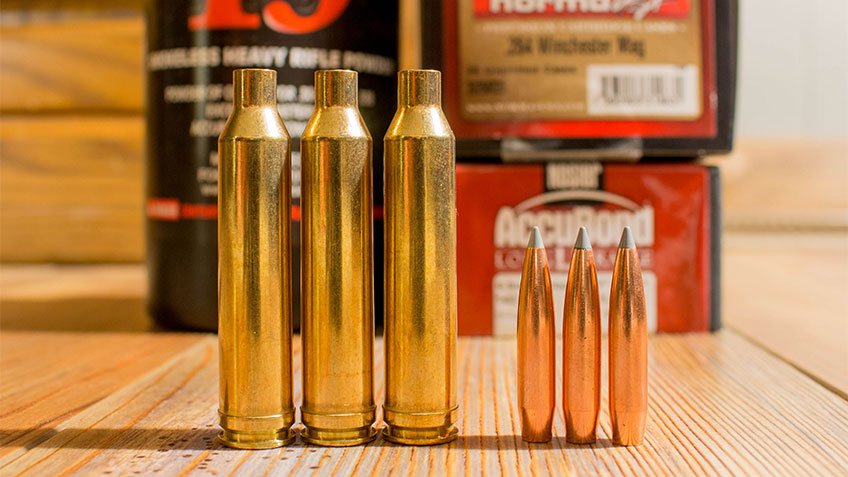
If you handload, the options for the .264 Winchester open up widely, as there are a good number of premium bullets available in component form. Definitely look to a large rifle magnum primer, and powders on the slower side, like Reloder 19, 22 and 23, IMR 4350 and 4451, and Hodgdon H4831SC. Move the shoulder as little as possible and you’ll see an improvement in accuracy.
Is the .264 destined for obscurity? Well, as a hunting cartridge, I think there is enough of a fan base to keep it around for a while, though I think the younger generation may frown upon the design, considering the popularity of the 6.5 Creedmoor and the head of steam that the 6.5 PRC is developing. But there are a good many rifles, both used and new, available in the .264 Winchester Magnum, and there’s no reason to shy away from the time-proven design.
Looking for previous installments of our "Behind the Bullet" series? We've got you covered.
• .348 Winchester
• .33 Nosler
• .260 Remington
• .30-30 Winchester
• .416 Rigby
• .358 Norma Magnum
• .22 LR
• 7mm-08 Remington
• 8mm Remington Magnum
• .338 Federal
• .224 Valkyrie
• .338-06 A-Square
• 9.3x62mm Mauser
• .257 Weatherby Magnum
• .45-70 Government
• .300 H&H Magnum
• .25-06 Remington
• .30-06 Springfield
• 6.5 Creedmoor
• .300 Remington Ultra Magnum
• 7mm Remington Magnum
• .470 Nitro Express
• .280 Remington
• .300 Winchester Magnum
• .270 Winchester
• .222 Remington
• .45 ACP
• .404 Jeffery
• .44 Remington Magnum
• .41 Remington Magnum
• .243 Winchester
• .338 Winchester Magnum
• .357 S&W Magnum
• 6.5-284 Norma
• 8x57 Mauser
• .38 Smith & Wesson Special
• 7x57mm Mauser
• 9 mm Luger
• .35 Whelen
• .454 Casull
• .375 H&H Magnum
• .45 Colt
• .22-250 Remington
• 10mm Auto
• .308 Winchester