Classic lever-action deer rifles are undoubtedly cool. My first was a Winchester Model 94AE XTR in .30-30 Winchester, that timeless rimmed cartridge that has accounted for innumerable amounts of game. It was a gift from my father for my 15th birthday, and—at least to the young man who received it—marked a passage into manhood. I’d be hunting deer with my father the following season, and that alone was a dream come true. Like any inquisitive young man, I delved into the history and nostalgia of the .30 WCF, or .30-30, and the many names it has carried, and was honored to take my first deer—a whitetail doe—with the same cartridge that my father took his.
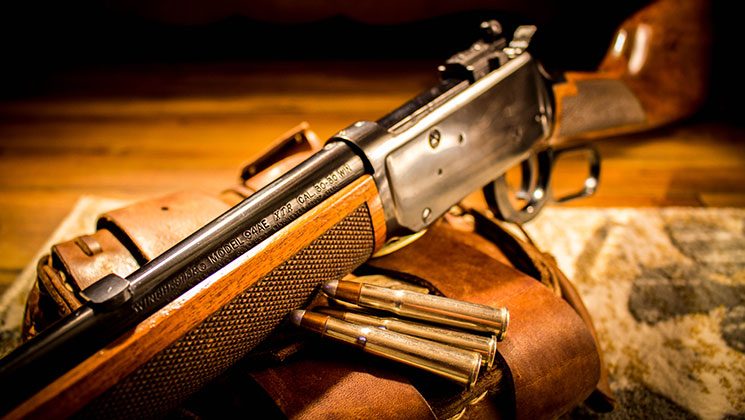
I’m old enough to remember when the lever guns were still highly popular among deer hunters, and my own rifle, as shiny and unproven as it was in comparison to the older gents’ worn pieces with bluing rubbed off and stock finish dulled by the elements, was a source of pride. In the deer camp mix of Savage 99s, Marlin 336s and a selection of Winchesters, many cartridges were represented, including some rarities like the .348 Winchester, but the main rivals were the .30-30 Winchester and the .35 Remington. As a matter of fact, that may have been the first campfire cartridge argument I was privy to; if only those gentlemen would’ve realized the fire they’d kindled. Let’s take a look at the two champions of the deer woods, and perhaps finish the conversation started three-plus decades ago.
The .30-30 Winchester has the unique claim of being the first cartridge designed to run on both black powder and the revolutionary smokeless powder. Deriving its name from a combination of the caliber and the powder charge (.30 caliber, 30 grains of powder) the .30-30 was introduced in 1895, in the John Browning-designed Model 1894 Winchester. At the time, .32 caliber cartridges were actually more popular than were the .30s, but it didn’t take long for the .30-30 to establish itself as a perfect deer hunting cartridge. Driving a 160-grain jacketed bullet to a velocity of just over 2300 fps, it represented a fantastic hunting cartridge for its time. Soon after, the classic 150- and 170-grain loads took root, and due to the tubular magazines of so many popular rifles, round nose bullets were employed. It has accounted for almost all, if not all, North American game species, and the famous African PH Wally Johnson used one to kill lions in his early years in Mozambique.
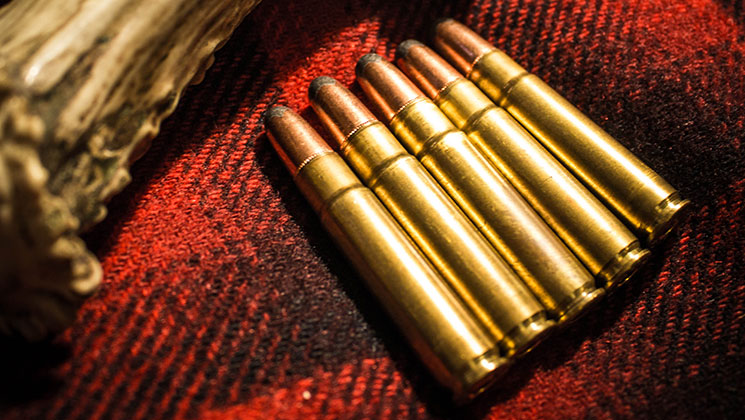
The .35 Remington was released—as one of a quartet of rimless cartridges from Remington—in 1906; it is a rimless affair designed for their Model 8 autoloading rifle. Alongside the .25, .30 and .32 Remington, the .35 would be the only survivor. While it has been chambered in many different rifles, the combination of the Marlin Model 336 rifle and the .35 Remington has achieved true classic status, in spite of the fact that the rifle was introduced 1948. This combination offers an affordable, hard-hitting rig which is capable of taking most common game animals, albeit at short range. The .35 Remington uses the 180- and 200-grain .358″caliber bullets, and while light-for-caliber, they are effective at the ranges a .35 Remington is used, which is usually inside of 150 yards.
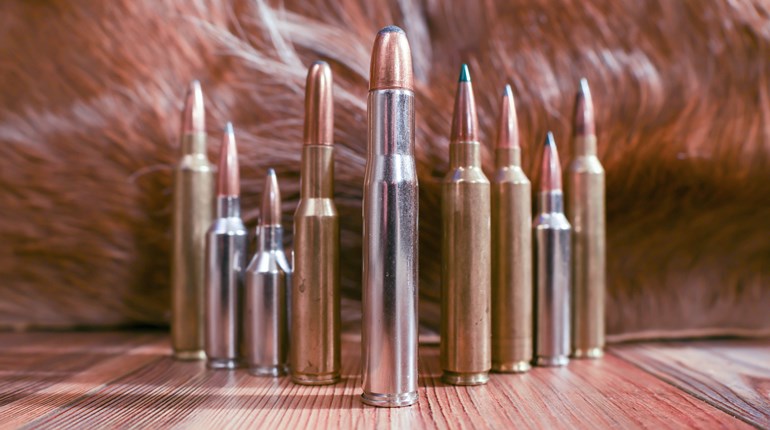
Which is the more useful cartridge? Of the two, which serves the hunter better? Traditionally, the tubular magazines of the popular lever-rifles restricted the cartridges to using round or flat-point bullets, to avoid the possibility of magazine detonation, should a pointed spitzer bullet hit the primer of the cartridge ahead of it in the magazine. The exception to that rule is Hornady’s LeveRevolution ammo line, which uses a pliable tip on a spitzer bullet to afford a much flatter trajectory in both cartridges. With the traditional loads, the .30-30 will drive its 150- and 170-grain bullets to a muzzle velocity of 2400 and 2250 fps respectively, while the .35 Remington launches its 180- and 200-grain bullets at 2100 and 2080 fps. Both generate between 1,800 and 1,900 ft.-lbs. of muzzle energy with traditional loads, and the hot-rod LeveRevolution will certainly offer an improvement in ballistic figures, but the advancements are parallel between the two cartridges.
I feel the cartridges offer very similar performance, at similar ranges. If you were to give the edge to the larger frontal diameter of the .35 Remington—.358″ versus .308″—you would have a valid point. If you were to vote for the .30-30 Winchester based on its higher Sectional Density values—the 170-grain .308 bullet has an S.D. figure of .256 versus the 200-grain .358’s S.D. figure of .223e—I’d have to agree with you as well. Personally, at the ranges that these cartridges are used, I could easily call it a draw. Both come in light, handy rifles that are a pleasure to carry in the forested mountains and wooded areas where these guns shine. But, there is an issue: It seems the .35 Remington ammunition has begun to fade away. There seem to be fewer choices each year, and that’s a shame.
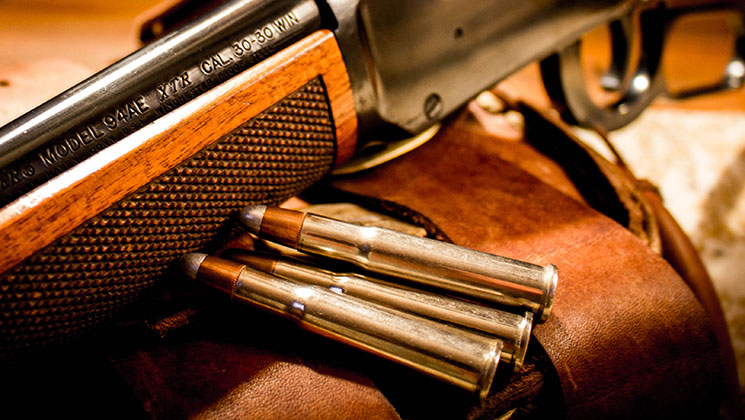
I give the edge to the apparently timeless .30-30 Winchester for the availability alone; there are dozens of factory loads to choose from, and being .30-caliber is never a bad thing. It’s just about perfect for the deer woods, and you can easily teach a youngster the art of shooting an iron-sighted lever rifle without punishing recoil. It will handle black bears and feral hogs—as will the .35 Remington—but sourcing ammunition is far easier if you own a good old thutty-thutty. My own 94 Winchester is coming out of the safe this year, freshly adorned with a new front sight and rear peep from Skinner Sights; even middle-aged eyes get a new lease on life, and I’m having lots of fun from the bench with my old friend.
If you shoot a .35 Remington, I see no reason whatsoever to stop doing so, just make sure you keep an ample supply of whatever load your rifle likes. However, even after 123 years on the market, the .30-30 Winchester remains the king of medium caliber lever guns; it has been in the top ten selling cartridges for Federal Premium to this day, and with millions of rifles out there chambered for the cartridge, that will probably be a fact decades from now.
Looking for previous installments of our "Head to Head" series? Click here.