Part of my career included giving seminars on big-game hunting in the West, mostly elk hunting. I'd also typically have a booth to chat with hunters, sell my books and converse with other exhibitors, many of whom were outfitters. Most of the time, these seminars were at outdoor expos in large venues located in big cities. Many of the attendees had little or no experience in elk country. Their questions to outfitters were all over the board—some had merit, some did not. As an editor for a major hunting magazine, I was asked many questions as well, and, because I lived in Wyoming, I was the go-to guy for my editors who wanted to experience their first western hunt. Here are four questions that we never want to hear.
1. What’s Your Hunter Success Rate?
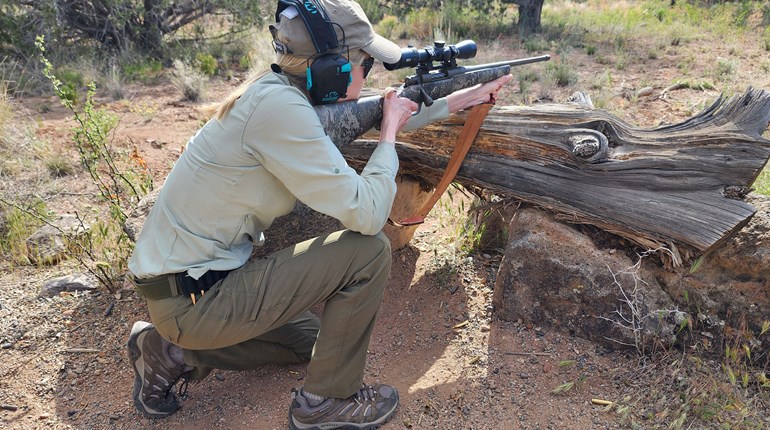
While this seems to be a sincere question, let's look at the meaning of hunter success. Of course, it's an indicator of how many hunters were successful in taking their animal. The only problem is, it doesn't reflect reality. Here's an example. I was on a wilderness elk hunt with four other hunters. I got my bull, along with one other hunter. That means the success rate was 40 percent—not very good when this is a costly dream hunt that you've been counting on for years. Why didn't those other three hunters get their elk? One missed two bulls. He didn't take the time to find a solid shooting rest, and he shot offhand. He was excited, and he never really had control of his firearm. Another hunter couldn't see three different bulls in time for a shot. His guide pointed them out, but by the time the hunter saw them, the bulls had disappeared in the timber. The last hunter was reluctant to ride his horse out of camp in the dark. He feared the night woods and was reluctant to ride his horse when it was totally dark. As a result, he never arrived at the hunting area in time to see elk moving from meadows to bedding areas in the forest. He never saw an elk. The result: three hunters failed to score because they weren't able to capitalize on opportunities—and that's the key word. It wasn't the outfitter's fault that the hunter success wasn't much higher. So the question to ask is: What is your average hunt opportunity rate? That's a much fairer question when evaluating the outfitter's success record.
2. How Far of a Shot Can I Expect?
Some outfitters who mainly hunt heavy timber might tell you that you can expect a 50-yard shot, or no more than a 100-yard shot. Another, who hunts in more open country where longer shots across meadows are common, might say to figure on 200 to 300 yards. But the truth is, most outfitters prefer not to offer this advice, because there's nothing predictable on a mountain hunt. The danger is that you might not be prepared for variable distances. If the average shot in the timber is expected to be 100 yards or less—and that's where you've sighted in your rifle—what will you do if your bull appears in an opening across the draw 300 yards away? Can you make that shot? Have you fired your rifle at that distance at the range to know where your bullet will hit?
Once, while hunting elk on a bitterly cold day, I stood quietly in heavy forest when I heard elk crunching in the snow. I had expected a close shot on that hunt, but saw several bulls come into view on a small open ledge 300 yards away. Luckily, I made the shot work, primarily because I've practiced with the rifle I was carrying repeatedly at distances up to 350 yards. Another mistake is bringing along that .30-30 that’s perfect in your Pennsylvania hardwood forest with plenty of thick mountain laurel, but not so good when that long shot in elk country presents itself. The answer is to be prepared for any eventuality. Bring a rifle you know can take out a gnat's eyeball at any reasonable distance, and you'll be comfortable that your gun is up to the task in the elk woods.
3. If I Score at the Beginning of the Hunt, Can I Leave Early?
This seems like a fair enough question—and some outfitters may allow it—but it can be a logistical complication for a backcountry hunt, when the outfitter would need to pack up you and your gear and send a guide down the trailhead with you. This is especially bothersome if it's a long horseback ride to the road. In the area where I live in the mountains of northwest Wyoming, the average horseback ride to the wilderness tent camp can be 20 miles, some as far in as 30 or more. That means it would take two full days to make a round trip.
Prepare to stay the duration and enjoy the wild surroundings. You might consider bringing a camera with a telephoto lens to take outdoor images, or a couple books. Many mountain camps have streams or lakes close by, sometimes within walking distance of camp. Check with the outfitter beforehand. If fishing is available, pack a compact fishing rod and be sure to buy a fishing license before you head into the woods.
4. Should I Bring Binoculars?
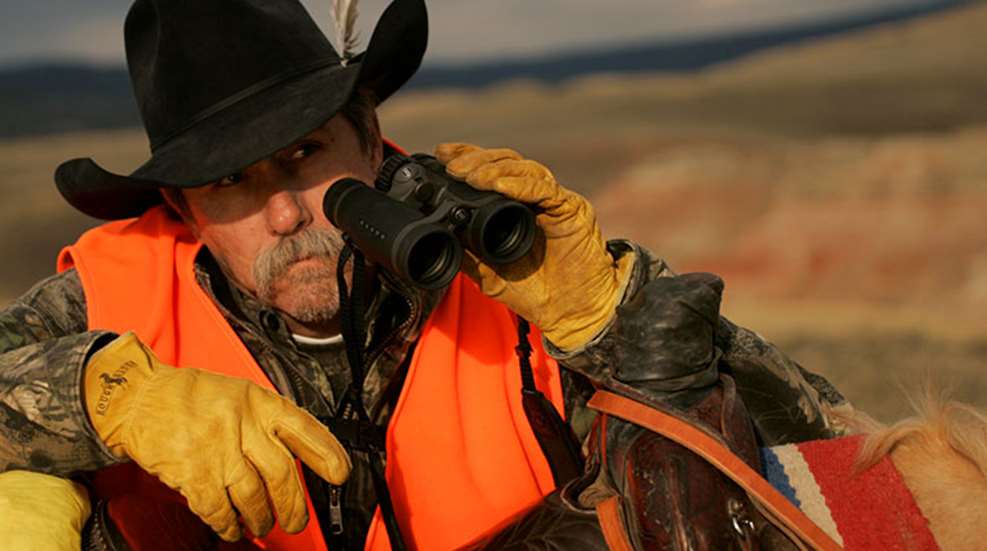
Dumb question? Believe it or not, many hunters will ask it, though most are inexperienced in western mountain country. Some have expectations that their guide will do all the glassing and point out the quarry. The inherent danger here is that the guide might be looking at an elk standing in the timber, being able to see it clearly, but you can't because you don't have binoculars. Borrowing your guide's isn't a good idea because he'll no doubt be reluctant to take them off when he's having a staring contest with a bull. What about substituting your scope instead of binoculars? This is a really bad idea for two reasons. First, binoculars are far more effective in making out a distant or partially hidden animal than a scope. The second and more important reason is for safety purposes.
Here's a scenario. You see movement in the brush. You can't make it out, so you raise your rifle to look through the scope. As it turns out, a person appears out of the brush. You are then aiming your rifle directly at a human being. If an outfitter catches you doing that, he's apt to send you home, and rightly so. Bring binoculars on your western hunt. You don't have to buy a four-digit set if you can't afford it. There are plenty that are far less expensive and perfectly adequate in the elk woods.
By avoiding these questions, your outfitter won't have to second-guess your woods savvy. You're already ahead of the game even though you've never stepped into the western mountains before—and that's a big advantage as you prepare for that big, long awaited hunt.