BullShooters: 7 Suppressor Myths

by
posted on June 3, 2015
** When you buy products through the links on our site, we may earn a commission that supports NRA's mission to protect, preserve and defend the Second Amendment. **
bullshooters_silencer_myths_f.jpg

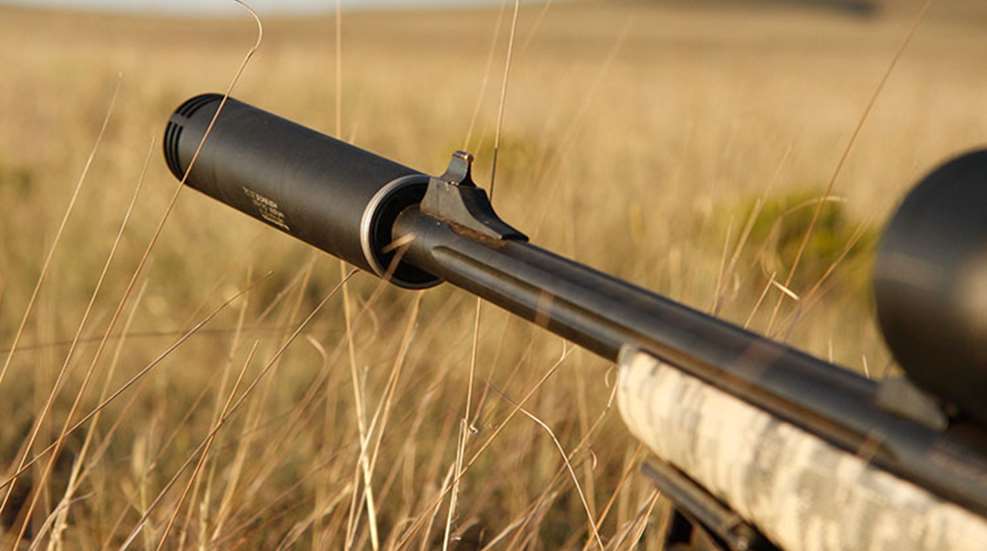
Because silencers (or suppressors) have been regulated and priced out of the average Americans’ means since 1934 (the required federal $200 tax stamp on a 3.50 Maxim silencer equated to $3,500 in 1934 dollars), many folks misunderstand both the laws associated with owning one. Here are seven myths—and the seven corresponding truths—about silencer ownership.

Myth 1: Silencers are illegal to own.
False. Right now, 39 states allow ownership of silencers and 34 states allow hunting with them. See the map here.

Myth 2: It takes a year or more to get a silencer.
“Right now (May, 2015) the BATF’s wait time is around 3 months,” said Jeremy Mallette of Silencer Shop. Then it’s up to the dealer to get your silencer to you.

Myth 3: The ATF can enter your house at any time.
Patently false. “In fact," Mallette says, "You have the same rights as before you purchased a silencer.”

Myth 4: You have to pay an annual fee to own a silencer.
Nope. It’s a one-time $200 tax stamp per silencer. 

Myth 5: You can only use your silencer on one gun.
Incorrect. You can use it on any gun.

Myth 6: You must have a class III license to own a silencer.
“Reality is, only your FFL needs a Class III license to buy and sell without paying a tax. You can own a silencer with a $200 tax stamp,” said Mallette.

Myth 7: You must get fingerprinted to get a silencer.
This one's trueif you register as an individual. But you can also form a legal trust, which can allow you to acquire a silencer without having to submit fingerprints.

Latest

LEDE Peak Alloy Empty Cases

Federal Signs Agreement with U.S. Army to Accelerate High-Performance Ammunition

Federal Ammunition has announced an agreement that allows the United States Army to utilize its patented Peak Alloy ammunition case technology for use in multiple cartridges and weapon systems. The new agreement specifies conditions necessary prior to granting Government Purpose Rights, such as the delivery of 40-million cases featuring the new technology.


NRA Announces 2026 Y.E.S. Grand Scholarship Recipients

The National Rifle Association has awarded $15,000 in college scholarships to attendees of the 2025 NRA Youth Education Summit (Y.E.S.) through the Y.E.S. Grand Scholarship program.

Recipe: Venison Empanadas

When Brad Fenson makes venison empanadas, the goal is simple. Keep the meat front and center, add enough flavor to complement it, and make a filling that stays juicy without overpowering the wild proteins. The filling is rich, balanced, and built to highlight venison, whether baked or fried.

Proof Research Unveils Shorter Barrels for Elevation 2.0 and MTR 2.0

Proof Research has announced shorter-barrel configurations for the Proof Elevation 2.0 and Elevation MTR 2.0. Both the Proof Elevation 2.0 and Elevation MTR 2.0 in shorter barrel configurations are available in Tactical Flat Dark Earth (TFDE) and the all-new Midnight color, offering shooters greater customization options alongside Proof Research's carbon fiber technology.

Range Review: Midwest Industries Bounty Hunter Revolver Brace

Thanks to Midwest Industries new Revolver Brace, you can easily mount a stabilizing brace to your favorite hunting revolvers. Check out B. Gil Horman's review of this game-changing product.

First Look: Marlin Mad Pig Customs Model 1894

Marlin has introduced its Mad Pig Customs Model 1894, a rifle developed—as its name implies—in collaboration with Mad Pig Customs. Built on Marlin's iconic lever‑action rifle platform, this model delivers modern, factory‑installed features previously found only on custom builds.

Interests


Get the best of American Hunter delivered to your inbox.