Where I grew up in central Pennsylvania, driving deer is still a go-to tactic—especially as the season wears on and opportunities for filling a tag grow dim. One group of hunters, the drivers, pushes through cover toward another group, the posters, who wait for deer rousted from their lairs by the disturbance to present a shot. It's a fun, camaraderie-filled way to hunt and can be very effective—if done correctly.
Do scout.
You have to find deer in order to drive them. Otherwise, it's just a walk in the woods with friends. Look for cover where deer will be holed up, but also look for escape routes. If you're not familiar with the terrain and how deer use it, look at aerial maps for features like saddles, draws and edges of cover that could funnel deer to waiting posters. The best drives are done through areas where you know (or at least have a good idea) how deer will react to the pressure so you can plan accordingly.
Do organize a plan.
A well-executed drive is like a military campaign: Every participant knows his duty, and how and when to do it. This takes planning, and it's why each team of hunters should have a captain who is both familiar with the land and experienced in driving deer. It falls to the captains to make sure the drivers know where the posters will be positioned, and the posters know which direction the drivers—and deer—will be coming from. This may sound obvious, but more than one newbie has mistakenly set up to watch the area behind them, turning their backs to the drive and the action. Captains should explain the lay of the land to their teams, describing terrain and vegetation features, ideally pointing them out on an aerial map. Each driver should know the route he is charged with taking through the cover, and each poster should know the area he is responsible for watching. Each team should know when the drive starts and ends, especially if some drivers don't meet up with posters when the drive is over. If the terrain or vegetation doesn't mark obvious starting and stopping points, text messages work wonderfully for communicating. If there's no cell service, use handheld radios (where legal). Make a plan for dealing with wounded deer before the drive starts. Should a hunter who shoots a deer stay on post (or continue driving) or take up the track? Figure it out before the shooting starts so everyone is on the same page.
Do stress safety.
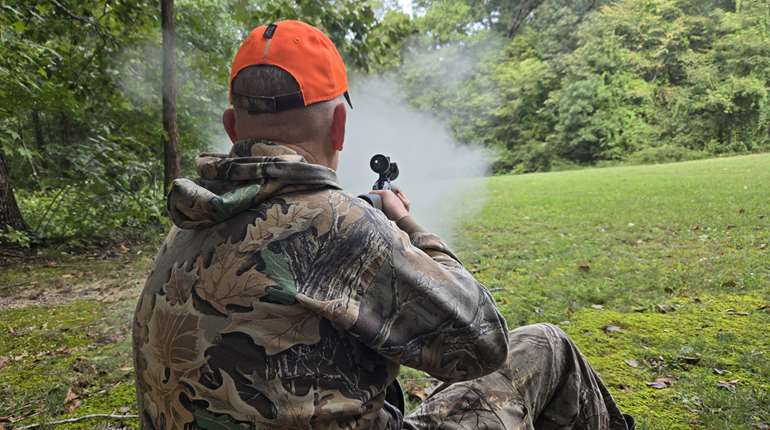
During much of a drive the deer will be between the drivers and the posters, so safety is paramount. You must pick your shooting lanes carefully, making sure another member of the gang isn't in line with your fire. Ideally, posters should hold their fire until a deer passes behind them and is clear of the drive. That way, bullets aren't heading in the general direction of the drivers. Those beating the brush should also limit their shots to deer slipping out the back of the drive. Never take a shot at a deer up or down the line of posters or drivers. If the cover or terrain is particularly nasty, drivers may want to proceed with an empty chamber to eliminate the chance of an accidental discharge during a fall. Even if regulations don't mandate it, wearing blaze orange—at least a cap—to make yourself more visible to others is a good idea.
Don't lose focus.
Deer can appear at any time during a drive—not just toward the end. Sometimes drivers will bump deer while they are still setting up their line and haven't started forward progress. If the drive isn't a long one, those deer could be in posters' laps before it even starts. Be ready. On the other hand, pressured deer may hold tight until the very last moment before breaking cover. Even when the drivers and posters can clearly see each other, and the drive seems like it was a bust, deer still may be lying low between them. Drivers should watch for deer trying to circle through the line and escape behind them at all times.
Don't ignore the wind.
Even with a raucous band of drivers behind them, deer usually aren't going to run straight into the stream of stench emanating from the post line. If possible, set up the drive so the posters are downwind of where deer are expected to be hiding, or at least set up with a crosswind blowing through the targeted area. If the wind is wrong but the drive must go on, put hunters on flank 100 or so yards in front and at each end of both the drive and the post lines to catch deer escaping out the side.
Don't rush.
A drive isn't a race; slow and steady is the best approach. The drivers (except for those on flank) should try to stay in a straight line as they work through the cover, which means the slowest guy in the thickest brush sets the pace. Drivers should regularly shout or whistle to stay in communication if they can't see one another; the sounds up and down the line will help them gauge their position in relation to the rest of the group. There's no need to yell at the top of your lungs, just loud enough so the hunters next to you on either side can hear. If you get hung up and fall behind, tell the rest of the drivers to "Hold the line!" until you catch up. And if you hear that command, honor it. A drive that falls apart in the middle is a shame, because one done well is a high-odds way of filling tags.