Norma was founded in 1894 by the Enger brothers from Oslo, Norway. In 1902 the family established a manufacturing plant in the small community of Amotfors, Sweden. Norma might be the only ammunition company initially formed to make bullets for a single cartridge; the 6.5x55mm Swedish Mauser. In 1914 Norma started loading 6.5x55mm ammunition using once-fired military brass, but there wasn’t enough brass to go around. So, in 1917 Norma began making its own. A couple Olympic records later, Norma began loading hunting ammo.
After World War II Norma helped Roy Weatherby with the design of his cartridges and the company still loads Weatherby-branded ammunition today. Norma also developed its own cartridges; the .358 Norma Magnum in 1959 and the .308 Norma Magnum in 1960. Then came hunting bullets like the Silverblixt (Silverflash) and the Alaska.
Between 1965 and 2002 Norma was sold four times. The latest acquisition was by RUAG of Thun, Switzerland. During that time, however, Norma’s engineers didn’t stop creating. Norma developed the 6mm PPC cartridge, the 6.5 VLD (very low drag) bullet, the 6mm Norma Bench Rest cartridge and it legitimized the 6.5-.284 wildcat round.
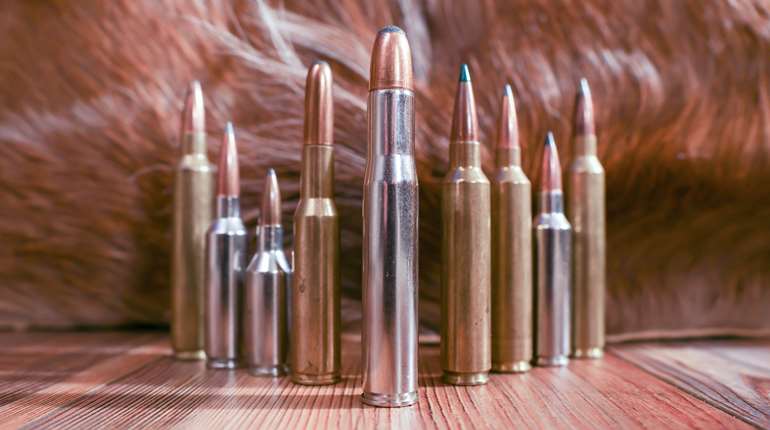
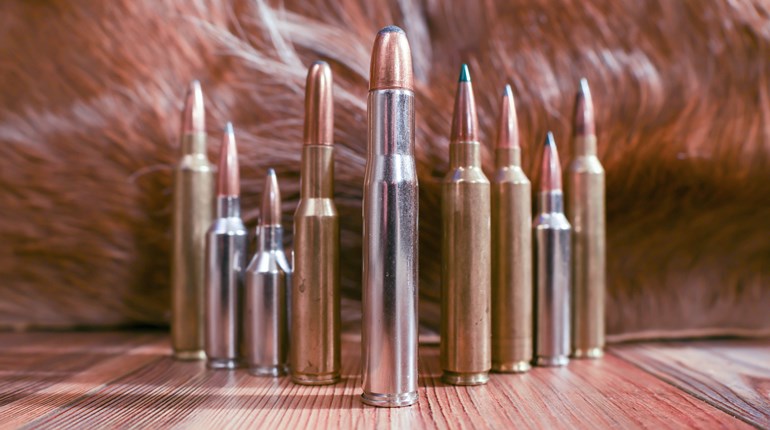
Norma has always represented quality and is often considered the source for non-American rifle cartridges like the 6.5 Japanese Arisaka, 7.5X55 Swiss, 7X57R and the 9.3X57. But it also loads American favorites like the .222, .223, .22-250., .280 Rem., .243, .270 and .308 Win. and the .270 and .300 WSM. Less popular loadings like the .35 Whelen and various big bores like the .404 Jeffery, .416 Taylor and .505 Gibbs are cataloged as well.
Currently, Norma manufactures cartridge brass for many companies and offers a wide selection of hunting and target ammunition. It continues to develop new cartridges too. It has its own .300 and .338 Magnums. Recently Norma helped Blaser develop 7mm, .308, .338 and .375 caliber beltless magnum cartridges. In total, Norma’s output currently reaches 30 million rounds of ammo annually in 106 calibers.
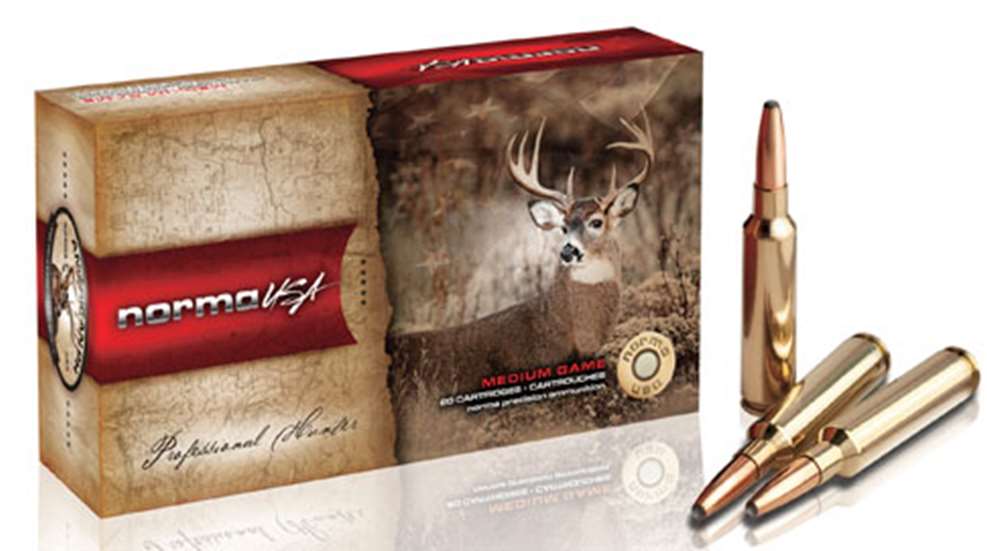
Probably most interesting to hunters is the newly formed Norma-USA. To help American hunters go afield with excellent ammunition, loaded with state-of-the-art bullets, Norma has established a branch in the States to help with the distribution of its products. Not only will Norma ammunition now be much easier to find, it is all wrapped up in packaging that is more appealing to North American big-game hunters. By mid-summer, you'll be able to buy Norma-USA ammunition direct from retailers like Cabela's, Midway-USA and Brownells. This ammunition will be loaded with some outstanding bullets.
Norma's Oryx bullet features a gilding metal jacket that’s bonded to a lead core. Like most bonded bullets it reaches its terminal shape very soon after impact. Oryx bullets also open to about double diameter. They can be expected to retain a high percentage of weight so penetration is generally very deep.
The Vulkan is another Norma bullet popular in Europe. It’s actually a soft point bullet but the front part of the jacket is folded into the nose to protect the tip from deformation. Vulkan bullets do not retain as much weight or penetrate as deep as Oryx bullets but they do create very wide wound cavities and damage more tissue.
Though not currently available in the States, the Norma Plastic Point bullet is popular in Europe because it puts animals down fast. This bullet is violent on impact. The small plastic point at the nose drives back into the pure lead core and intensifies expansion. Terminal performance is similar to Nosler’s Ballistic Tip. The recovered bullet diameter is misleading because this bullet expands so much that its outer extremities often break off. The down side? Penetration is limited. But it is sufficient on thin-skinned animals.
Norma’s newest bullet, the Kalahari, is a 100 percent lead-free, copper/copper alloy bullet that's coated with a nickel finish. This monolithic bullet is designed for maximum penetration and high weight retention at long ranges. Similar in construction to popular bullets like the Barnes Triple Shock, Nosler E-Tip and Hornady GMX, terminal performance of the Kalahari is similar, too. The major difference is in the amount of velocity needed to initiate expansion. A Norma engineer said, “The Kalahari only needs to impact at 1650 fps or faster for expansion to begin.” This is several hundred fps less than the required minimum velocity for most American-made mono-metal bullets. Due to this low velocity expansion threshold the Kalahari may shed its petals at very close range when impact velocities are in excess of 3000 fps.
Low expansion velocity is not just a trademark of the Kalahari. The Plastic Point bullet will show some expansion when impacting as slow as 500 fps and will violently expand at just 1000 fps! The Oryx needs about 1500 fps and the Vulkan about 1800 fps. The ability to expand at lower velocities has two advantages: It lets you experience meaningful expansion at greater distances and allows handloaders to seat premium bullets in less powerful loads without worry of expansion failure.
One stunning observation in terminal performance testing was the uniform diameter to which all Norma bullets expanded; variation was only .03 inch for all .30-06 bullets. It’s amazing that bullets of such varied construction would all expand to the same, double-caliber diameter. Considering there was a 38 percent variation in total penetration depth and weight retention, it is even more amazing.
It’s a great thing to learn that your ammo offers your desired echelon of terminal performance, but this info is worthless if you can’t hit where you aim. Seven different Norma factory loads in four chamberings were tested from the bench at 100 yards using four different rifles. Thirty-five, five-shot groups were fired. The average group size for all was an impressive 1.009 inches.
By 2013, Norma-USA hopes to offer bullets for handloaders; brass is already available. You may already be shooting Norma brass; it manufactures brass for many ammo companies. One thing's for sure, whether you are shooting Norma brass, Norma bullets or the new Norma-USA ammunition, you can expect top-shelf performance at a competitive price. What else would you expect from a company that has been doing this for over 100 years?