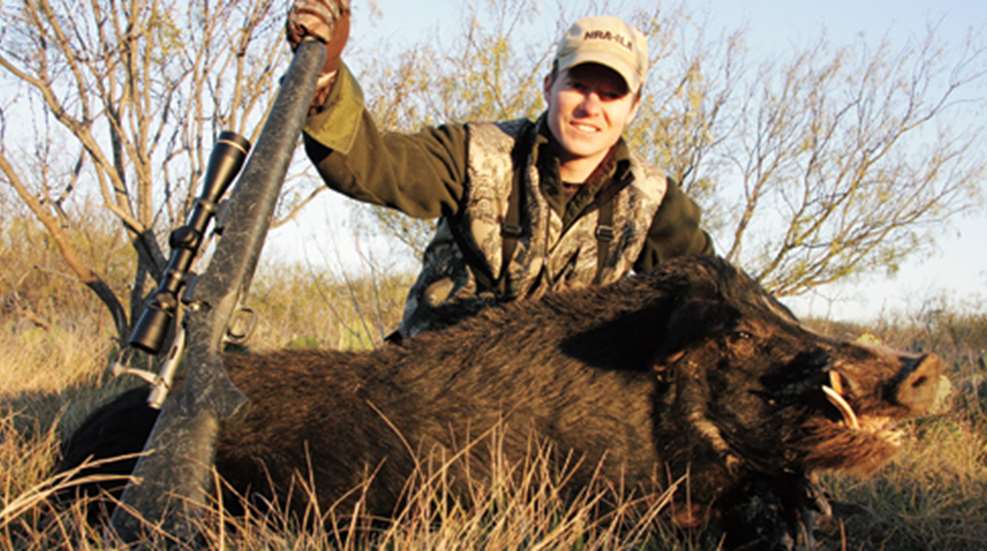
It’s like the fire ant scourge of the ’40s, except these invaders have large teeth, more brains than your Labrador retriever and free Christmas hams hanging from each leg. They’d be the perfect big-game animal—if only they were classified as such. And that in itself adds to their popularity among hunters by placing them within reach of even the most pedestrian of us. In many states you are encouraged to hunt them anytime, even without a license, due to their penchant for destroying habitat. If you live in the South chances are good you’ve got your own pig problem, and if you don’t, just be patient. They’ll uproot your food plot in a night then ravage your neighbor’s pasture before you can holler for help.
We call them wild pigs, wild hogs, razorbacks and Russian boars, but actually they’re feral swine. Spanish explorers brought them in the 1500s for pork, but fingers can be pointed at many, including hunters who imported wild boars from Russia for sport. Over the years they escaped, bred and now they’re as prolific as butterbeans. They’re intelligent, hardy, adaptable, and capable of eating nearly anything that’s not bolted down. They compete with native game and livestock for food—and usually win—and steamroll crops like a division of Panzers. They reproduce at a rate that makes rabbits seem prude, rearing 2-3 litters of 4-10 piglets per year.
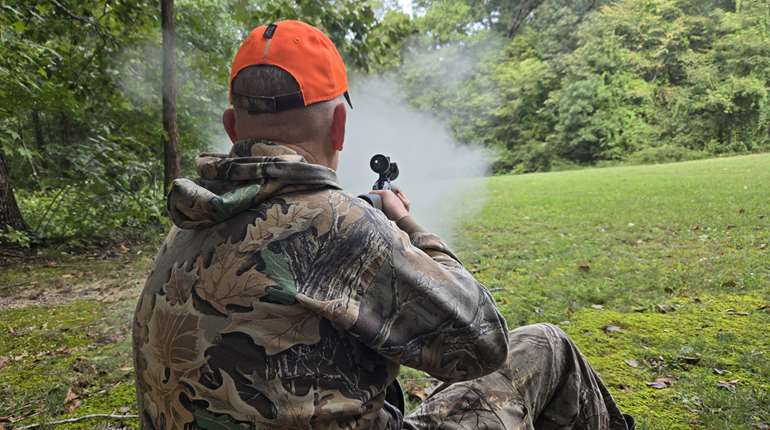
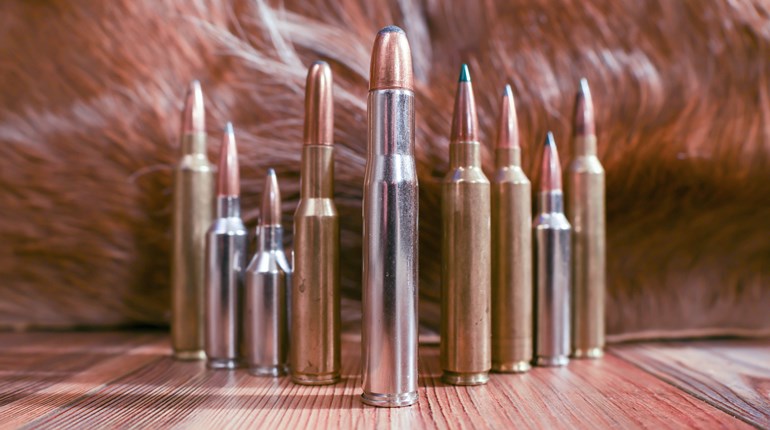
Right now feral swine are running rampant across most of the South, upper Midwest and portions of California, and game departments are struggling for solutions. Currently hunting offers the only feasible means of population control. In September Texas wildlife officials allowed paying sportsmen the use of helicopters for hunting hogs on private land. For more primitive means, try hunting with hog dogs, spotting-and-stalking, baiting-and-waiting, spears, knives, traps, pistols or pitfalls where legal. But just because they’re feral, don’t think they’re easy, weak or won’t punch a tusk through your guts. They’ve been running wild long enough to develop a keen distrust of man, and they’re just smart and surly enough to know that sometimes the best defense is to send their pursuers packing up the handiest tree. They’ve got noses that make your champion bird dog look like a piker, and a thick, grisly shield around their shoulders to protect their vitals. Always use the wind to your favor and err on the side of penetration when choosing a projectile.
Most wild pigs are black, coarse-haired and rotund, but some are pink-and-white polka-dotted, red, brown or palomino, with linebacker-like shoulders, little bitty hips and hoggishly long snouts. Practical hunters prefer a 60- to 80-pound “meat pig” to serve as hors d’oeuvres at parties simply because they’re easy to carry, but don’t think you can’t eat the backstraps of a Hogzilla-sized swine if you’re inclined. Yes, there’s a place for these pervasive porkers, and it’s right next to the potatoes! So do your part and plug a pig this year, because there’s a surplus out there, and every day it’s open season.
Tips for Pig Baiting:
Hogs are like catfish—they eat about everything. So almost anything edible—meat, vegetables, fruit or candy—can serve as bait. Naturally, the smellier the better. The problem, however, is getting a pile of pigs to stay at the bait long enough without consuming it (and maybe even the cash in your wallet) in a matter of minutes.
-Electronic deer feeders are great for baiting because a hunter can control the times, intervals and amount of corn that’s broadcast. You don’t have to throw much corn daily to keep hogs coming back for more. Be sure to stake down the feeder solidly or the hogs will turn it over and trash it.
-For a less expensive option, coat corn in molasses or a commercial hog attractant. Some hunters swear by Dr. Pepper or Big Red soda. With post hole diggers dig a hole 2 feet deep and drop in the corn. It will take a few hogs a few days to find it. But when they do it will take them longer to uproot it all, thereby increasing your chances of seeing hogs during hunting hours.
-In areas where baiting deer is allowed and wild hogs also are present, it is difficult to keep the aggressive porkers from eating all the bait. But hogs can’t jump very high, so hunters have found that building a sturdy fence of hog wire 32 inches high around the bait site allows deer to jump in to feed, while prohibiting pigs.