Top 10 Buck Hideouts

by
posted on September 18, 2009
** When you buy products through the links on our site, we may earn a commission that supports NRA's mission to protect, preserve and defend the Second Amendment. **
2009918-ds_03952_f.gif

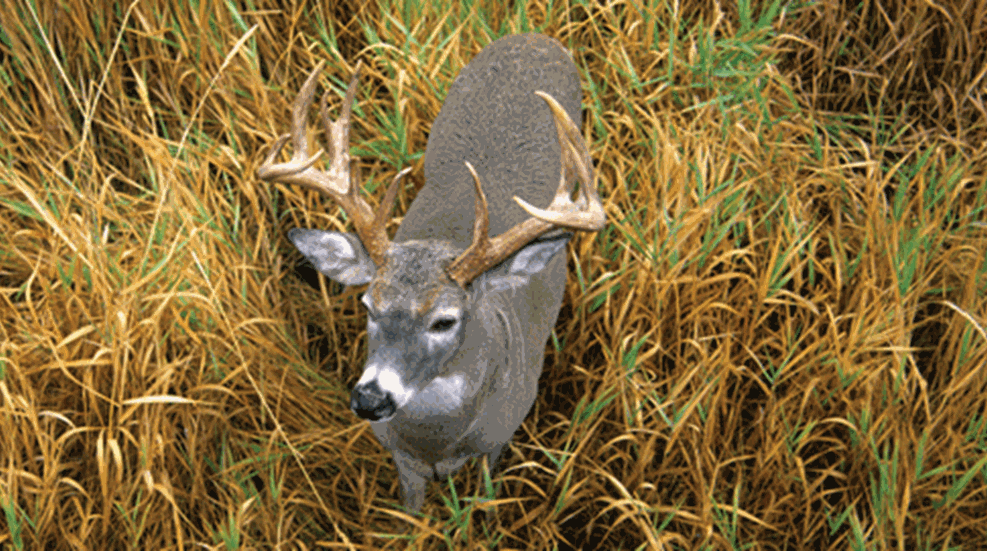
The main thing a whitetail needs to become a trophy is longevity. Yes, genetics and food sources play important roles, but a buck must survive at least 3½ years to grow decent antlers, and 4½ to become heavy. Many places that manage specifically for mature bucks won’t even shoot a buck until they’re certain it’s at least 5½ years old. Outside of managed areas, whitetails that live long enough to make the record books do so by spending much of their time in “sanctuaries” where hunters don’t tread. Learning to find their secret spots is a key to tagging these brutes.

Big-buck sanctuaries have oft been called “buck bedrooms” because the deer mostly bed and wait for darkness in these hiding spots. Such places can take many forms, such as parks, golf courses and posted lands. But though you can’t hunt many

sanctuaries, bucks invariably leave their safe havens from time to time, especially during the rut. They also get up at different times during the day to move around their hideouts. As a result, if you can find a big-buck sanctuary and hunt adjacent to it, your odds for bagging a trophy skyrocket. We’ve put together a list of 10 sanctuaries where aged whitetails often lay up. One of these areas just might harbor your dream buck.

1. Golf Courses and Parks
Whitetails love to munch on the lush grasses and manicured shrubs and plants that grow on golf courses; however, to be a sanctuary, a golf course so needs bedding cover. Whitetail fanatic Steve Pinkston found a golf course in central Ohio that appeared to have everything whitetails needed. Pinkston talked the course manager into letting him scout the grounds, and he found some long-tined sheds in a bedding thicket near a cluster of cabins.

Since he couldn’t hunt the golf course, Pinkston finagled permission to hunt a 12-acre strip of woods that separated the golf course from a soybean field. He set up trail cameras in the woods and soon had photos of three trophy bucks. One of them was enormous, but it only passed through at night....

Latest

Norma American Professional Hunter 308 Norma Magnum 180Gr Oryx Rifle Ammo 20 Rounds 1439756 1

Behind the Bullet: The .308 Norma Magnum

Norma’s ballistician Nils Kvale saw the wisdom of having the velocity and horsepower of the .300 H&H Magnum, but in a shorter, more affordable receiver, and used the H&H case to develop his .358 Norma Magnum in 1959 as well as the .308 Norma Magnum one year later. The .308 Norma Magnum closely resembles the wildcat .30-338 cartridge, though the shoulder of the former is located a bit more toward the base than that of the .308 Norma Magnum. Intrigued? Read on about this often unfairly overlooked hunting classic.

New for 2026: Browning Trail Cameras Defender Pro Scout Max HD-DV

The Defender Pro Scout Max HD-DV, from Browning Trail Cameras, promises direct video transmission and streamlined setup without adding complexity.

Is Wildcatting Right for You?

Dennis Bradley explores the potential benefits of going with a wildcat cartridge, using the .375 Raptor as a case study.

New for 2026: The Chiappa M1-22 Bushranger

Chiappa Firearms expands its rimfire lineup with the introduction of the Bushranger M1-22 Semi-Auto, a .22 LR rifle built to bridge familiar sporting ergonomics with modern accessory capability. The Bushranger is intended for recreational shooting, skill development and range use, but could also excel in the hands of any small game or varmint hunter.

Savage Updates 212 and 220 Slug Guns

Savage Arms has upgraded its 212/220 Harvester and Harvester Woodland slug guns. These models now feature the AccuFit V2 stock system, providing shooters with all sorts of customizable options.

Science Behind Mountain Lion Management and Hunting

Across North America, agencies responsible for the conservation and management of native mammals, including large carnivores, employ science-based tools to manage wildlife populations. It’s a delicate balance too often compromised by emotion at the ballot box.

Interests


Get the best of American Hunter delivered to your inbox.