Attention all whitetail hunters: The experts have been fibbing to you all these years. Those guys who keep telling you that the rut is the best time to kill a big buck aren't entirely correct. If I could hunt just one time of the year in a quest to kill a big, mature whitetail buck it wouldn't be the rut, when most folks sell their souls for an extra day on stand. It would be during the post-rut. Here's why.
The rut is great, for sure. The big bucks get a testosterone overload and become relatively dumb for a few days. Those big Vampire Bucks-the ones who move only after dark, except when the breeding urge forces them to get up when the sun is above the horizon-are vulnerable now. Problem is, when the rut is on it is a "here today, gone tomorrow" deal. Unless you can hunt great places day after day, you may never see a good buck simply because their otherwise very orderly lives have become total chaos. Even they do not know where they are going next, and if they don't know, how do you pattern them?
The late season is a different story. In those regions of the country where the Alberta Clipper blows into town in December, bringing with it bitter cold temperatures and maybe a big dump of snow, you can once again pattern those big dudes.
It really isn't that tough. After the rigors of the rut, both bucks and does have to eat. A lot. They have to put the pounds on as quickly as possible to be able to survive winter. Thus, they hone in on high-calorie food sources like corn, soybeans, winter wheat and maybe even some late-season food plots filled with brassicas, as long as they last. Young deer, old deer, does, bucks, they'll all be there-and so should you.
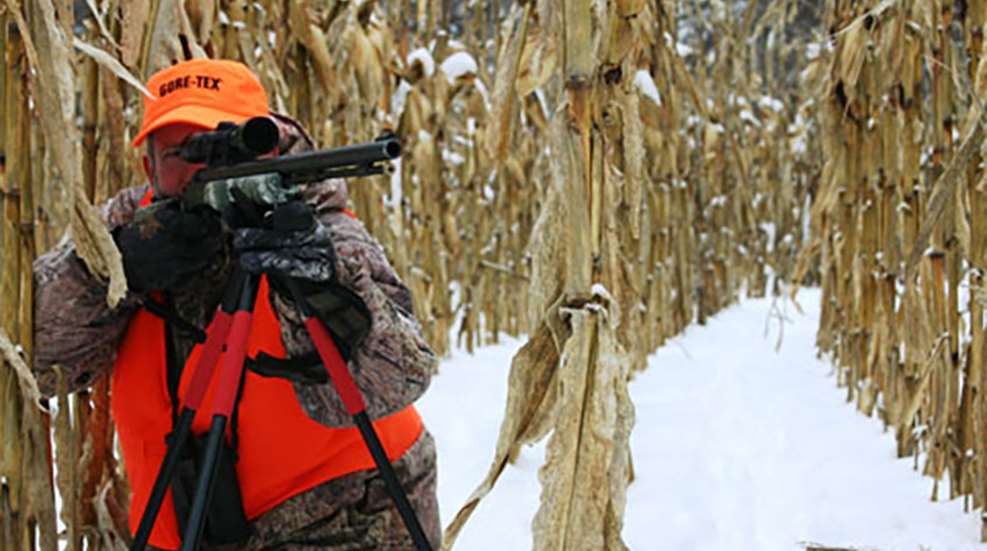
Some states have late-season archery hunts, while others conduct muzzleloader hunts. Out West, some even have rifle hunts. The key is to locate the biggest concentration of food, scout it, find the sign that tells you the big deer are nearby and set up on them.
It really is not any more complicated than that. A bonus, at times, is when a doe that was not bred during the first estrous period comes into heat in December. If she's on the food-and she will be-every buck within shouting distance will be on her trail.
If you want to take it to the next level, the time to set up a late-season hunt is in the spring. That's when you work with the landowner and ask him to leave you some standing corn in an area where you can set up a stand or three that keep the prevailing winds in your favor. Buy the corn from him if you have to. Then, as the season progresses, get your stands set and any ground blinds erected well ahead of time.
Not all that long ago in Iowa in December, the weather turned bitter and I was set up on a strip of standing corn in an otherwise cut cornfield. I had a muzzleloader and was glassing the corn strip from about 200 yards when, after two days, I realized that was where all the afternoon action was. We moved a portable Darkwoods blind to about 80 yards from the strip edge, placed it on the edge of the woods and hid it as best we could. Late that evening a pair of shooters came for supper, and the bigger of the two left in the back of the truck. He scored 164 2/8.
Two seasons ago I was bowhunting in southwest Kansas with my buddy, outfitter Jeff Louderback, on the family ranch. Jeff has a superb cottonwood river bottom to hunt where, on this December week, I shot a dandy 8-point that grossed 154. He was trailing a group of seven does that were coming to the only open water and food source (corn) for a long ways.
These are but two examples of good deer I have taken during late-season hunts. There are more. There will also be more, since you can be sure that in December I will be spending a lot of time bundled up near a high-calorie food source, sorting through all the deer coming to stoke their fires after a tough rut.
Sure beats Christmas shopping.