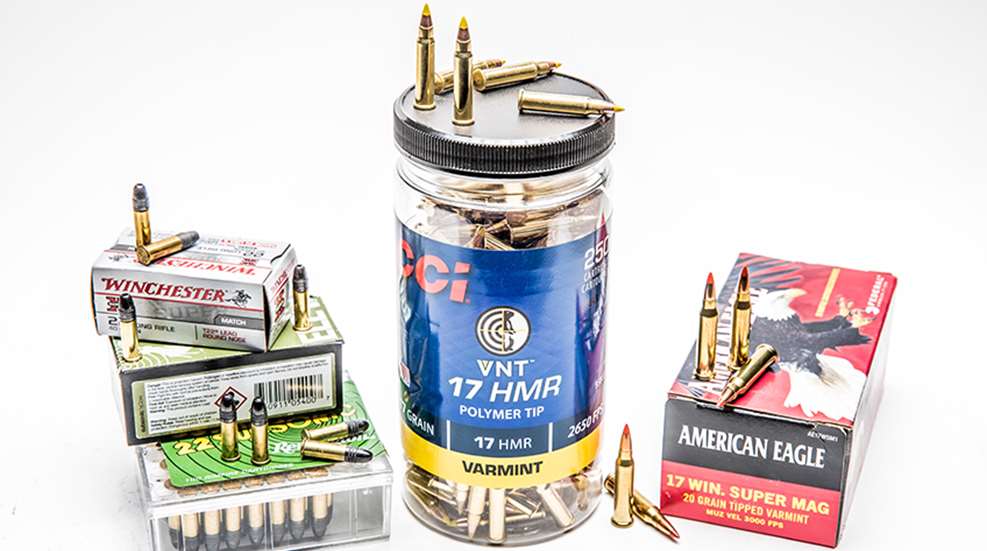
Like baseball, rimfire cartridges have long been a staple of Americana. Many hunters grew up with them—especially the venerable .22 Long Rifle—since the low recoil, inherent accuracy and low cost of ammunition make them readily accessible to new and especially young shooters. Not surprisingly, the .22 LR has been around for more than a century and is arguably the most popular of any cartridge ever made.
Despite the widespread usage of rimfires, the category as a whole saw shockingly little innovation throughout the 20th century. The .22 Long Rifle, .22 Short and .22 Long were all developed in the late 1800s, originally as black powder loads. The only monumental change came in 1959 with the .22 WMR, which improved on the LR and has been a staple of the rimfire fan club. Big waves of change came starting in the early 2000s, however, as Hornady introduced the .17 HMR and .17 Mach 2, which was followed by Winchester’s .17 WSM. Call it a resurgence, but the rimfire family finally saw the change it was due after nearly 100 years without much fluctuation.
With such a storied history, it’s fair to ask which cartridges stand head and shoulders above the rest. Some are standouts because of performance, while others make the cut based on groundbreaking innovation and longevity. Here’s a look at the seven best rimfires of all time.
1. .22 Short
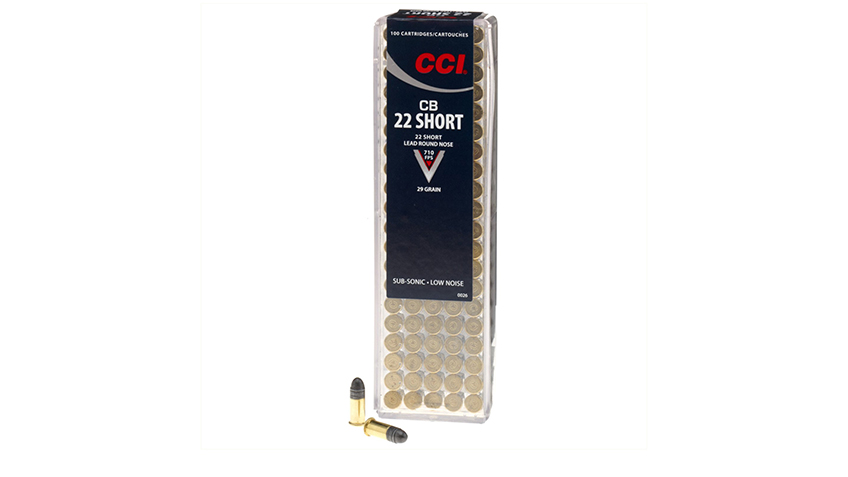
It may not be the most powerful rimfire, but the .22 Short is the oldest commercial, American, self-contained metallic cartridge around, having been in production for over 160 years. The .22 Short still finds use as a close-range plinking and competition round and was for years a staple of Olympic match shooting. Interestingly enough, the cartridge was originally developed as a defense round for the first Smith & Wesson pistols. Uniquely, the Short began as a black powder load and made the successful transition to smokeless, giving it greater velocity. Later combined with a hollow-point bullet, the Short achieves around 700 fps with a 27-grain bullet. Although it has given way in popularity to the .22 Long Rifle, the Short still has a consistent following and is a good option for short distances and small game, especially in handguns.
2. .22 Long
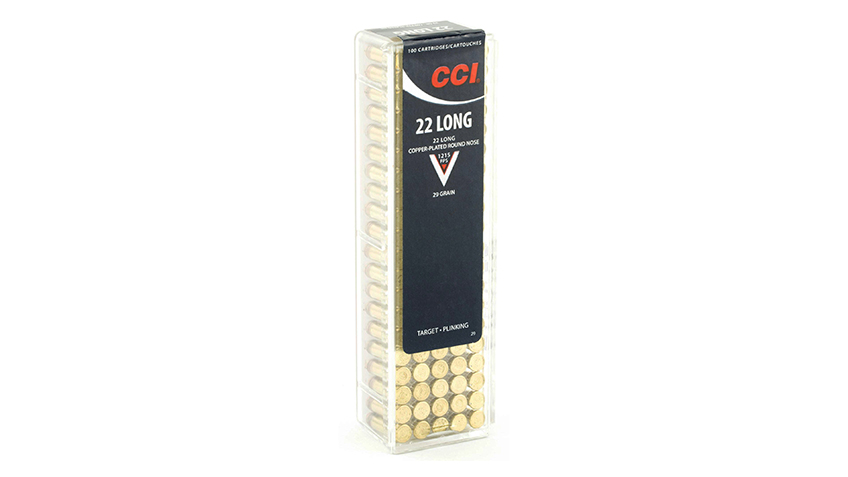
Originally a black powder load that dates back to at least 1871, the .22 Long housed a 29-grain bullet and five grains of granulated powder. Later, smokeless, high-velocity loads became the standard. In terms of velocity, the original black powder Long surpassed both the Short and Long Rifle, but with the advent of modern smokeless powders, the high-velocity Long chambering falls in between the other two. Currently, CCI still loads the .22 Long with a 29-grain bullet that carries a muzzle velocity of 1215 fps. Oddly enough, many firearms chambered in the more popular .22 Long Rifle will fire the Long cartridge, but not in semi-autos. Though it certainly has been eclipsed by the more widely-available Long Rifle, the .22 Long has stood the test of time.
3. .22 Long Rifle
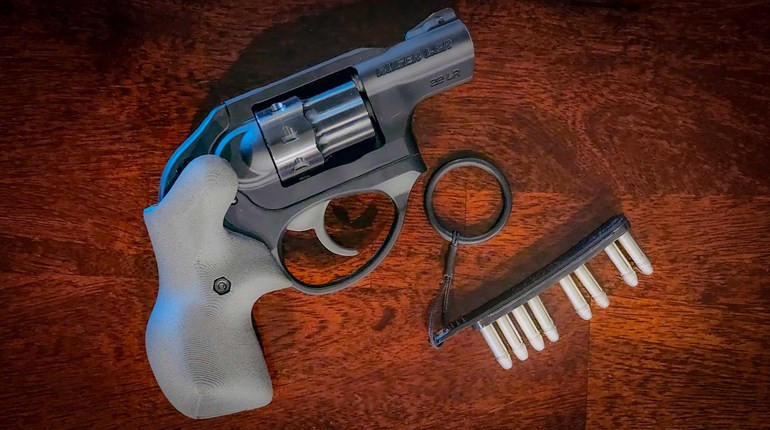
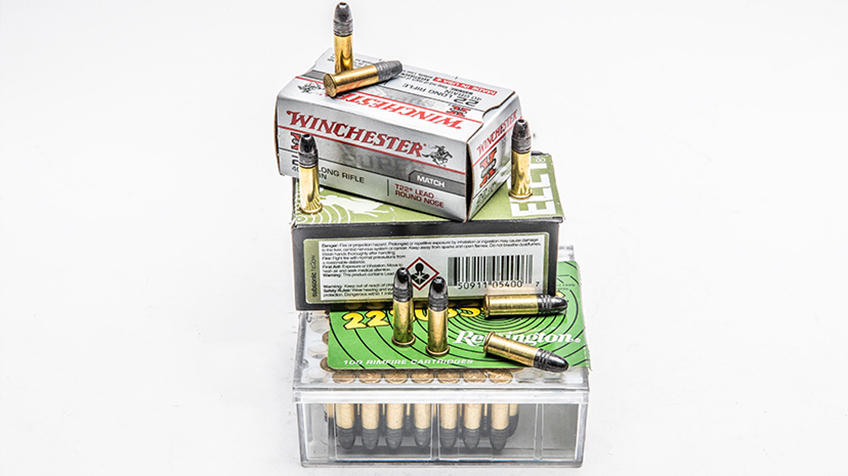
Developed by the J. Stevens Arms & Tool Company in 1887, the .22 Long Rifle was first loaded with black powder and a 40-grain bullet. It’s since made the leap to smokeless powder and just about every pistol and rifle platform known to man, from semi-autos to pumps, wheel guns, bolt-actions and AR-type rifles. The .22 Long Rifle is the most widely-popular rimfire on the planet, with prolific use in everything from match shooting to back-porch pest control. It’s available in hypersonic, subsonic, suppressor-friendly, hollow-point, match and hunting variants, to name a few. Not only does the cartridge surpass the Short and Long in velocity, it is also far more accurate.
4. .17 HMR
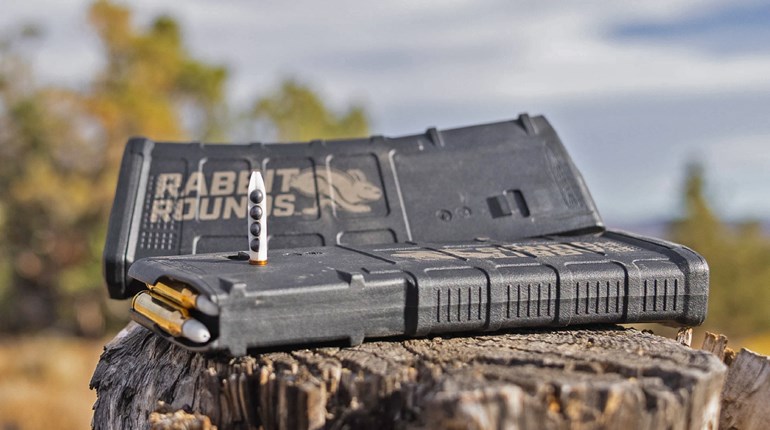
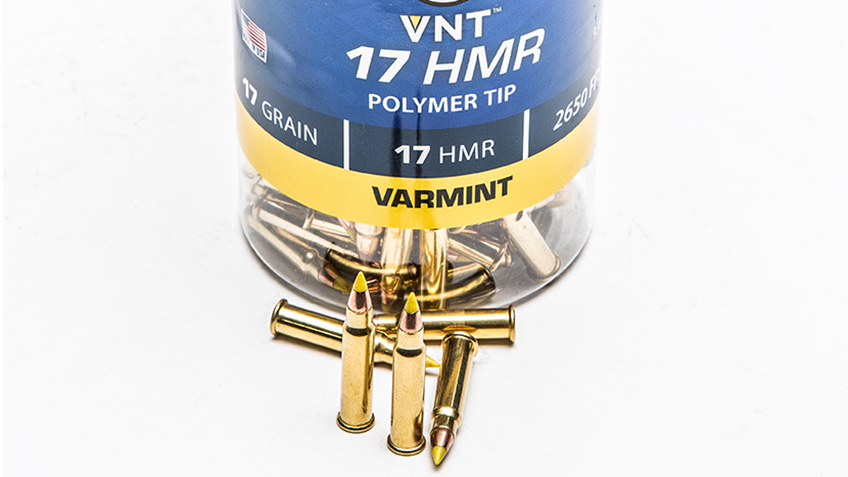
In 2002, Hornady set out to do what virtually no company had done in 100 years: develop a revolutionary rimfire cartridge that would remain on the shelves for years to come. Remington tried the 5mm in 1969, but it didn’t last. The same goes for countless other upstarts, none of which could play in the same sandbox as the .22 LR or WMR. After nearly 20 years, it’s safe to say the .17 Hornady Magnum Rimfire (HMR) project has been a raving success. The cartridge utilizes a necked-down .22 WMR case to house the .17-caliber bullet, which is most commonly 17 grains and exceeds 2500 fps. The result is a supremely accurate varmint and coyote gun that’s effective out to 200 yards—something you can’t say about the .22 LR or WMR. Key to Hornady’s success was working with manufacturers to build rifles for the HMR, which is why today, the rifles are available from Remington, Ruger, Anschutz, Savage Arms and others.
5. .17 WSM
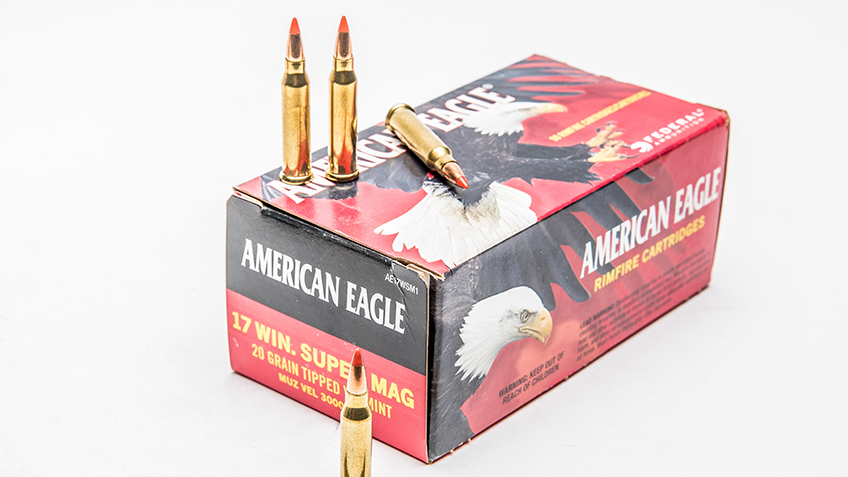
For a time, the .17 HMR was the fastest commercial rimfire on the planet. That all changed in 2013 with Winchester’s release of the .17 Winchester Super Magnum (WSM), which boasts of speeds in excess of 3000 fps. Inherently accurate, the .17 WSM is the result of a .27-caliber nail gun blank necked down to .17 caliber. Featuring a thicker brass case and a max internal average pressure of 33,000 psi—7,000 more than the HMR—the WSM turns a 20-grain projectile into a dead ringer at 200 yards. While the cartridge is a bonafide performer, it has not seen as widespread popularity as the HMR because it’s chambered in fewer rifles and is difficult to make work in a semi-auto platform. That said, it delivers roughly 150 percent more energy than the .22 WMR or .17 HMR, which may be beneficial for larger-bodied critters at greater distances.
6. .22 WMR
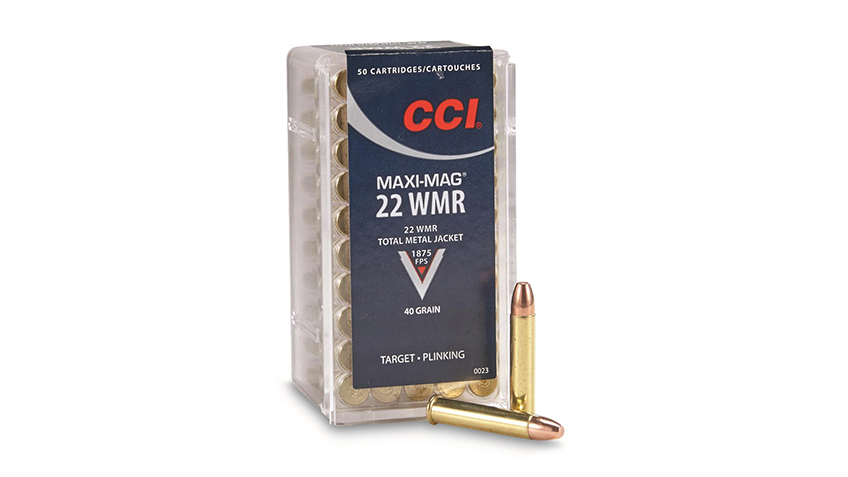
Introduced in 1959 by Winchester, the .22 Winchester Magnum Rimfire (WMR), or more affectionately the .22 Magnum, was originally loaded with a 40-grain bullet traveling somewhere around 2000 fps. Today, loads extend from 30 to 50 grains and anywhere from 1500 to 2000 fps. Until the recent advances with the .17s, the .22 WMR was virtually the only rimfire advancement of the 20th century to outshine the .22 LR and live to tell about it. It’s not as flat-shooting as the .17 HMR, but it delivers close to 300 ft.-lbs. of energy—50 ft.-lbs. more than the .17. For nearly 50 years it stood as the king of the rimfire hill, and has been widely used in handguns and rifles for pest control and small-sized predators.
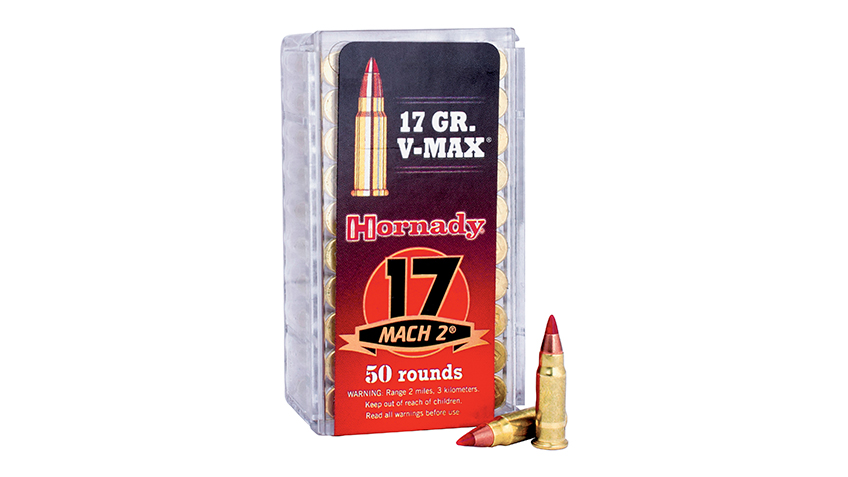
7. .17 Mach 2
The .17 Mach 2 came about as a project developed by Hornady and CCI in 2004 to deliver higher velocities and flatter trajectories than the .22 Long Rifle. The cartridge is ideally suited for plinking and varmint work, as well as various other small-game hunting applications. Using the .22 Stinger case as a parent, the Mach 2 houses a 17-grain, 17-caliber bullet that travels around 2100 fps. Conveniently, a conversion of a bolt-gun from .22 LR to Mach 2 requires only a barrel change. Loaded with Hornady’s V-Max bullet, a box of 50 can be had for around $8, roughly 18 cents per round and twice as much as the average .22 LR cartridge. It hasn’t been nearly as popular as the HMR, but the Mach 2 is an accurate, effective rimfire that exceeds the .22 LR in performance, all from a similar-sized cartridge, and is fairly widely chambered in different rifles.