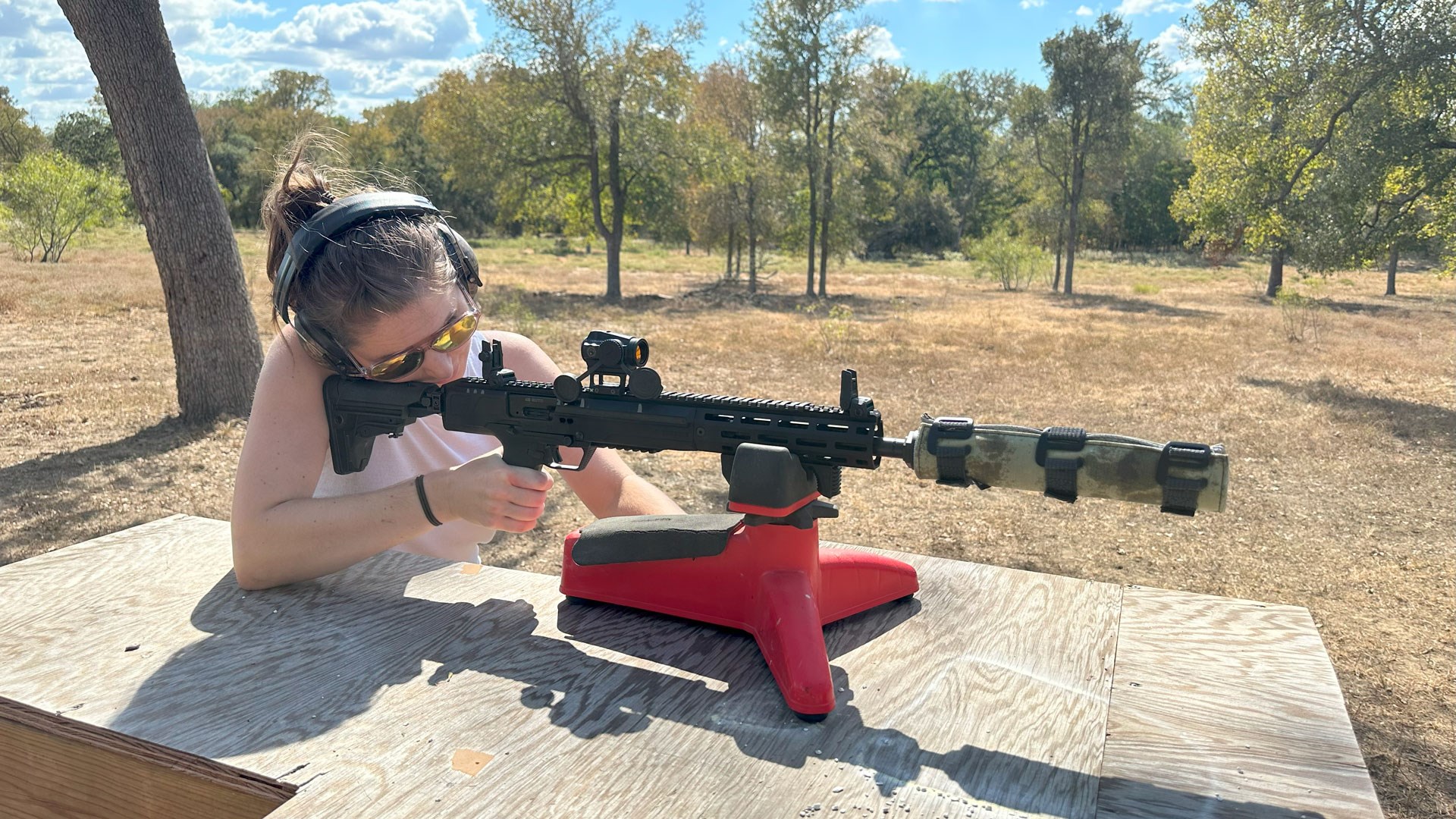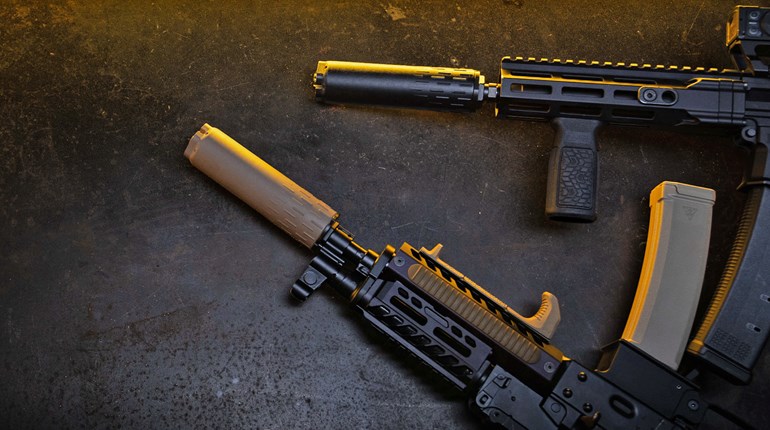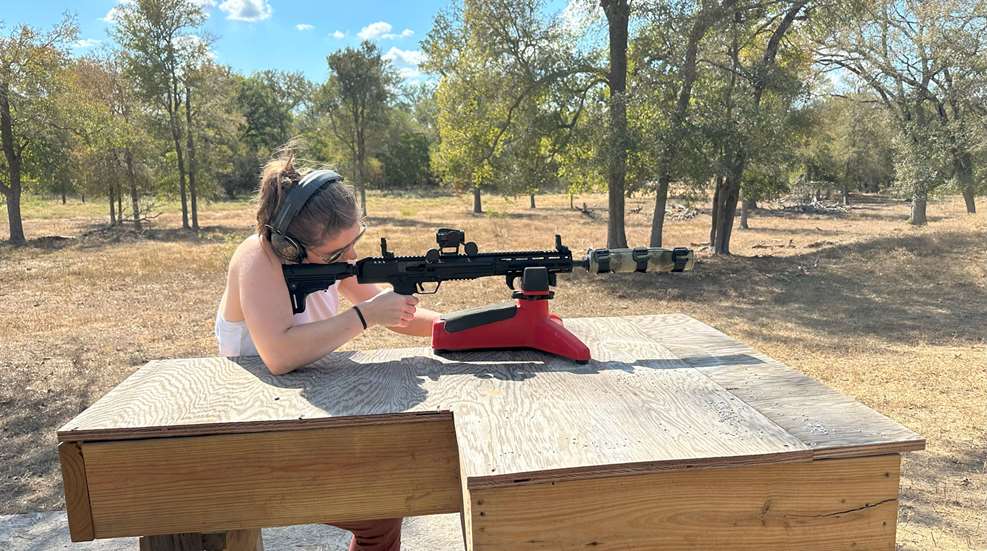
The hunting subcategory of general firearms use has, contrary to popular belief, helped to advance suppressor use in leaps and bounds. For example, the AR (I’m not getting into the terminology debate here) has for all intents and purposes become known as an MSR (Modern Sporting Rifle) because it’s become a widely accepted platform in the world of hunting. The same can be said for suppressors; though a name change hasn’t been adopted, more and more people are accepting suppressors in the field, particularly with the advent of accessible, big-bore options like the Silencer Central Banish 46 V2. For those who haven’t tried both—and if you fall into this crowd, I suggest you try it out—here are some ways to make your experience using ARs and suppressors in tandem a better experience overall while hunting.
Blowback
Suppressors and ARs—while some may claim the two items are a perfect pairing, they do have one significant drawback mechanically: blowback. For those unfamiliar with the concept, because AR’s run on a direct impingement gas system, hot gases are cycled back into the action via a port in the barrel through the gas block and gas tube, which cycles the bolt. Normally that’s not an issue, because all that pressure is diverted into the atmosphere. With a suppressor, which traps a lot of that pressure and gas, AR gas systems change drastically because those gasses are not flowing out of the gun the same way. The result is gas blowback into the shooters face due to the nature of how the AR platform cycles. There are a few workarounds for this.
One: get an adjustable gas block to help only cycle off enough gas to cycle the bolt. Two: get a charging handle specifically designed to divert gas away from the face. Three: a piston-style gas system may help alleviate some of the issue, but those tend to be expensive. Four: there is also a faux forward assist that acts as a vent for some of those gases; it’s fixed in place, so if you have a working forward assist, know this replaces the button, and therefore inhibits your ability to use the forward assist as intended (which can be important when shooting suppressed without and adjustable gas block). Finally, consider swapping out BCGs, as some are designed to minimize blowback or offer some adjustment system, similar to an adjustable gas block. Combine all of these options and you’re sitting very, very pretty. Another option is to build an AR (or at least an upper) that functions around a sealed rear and operates using a side-charging handle instead. Some examples include the Ruger LC Carbine series (there’s a new one in 10mm), or the BRN-180 from Brownells. Because options like these don’t have a rear charging handle, there is no gas that can cycle through the gun rearward into the shooter’s face.
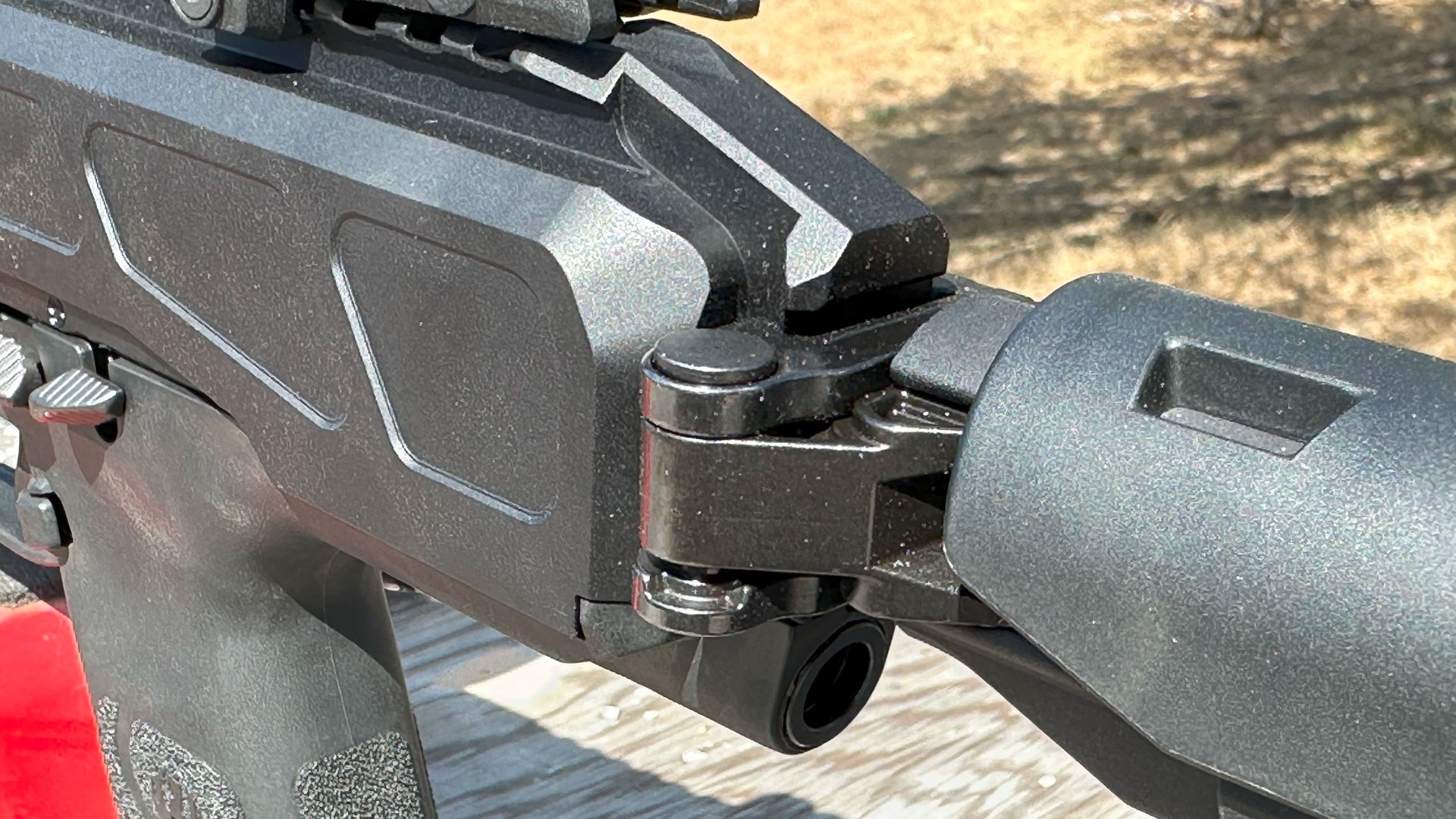
Why is it important to cut blowback, though? Hunting with an AR gives shooters quick follow-up shots, or fast shooting capability if there are multiple targets of opportunity and things need to be kept quiet (think pigs). All the blowback from the suppressor can change that; it’s hard to get a second shot off when you can’t see. By cutting blowback—or eliminating it completely—your suppressor/AR combo will serve you much better in the field.
Reliability
Tied to blowback is the reliability of the AR platform. Because it relies on gas cycling back into the action, there’s a certain amount of pressure needed to successfully disengage the bolt and cycle it rearward to eject the spent case. The bolt also needs to be pushed backward enough to compress the buffer spring sufficiently to push it back forward with enough force, so that as it returns to battery, it can overcome the friction needed to strip a round off the top of the magazine and go back into battery for the next shot. Simply put, there’s a lot riding on the gun’s pressure—which changes with a suppressor—to ensure optimal operation and not get hung up somewhere in the process. That’s where parts as mentioned earlier—like an adjustable gas block or adjustable BCG—come into play. One can also toy with buffer weights and springs to get the right balance, but I recommend the former, as those can, more often than not, be adjusted on the fly without having to partially disassemble the gun like a buffer adjustment requires. In any case, if hunting with a suppressor on an AR is your jam, make sure you get all the bugs worked out before you go, as the worst thing in the world at that time might be when your suppressed AR turns into a single shot when you really need a follow-up.
Ammo
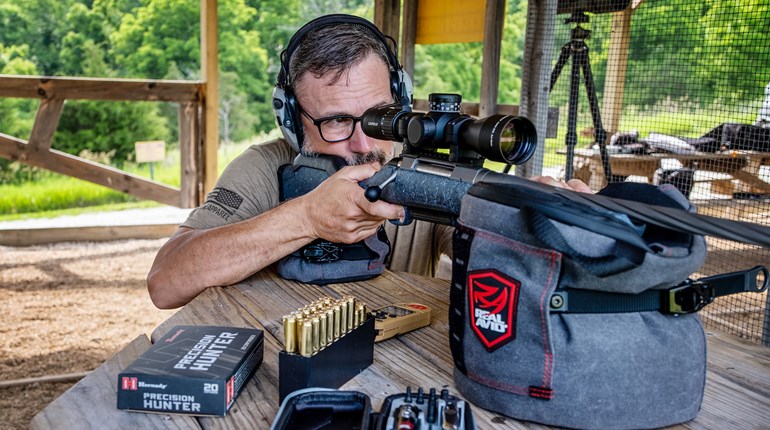
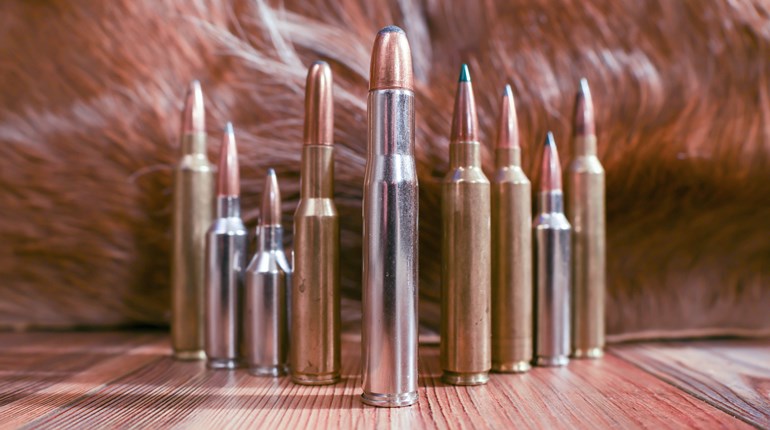
The bullets we shoot at game matter. That’s one reason I handload. But ammo and bullet selection matter even more when shooting suppressed through a semi-auto that relies on a certain amount of pressure to be reliable. This is true for a few reasons. Shooting suppressed ammo means the projectile is going much, much slower. That said, some bullets don’t perform at subsonic velocities, or speeds below about 1,100 fps. Rather than expanding like we expect typical hunting bullets to, some bullets will act like an FMJ because the bullet doesn’t have enough resistance to upset it. This is why some companies, like Hornady, came up with the Sub-X bullet, which it loads in some of its factory ammo made for suppressors, and sells as a component bullet (it’s my go-to bullet for my subsonic .458 SOCOM loads).
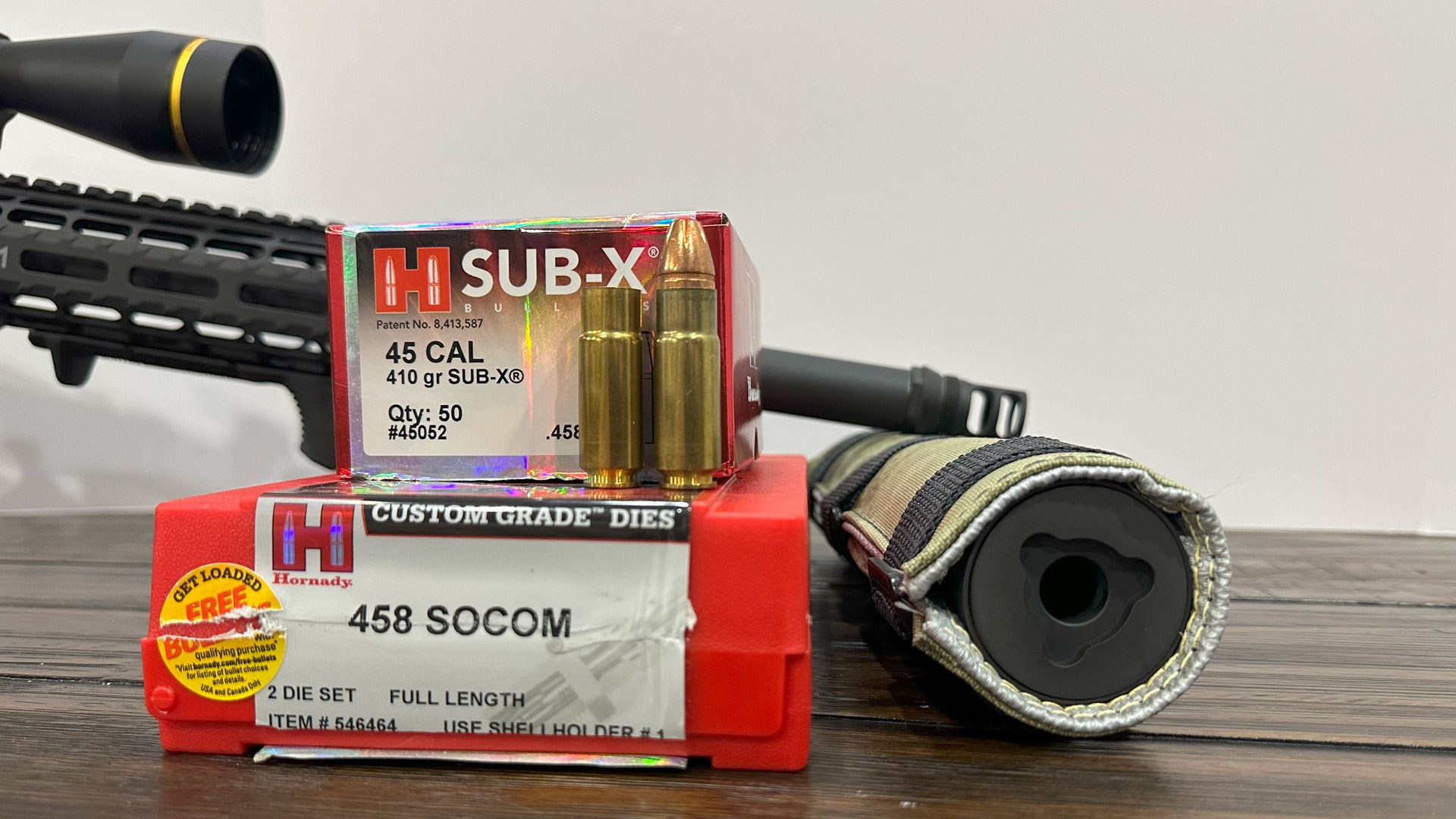
Speaking of reloading, this is another way to slightly minimize blowback, increase reliability, and get a hunting load that works on game. Companies like Hodgdon offer reloading data specifically for subsonic use in select cartridges, and even list subsonic-specific bullets—like the Sub-X bullet—to create ideal subsonic reloads. Other ammo manufacturers, like Winchester, offer a variant of subsonic ammo options, even though it may not offer a subsonic reloading component. In any case, lead will more likely offer better subsonic performance than copper alternatives because it’s softer. However, some all-copper options do exist. For example, Gorilla Ammo makes an 8.6 BLK subsonic load using a solid-copper bullet, which was designed to run through an AR-10, but it works off the idea of fast rotation. I’ve seen some designs, however, that create premanufactured weak points in the bullet so it’s more likely to open due to stress imparted on the bullet and rupturing at those designed compromised points, similar to those skives made in pistol bullets.
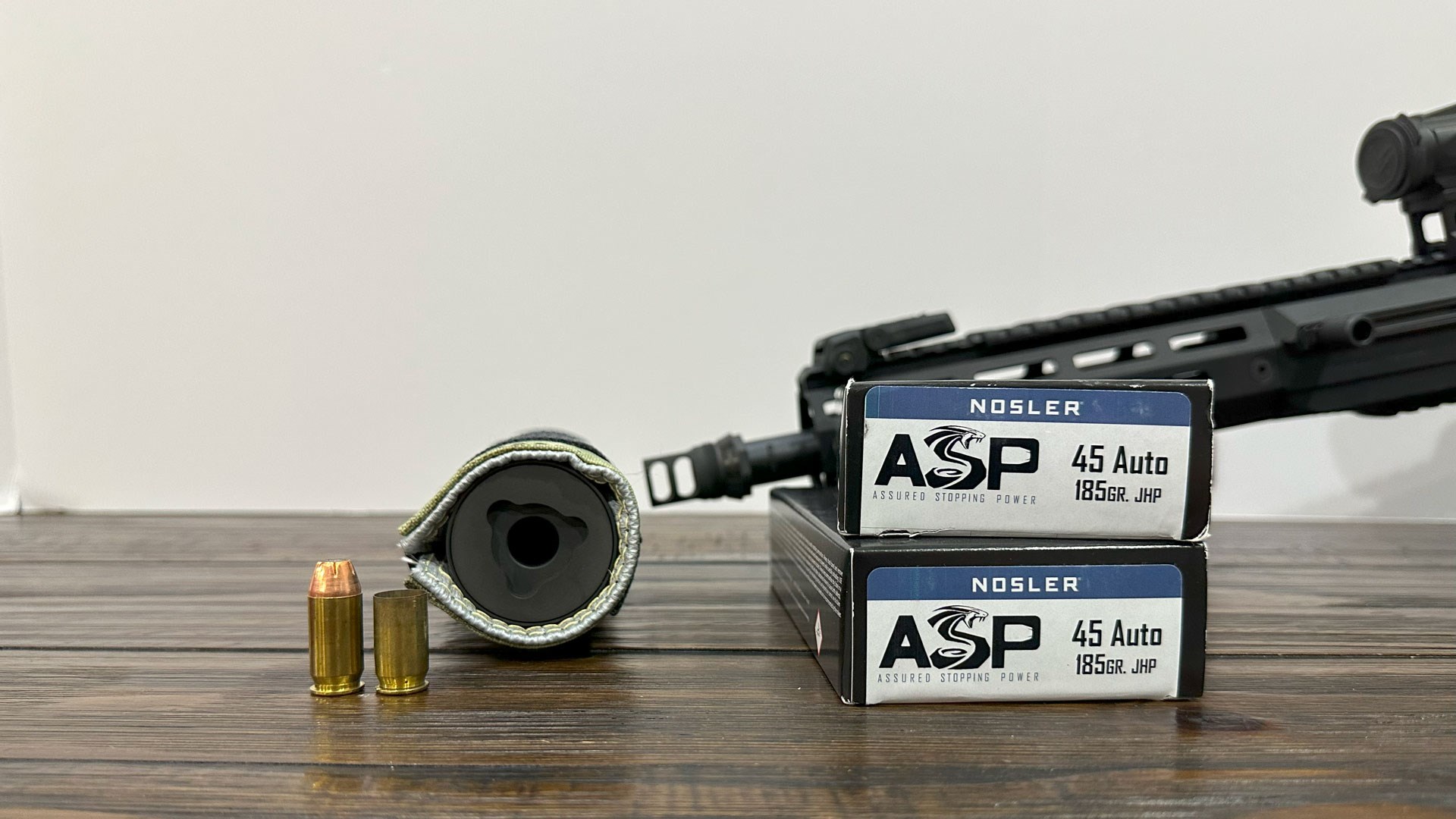
In any case, consider the ammo being shot to ensure optimal performance not only on game from an ethical standpoint, but specifically from the AR platform from a functional standpoint, too.
Suppressors and ARs are the modern hunters’ new best friend, but getting them to play nice together can be a chore at times. As technology continues to improve, there will be other ways these combinations can be bettered. For not, this at least will give hunters a starting point.