Not much bothers me more than sitting in my tree stand, bowhunting, and sweating at the same time. Perspiration is not only uncomfortable but carries odors that deer can smell at some distance. For late September and early October bowhunters it is just one of the little problems that must be tolerated.
Another issue is bugs. Early fall is prime time for hungry mosquitoes and gnats. Being buzzed while not being able to swat can drive an otherwise even-tempered archer into a frenzy of waving arms and four-letter words. Just last year a move to "smack" a skeeter on my nose cost me a shot at a nice deer.
But with all of that said, there are still many good reasons to hunt in late September and early October, before the rut begins. One such reason is because bucks are easier to pattern before the breeding instinct disrupts their routine. During the last 2 weeks of September and the first three weeks of October, Whitetail bucks are feeding machines. They instinctively react to the coming breeding season by laying on fat in late summer.
Finding established feeding patterns is not difficult, even for mature bucks. Even though big bucks are still very cautious, younger, less-educated males often accompany them this time of year. Often a smaller buck will give away the location of his bachelor group. It is very likely that this group contains at least one shooter, if not more.
The reason that these groups of three to six or eight bucks exist this time of year is not to feed together. It is the development of the social structure within the herd, to establish breeding rights for later on, that brings these male deer together. Placement in the "pecking order" is a very important trait in deer behavior, because every effort all year long centers on the rut.
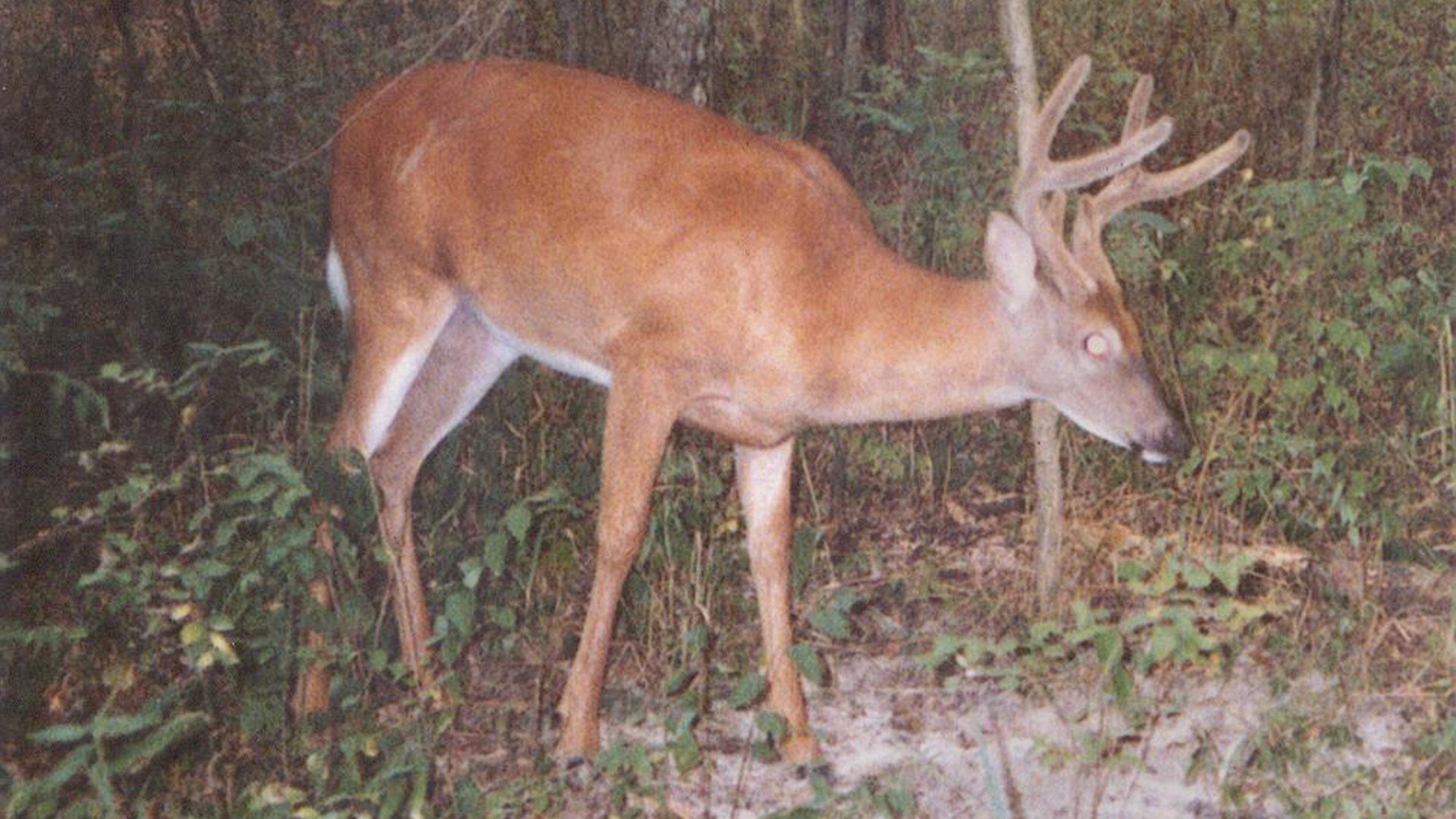
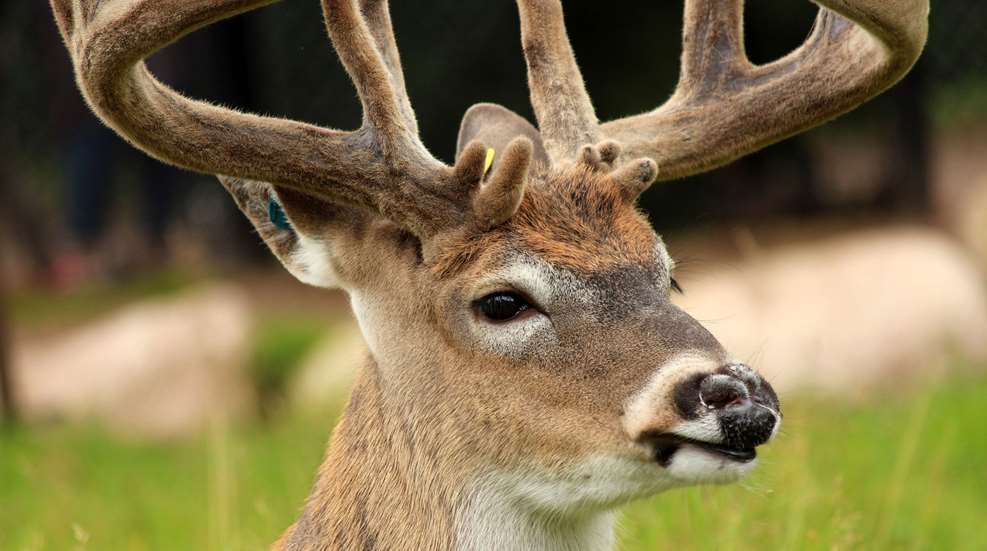
During the late summer, the very vascular antler covering, called velvet dies, dries, and is sluffed off. For years, hunters thought that tree rubbing was a method by which bucks removed itchy velvet. In fact, there is no feeling in a buck's antlers, much like there is no feeling in your thumbnail.
Bucks rub trees to leave both a visual and a scent marker of their chosen breeding ground. Trees are also rubbed to mark secure trails, and to leave scent from glands on their foreheads for other bucks to recognize. When velvet is rubbed off in the process, it's merely coincidental.
As male whitetail deer end their summer and begin their trek into autumn, and eventually into the rut, their need to establish dominance increases. This time of year, sparring is common because a buck must find his place in the social order. Every buck in the area is instinctively driven to seek out any and all other bucks for a challenge. These sparring matches are usually only shoving contests and shows of strength—the really brutal, knockdown-dragout fights will come several weeks later, during the peak of the rut.
As these pushing matches are in progress, the bucks become familiar with each other’s scent. This happens from the same supra orbital glands that mark the trees during rubbing. In this fashion, one buck can recognize another simply by smelling the tree the other buck has rubbed. For big bucks, knowing whose turf you are trespassing on can be very helpful.
As for smaller, more immature bucks, being able to recognize the scent of the big 12-pointer that dominated them in October, is much less painful proposition that accidentally stumbling into his bedroom. Nothing is more easily irritated than a dominant whitetailed buck in the presence of an estrous doe.
The characteristic of deer to be in small bachelor groups in the early season can also aid in your scouting practices. In the late summer, well used trails and lots of sign is not conducive to finding bucks. Lots of tracks and lots of sign usually means lots of deer, but female and young deer are still segregated from the bucks. The shunning of the yearlings and the attraction between adults of the opposite sex has not yet begun. Buck hunters should look elsewhere.
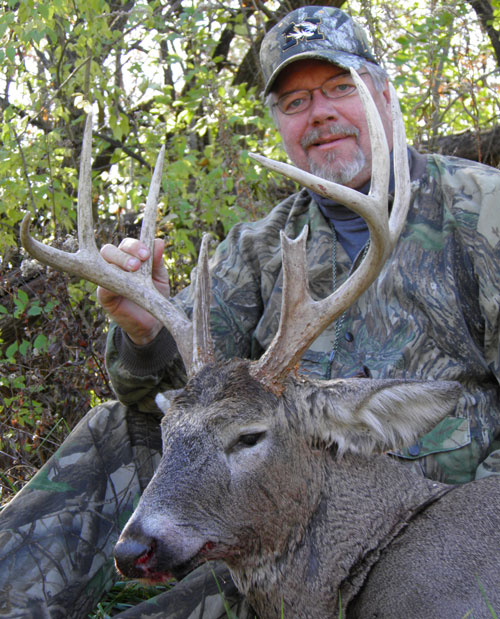
Early-season buck sign that can be counted upon are rubs, large tracks and large droppings. The downside is, your scouting attempts could be lengthy procedures to find this sparse sign. Remember, food is priority during this period. Begin your scouting at food sources and work your way toward bedding areas. Ambush points should be selected somewhere in between.
The heat that is often associated with a lingering summer can also play a key role in early-season buck location. Hot, dry summers place a premium on water sources. Ponds, marshes, creeks and springs can all be very important in early hunts. If large bodies of water exist, like lakes or rivers, this becomes less of a factor. But if water is scarce, hunt it.
Another thing to establish in the pre-season, is the deer's pattern for using the watering site. Do they come in the morning, in the evening, or at night? Do male and female deer both use the spot? If so, do they both use it at the same time? All are questions that, when answered, can help you plan an early-season strategy to get close to big bucks.
For all these same reasons, salt and mineral blocks can be important. Although some states have specific regulations about hunting directly over minerals, knowing when the bucks usually use them can help you choose a good spot to pick them off on the trail, at a legal distance from the lick. The deer's natural metabolic process causes them to need the minerals, especially salt. This not only improves the quality of the deer, but also helps the hunter learn routinely used routes.
Another part the weather plays in early autumn is its unpredictability. If a sudden cold snap hits, as is possible, the deer will move more to burn calories to stay warm. More movement means more food consumption, which in turn means even more movement. Cool, blustery October days can be great deer hunting, just be ready for anything.
The reverse also holds true quite often. As mentioned earlier, some days in the early part of the season can be oppressively hot. Odor from perspiration must be factored into any hunts for big bucks. Just because the rut is still a few weeks away, does not mean that deer will not still react like deer. If they identify you with their noses, they are gone.
Using a scent-locking system is highly recommended; several companies now manufacture such garments. These clothes keep your scent-carrying molecules close to your body and out of the air. Care should still be taken because these items do not and cannot cover your entire body. Playing the wind is still your most reliable option.
Early-season bucks can be found and the hunting can be exciting if you know what to look for. Since deer can outrun, out smell you and out hide you, your best weapon is your brain. They cannot outthink you. Be a smart hunter this early season; good luck.