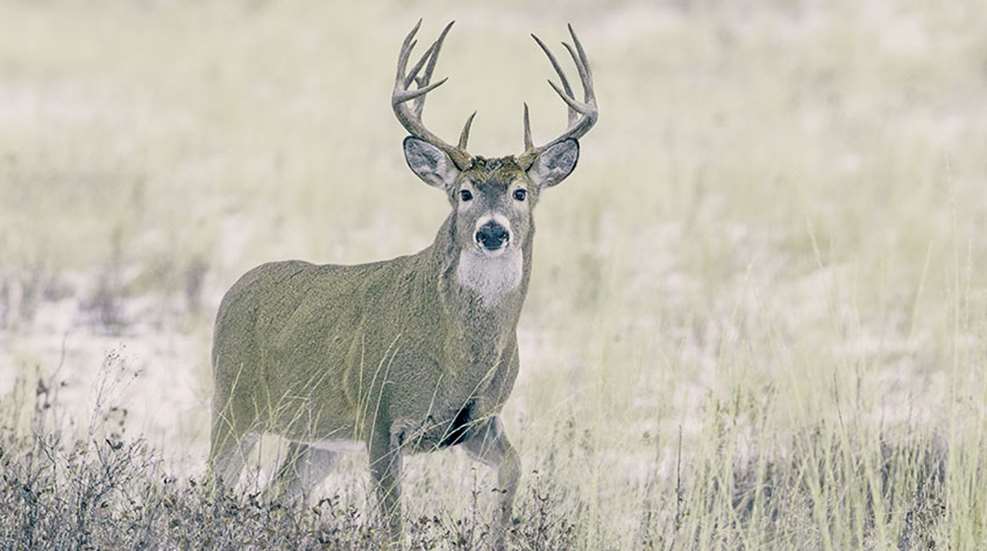
For most hunters, the late season is tough. It’s cold, bucks are licking their wounds, and they’ve lost their reckless drive to breed. Those wary ones that have survived are even warier now because they’ve likely learned from a few brushes with the orange-vested army. If you’re like me then you’re often out there freezing your tail off and wondering why deer aren’t parading by your stand anymore.
It took me years to figure out what should have been obvious, but here’s what I now realize: By winter, everything has changed. The sooner you realize this and adapt your tactics, the easier the late season will be.
Find the Food
Likely your early-season stands in cover were productive because bucks were sucking up white oak acorns like suckling pigs on a momma hog. Now though, the white oaks have long dried up and the bucks must find other sources. This is when red oaks earn their keep. Their mast is generally available well into the winter, and by this time the tannin content of their acorns has mellowed so they taste better to deer. Find a red oak tree that’s recently dropped its acorns, and you’re in business.
Apple trees, especially those varieties that drop their fruit late, can also draw deer well into winter. And don’t overlook concentrated pockets of browse, such as blackberry and greenbrier thickets, stands of maple saplings and sumac, and honeysuckle bushes. Deer turn to these when other food sources are gone.
If you hunt the Midwest’s corn- or bean-producing regions, then this article really isn’t for you. You already know what to do: Find the standing crops and hunt them hard. Keep in mind, though, that skittish deer tend to feed on crops at night during the late season; remember they are even more wary now. Instead of hunting in the morning, wait until the early afternoon to get out there, like 3 o’clock. Does will begin coming out of cover usually around 4 to 5, and bucks will follow often right at dark. The upshot is, at least you won’t freeze your tail off or spook anything while traipsing in at dawn.
Scout Bedrooms and Hunt Cover
I assume you’re reading this because you typically have a hard time killing big bucks in winter. (You’re in good company here.) If you’re not seeing bucks, it’s likely because they’ve taken to heavier cover, are feeding on food sources unknown to you, and/or are moving mainly at dawn and dusk if not entirely at night.
So the first objective is to actually find the deer. What we can deduce is they’ve got to be feeding on something. Start by using the least intrusive tactics possible to find the food. Scour Google Earth or satellite imagery to look for nearby crops that you may not know about. Drive roads during the last hours of light looking for crops and deer. Ask the neighbors, and consult mailmen and local delivery drivers. Perhaps deer are using your woods for cover and feeding on a strip of the neighbor’s beans that wasn’t cut because the ground was too soft.
When you find a food source that deer are using, backtrack the trails leading to it and hang a stand at a choke point along one of the routes—preferably in cover. Remember to pay attention to wind, and have a plan for low-impact access and exit. The last thing you want to do is give more education to deer that are already pressured.
If that doesn’t work, put boots on the ground to scout the thick spots and find sources of naturally occurring food. Wait for a day that’s wet and scout-hunt. That means still-hunting new areas with the purpose of killing a deer, while paying attention to tracks and food sources. If you find new food or fresh deer sign, hang a stand or at least a trail camera there. Even if you don’t have time to hunt the spot this year, the intel you gather could be golden for next year. Sure, you might blow a buck out of the heavy cover while scout-hunting, but you might kill one as well. At this point in the season, you don’t have much to lose.
Bring Them to You
In areas that don’t hold standing crops, consider planting a late-season food crop like oats, winter peas, radishes, beans or brassicas. The problem is, this should have been done back in late September. But all is not lost. This is the perfect time for bait like corn or, preferably, protein pellets (where legal).
Consider placing bait in cover, like in or near a thicket where deer feel safe, but where you can also easily access it without making a bunch of noise. Even if you have baited all year, it will work better now since much of the other food is gone. Also, consider baiting at a stand location that you haven’t been hunting and defiling with your stench since October. Deer are sensitive to human habits, and over time they learn to avoid places where they’ve encountered hunters. Switch stand locations, and sweeten your new spot with bait. Just be mighty sneaky going in and out.
In areas that get really cold, hunting near water can be effective if most of it has frozen. Find an area of open water in a creek and look for tracks indicating deer are using it. Hang a stand and give it a try, or hang a trail cam and check it in a few days. If you hunt over a frozen creek, break some ice as quietly as possible as you enter your stand. Deer can hear running water, and it can attract them if they’re thirsty. It’s not a high-odds proposition, but nobody said killing a big buck in the late season was easy.
When hunting in winter, keep in mind that the deer most likely are still there; they’re just not roaming around your treestand like they were during the rut. Find the food to find the deer, and then bundle up, slip in and kill one. The late season will be even cooler if you do.
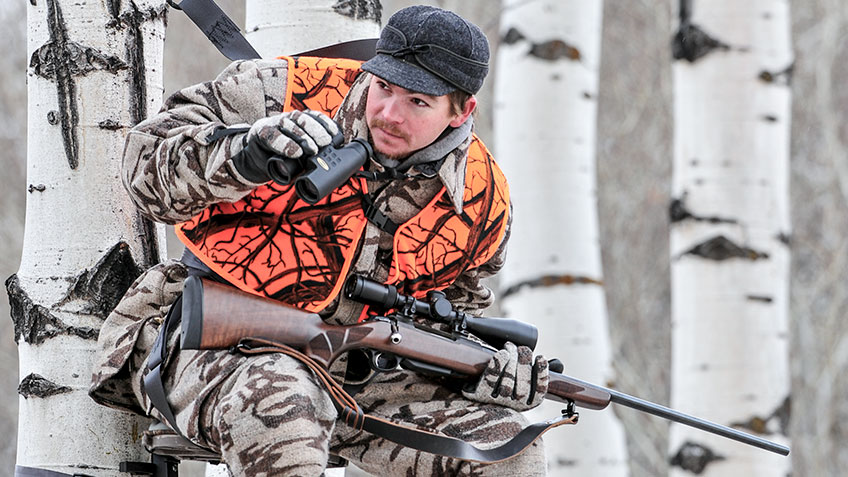
Bundle Up
Nothing’s colder than a windy winter deer stand when you aren’t seeing many deer. Go with layers, and go bulky to trap warm air next to your body while blocking cold air from entering. I wear a thin poly base layer to keep my wool shirt from itching, a down vest or an electronically heated vest like that from Milwaukee, and a wool parka. If it’s wet outside I’ll throw a Gore-Tex shell over it all. For my bottom half, I like a heavy base layer under Gore-Tex insulated bibs. I prefer boots that are two sizes too big so I can wear a thin liner sock and a heavy wool sock while still allowing room for battery-powered heated insoles, like those from Heat Factory. They’re expensive, but wonderful. Finally, I like a wool hat, a hood to keep the wind off my neck and copious handwarmers to give me hope when all else is bleak.