Patterning (or the attempt to pattern) is the most enjoyable part of the season. I really enjoy trying to put the puzzle together. It can be a real mind-bender with some bucks. Every one of them is different, so you never know what you are getting into until you dig in.
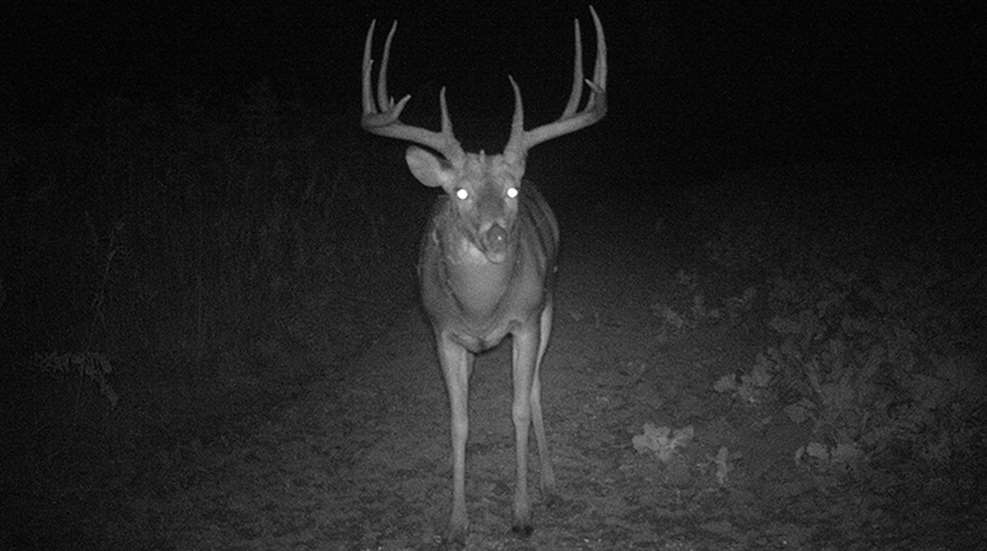
A buck I have been following for three years (nicknamed Big Jr.) showed up on trail camera earlier this fall. Now I have to figure out where he might be killable.
Big Jr. is six years old this year. I tried to kill him last year but was unsuccessful. He looks pretty good right now! I need to figure him out a bit better though. Last year, I saw him three times in daylight, but I never spent the time needed to learn where he was living.
I am getting a few photos of him coming to a food plot, but he is not getting there until after dark. The closer I can hunt to where he is coming from, the better my odds will be of a daylight sighting.
He approaches the camera from the same direction each evening, so I am going to move three cameras to accessible spots a few hundred yards in that direction. You can learn a lot from trail camera photos if you study them carefully—such as where the deer is likely coming from in the evening, which can lead to a few educated guesses on where he may be bedding. The closer you can get to daylight photos, the closer you likely are to his core area. That is the goal—to figure out where he is spending most of his time and then go from there.
In my efforts to search for his core, I may jump right past him with my camera locations. That is OK. I want to rule out the backside fringe areas before I go to work on the cover nearest the food plot. Actually, I hope he is coming from a ways away. If not, he is ridiculously nocturnal, not arriving at the food plot until several hours after dark. If he is coming a ways to get there, I still have some hope of finding some place where he is on his feet in daylight.
I will bring you details on the whole patterning process in future blogs—starting with the next one when I go through the findings of this round of camera moves.