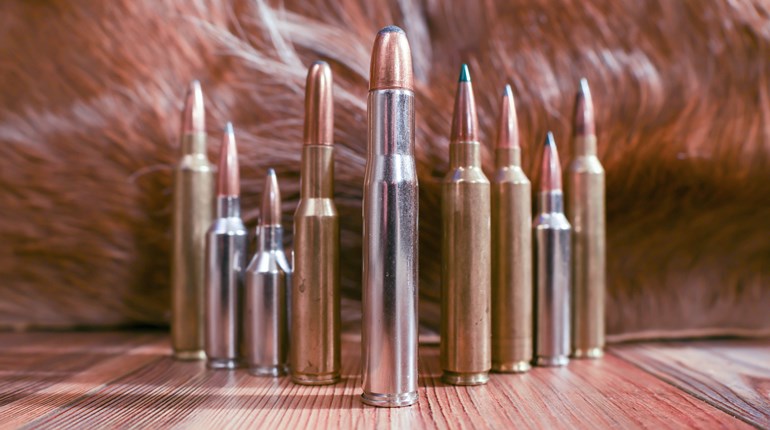
Over the years, plenty of “wildcat” cartridges have been taken into the mainstream by major ammunition manufacturers. Rounds like the 25-06 Rem., 7 mm-08, and 338-06 all started out as non-standard cartridges before they were “legitimized” and chambered by the industry’s major players. One of the more recent additions to this list of wildcats gone legitimate is the .280 Ackley Improved. Developed by P.O. Ackley and Fred Huntington and known previously by a variety of names such as the “.280 Rem. Ackley Improved 40 degrees,” this cartridge was standardized by Nosler and accepted by SAAMI in 2008.
I’ve been a user of this cartridge, in both its wildcat and later in its ballistically identical standardized formats, for just under 15 years. I’ve probably taken more big-game animals with this cartridge than any other, mainly because for years my .280 AI was one of the few hunting rifles that I owned. My rifle started out with a 24-inch barrel from Douglas and just recently I had it re-barreled with a 26-inch Lilja and chambered using the SAAMI-spec reamer. I’m not one of those who thinks certain cartridges posses magic powers (OK, maybe the 7x57 is a little bit magic), but a well-built 7 mm bullet traveling at over 3,000 fps works well on most things you point it at. The .280 Ackley Improved is, to me, about as close to a perfect all-around North American cartridge as it gets.
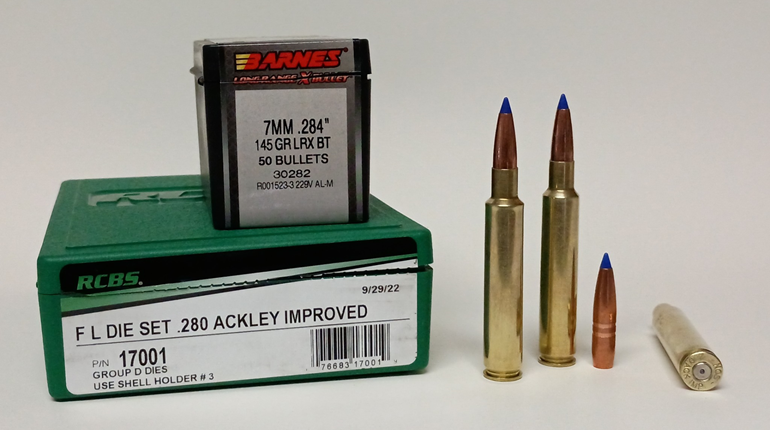
The primary difference between the standard .280 Rem. and the .280 Ackley Improved is the steeper 40 degree, which lengthens the case body and allows for about 5 percent more powder capacity. This sharper shoulder can also increase case life, which is a good thing for the handloader. In a pinch (read lost luggage), .280 Rem. ammunition can be fired in the Ackley Improved chamber, usually with reasonable accuracy. It is important to note that the SAAMI-spec .280 Ackley Improved is dimensionally different than most of the wildcat versions and may not be interchangeable depending on when and how the rifle was chambered. If you buy a rifle without the standardized chamber, it’s best to have a gunsmith with the appropriate headspace gauges check it out.
The .280 AI’s additional case capacity does good things, but it doesn’t change laws of physics. With equal barrel lengths, the Ackley Improved version gets you about 100 additional fps of velocity with a 140-grain bullet and a 24-inch barrel. Due to conservative loading of the .280 Rem., that velocity gap is more pronounced when we examine factory ammo. For example, all three of Federal Premium’s 140-grain loads for the .280 Rem. list velocities of 2,990 fps while Nosler’s 140-grain Accubond Ackley Improved loads get you 3,150 fps. Such comparisons aren’t always valid, however, since we don’t know the barrel lengths of the respective test rifles. You’ll often hear that the Ackley gives you 7 mm Rem. Mag. velocities with less recoil and muzzle blast. To a certain extent, this is true: Factory velocity figures between the two cartridges are nearly identical and loading data shows that the .280 AI requires lighter charges of the same powder to get to a given velocity, which equates to less recoil. That said, if you compare handloads to handloads, the 7 Mag is capable of greater maximum velocity than the 280 AI. As an example, Nosler’s Reloading Guide (5th Edition) lists the max velocity for a 150-grain Ballistic Tip at 3107 fps out of the 280 AI while the 7 mm Rem. Mag. pushes that same bullet at 3,248 fps—both out of 24-inch Wiseman barrels.
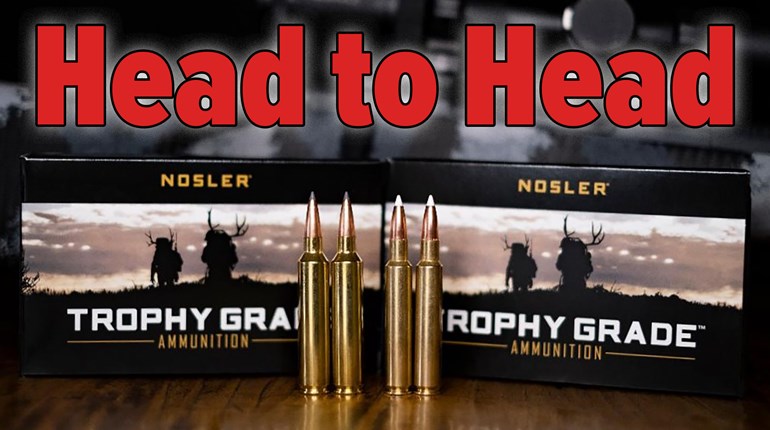
So why choose the .280 AI over the .280 Rem. or the 7 mm Rem. Mag.? Well, for starters, if you’re not a handloader, I don’t know that I would. Nosler offers two Custom and two Trophy Grade loads for the .280 AI but that’s about the extent of factory-loaded options. To fully-realize the versatility of this cartridge, you’ll either need to handload or be willing to purchase custom loaded ammunition. If you are a handloader though, the choice is a no-brainer. The .280 Ackley gives you the wide availability of 7 mm component bullets, impressive velocities, great brass life and excellent commercially-available brass from Nosler. When you push past this performance level with a 7 mm cartridge, you do so with diminishing returns as far as velocity goes. There are faster .284 cartridges out there than the .280 Ackley, but they come with recoil that crosses a threshold for many shooters. That the .280 AI can be built on a standard long action with a 30-06/.270 bolt face and magazine box is an added bonus.
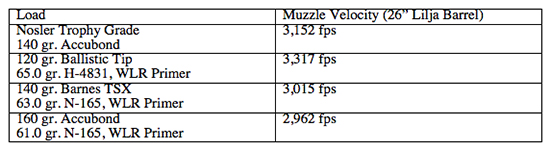
The true beauty of this round is its versatility. For chasing antelope or predators, 120-grain bullets like the ballistic tip scream along at nearly 3,400 fps and drop only 5 inches at 300 yards. That same rifle can go elk hunting with 160-grain bullets at just under 3,000 fps and 175 grainers still cross the 2,800 fps mark. You’re talking about a cartridge suitable for a wide variety of game without the recoil of a magnum round. The 280 AI gives you heavier bullet options than the .270 Win. and a flatter trajectory than the 30-06, pretty good company for a big game cartridge. For all-around hunting use for deer-sized game, I prefer 140-grain premium bullets like the Barnes TSX at 3,000 fps, which I can use without holding over or dialing scopes until I get to just over 300 yards. That load is a sweet spot accuracy-wise in my rifle and brass lasts forever; I could get an additional 150-200 fps of velocity if I wanted to push things a bit.
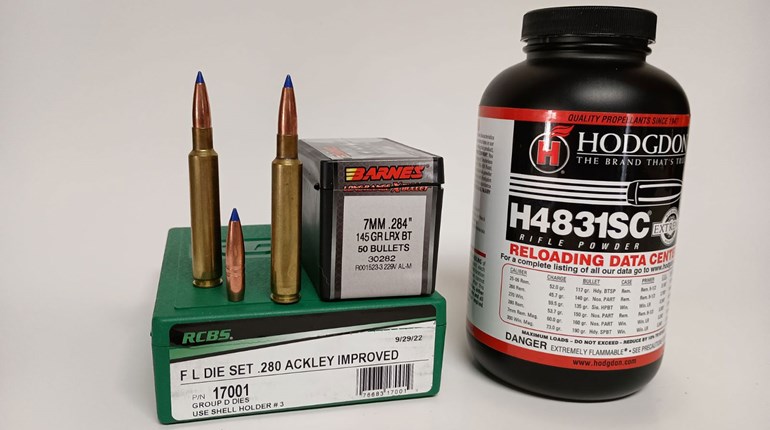
Handloaders will find this cartridge to be pretty forgiving and simple to load. Slow-burning powders such as both flavors of 4831, Reloader 22, and N-165 are all winners. Both Nosler and Hodgdon provide detailed loading data for the .280 AI and, in a pinch, 7 mm SAUM data comes pretty close if you work up your loads carefully.
The .280 AI will never replace with .270 Win., but it’s a cartridge of equal or grater capability that deserves its place at the table as a legitimate factory round. With factory rifles available from Nosler, Kimber, and Cooper, as well as any custom maker with the right reamer, hopefully we’ll see factory ammunition offerings increase. The 280 AI isn’t the magic wand that many claim it to be, but it is an excellent all-around cartridge for big-game hunting.