Maybe you shouldn’t look to me for tips on dove hunting. Though I’m an NRA-certified shotgun instructor, my advice is exhausted after the basics are imparted. Every time I leave a dove field I am reminded just how humbling the experience can be.
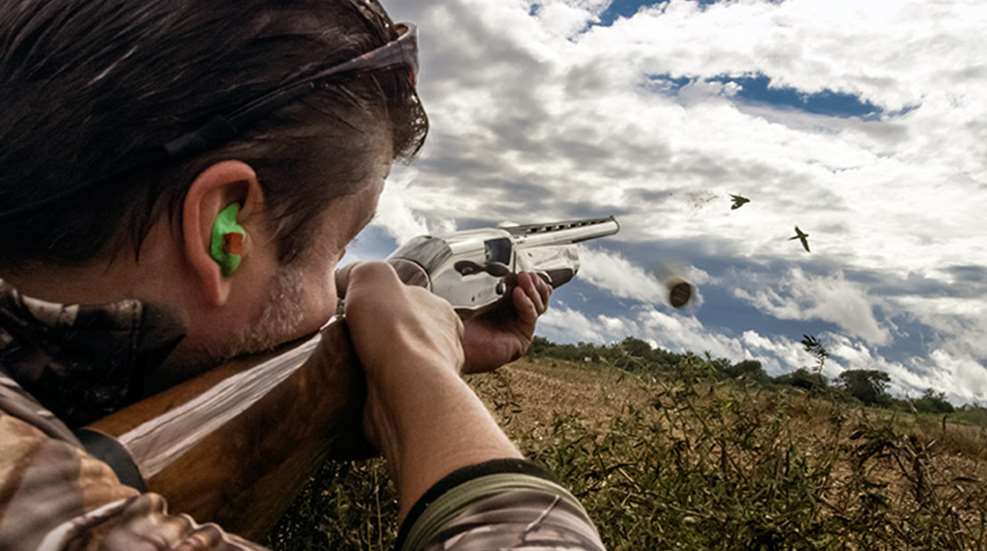
But my first morning in Argentina, as I snapped open the Orion and shucked in two more shells, I realized my persistence might yield dividends. Maybe the next time somebody invited me to a dove opener in the States, I could exit the field with a limit of 12 like everyone else.
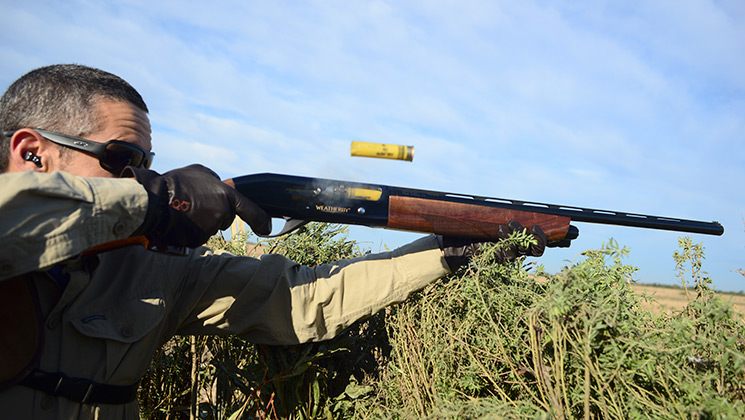
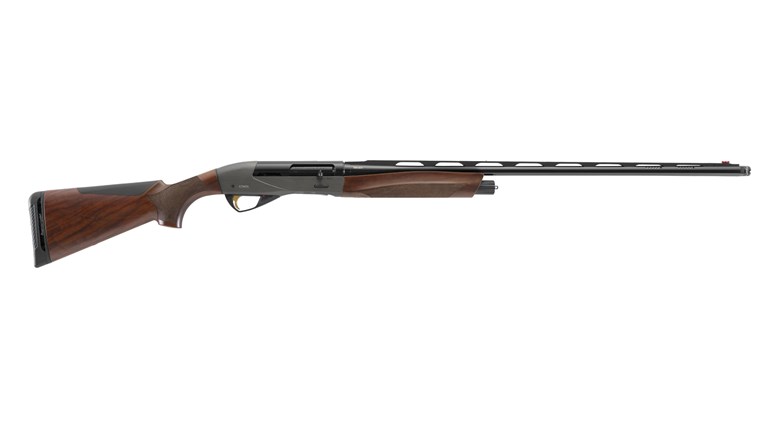
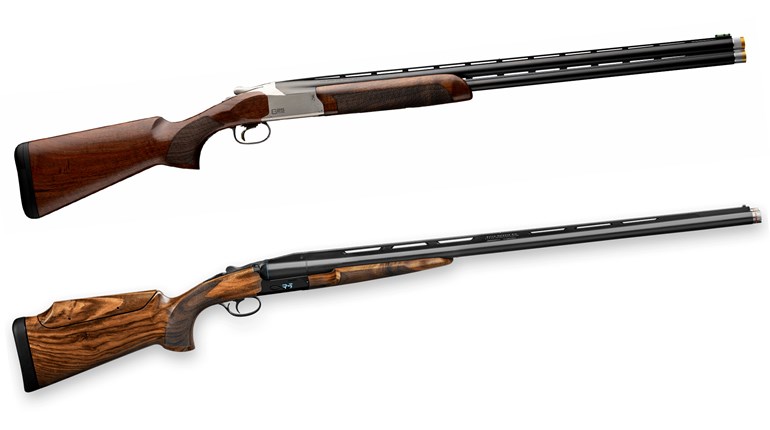
One of the first things I had to admit was fast-and-furious shooting calls for an autoloader. My hands ached after two hours of breaking open the over/under. Also, my cheek hurt by lunchtime. So when we set up for our afternoon shoot, I knew two things were true: I needed to switch guns, and I needed to work on my mount.
Too bad I didn’t heed those thoughts.
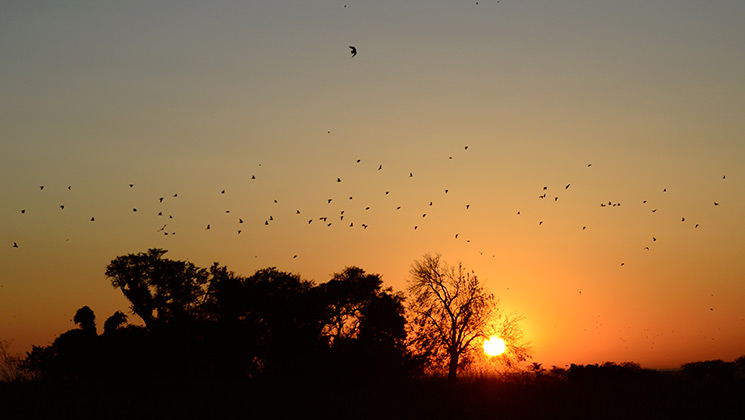
We set up beneath a roost. Immediately, I was overwhelmed. Doves are speedsters and change course in milliseconds. Hitting one demands decisiveness, the ability to calculate the bird’s flight speed and direction, proper gun mount and split-second timing. I exhibited none of those skills. Birds flew everywhere—to my left, right, right at me and right over me. Every time I picked out a bird and lined up a shot, I saw another, more promising target: “Oh, there’s a better one. Wait … there … oh.” Hell, I couldn’t hit anything.
So I resolved to pick out a bird—only one—stay on it and make every shot count. Thereafter I kept the Element fully stoked, and I hit birds—lots of ’em. I lost track of the number of times my “bird man” emptied boxes of shells into the pouch on my hip, focusing instead on every mount, every shot and follow-through. By nightfall, I grinned ear-to-ear along with my companions. For the first time ever I felt like a dove hunter.
Last spring, a group of eight of us traveled to the Entre Rios province of Argentina northeast of the capital, Buenos Aires, and due east of Cordoba, perhaps the most popular destination of bird hunters who come from the States. There, we tested Weatherby’s new Orion over/under and Element semi-automatic shotguns. I thought surely I’d stick to the fine-looking Orion, but I learned there is no substitute for semi-auto firepower when doves literally darken the sky.
This is the last “big-bag” shooting experience in the world. Doves in Cordoba or Entre Rios are estimated to number as many as 32 million birds. It is not uncommon for some quick, crack shots to shoot a thousand times a day.
Such shooting might give U.S. sportsmen pause: “That’s too much take!” After all, once upon a time in America, volume shoots like this pressured the passenger pigeon into extinction. That’s not the story in Argentina, where the eared dove is considered far more resilient.
The eared dove (Zenaida auriculata) is a close relative of our mourning dove. It ranges from Colombia south to Chile. It measures 9.5 inches long, weighs about 4 ounces and like our dove features a wedge-shaped tail. Adult male plumage is olive-brown; a crown on its head is gray; its bill is black, its legs dark red; and just a touch of cinnamon graces its tail. Like our dove, its call is a soft oo-ah-oo.
Amid thriving agriculture, birds breed at least four times a year. Unlike our dove, the paloma of Argentina does not migrate. It flies constantly from roost to vast areas of grain, feeding mainly on seed taken off the ground. It thrives among savannahs and cultivated fields across the country. Agricultural interests consider it a pest.
Add to this the fact that most folks in Argentina don’t hunt, and a year-round season with literally no bag limits becomes easier to understand.
By day two I was used to the bird’s flight—high, fast and direct—with occasional sharp flicks up, down, left or right. I was reminded that the best wingshots are able to focus only on the target and let their eyes and hands take over, seemingly plucking birds from the sky with little movement. To emulate this, I remained calm and tried to shoot where my targets would be in the next instant rather than chase them and shoot where they were, as I’d done historically.
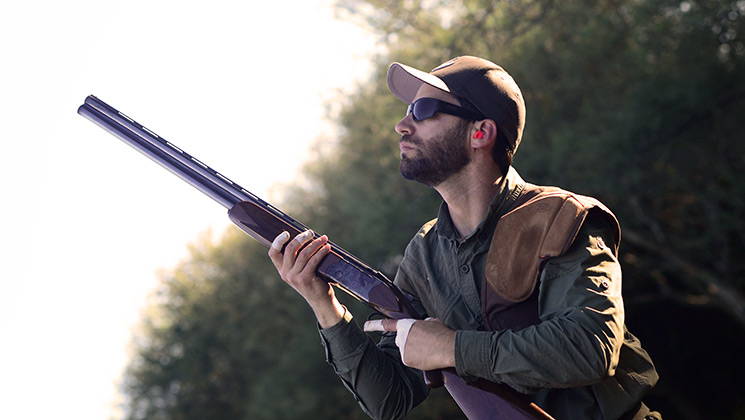
Some folks call this the “see-and-shoot” method, and it’s pretty much what’s taught by Gil and Vicki Ash in their Optimum Shotgun Performance seminar, which I took several years ago. The theory is based on the fact that, given enough information, our brain predicts a bird’s speed, distance and flight path in relation to our position. It’s important to keep both eyes open, keep your head level and your gun out of your line of sight until the instant you fire. Mount the gun in one smooth motion; the stock should contact your cheek and shoulder at the same time, an instant before pulling the trigger. Remember: Insert the gun, don’t mount and swing.
With an aching cheek in mind, I followed birds but did not shoot them. I focused on the target and let visual cues guide my hands and the muzzle. When I began shooting, I focused on a point in space farther from where I thought the bird would first appear; I focused on the leading edge of the bird as soon as I saw it; I held the muzzle below the bird; rotated my hips toward the bird’s flight path; kept the gun level while smoothly moving it to my cheek just as the muzzle reached the “break point,” the spot where I planned to intercept the bird’s flight with my shot; then I pulled the trigger. I noticed when a bird was slow or closer than predicted, I intuitively pointed at it; if it was a fast crosser, I compensated by inserting the barrel in front of it. Well, that was the plan, anyway.
None of us fired a thousand rounds a day. None of us wanted to, really. Over three days, one fellow emptied 140 boxes of 12-, 20- and 28-gauge for a success rate of 55 percent. Another guy emptied a lowly 60 boxes of 12-, 20- and 28-gauge … but hit a whopping 71 percent of the birds he targeted. I emptied 95 boxes of 12-gauge loads: 2,375 shots fired at, I presume, 2,375 birds. I downed only 1,162 of them: a success rate of roughly 49 percent. I was the “low” shooter. No obstante, diria que las palomas me hizo ver la luz.