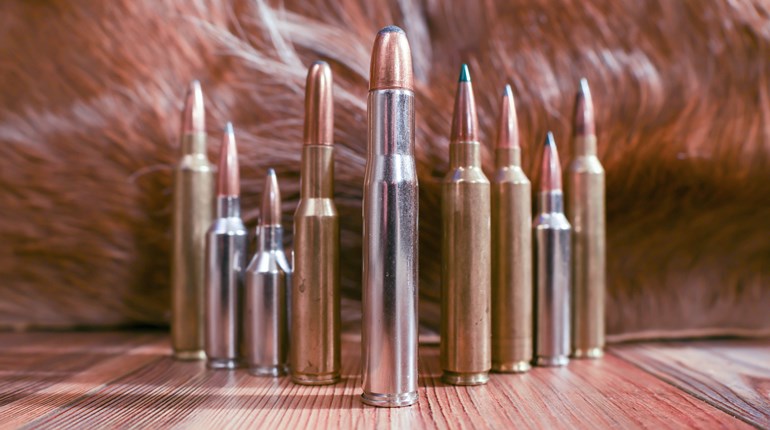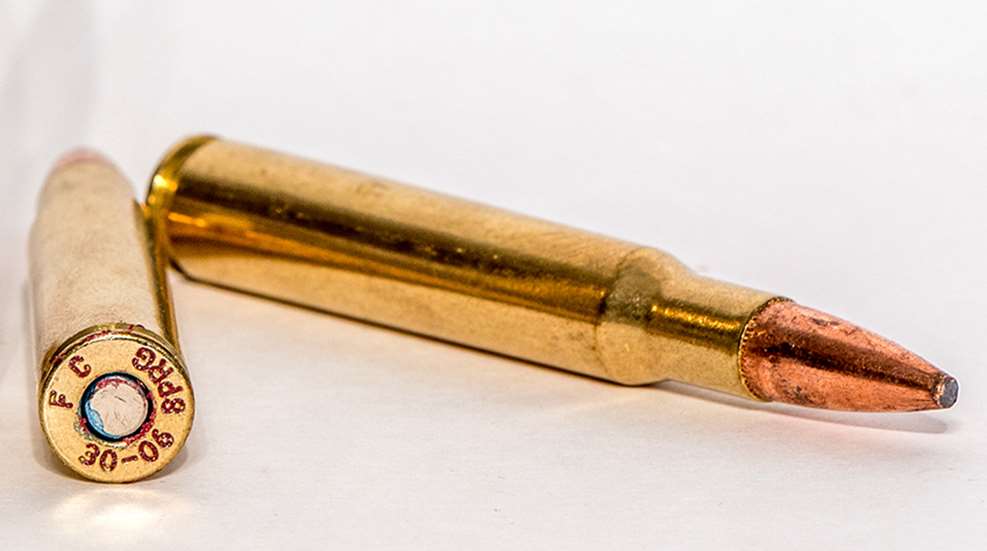
No matter what happens tomorrow, next year or even a decade from now, the .30-06 Springfield will be regarded as one of the best centerfire rifle cartridges of all time. Adopted by the U.S. military in 1906, it was originally loaded with a 150-grain bullet, with a muzzle velocity of 2700 fps. With a 100-yard zero it would drop less than 16 inches at 300 yards and deliver 1,435 ft.-lbs. of energy on target.
These were impressive ballistics for 113 years ago, and in reality, they still are. Jeff Cooper thought it adequate for general-purpose rifle work, and it proved more than capable for Stewart Edward White and Theodore Roosevelt in Africa. Since then, it has admirably served soldiers and hunters all over the world.
Even so, the .30-06 is dying. In fact, it has been dying for almost 100 years. In 1923, the .270 Winchester arrived. Loaded with a 130-grain bullet, it shot flatter and hit harder than the original .30-06 Sprg. load. Nevertheless, up until and especially after WWII, the .30-06 remained the most popular rifle cartridge, but in 1952, the .308 Winchester became the commercial variant of the 7.62x51mm NATO cartridge. It, too, could push a 150-grain bullet to 2700 fps, however, because the .308 was 0.5-inch shorter, it fit more compact actions. This meant lighter and shorter rifles. The .308 Winchester cut greatly into the popularity of the old “ought-six.”

Of course, cartridge development didn’t stop there. In 1963, the .300 Winchester Magnum was thrust upon the world. With the ability to push a 150-grain bullet to almost 3300 fps, it became one of world’s all-time favorite cartridges for both hunting and sniping. It was so well received that other shorter magnum cartridges followed, like the .270, 7mm, .300 and .325 Winchester Short Magnums, the Remington Short Action Ultra Magnums, and the .300 Ruger Compact Magnum—and let’s not forget the 7mm-08 and .260 Remington cartridges. Based on the .308 Winchester case, both deliver about all any hunter needs.
Admittedly, .30-06 Springfield sales remained strong through it all. Since grandpappy and daddy swore by it, so did thousands of others. It’s been a long-standing tradition that when a new rifle was introduced, the first cartridge it would be chambered for was the .30-06. You could say it was the gold standard in which the rifle industry lived by. In fact, you could argue that until this year, .30-06 Springfield ammunition sold better than ammo for any other rifle cartridge. (This is mostly fact-based speculation. Ammunition manufactures guard their exact numbers like a king guards his princess. They’ll give you hints, but never actual figures.)
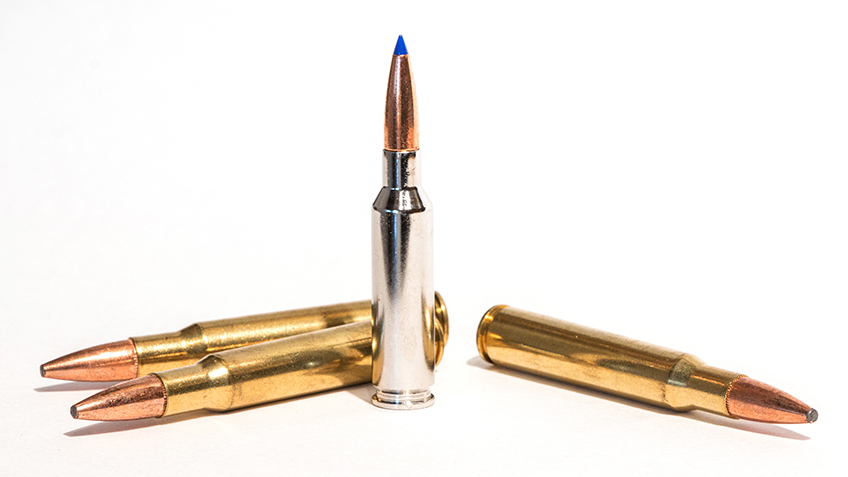
Even though at the turn of the century there were dozens of cartridges to compete with the .30-06 in essentially the same ballistic bandwidth, it was still king. But in 2008, Hornady introduced the 6.5 Creedmoor, which was made more popular by the movie “American Sniper” in 2014. Driven by a new breed of what you might call new-millennium shooters, the 6.5 Creedmoor found legs, ran off and left everything else behind. At the end of 2018, the 6.5 Creedmoor had become the most popular centerfire rifle cartridge offered in factory ammunition.
From 300 to 1,000 yards, the 6.5 Creedmoor shoots flatter and hits harder than the original .30-06 Sprg. 150-grain load. Yes, modern .30-06 loads give the Creedmoor a run for its money, but breaking that 113-year-old ballistic benchmark was enough for shooters and hunters (who know how to do math) to adopt it and its minimal recoil with relish. Now, it’s not uncommon for new rifles to be offered in 6.5 Creedmoor—not .30-06 Springfield. Who would have thought the day would come?
It’s not that the 6.5 Creedmoor is better than the .30-06—though in several ways it is. It’s the new era the 6.5 Creedmoor ushered in. Fifty years ago, a lot of hunters only had one rifle. I know that was the case in the hunting family I grew up in. My grandpa had one rifle, my dad had one rifle and all my uncles had just one rifle. Modern hunters are much more specialized; they have several rifles, specifically configured and chambered to serve specific purposes.
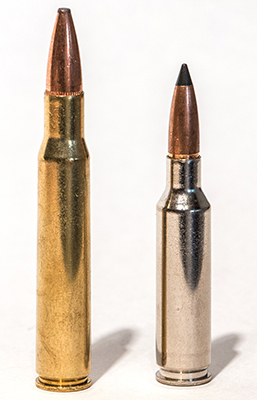
This specialization has eclipsed the allure of the .30-06’s ability to do just about everything. Today, if a hunter want’s a varmint rifle, he’ll get a .223 Remington or maybe the—you could say Creedmoor inspired—.224 Valkyrie. If you want to tackle big or dangerous critters, which is something the old ought-six has done a remarkable job at for years, you’ll probably get a .300 Magnum or .375 Ruger. For everything in the middle, the Creedmoor works exceptionally well with a lot less recoil than the .30-06. And too, older hunters who’ve been clinging to their .30-06 have now learned that for the hunting most hunters do, the .30-06 is more than enough. They’ve also learned that they can get the same results with less recoil, like with a .308 Winchester or—you guessed it—the 6.5 Creedmoor.
There is no denying that the .30-06 Springfield was a magnificent cartridge when it was introduced more than 100 years ago, and with today’s modern ammunition, it’s even more capable. The problem is that it falls right in the middle of too much and not enough. In that middle-ground arena, there’s a lot of competition for the old ought-six from cartridges that can shoot flatter, hit hard enough and recoil a hell of a lot less.
New cartridges are the result of progress. Some might argue the 6.5 Creedmoor killed the .30-06 Springfield. That’s not really true, but it did usher in the age of .30-06 irrelevance. The king was dethroned by time and progress, which is something that happens to all monarchs. The ought-six and the family of cartridges it sired—the .25-06 Rem., .270 Win., .280 Rem. and .35 Whelen—have been pushed from power. Though not completely exiled, they’re no longer the ruling class, and never will be again.