Attractive food sources tucked in a few small clearings will really improve the quality of your whitetail hunting. The better the food, the more they glue themselves to it. We all have our favorite restaurants. We pop into those places whenever we are in that neighborhood for a quick sandwich. After a while, it becomes almost a routine social visit. My goal is to create as many “favorite restaurants” for the deer on my hunting ground as possible.
Why They Work
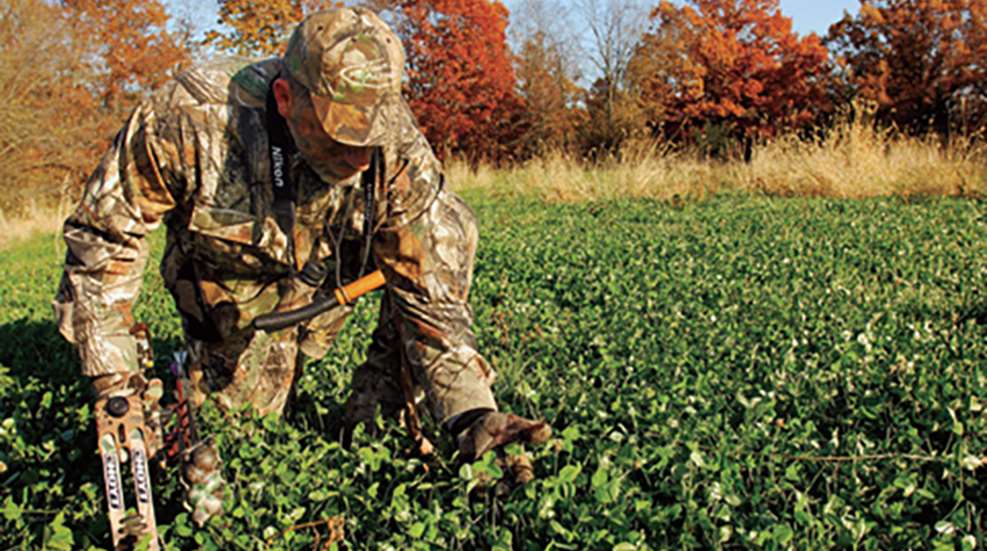
Miniature food plots are effective because they are small enough—at around a half to 1 acre in size—so any deer that enters the plot is likely to wind up within bow range. Also, these micro-plots are generally located closer to bedding areas than larger plots and therefore the deer are more likely to visit them during daylight hours. These small plots are the last place they visit before bedding in the morning and the first place they visit upon rising in the afternoon.
Micro-plots become the focal point of deer activity in that area, especially during the rut. Every buck passing through will add the plot to his rounds, checking a few scrapes and sniffing around for signs of any hot does. You can almost call them social plots because micro-plots take on the role of a community center for deer. Deer also feel safer in these small plots because they are only a jump or two from the cover.
A “Huntable” Shape
Most of my micro-plots fit available openings found in the timber or along its edge. They tend to be oval, rectangular or round in shape; however, the ideal shape is that of an “L” or a crescent, as this gives you two stand locations that are visually separated from each other. You can hunt one side and sneak away without the deer on the other end realizing you were there.
For hunting purposes, a narrow plot is better than a wide one. When a buck enters a small plot, he will often walk the length of it, checking scrapes or just boldly strutting right down the center. If the plot is only 30 to 35 yards wide, he will be within range of your stand when he comes past, even if he is on the other side; however, for agronomy purposes, wide is better than narrow. All plants need a certain amount of sunlight each day to flourish. Even if we select crops that tolerate some shade, a narrow plot may not furnish even that minimum amount of sunlight. You can improve the productivity of your plot by planting it so that it runs east and west to follow the path of the summer sun.
What to Plant
Because these plots are small, it is easy for the deer to wipe them out during the summer or early fall if you plant the wrong thing. I would not plant corn or soybeans in a small plot. Better choices include clover and brassica blends. Typical examples of brassica blends include the Whitetail Institute’s Tall Tine Tubers and Mossy Oak Biologic’s Maximum. Both clover and brassicas can do well in areas that don’t get full sunlight all day. Both can also sustain some browsing pressure during the summer and still continue to grow.
Most of my small plots are in a clover blend with the remainder in a brassica blend. I have had great success with clover over the years. It is low-maintenance, will stand moderate to heavy grazing pressure and deer love it.
How to Hunt Them
The primary goal when hunting small food plots is the same as the primary goal when hunting any stand: You need to be able to get to and from the stand without alerting any deer. In this case, getting away from these stands is the hard part because deer may be feeding or lingering nearby as darkness draws close. Not only does a clean entry and exit require creativity, but you need to spend some time thinking about the stand location and even the location of the plot itself. I like stands located right next to terrain features like ditches or cover features like a thick line of cedar trees.
I love hunting small food plots. Most of my evening hunts (and many of my morning hunts) take place on their edges, not because I don’t have other places to hunt, but rather because micro-plots are where I get my best shots at deer.