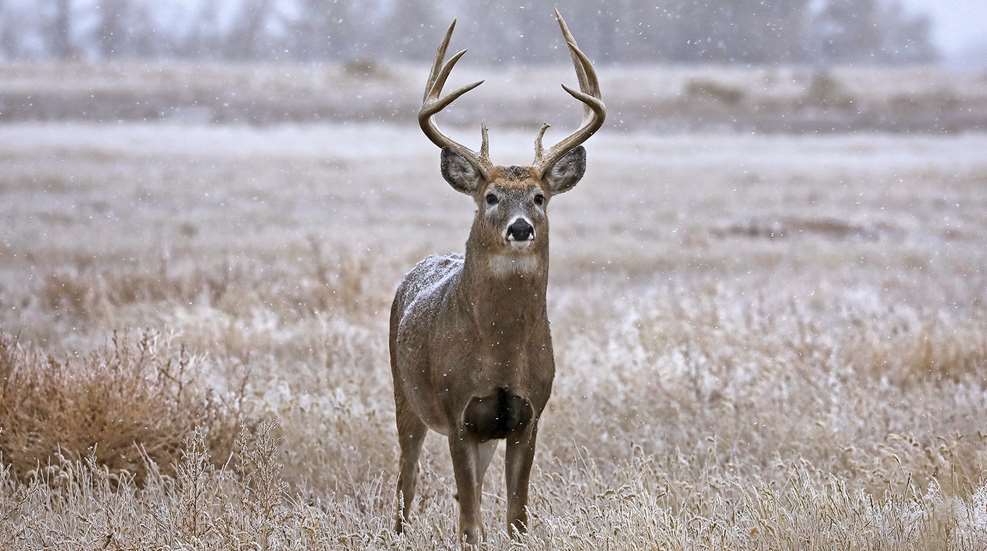
Although hunters in the Deep South may be in the middle of the lower-latitude rut, most December muzzleloader hunters experience a landscape of subdued deer activity. Some areas may almost appear devoid of deer due to hunting pressure and the approaching winter weather. Add one reduced-range muzzleloader into the mix, and the odds of success can decrease even more.
I Feel the Need to Feed
You know the facts. Rut-weary bucks have lost 20 percent or more of their body mass during the rut, and going beyond a 25 percent weight loss goal texts the Grim Reaper for possible collection duties. Bucks feel the need to feed in December. Whitetail does, also weary from the rut, but now in the beginning phase of growing life, also have an instinctive drive to super-size their meals.
Weather assists in driving whitetails to feed during December daylight hours. Below-freezing temperatures, snow, icy rain and brisk winds all devour energy from already worn-out whitetails. These circumstances prod whitetails to feed, and the worse off they are the more feed they will need to nip, hopefully during shooting light.
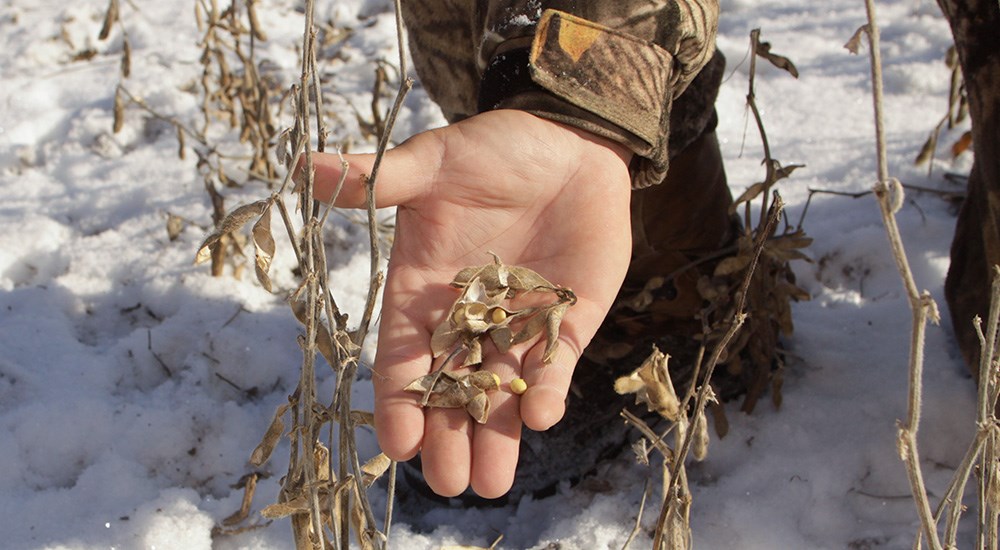
The solution sounds easy. Watch your hunting app forecast for every major winter event and set up near a food source. But what if you do not have a Lakosky-style food plot to hunt? What if the farmers harvest fields with the efficiency of Mr. Clean? You have two options. First, do your research on native browse deer may use as a substitute for the tons of soybeans on their way to market. Pockets of sumac, ash, white cedar and hemlock attract deer for browsing opportunities if crops are not available. With advice from a forestry expert, hinge cutting could also be in your future to make browse accessible to hungry deer.
Next, study any agricultural fields you have permission to hunt. Look for corners where equipment may have missed harvesting due to tight turnarounds. Review any low spots to see if farmers avoided them due to fall moisture and a fear of getting stuck. A small strip of waterlogged soybeans has high potential for an ambush.
Finally, spy on your neighbors, and not in a voyeuristic way. Determine if they have Lakosky drive-through lanes on their food plots. Even if they have all the food, you may have better sanctuary with deer creating a highway of travel between neighboring properties as winter feed needs change. Once you find a busy food source, determine prevailing winds, whitetail entrance points and determine if dawn or dusk offers an effective strategy without changing deer patterns.
I Feel the Need to Snooze
Spying and scouting provides you with information to determine where deer are feeding—a high December priority—but do not forget the sanctuary requirement. By December, some American whitetails have experienced as much as three solid months of hunting pressure. Worn out, harassed, feeling the effects of winter and attempting to conserve every ounce of energy, whitetails of all genders escape to refuge. While there, they may snooze as much as 70 percent of the day, and in severe climates that number could top 90 percent. This faux hibernation allows their body to survive on questionable calories by not expending energy.
Pinpointing suitable bedding cover becomes problematic when surrounded by ideal habitat. Start near a food source and then backtrack. First, utilize your eyes. I often sneak to a high point and put my binocular to use a day or two before hunting. Scanning food-source edges and noting the arrival direction of deer both point me towards a bedding location. Trail cameras also provide an extra set of eyes to determine deer travel preferences.
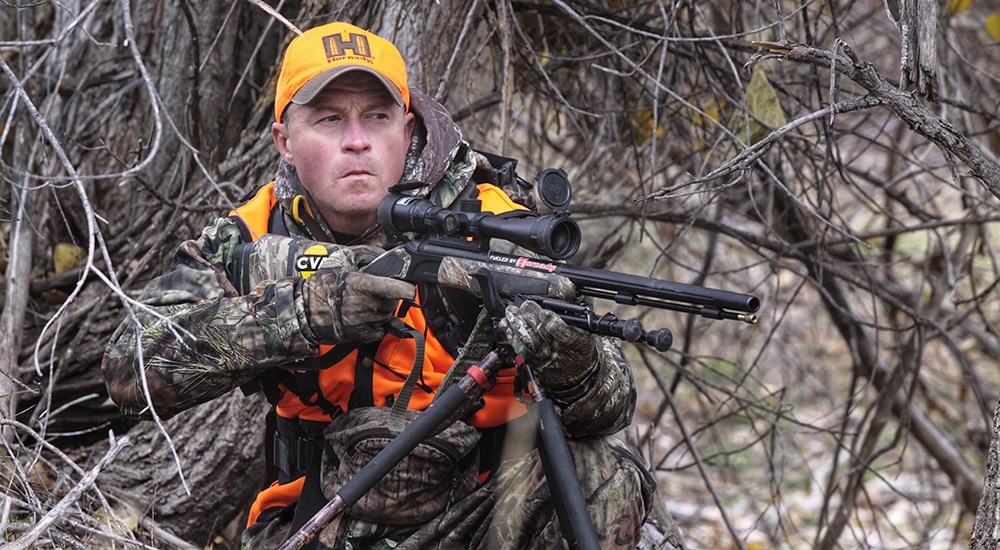
Next, retrace the presumed travel route of the deer to the closest, next closest and the farthest likely bedding cover. In severe weather, possibly plagued by deep snow, deer will conserve energy and bed in the highest quality cover near the highest quality food. They could bed within 100 to 400 yards of the food in survival mode. In mediocre weather, they may bypass a closer bedding option and travel a half-mile or more. All prey species understand that visiting food and water equals an increase in predation, so separation is a survival tool. Finally, I have witnessed open-country whitetails travel a mile or more to food if snow does not hinder their trek. The uncluttered landscape provides them with increased surveillance and a journey across rolling topography consumes minimal extra calories.
Hunting bedding cover is best accomplished by looking for funnels and pinch points on the perimeter of cover, but not on the delicate edge of their final food destination. A setup within a few hundred yards of refuge may provide you with an early glimpse of deer anxious to feed, but not anxious enough to expose themselves on food until after dark.
I Feel the Need to Breed
Hoping for weather to force deer into exposing themselves on food sources while exiting cozy bedrooms offers a ray of hope. Another 10 percent rule could come into play in December. That rule exists because approximately 10 percent of females, primarily healthy female fawns, will come into estrus in December. Research concludes the group is small, but fairly reliable. The after-rut party could spark back to life, and you may happen to be in the woods when the action starts.
Since this is a phenomenon you cannot mastermind, up your odds of a post-rut party by hunting areas brimming with does and fawns-of-the-year. Landowners with brimming deer populations may allow hunting, and these deer clusters increase the chance of a coming yearling entering estrus.
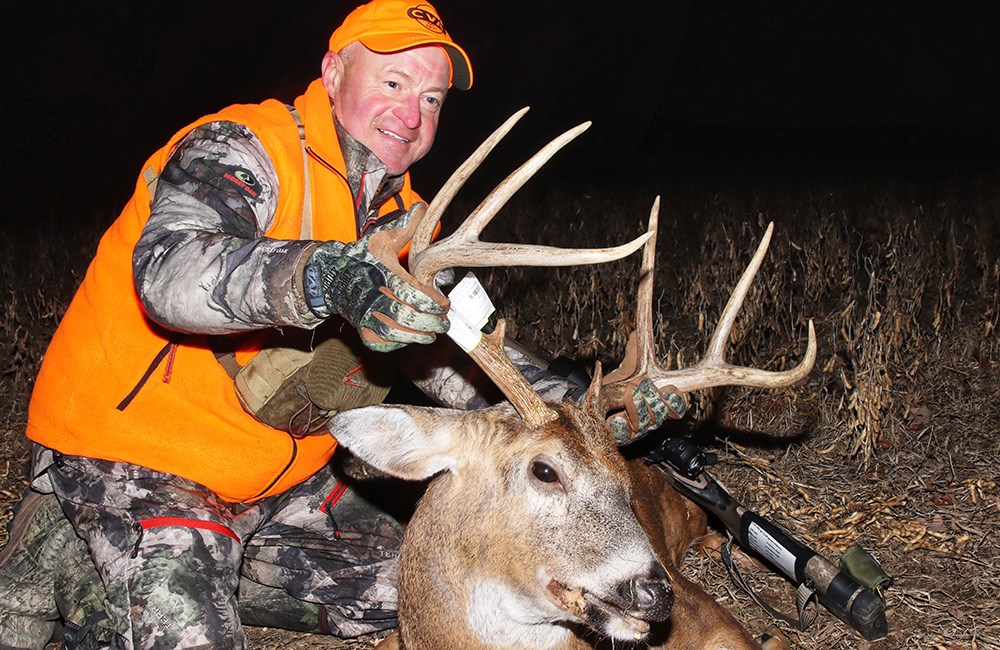
One December morning a dozen or more does and fawns entered an alfalfa field I happened to be set up along and soon after a buck approached. When he passed downwind of the band, he immediately lip-curled and soon after, pursued a fawn with passion. Unfortunately for him, he trotted by me within range of my CVA during the pursuit and I was able to give the fawn relief with a Hornady SST sabot. December whitetails may show a restrained nature, but with the right approach you can still make muzzleloader smoke.