“Why is your phone making such a racket?” I quizzed my friend Greg Gilman as the device buzzed relentlessly from the truck cup holder.
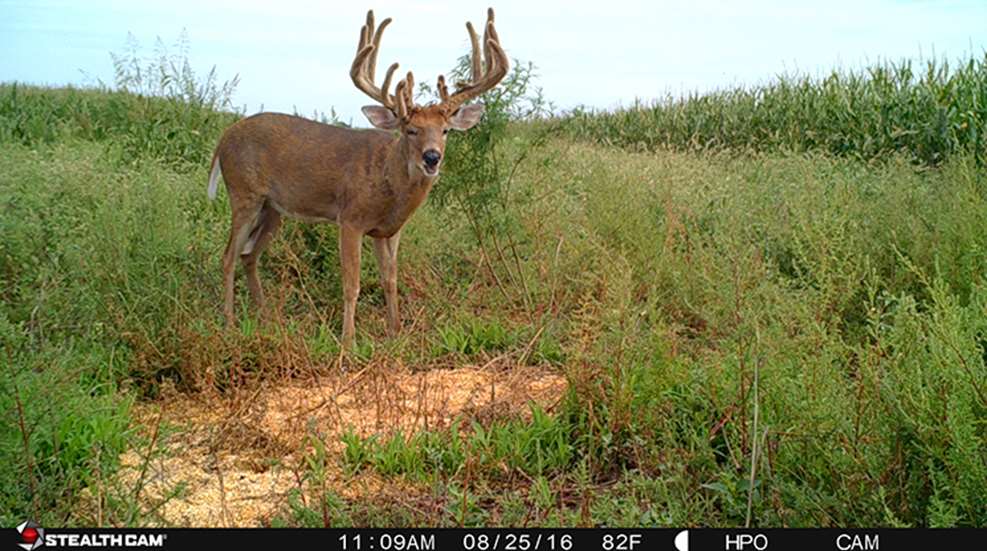
“Every time it vibrates it’s receiving another image from one of my trail cameras,” he replied. “I upgraded to wireless and never have to check them. Since I hardly go onto the properties, except to hunt, I’ve been racking up more images.”
Gilman is a wildlife property specialist for a realtor in Kansas and has trail cameras scattered across several counties. Wireless is his choice of technology to monitor properties, diminish human presence and capture more bucks on cameras.
If wireless isn’t in your budget then purchase an SD card with the highest memory your camera allows, and power the unit with name-brand lithium batteries. These steps minimize camera maintenance, and that minimizes your human footprint in deer country, which leads to more photos. The following strategies can also bulge your buck photo album.
Leave No Human Scent
Aaron Volkmar of Tails of the Hunt Outfitters offers trophy whitetail hunts in Iowa and Missouri (tailsofthehunt.com). He stresses a scent-free entrance during every visit to check trail cameras. That includes laundering clothes and spraying down all gear that goes into the field.
“Bring along a rake and rake off the trail and set area,” Volkmar also suggests. Raking removes leaves to lessen foot-traffic noise, and it removes fallen branches that could rub on clothes and capture scent.
Use Attractants
Attract whitetails to a camera site with minerals and comfort foods if legal. The easiest to maintain is one or more mineral sites with a focus on calcium and phosphorous in addition to trace elements, plus vitamins. All aid in antler growth and the health of lactating does.
Also consider corn or commercial deer feed at easily filled stations. Deer will make these extravagances habitual, but the cost of getting images could become prohibitive.
Target Water
Art Helin is a whitetail property consultant and seasoned bowhunter from southwest Wisconsin. One of his go-to strategies to boost buck photos is placing cameras on waterholes, especially those adjacent to heavily used food sources.
“Nearly every waterhole on my property has a trail camera on it,” proclaims Helin. “And when I construct a new waterhole I build many next to food to boost trail-camera traffic. The waterhole cameras capture images throughout the summer and throughout the rut.”
Capture Crossings
While hunting with an old farm boy from South Dakota, we stopped to check a trail camera watching a steep ditch. A single trail traversed the span. The SD card was loaded with shots of deer using the crossing as they left a grass plateau to reach green fields beyond.
Crossings, funnels and pinch points occur throughout deer country; think fences, water crossings and terrain gaps. They can be a conduit to more images.
Hang it Higher
A retired construction worker shared with me his formula for more images: Place the camera above and out of mind of deer.
The treestand-like position puts the camera out of the deer’s normal line of sight, and tilted downward it still snaps images worthy of field-judging. What you don’t get is buck paranoia caused by eyeball-level trail cameras that could lead to skirting issues.