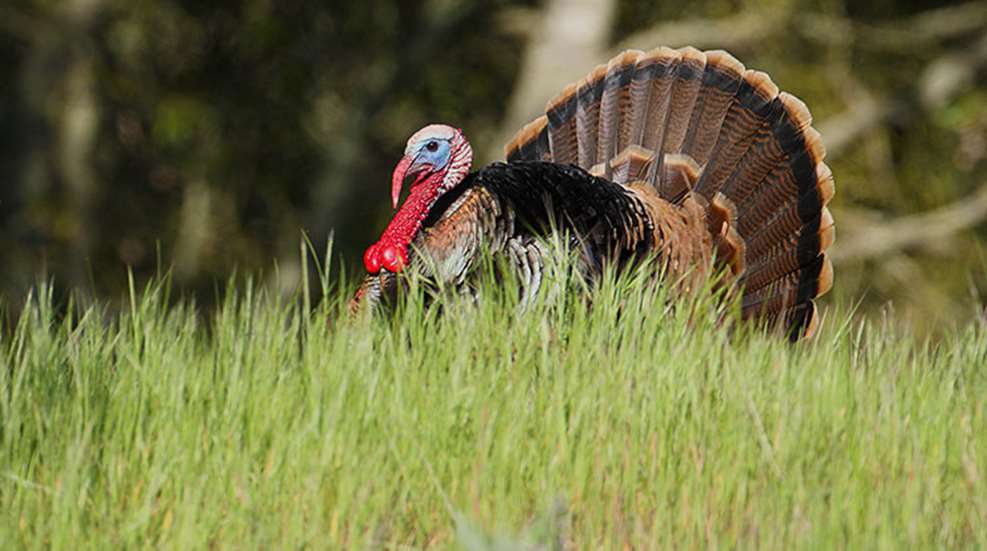
You prepare for weather on a turkey hunt by bringing raingear. Why not prepare for shooting predicaments, too? Going prone squashes your profile and gives you the green light to slither closer to a tom that won’t budge. It’s a simple strategy to employ with an obstinate gobbler; remember, once the hunt starts the toms dictate your every move.
Before season visit the range. Start with the traditional sight-in session from a sandbag rest. After zeroing your shotgun and checking its pattern, practice several shots prone. The terrain-hugging position gives you the most stable platform to launch a load of pellets, but the change-up could also throw off your sight alignment. It may not mean much on a 30-yard shot with a respectable pattern, but it could mean a miss at close range when you pitch a softball-shape of pellets at a tom’s tiny noggin.
Your turkey gun may generate substantial recoil, so you might wish to position your body at up to a 45-degree angle to the left of your target if right-handed. Newer instruction recommends a 10- to 20-degree angle to the target, with nearly a straight-on lineup. Even a slight degree of angle allows the body to soak up some of the recoil and disperse it without it driving down the full length of your body. Test several angles to accommodate your comfort level.
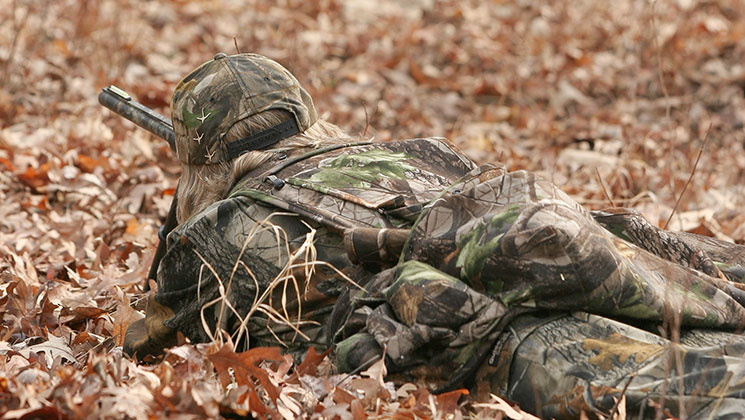
While lying on your stomach, stabilize the shotgun with your elbows dug firmly into the earth. Your legs should be spread hip-width apart with ankles flat and feet pointing away from your body. Alternatively, you can bend your right leg (if right-handed) and lock the flat part of your foot into your left leg. Bring the buttstock of the shotgun to your cheek. Never slide your head into the gun. Confirm your alignment while shooting, and file away the position for a future hunt.
Before going prone on a hunt, consider safety. Crawling around in areas of high hunting pressure should get a second thought, especially if you plan to use decoys. Be alert for others stalking your position, and identify yourself in a loud, clear voice if you observe other hunters.
If you find yourself able to set up prior to a gobbler sighting, look for high ground to gain the advantage of increased visibility. Be mindful to avoid lying in too much grass that could obscure your vision. Never allow obstructions in front of your shotgun muzzle.
Lying prone in wait can cause discomfort. If you anticipate a prone hunt you may want to don knee and elbow pads. Some setups could require staying prone for a long time, too. Carefully lay down your shotgun, pointed in the direction you suspect a tom to make his entrance. When it comes time to raise the gun for the shot wait until the turkey’s head disappears behind a tree trunk, brush or even his own fan. He may even drop his head to peck, giving you a second to aim.
While hunting with my kids one spring we encountered a gobbler duo that had staked claim to a prairie knob with no intentions of leaving. Belly-crawling between swales and calling sporadically finally prompted one of the birds to shift into drive. My son acted as a decoy puppeteer behind my daughter and me as we all lay prone watching a blue head march into range. With the tom on a course to walk right over us, I whispered “shoot” to my daughter for a 9-yard ending to our prone hunt.