Photo Courtesy USFWS
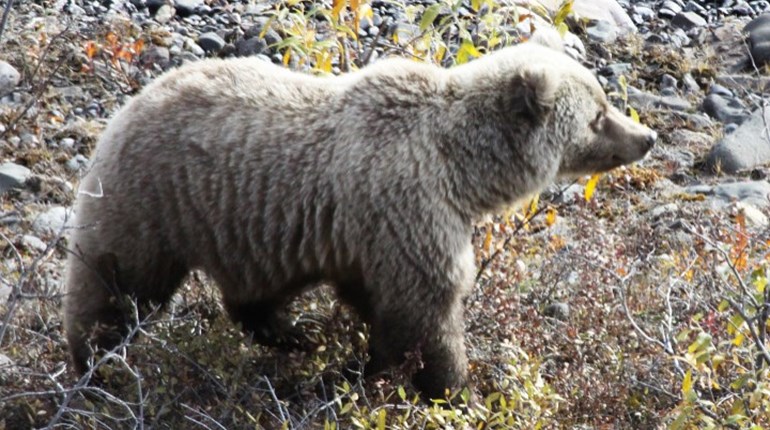
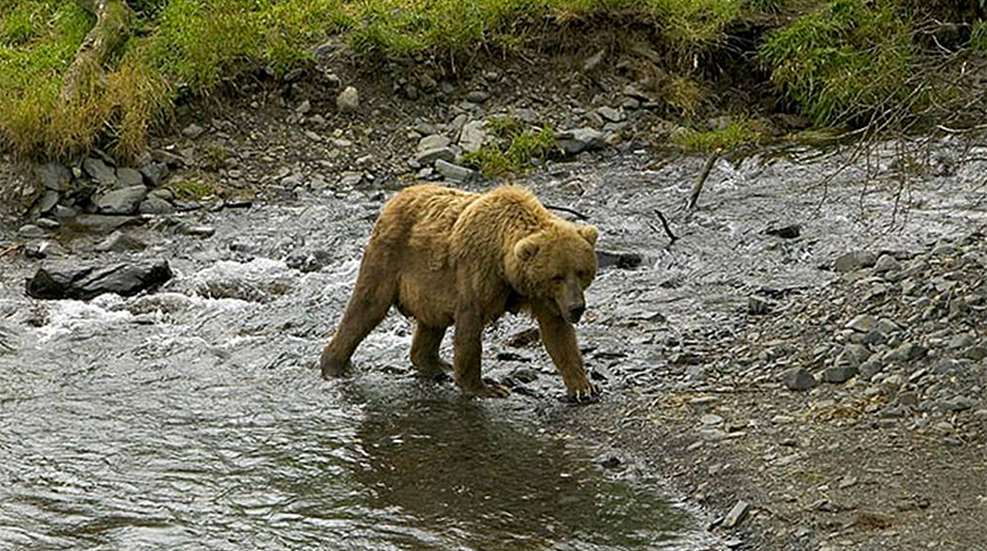
The U.S. Fish and Wildlife Service (USFWS) wants to take the grizzly bear in the Yellowstone ecosystem off the Endangered Species List. As reported at AmericanHunter.org/HLF, the USFWS’ reason is simple: The bears have recovered from the effects of the bounties and eradication programs the federal government once ran. Now according to the USFWS: “Population and habitat monitoring efforts undertaken by the Interagency Grizzly Bear Study Team indicate that grizzly bears have more than doubled their range since the mid-1970s. They now occupy more than 22,500 square miles of the Yellowstone ecosystem, an area larger than the states of New Hampshire, Massachusetts and Rhode Island combined. Stable population numbers for grizzlies for more than a decade also indicate that the Yellowstone ecosystem is at or near its carrying capacity for the bears.” (Note: Forty days remain for the public to post comments to the Federal Register on this topic. To do so click here.)
In response, some “animal-rights” groups are saying that the 700 or so grizzlies in the Yellowstone ecosystem will soon be in trouble again if federal protections are removed. Here’s what’s really happening.
First, a Touch of Politically Incorrect History
Few know that Outdoor Life magazine’s founder and first editor J.A. McGuire—this would make animal-rights activists cringe—deserves the credit for getting all this grizzly conservation started. He saw that the grizzly needed to be managed with regulated hunting back in September 1915. He proposed legislation that was introduced in state assemblies all over the West. It would have impeded the federally subsidized slaughter of the bears by setting limits on the number of bears that could be killed. This would have used hunters to protect and control the species, an idea that later became known as “The North American Wildlife Conservation Model,” which has been used to save everything from the black bear to the wild turkey.
This was a topic McGuire knew something about as the grizzly was his favorite animal to hunt. I interviewed his niece in 1997. She was in nursing home in Denver at the time and was the last living relative who knew him. Her greatest memory of McGuire, who published the magazine out of Denver, was seeing him come back with a grizzly he’d taken in Wyoming.
Now, to the Present
After a century, it looks like McGuire’s dream will finally come true.
Delisting means that a few hunters may soon be issued grizzly tags in Montana, Idaho and Wyoming. The National Parks Service says it has “asked the states to focus hunting away from park boundaries and into areas with high levels of human-bear conflicts.”
The bears still would be closely managed. “We’ve got a gold-plated management plan,” said Chris Servheen, the USFWS’ coordinator for bear recovery.
If this sounds like a familiar fight, that’s because it is. The USFWS first delisted grizzlies in 2007, only to have a lawsuit by anti-hunting groups lead to the bears being relisted in 2009. Anti-hunters did this by arguing that two of the bears’ primary food sources—whitebark pine nuts and cutthroat trout—are in decline from global warming. The USFWS looked into these claims and found that, even if this is true, the bears have plenty of alternative food sources.
Meanwhile, Montana, Wyoming and Idaho want the Endangered Species Act’s (ESA) restrictions lifted so they’ll be able to allow grazing and perhaps logging and improve trails in this area. Also, the USFWS needs to be able to show that the ESA can work, as many critics of the Act have noted that once a species gets on it the species is rarely removed—often because of lawsuits from anti-hunting groups.
A Firsthand Look at Grizzly Management
The National Park Service (NPS) says, “Employing the best practices for safety in bear country doesn't just protect people, but the welfare of animals as well. When bears kill people or damage property, bears lose.”
For a firsthand perspective on how we can live with grizzlies I spent a few days with Mike Madel, a wildlife management specialist for Montana Fish, Wildlife & Parks, who patrols a 2,500-square-mile area solving problems people are having with a growing population of grizzlies.
I hopped into Mike’s pickup and we went north out of Choteau, Mont., with his Karelian bear dog, Ursa. Mike is the type who’d rather show than tell. So I said, “Come on Mike, I came to you for the truth about these big, bad grizzlies. Start talking. If you don’t I’ll have to make it up. Don’t make me do that, Mike!”
Mike didn’t take his eyes off the road. He just grinned. But I thought that was a good sign. It took me three days once to get a cougar specialist with Wildlife Services to smile. And he only did that after my mule decided to rodeo on a cliff ledge.
Mike has dealt with problem grizzlies for more than three decades. He knows every rancher, butte—and a lot of the bears. He keeps a list of the names and radio frequencies of the collars on local grizzly’s necks by his right hand as he drives. I glanced down and saw that they have names like Dex, Beenie and Bonita. The area Mike patrols—the “Northern Continental Divide Ecosystem”—is north of the Yellowstone ecosystem. These grizzlies aren’t yet up for delisting from the ESA, but the grizzly population in this region has been increasing for decades.
The bears in both populations are now so numerous a lot of them are moving out of the overcrowded Rocky Mountains like urbanites looking for elbowroom in farm country.
Mike said, “Hunting is a game-management tool. I don’t know if it can be used to take out specific problem bears, but it can be used to raise money for conservation; it can reduce populations in areas where they’re running out of natural foods; and it would make the local residents feel like they can actively do something. It’s a win-win-win for grizzlies and people.”
Mike’s biggest problems now are coming from grizzlies that spend their days sleeping in ravines choked with willow and buffalo berry (a grizzly favorite) near houses, livestock and crops that then spend their nights feeding near those homes—sometimes on the livestock and crops. This causes some touchy situations, such as when an upland-bird hunter in Dupuyer, Mont., in 2009 sent his dog into a ravine to flush pheasants and instead flushed a grizzly. The bear charged and the hunter, Galen West, somehow killed the bear by shooting it three times with his 20-gauge semi-auto. The third and fatal shot hit the bear between the eyes.
When I asked Mike if he’d ever been charged, he said, “I’ve stopped three with bear spray and was treed by a grizzly that kept hopping up and down under the tree. Damndest thing I ever saw. I found that grizzly sleeping next a calf it killed. He was only 30 feet from me. I tried to slip away but he heard me and came charging. Hell of thing.”