The buck stepped into the field like he owned it. His tall, eight-point rack glistened in the early-morning sunlight. His neck was thick with the rut, and steam bellowed from his nostrils with every breath. He was a true trophy.
The hunter leveled his deer gun and put his cross-hairs on the buck’s massive chest. He was confident in the 80-yard shot as last deer season he had taken a deer at this same range with no problem. As he recovered from the recoil of his shot, he saw the buck whirl, untouched, and then exit the field. No blood, no hair, and no buck. It was a clean miss.
How could this possibly happen? How could he miss that shot? Was it him or was it the gun? These are legitimate questions that can easily be answered. It was the hunter’s fault that the buck was missed. The gun did everything it was supposed to do. The function of the gun is to put the bullet where the shooter is aiming. The simple fact in this case, and thousands of others just like it every year, is the hunter was not aiming at the deer.
Oh, he may have had the crosshairs on the deer, but quite often that has very little to do with where the projectile is aimed. The fact that the gun had not been fired for over a year is the problem. Pre-season sight-in is essential to success. It should be done before each and EVERY season.
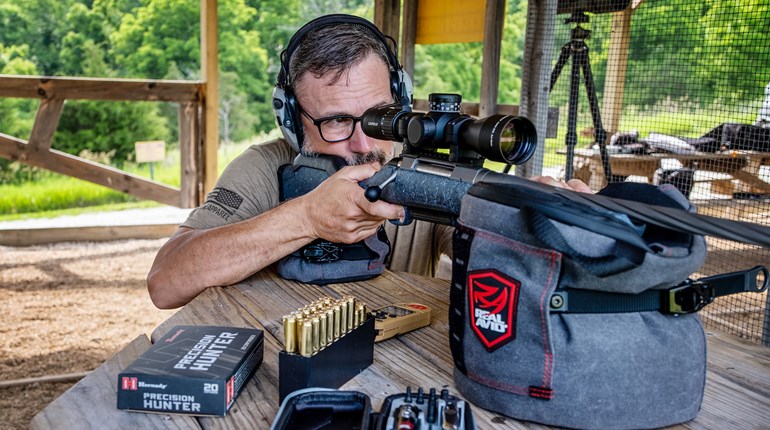
In fact, I recommend shooting your weapon on a regular basis, all year. A half-dozen shots off sandbags before the season will definitely help, however, shooting
several boxes of shells throughout the summer will help you be ready for that one big shot in the fall.
A good “rule of thumb” that I use is to look back over the past two or three deer seasons and count the average number of shots I take each year. For every shot I intend to take during the season, I shoot one box of shells in preparation. This gives me a large measure of confidence and security in both my equipment and myself when I put my cross-hairs on his chest.
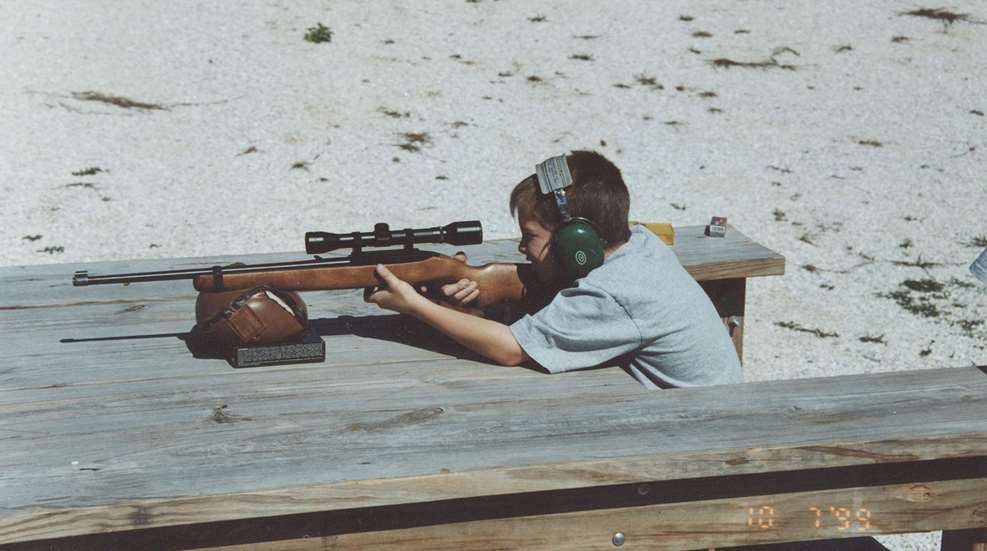
This advice holds true for more than deer hunting and deer hunters. Predator and varmint hunters too can benefit from these tips. If you enjoy squirrel hunting with a .22, practice is crucial. Anytime you shoot a single projectile at a target or animal, your success is directly proportional to the amount of your practice.
Until now I have made mention and reference to scoped long-guns. I am very aware that not all deer hunters use scopes on their guns. Does that eliminate them from the need to sight-in their guns? Absolutely not. Every time a gun goes into or is taken out of a case, there is potential to bump the sights, even irons. Every time your gun rides in a vehicle, there is a potential to misalign the sights. Every time you fire your gun, there is potential to change the sight. Why take the chance? Shoot your gun often and check the sights or scope every time you move or use the gun.
Handgun hunters should also heed this advice. Because of the size of handguns, they are more likely to be bumped or even dropped during handling. Many of today’s hunting handguns also have scopes. This increases the odds for knocking the sighting device out of adjustment.
A valuable trick I learned the hard way, many years ago, was to use a product called “Loctite 222” on all my sight and scope threaded screws. I use it even on my scope bases and rings. As I said, I learned this lesson the hard way …
I was deer hunting in N.E. Missouri. I had been still-hunting when I slipped-up on a nice buck. He was a shooter, and was moving with a couple of does. I decided to stalk the big buck to get a better shot. As I picked-up my pace to stay with the deer, something on me rattled. I stopped and checked all my gear. Nothing was loose. I slung my .308 Winchester and took-off again. The rattle returned.
I had to ignore the bothersome little noise as I approached the deer. The buck was standing about 60 yards in front of me. I had an open shot. As I raised my gun and looked through the scope, the crosshairs looked like an “X” instead of a cross. The rattle I had heard was my scope rolling around inside the rings.
I returned to the truck where my partner, Roger Lewis, was waiting. I told him my story. “Why in the world would you screw-on your scope without Loctite?” he asked. Needless to say, I have used it ever since.
He told me about a very proficient bench-rest and black-powder shooter from S.E. Missouri named Elvis “Crawdad” Adams. It seems “Crawdad” was assisting a friend in sighting-in a new rifle. The gun was throwing bullets all over the target. They were prepared to return the gun to the store. Roger suggested “Loctite” and saved the shooter a lot of trouble and aggravation.
Regardless of what guns you have scoped, getting and keeping them sighted-in allows you to be ready for that shot of a lifetime.
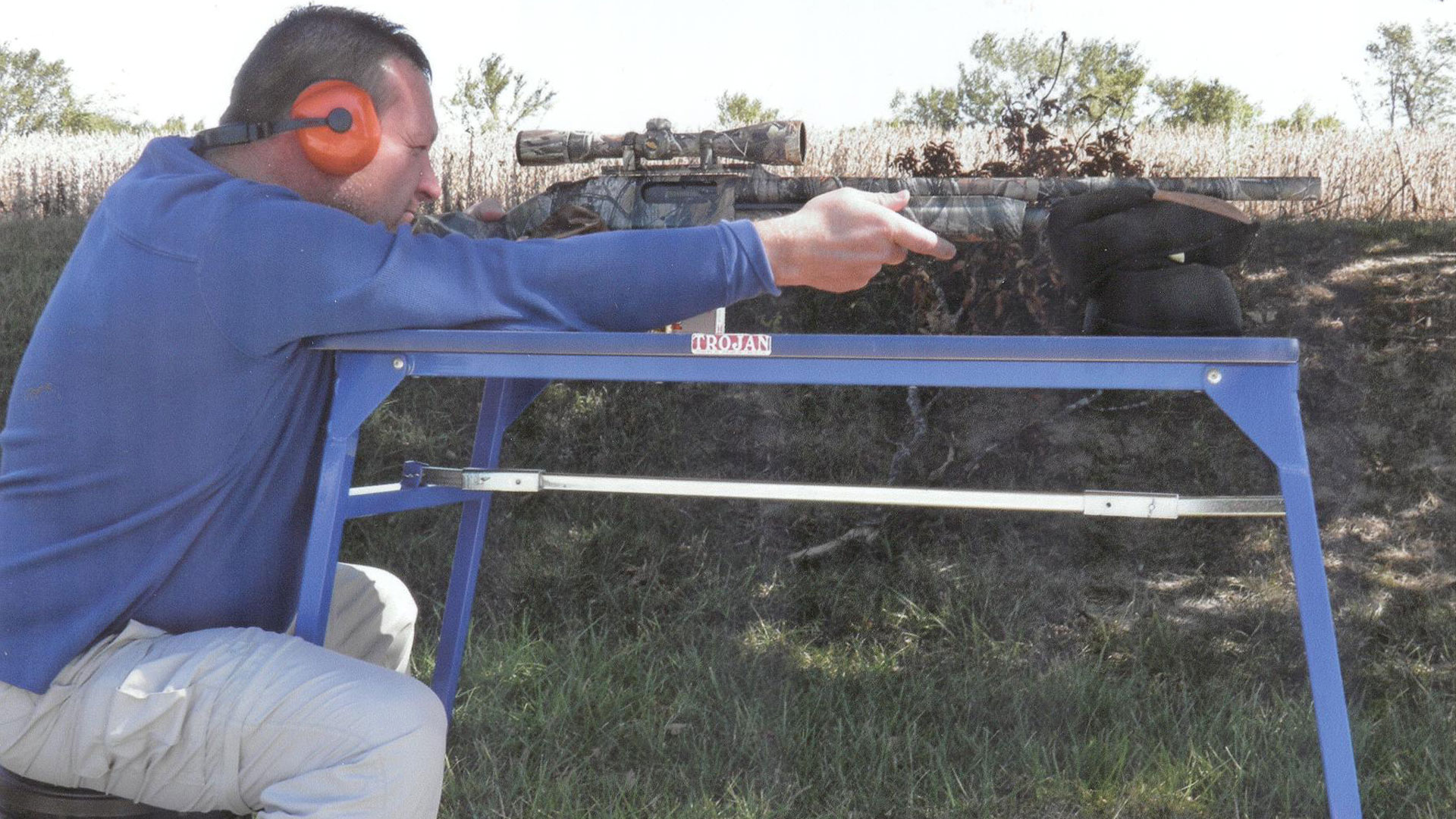
So here is your “To-Do” list for fall success, as a result of summertime preparation:
- Your first and last step should always be to clean your gun. Yes, that is right, thoroughly clean your gun before and after each practice session. Your assumption that nothing has changed with the gun since the last time you cleaned is just that: an assumption. How far you break your gun down for cleaning is a personal preference. I will, however, tell you that wiping down the outside with a cloth is not enough.
- Most of us sight our guns in on a range. These ranges are likely perfectly flat. Most of our shots in the field are not. Find someplace safe to shoot your gun at up and down angles. Bullet trajectory is not the same at an angle as it is on the flat.
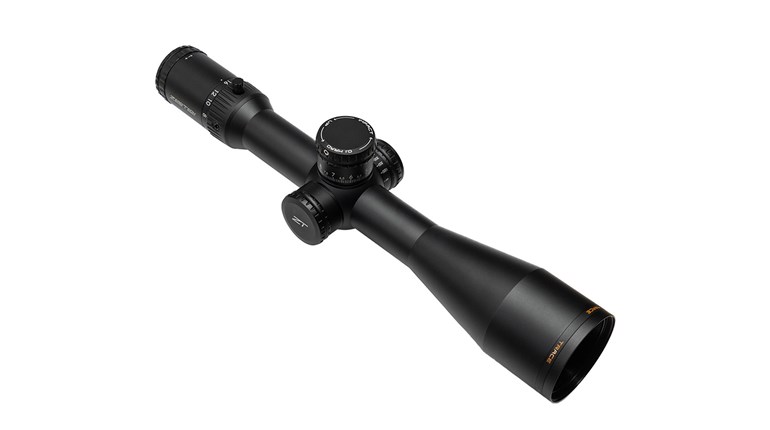
- Check and double check your scope and scope mounts. Leave nothing to chance here. You will regret not paying close attention to these details.
- Finally, protect the finished product. Once you are 100-percent satisfied with what you can do with your gun, take steps to make sure your efforts were not in vain. If you have a hard case, that is great. Not everyone does. Either way handle your gun like eggs. If you throw your gun in the truck like luggage, you have just wasted all that time and effort.