Over the last five years, the NRA Hunters’ Leadership Forum (NRA-HLF) has collaborated with leading outdoor industry research company Responsive Management on groundbreaking new studies examining Americans’ attitudes toward hunting and hunters. With additional consultation from some of the country’s top debate strategists and communication specialists, the partners have distilled the findings and recommendations into a convenient, accessible, easy-to-digest book explaining how to communicate with the American public about hunting. Developed specifically for game agencies and other wildlife and conservation professionals, the book details how to build support for hunting in the most persuasive and compelling ways possible. Over the course of 11 chapters, readers will learn how to talk to non-hunters about the historical role of hunting, the benefits of hunting and why it remains essential today. The book’s insights rest on a foundation of new social science research and proven debate and communication techniques; readers will emerge with tools to become more effective advocates for hunting and the North American Model of Wildlife Conservation.
Why would the NRA take on such a tremendous worthwhile project? One of the NRA’s five foundational principles is: “to promote and defend hunting as a shooting sport and as a viable and necessary method of fostering the propagation, growth, conservation and wise use of our renewable wildlife resources.” The information obtained from our groundbreaking research, coupled with NRA’s knowledge of the hunting industry’s critical position, gave us an opportunity to again lead and fulfill the principles the forefathers intended of the organization. This product was no accident, but instead a well-coordinated collaboration of NRA’s resources working hard for the American hunter!
There are two ways to promote and defend hunting in the United States. The first is to foster active participation in hunting. The second is to maintain, protect and enhance the cultural acceptance of hunting. The first cannot exist without the second.
Today, numerous organizations across the country work to increase hunting participation and to develop programs to recruit, retain and reactivate hunters, otherwise known as R3. These organizations include state fish-and-wildlife agencies, sportsmen and conservation non-governmental organizations (NGOs), and the Council to Advance Hunting and the Shooting Sports (CAHSS). In fact, CAHSS developed a plan to promote participation in hunting that has gained traction and is helping to hold the line on the loss of hunters. However, almost no effort is directed at the protection and maintenance of the cultural acceptance of hunting in America. Without this, efforts to recruit, retain and reactivate hunters are wasted. Hunters in the United States represent less than 5 percent of the country’s population. Without excellent representation of who we are and the great things we do for conservation and the economy, our future lays in the hands of people who don’t hunt or understand our positive contributions.
The reputation of hunting remains vulnerable to setbacks in the court of public opinion. Social media missteps, high-profile trophy hunting incidents covered exhaustively in the media and outright falsehoods perpetuated by animal-rights interests continue to jeopardize the future of hunting in the United States. There is a pressing need for action, based on a solid foundation of research, with effective pro-hunting messaging appealing to shared values, common sense and scientific wildlife management principles. Unfortunately, too much of the little work being done by sportsmen and conservation NGOs to defend hunting and communicate its benefits is not based on research; further, it tends to lack coordination. What is needed is action, based on research, with strategic direction on how to communicate with the public about hunting. When the NRA-HLF began research five years ago, it was not for the purpose of writing a book to understand the cultural, political and demographical challenges facing the future of hunters and hunting. What transpired turned out to be the largest-ever-of-its-kind study on Americans’ attitudes toward animal rights, animal welfare and regulated hunting. This study entailed a series of focus groups across the country and interviews with a nationally representative sample of thousands of U.S. residents. The study covered a range of subjects central to the question of how to effectively communicate about hunting, including opinions on the uses of animals; approval and disapproval of firearms, sport shooting and hunting; perceived threats to wildlife populations; and opinions about the media and the perceived credibility of various organizations, among other topics.
We must defend hunting in the court of public opinion.
A considerable amount was learned from this research regarding the issues and vulnerabilities hunting faces in terms of public opinion. One of the most important facts we learned, however, was that defending and promoting hunting is not a matter of changing Americans’ values, but of reaffirming them. We now know from our research the majority of Americans (about 79 percent) have a positive attitude towards hunting and hunters. So, from the research the book was born as an avenue to share all the information with the future decision makers who can help chart the course for communication strategies about hunting in the United States. We are on the cusp of a budding new era in helping save hunting in America; the findings of the NRA-HLF research will help those who are interested in charting a path forward.
Protecting and enhancing the cultural acceptance of hunting is a natural fit for NRA members as well as hunting community professionals. NRA members are the largest single hunting membership group in the United States. NRA members are passionate about the organization’s mission and have proven time and again to put words into action. Protecting our right to hunt is essential if game populations are to thrive, if conservation is to be funded and if hunters are to be allowed the opportunity to seek healthy nourishing food.
NRA hunters can lead this campaign on a nationwide scale. The time is now to set the example, to unify the community in positive pro-hunting communication. As stated earlier, we know promoting hunting is not a matter of changing Americans’ values, but of reaffirming them. We have an opportunity to get in front of something instead of operating from a position of weakness. I urge every NRA hunter to follow the simple steps we will lay out to help. Will you join us?
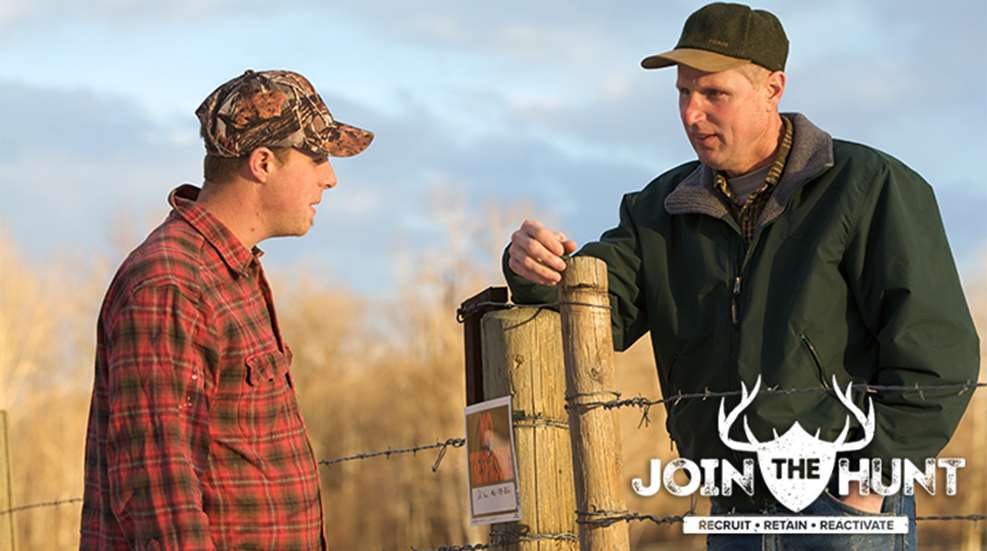
In 2021, “Join the Hunt” will provide research, and tips and talking points from the book to help every hunter get on the same page about How to Talk About Hunting. The campaign can be the most meaningful pro-hunting/pro-hunter focus ever in the United States. There is a potential for it to build a groundswell with current hunters and gain a grassroots following that will give hunters and hunting the recognition and funds needed to continue for decades.
How to Talk About Hunting: Researched-Based Communications Strategies
Over the last five years, the NRA Hunters’ Leadership Forum has collaborated with Responsive Management on groundbreaking new research examining Americans’ attitudes towards hunting and hunters. With additional consultation from some of the country’s leading debate strategists and communications specialists, the partners have distilled the findings and recommendations into a convenient, accessible, easy-to-digest book explaining how to communicate with the American public about hunting.
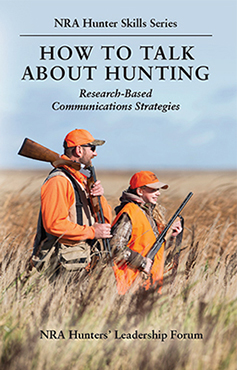
Developed specifically for wildlife and conservation professionals, the book details how to build support for hunting in the most persuasive and compelling ways possible. Over the course of 11 chapters, readers will learn how to talk to non-hunters about the historical role of hunting, the benefits of hunting and why hunting remains essential today. The book’s insights rest on a foundation of new social science research and proven debate and communications techniques; readers will emerge with the tools they need to become more effective advocates for hunting and the North American Model of Wildlife Conservation.
The book and shipping are free. Up to 20 copies will be provided to each agency or organization, with more available upon request. To order "How to Talk About Hunting," contact Peter Churchbourne at [email protected].