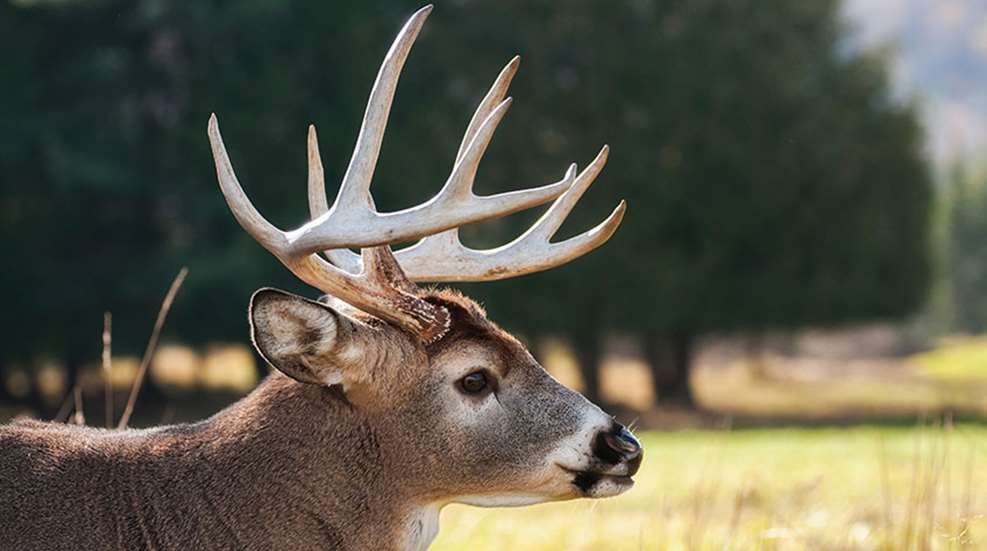
My mind rattled as my eyes bugged out: Was it a mature buck or just a youngster with potential? The buck stopped. I had one window through trees to the buck’s vitals and I’d had just one glance at its face and rack. As adrenaline rattled me, I shot.
Minutes later I wasn’t disappointed with the buck’s rack, but I was disenchanted with my age-judging abilities. The buck was 2½ years old. It was well on its way to becoming a heavy-racked buck and, as I was on a managed property, I should have let it walk.
Hunting can be like that. If you’re managing a whitetail property, one of the quickest ways to get more trophy bucks on your land is to pass on younger bucks. In fact, Grant Woods, a consulting biologist and owner of Woods and Associates, says, “Age is the strongest correlation of antler size for a buck. If the object is bigger racks, food won’t do much without age to back it up."
So how can you tell the difference between a 2½-year-old buck and a mature 5½-year-old deer in those few tense seconds before you shoot or don’t shoot? For answers, you need to familiarize yourself with the ever-changing body features of the whitetail buck.
“Most animals change body shape as they age. I’m 48 and getting a bit of a pot-belly. Whitetails are similar. When they reach midlife they acquire a sagging belly. The older they get, the more that belly sags,” says Woods. “Any individual human or animal can defy that trend, but by looking at body shape you should be able to age deer to at least within a year either way.”
1½-Year-Old Bucks
The easiest bucks to judge are youngsters. Bucks at 1½ years of age may have spikes or even small racks sporting 4x4 or more points, but few racks will exceed the width of their ears. They’ll also appear to be all legs. Look for a slim torso leading up to a slender neck to confirm their yearling status. During the rut their neck won’t bulge. They’ll rarely have stained tarsal glands like an older buck. Woods also says, “When you’re looking at a buck, ignore its antlers. If, without its antlers, it looks like just an average-sized doe, then it’s a yearling. This trick works from Florida to Canada.”
2½-Year-Old Bucks
Think of 2½-year-olds as yearling bucks on steroids. These bucks still portray a leggy look with a slender overall appearance. The main body difference between a yearling and a 2½-year-old is a slight appearance of muscle structure. During the rut you can detect some swell in the neck and even some staining in the tarsal glands of a 2½-year-old.
Woods again suggests ignoring the antlers. When you do, if it looks like a super-dominant doe, you’re likely sighting a 2½-year-old.
Since you’ll only have seconds to determine the age of a buck in the field, Woods has come up with this quick, mental imagery test: Imagine a 2x4 wooden board placed horizontally behind the front legs of a buck. Now imagine you and a friend lifting up on that board from either side as the buck stands on all fours. If the buck tips backwards, it’s a 2½-year-old.
3½-Year-Old Bucks
Determining buck age over the next two years is as challenging as raising a hormone-rattled teenager. Not only do 3½-year-olds have more muscling and features common to a mature buck, they also can have tempting racks. Three-year-olds have finally bulked up with muscle, so look to see if the rump and chest are bulging and in equal proportion. Also, look at where the neck and shoulder meet since there still will be a noticeable separation. Its gut will seem lean and flat.
During the rut, 3½-year-olds definitely sport a swelled neck and have staining on their tarsals. Keep your eye off the rack and scrutinize body parts to avoid shooting an up-and-coming giant. If you use Woods’ 2x4 test, a 3½-year-old will actually balance when the beam is lifted.
4½-Year-Old Bucks
At 4½ bucks often have the frame and character of the rack they’ll display later in life. According to research, Woods confirms that they will have 90 percent of their antler growth at this age. They may add an extra point here or there, and of course mass, but you’re seeing their future frame.
It’s at this age when a buck literally looks like his neck and chest are seamless, particularly during the rut. Legs now have a short, stocky appearance and the chest and stomach definitely have a common line. Many classify 4½-year-olds as mature bucks. As for the board test, 4½-year-olds and older tip backwards as they have a heavier rear end.
5½-Year-Old Bucks and Older
If you’re lucky enough to see a 5½-year-old or older buck in the woods, you’re experiencing something special. From here on out determining the age of a buck is as difficult as believing the sincerity of politicians. Use everything at your disposal including preseason, firsthand scouting and trail-camera photos. Bucks that hit this golden mark are all chest with a head sitting atop.
Their nose becomes bulbous or “Roman,” as some call it.
In addition to a large muscular structure 5½-year-old and older bucks portray a sagging gut and back line. Lastly, racks are definitely near 100 percent of their potential. If you think a buck is really old, use a tip from my good friend professional hunter and biologist Larry Weishuhn: Look for loose skin in its face, especially the skin below the jaw, which becomes flabby on 7½-year-olds or older bucks. At 8½ years or older, bucks start to nosedive in both antler size and body character. Most of us won’t have the pleasure to view such a senior citizen in the wild, but you never know.