Next time you’re sitting around the campfire talking about favorite cartridges, bring up the modern designs, and then duck for cover. Within seconds, the comments will invariably range from “We don’t need that new-fangled crap,” to “Listen, Fudd, those sad cartridges over a century old are definitely outdated.” In some cases both statements can be absolutely true; I enjoy some of the cartridges from the 1870s as much as I do the latest, greatest designs.
Over the last five years, we’ve seen some interesting designs, including the 27 Nosler, 6mm ARC, 6.5 PRC and .338 Weatherby RPM, but two of my favorites among the latest releases are the 6.8 Western and the 7mm PRC. With the former being a .277-inch-bore based on a shortened .270 WSM, and the latter is a shortened .375 Ruger, both of these cartridges are certainly designed for long range work, though as I’ll demonstrate, both are solid all-around choices for the vast majority of hunting duties, bar the heavyweight dangerous game animals. I've spent a good amount of time with each of these. Let’s pit them against one another and weigh their attributes.
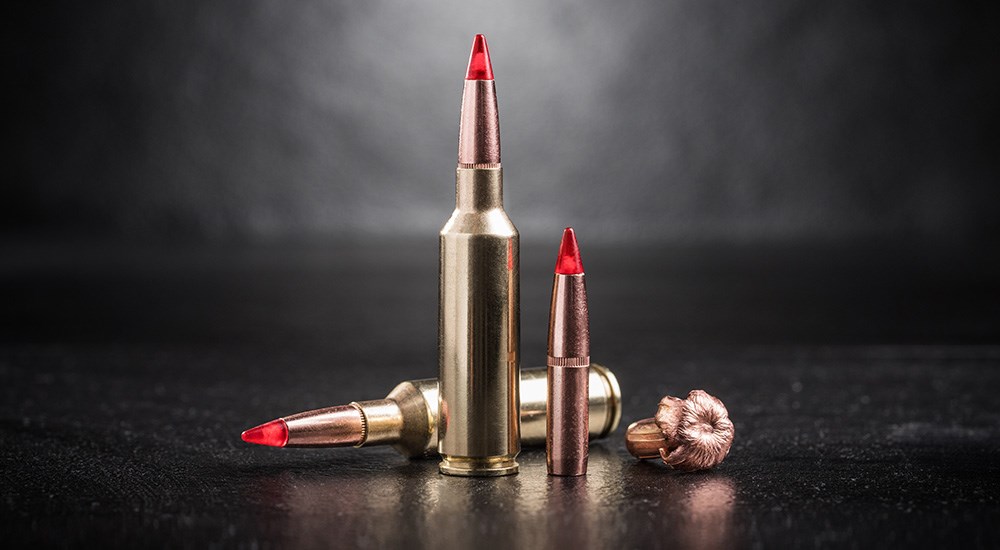
Starting with the smaller cartridge, the 6.8 Western is a collaborative effort between Browning and Winchester, Taking the .270 Winchester Short Magnum—which offered a better velocity than did the classic .270 Winchester, yet using the same bullet weights—and shortening the case to allow for the use of longer-ogive bullets, the 6.8 Western uses a tighter twist rate to take advantage of heavier bullets. Where the .270 Winchester will (generally speaking) top out at 150 grains, the new 6.8 Western uses bullets as heavy as the 175-grain Sierra Tipped Game King, but can utilize the more traditional bullet weights associated with the bore diameter. Like the WSM family of cartridges, the 6.8 Western uses the 0.532-inch base diameter of the H&H cases, but is rimless, using the 35-degree shoulder for headspacing instead of a belt. With a case length measuring 2.020 inches, and an overall length measuring right around 2.910 to 2.955 inches (depending on the load) the 6.8 Western is right at home in a short action rifle. The factory loads offer a 162-grain Copper Impact bullet at 2875 fps, a 165-grain Nosler AccuBond Long Range at 2970 fps, 170-grain Ballistic Silvertip and Power Point bullets at 2920 fps and the Browning-loaded 175-grain Sierra Tipped Game King at 2835 fps. Recoil is significantly less than that of the popular .300 Winchester Magnum or 7mm Remington Magnum, in spite of the cartridge being housed in a lighter rifle. It has proven to be wonderfully accurate; my personal Browning X-Bolt rifle will print sub-MOA groups with just about anything you feed it, including a variety of handloads.
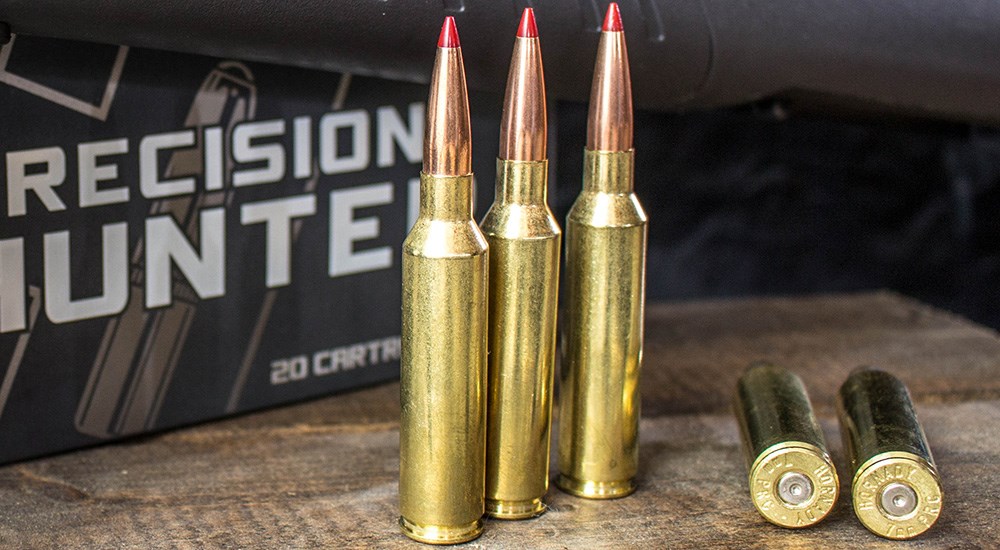
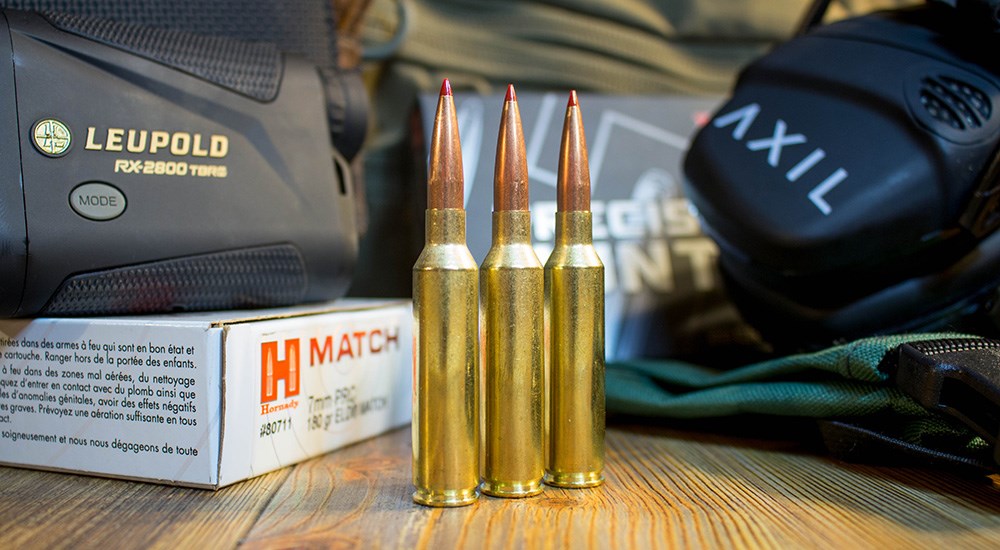
Hornady’s 7mm PRC is the third in a line of cartridges designed for target shooting, competitive shooting and hunting. Based on the .375 Ruger, the 7mm PRC uses the same 0.532-inch case head diameter common to many magnum designs, and is made to be loaded in a long-action receiver. Like the 6.8 Western, the case has been shortened—this time to 2.280 inches—to allow the use of the longest 7mm projectiles. The 7mm PRC is also a rimless cartridge, and shares the 30-degree shoulder common to the PRC family. Where the 6.5 PRC is designed for a short-action rifle, and the big .300 PRC needs a magnum-length action, the fact that the 7mm PRC uses a common long-action and offers that wide range of 7mm bullets make for an excellent combination. It will give velocities slightly higher than does the 7mm Remington Magnum, without any of the headspacing and case-stretching issues involved with any of the 7mm belted magnum cartridges. The 7mm PRC is currently available in three factory loads, (understandably) all from Hornady. The 160-grain CX monometal is loaded in the Outfitter line at a muzzle velocity of 3000 fps, the 175-grain ELD-X is loaded in the Precision Hunter ammunition at 3000 fps, and the 180-grain ELD Match is loaded in the Match ammo line at 2975 fps. I’ve used this cartridge in the Remington Model 700 Long Range at the FTW Ranch’s SAAM course—where we took the Match ammo out to 1,400 yards—and hunted with the cartridge in Wyoming and British Columbia using a Savage Impulse Mountain Hunter. The 7mm PRC displays fine accuracy, and in spite of the velocities, I found the recoil from both those rifles completely manageable, whether shooting from the prone position, from a bench or from any hunting position.
I've hunted with both of these cartridges, taking elk and mule deer in Colorado with the 6.8 Western, as well as whitetail deer here at home in New York. I took the 7mm PRC to Wyoming to participate in the Lander One Shot Antelope Challenge—where I took a pronghorn at 330 yards—and carried it all over British Columbia in pursuit of elk, moose and black bear, though I only connected on the latter. Additionally, I had many colleagues on the same hunts using the cartridges, so there were plenty of opportunities to share experiences, recover bullets, etc.
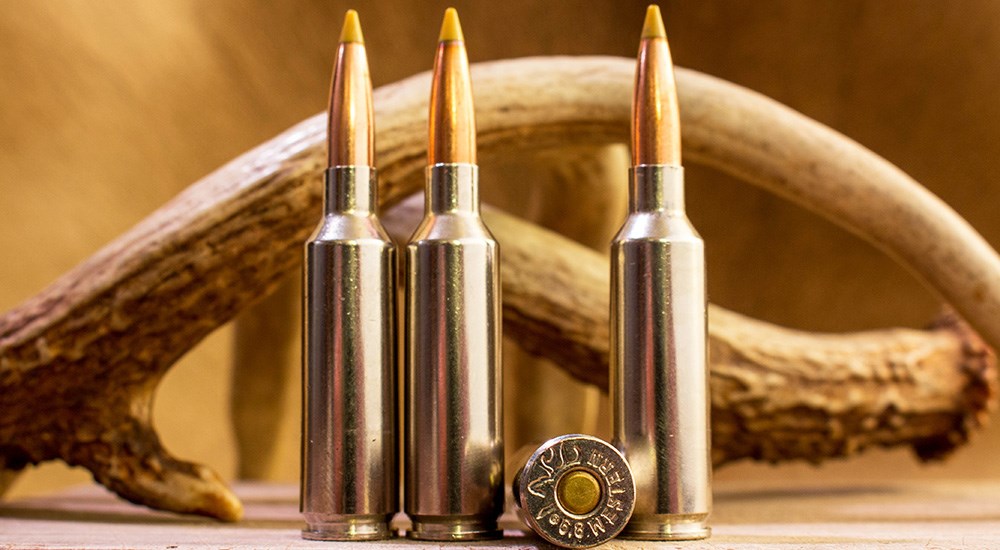
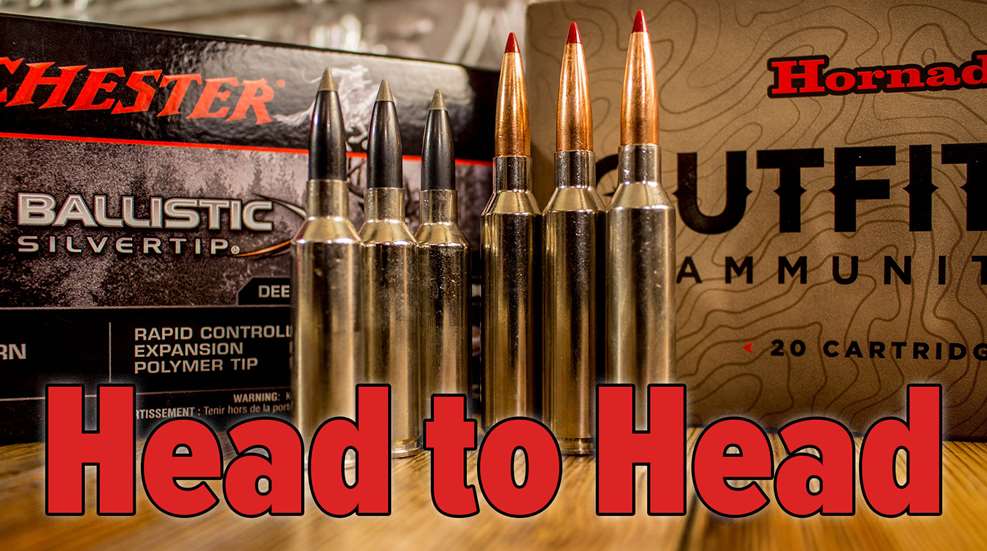
In this “Head to Head” installment, we’ve got two cartridges designed for all-around hunting duties, as both of these will surely handle game animals out to 500 yards, and that is farther than I like to shoot at unwounded game, unless there is no other choice. Bullet weights are similar, with the monometal choices running at 162 grains for the 6.8 Western and 160 grains for the 7mm PRC, and the hunting bullets topping out at 175 grains for both. The 7mm PRC offers a bit more velocity, but the 6.8 Western still delivers magnum performance with plenty of velocity and striking energy. Comparing my two favorite loads—the 165-grain Nosler AccuBond Long Range in the 6.8 Western and the 175-grain Hornady ELD-X in the 7mm PRC—you’ll see trajectories within two inches of one another out to 500 yards, with the 6.8 retaining 1,856 ft.-lbs. and the 7mm PRC retaining 2,141 ft.-lbs. at that same distance. Comparing the recoil of the two, the smaller 6.8 Western has a definite lesser recoil level, though I have no issue with the 7mm PRC’s recoil level.
Looking at the bullet conformation, if we compare the same bullet weights, the slightly larger diameter 7mm (0.284-inch) bullets will have a lower sectional density than will the .277-inch-diameter projectiles. Is the slight difference in bullet diameter enough to say one is better than the other? I don’t think so, nor do I honestly believe that any animal could tell the difference between the two cartridges. Action length has never been a big factor in my cartridge choice, but the fact remains that the 6.8 Western comes in a shorter, lighter and more rigid rifle. Both cartridges are currently produced by their respective developing companies, but there are good bullet choices for each. Add in the possibility of handloading (I hunted deer this season with the Badlands Precision 140-grain monometal Super Bulldozer 2 in the 6.8 Western, cleanly taking a mature buck) and each of these cartridges become even more versatile.
This is nearly a tie, but I will choose the 6.8 Western for the lesser recoil level, and the lighter rifle is which it is housed. Of the WSM family of cartridges, I like the 6.8 Western head and shoulders above any other, including the .300 WSM. That said, keep an eye on the 7mm PRC; this cartridge has all the makings of an instant classic, and I firmly believe both of these cartridges offer a great value to the hunter looking to expand his or her rifle collection.
Looking for previous installments of our "Head to Head" series? Click here.