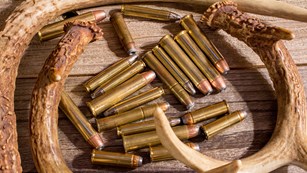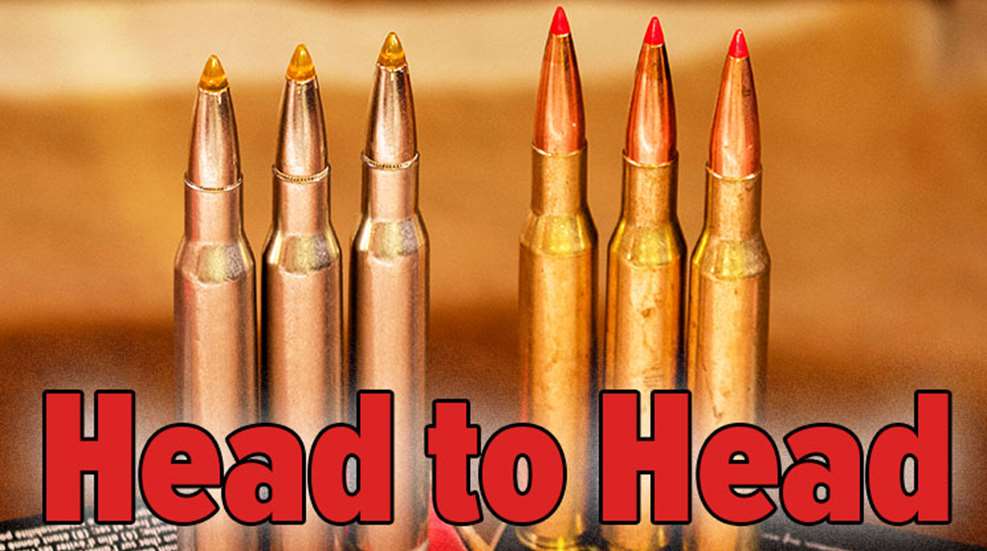
It’s the battle of the aught-six offspring. The .30-06 Springfield has spawned many children from .22 caliber wildcats all the way up to the .40 calibers, but it’s the medium calibers that have enjoyed most success. Our calibers from .257-inch up to .338-inch have served us well for decades, but the .277-inch, 7mm, and .308-inch calibers have gotten the lion’s share of work from deer hunters. But between the .270 Winchester and the .280 Remington, which offers the best performance for the hunter? Let’s take a look at what makes them tick.
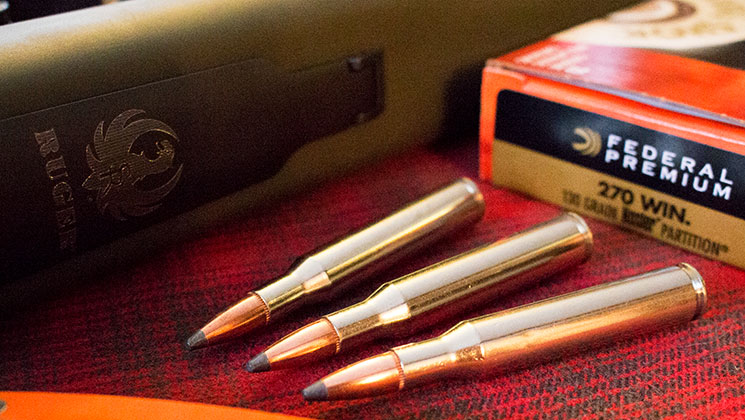
It was the .270 Winchester that was the first commercial cartridge based on the .30-06 Springfield case, introduced in 1925 in the Model 54 Winchester. The case is slightly longer than the .30-06—the .270 actually has the same length as the earlier .30-03, at 2.540-inch—and represents one of the early ‘fast’ cartridges to come onto the scene. In spite of the fact that telescopic sights were not unpopular, but unreliable, the cartridge quickly developed a reputation as a flat shooting cartridge that was perfectly suited to the open plains and mountain hunting. The original load—and the load that is still the most popular—was a 130-grain bullet at 3140 fps, though it was later reduced to 3060 fps. This combination was embraced by several gun writers, most notably Outdoor Life’s Jack O’Connor, who championed the cartridge for decades. O’Connor took that cartridge and hunted all sorts of game, from sheep and antelope to elk and bears, with good results, and the advent of reliable telescopic sights showed the true long-range capabilities of the cartridge. It’s just about perfect as a deer/sheep cartridge, and the heavier 150-grain bullets—with proper shot angle and placement—handled larger game like elk and moose. The cartridge was relatively easy on the shoulder, and deer hunters flocked to it (especially with O’Connor’s never-ending endorsement); to be honest, if you were hunting nothing but deer, the .270 Winchester may be one of the perfect cartridges. It uses bullets weighing between 90 and 150 grains, and does make one of the all-around cartridges for most hunters.
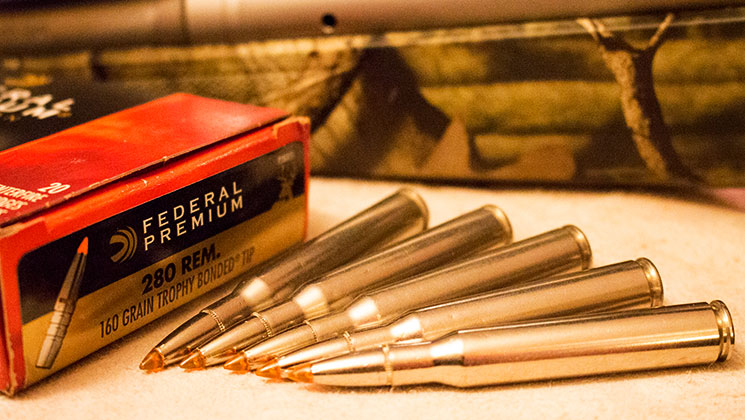
The .280 Remington was next to gain commercial status, being introduced by Big Green in 1957. It is nothing more, and nothing less, than the .30-03 case (and even the .270 case) necked to hold 7mm bullets, and that’s a good thing. The 7mm, or .284-inch diameter, bullets offer a good range of weight for the hunter, topping out at 175 grains. The 7mm bullets are one of the few that can rival the .30 caliber range, and there are those who feel the Sectional Density of the 7mm bullets will surpass the potential of the .30 caliber slugs. In spite of all that, the 32-year head start that the .270 Winchester had made a huge difference in sales, and the .280 never really took off. It plodded along for a couple decades, with a quiet, yet fervent, following, but sales comparisons showed that the .270 had the much larger portion of the market share. In the late 1970s, the cartridge went through a couple of name changes, first to the 7mm-06 Remington, and subsequently to the 7mm Express Remington. With the 7mm Remington Magnum firmly rooted in the shooting world, confusion abounded, and in 1981 the cartridge went back to being called the .280 Remington, which in my opinion should have stayed from the beginning.
Which of the designs is better? Or maybe I should ask the question this way: if both were released today, which would prove the more useful round?
Let’s look at the similarities first. Both can be housed in virtually any style of rifle, from autoloader, to lever to bolt and beyond. Both have a good case capacity for their caliber, sending their respective projectiles at very useable velocities, offering good trajectories without punishing either shooter or barrel. With modern bullets, both are fully capable of taking most of North America’s game animals, and a good portion of Africa’s plains game. With a minimal diameter difference—0.277-inch vs. 0.284-inch is not much to argue about—and a case capacity that is nearly identical, the race is definitely a tight one. Both use the Springfield 0.473-inch case head, and both maintain the 17˚-30’ shoulder of the parent.
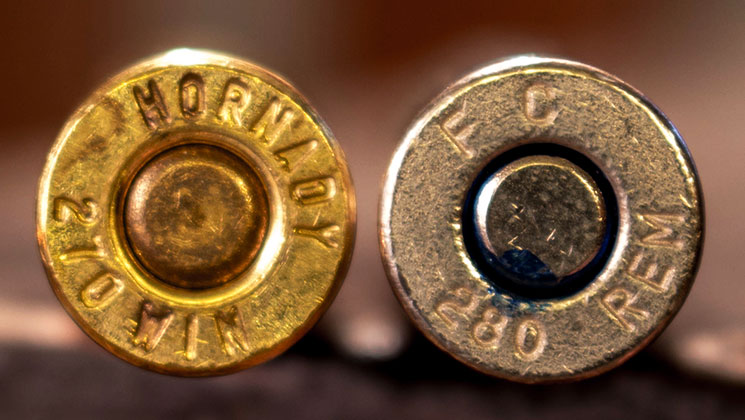
I give the edge to the less-popular .280 Remington for one reason and one reason only: the available bullet weight. Unlike the .30 calibers, which rarely use the heaviest 220-grain hunting bullets, the 175-grain 7mm bullets make a great choice for elk, moose and larger African antelope. It’s the twist rate of the .270 Winchester that precludes it from using bullets heavier than 150, or in some cases 160 grains—though the latter won’t always stabilize—and that probably hearkens back to the earlier design. Like the .22-250 Remington, the designers of the .270 Winchester (presumably) didn’t envision our current obsession with the long, heavy-for-caliber bullets. There are some heavyweight bullets for the .270 Winchester—namely the Berger Extreme Outer Limits Elite Hunter—but they require a twist rate faster than the normal 1:10”; however, the 7mm cartridges, if equipped with a similar twist rate, could use the same bullet at 195 grains. The weight advantage definitely goes to the 7mm. With the same weight of bullet, the .280 Remington will better the velocity of the .270 Winchester every time, even if just by a small margin.
I’m well aware that the sheer number of .270 rifles will guarantee the future success of the cartridge, but coming from a design standpoint, the .280 Remington may just be the most efficient of the Springfield offspring.
Looking for previous installments of our "Head to Head" series? We've got you covered.
• .35 Whelen vs. 9.3x62mm Mauser
• .416 Rigby vs. .416 Remington Magnum
• .308 Winchester vs. .30-06 Springfield
• .22 Nosler vs. .224 Valkyrie
• .300 Win. Mag. vs. .300 WSM
• .223 Remington vs. .22-250 Remington