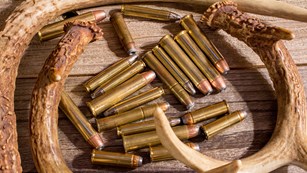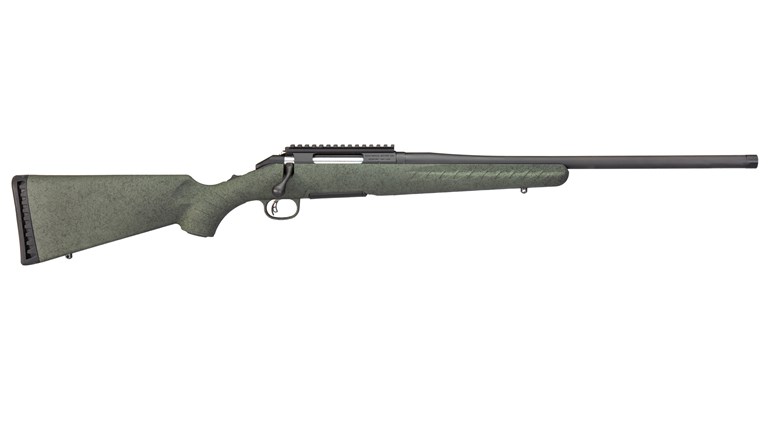
I had a good friend call the other day, as he was in the middle of shopping for a youth deer rifle for his soon-to-be teenage son. His decisions had come down to the .243 Winchester and 6.5 Creedmoor—he referred to the abundance of ammunition for both cartridges—and he was more than a bit torn between the two cartridges. Our discussion, and his ultimate decision, warranted a “Head to Head” competition between the two cartridges.
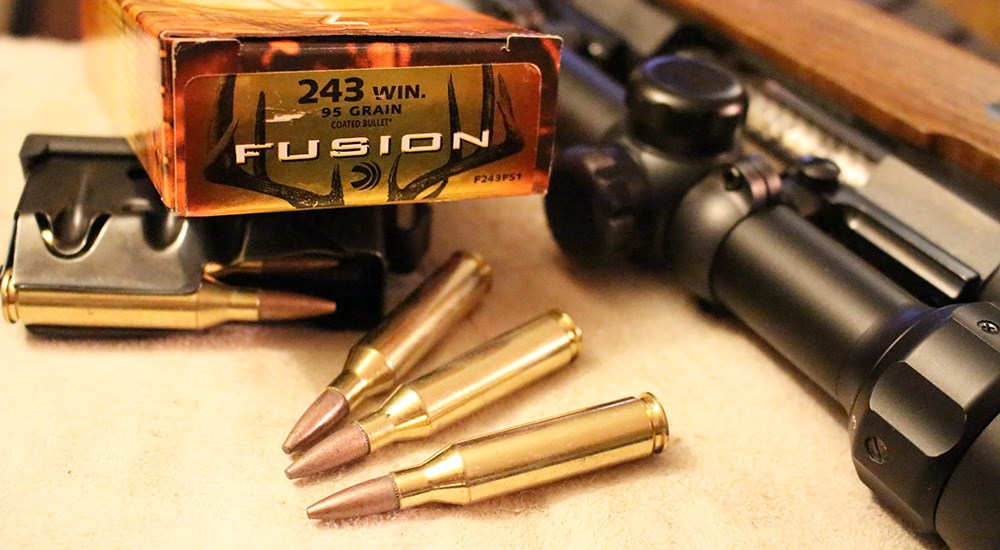
The .243 Winchester is the elder of the pair, having come onto the scene in the mid 1950s, as the first derivative of the then-new .308 Winchester. Renowned wildcatter Warren Page has been experimenting with 6mm cartridges in the 1940s, and once Winchester made the .308 Winchester available to the public, he wasted no time necking it down to .243-inch/6mm diameter. The resultant cartridge was, is, and shall be nothing more and nothing less than a necked-down 308 Winchester, and perfectly bridges the gap between deer cartridge and varmint cartridge. The 243 Winchester shares many traits common to tour most popular rimless cartridges, being a derivative of the 7x57mm Mauser-.30-06 Springfield-.308 Winchester evolution chain. It sports a case head diameter of 0.473-inch, a case length of 2.045 inches, and the same 20-degree shoulder of the 308 Winchester.
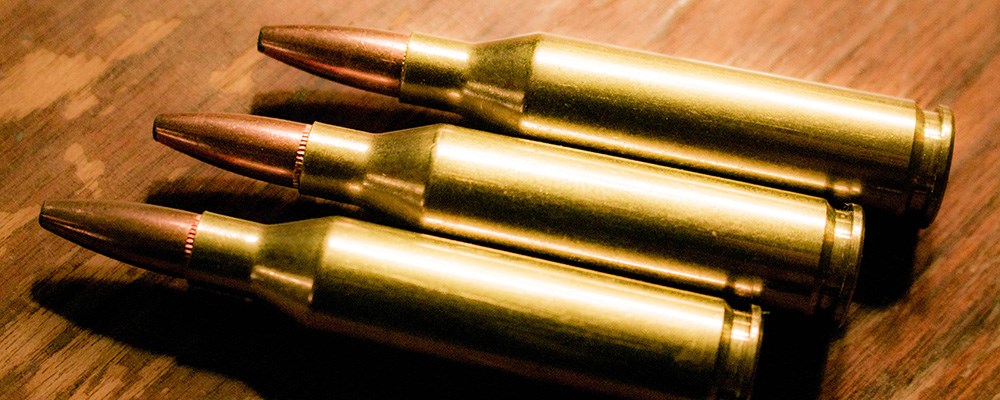
The cartridge overall length is 2.710 inches, so like its father it sits perfectly in a short-action receiver. With bullet weights ranging from 55 to 100 grains, you’ve got a versatile cartridge equally at home in the deer woods as it is over a prairie dog town. With the lightest bullets breaking the 3900 fps mark—look at Winchester’s Fragmenting varmint load—and the 100-grain deer loads clocking in at just under 3000 fps, the 243 Winchester offers all sorts of versatility. In addition, there are many bullet weights in the middle of the spectrum which can be used for both predators and deer-sized game; I used Federal’s 85-grain Trophy Copper monometal load to take a big Texas seven-point buck almost a decade ago, in one of the most dramatic one-shot kills of my deer hunting career.

The 6.5 Creedmoor—the cartridge we all love to hate—didn’t exactly skyrocket to popularity immediately after its release. In fact, it was more of a slow burn, as when it was released in 2007, taking nearly a decade to ascend to superstardom, as the .260 Remington was the darling 6.5mm cartridge at the time. Where the .260 Remington is a necked-down .308 Winchester, the 6.5 Creedmoor is the son of the .30 T/C cartridge, and was developed by Hornady’s Dave Emary and Creedmoor Sports’ Dennis DeMille, as a long-range target cartridge. Taking full advantage of the high ballistic coefficient projectiles available in the 6.5mm bore diameter, the Creedmoor’s case is a bit shorter and wider than that of the 308 Winchester, with a 30-degree shoulder in comparison to the 20-degree shoulder of the 308 family, yet fits perfectly in the short-action magazines. The concept of the shorter case/longer bullet design has now firmly taken root, with a good number of modern cartridges following suit. The Creedmoor might have been designed as a target cartridge—a role it fills very well—but didn’t take long to cross over to the hunting world.
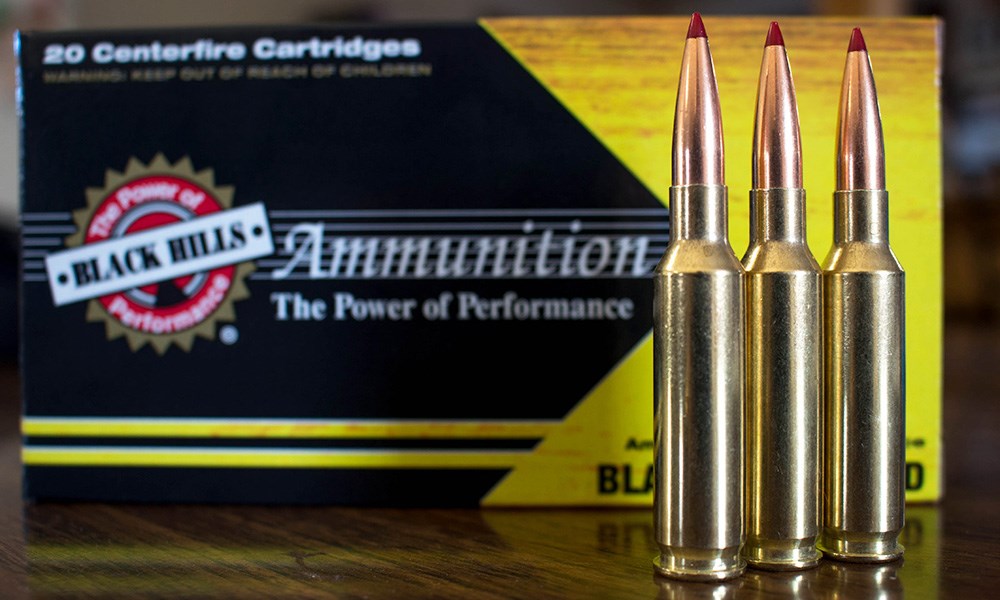
The 140- to 143-grain bullets are the most popular choices for hunting in the Creedmoor, usually leaving the muzzle at somewhere around 2700 fps; this formula works very well for deer and similar sized game at sane hunting ranges. Some folks insist the Creedmoor is some sort of death ray, fully capable of easily taking any and all game species. Yes, it’s been used on all sorts of stuff, including grizzly bears, but I surely don’t recommend it for that purpose. In fact, I like a bit more bullet weight for elk, moose and larger animals. There are lighter bullets available, down to 90 grains or so, for smaller species and for coyotes and such, though that load is still heavy for long sessions over a prairie dog town. In my opinion, where the Creedmoor shines brightest is as a deer cartridge, as it has enough bullet weight for deep penetration, and is mild enough on the shoulder for shots to be placed accurately.
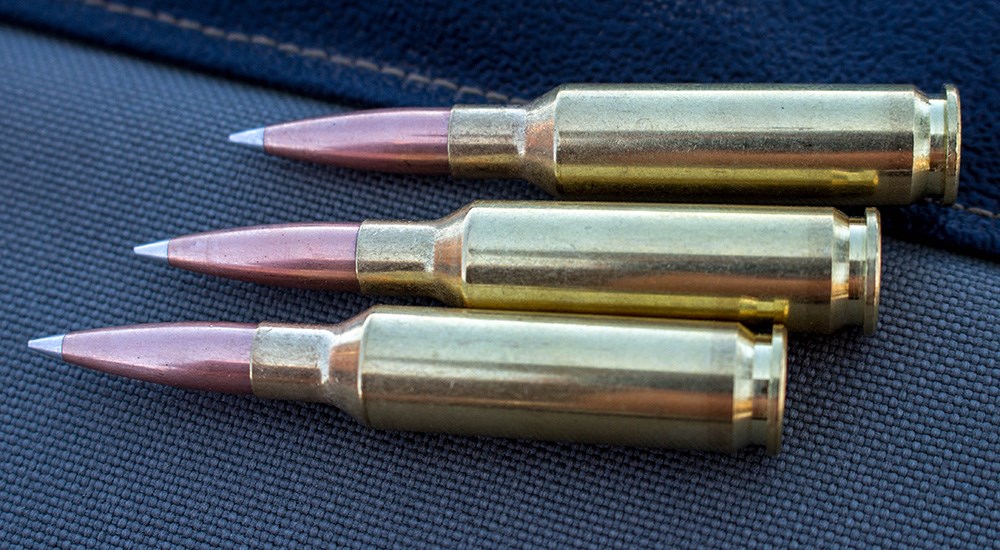
So we’ve got two short action cartridges, both very efficient, and both very manageable; but which one come away the winner? I like both of these cartridges; though I will admit each has their limitations. To my way of thinking, the decision to be made between the .243 Winchester and 6.5 Creedmoor is the shooter’s desired application. Quite often, a .243 Winchester is touted as a perfect youth cartridge for deer hunting, or for a new hunter of smaller frame, be they man or woman. In that light, I feel the 6.5 Creedmoor is a bit more forgiving, as the heavier bullet weight and larger frontal diameter is more effective on deer, where the .243 Winchester is probably better suited to a more experienced hunter, who is willing to wait for the perfect shot presentation. Put simply, I’d rather arm a youth—eager to take his or her first deer, replete with the shakes that come with the territory—with a 6.5 Creedmoor than a .243 Winchester, as the former is a bit more “forgiving,” though no shot that doesn’t hit vital tissue will kill.
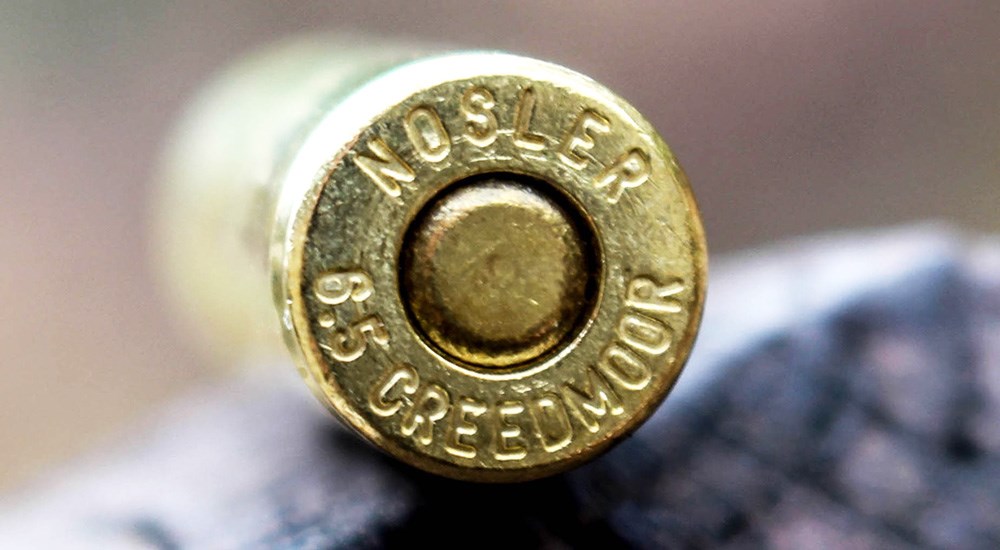
I do feel the .243 Winchester is the more flexible of the two, as it is a perfectly viable deer cartridge, when in proper hands, yet has the bullet weight range to be a dedicated varmint/predator cartridge as well. The higher velocity of the .243 Winchester makes for a great woodchuck/prairie dog rig, and it shoots plenty flat enough; the 100-grain .243 Winchester load and the 143-grain 6.5 Creedmoor have identical trajectories out to 500 yards. So, I’ll score it this way: if deer is all you’re asking a cartridge to handle, then grab a Creedmoor, but if you appreciate flexibility and the ability to cover as many bases as possible, the .243 Winchester still makes complete sense, just as it did in 1955.
Looking for previous installments of our "Head to Head" series? Click here.