Engineering breakthroughs within the gun industry are relatively rare happenings, and most of what is employed in the hunting fields today are coveted designs from yesteryear with a few alterations to match the needs of an ever-trending timeline. In the case of the scattergun, few blueprints earn such paramount standing as one example crafted in the early 20th century by John Moses Browning. That gun, the Superposed, reconfigured the elegance of the side-by-side shotgun and offered up manufacturing efficiency that resulted in savings to the end user.
I’m a price-point guy at heart—most of us are. I’m also a dyed-in-the-wool hunter, on top of being a gearhead and gun nut. This means I am a utilitarian-type gun collector, so when I see a well-made value proposition in a hunting firearm I can’t help but get excited. Always searching for the most “bang for my buck,” I was eager to see if these new Balikli Blue label over/under shotguns from EAA delivered.
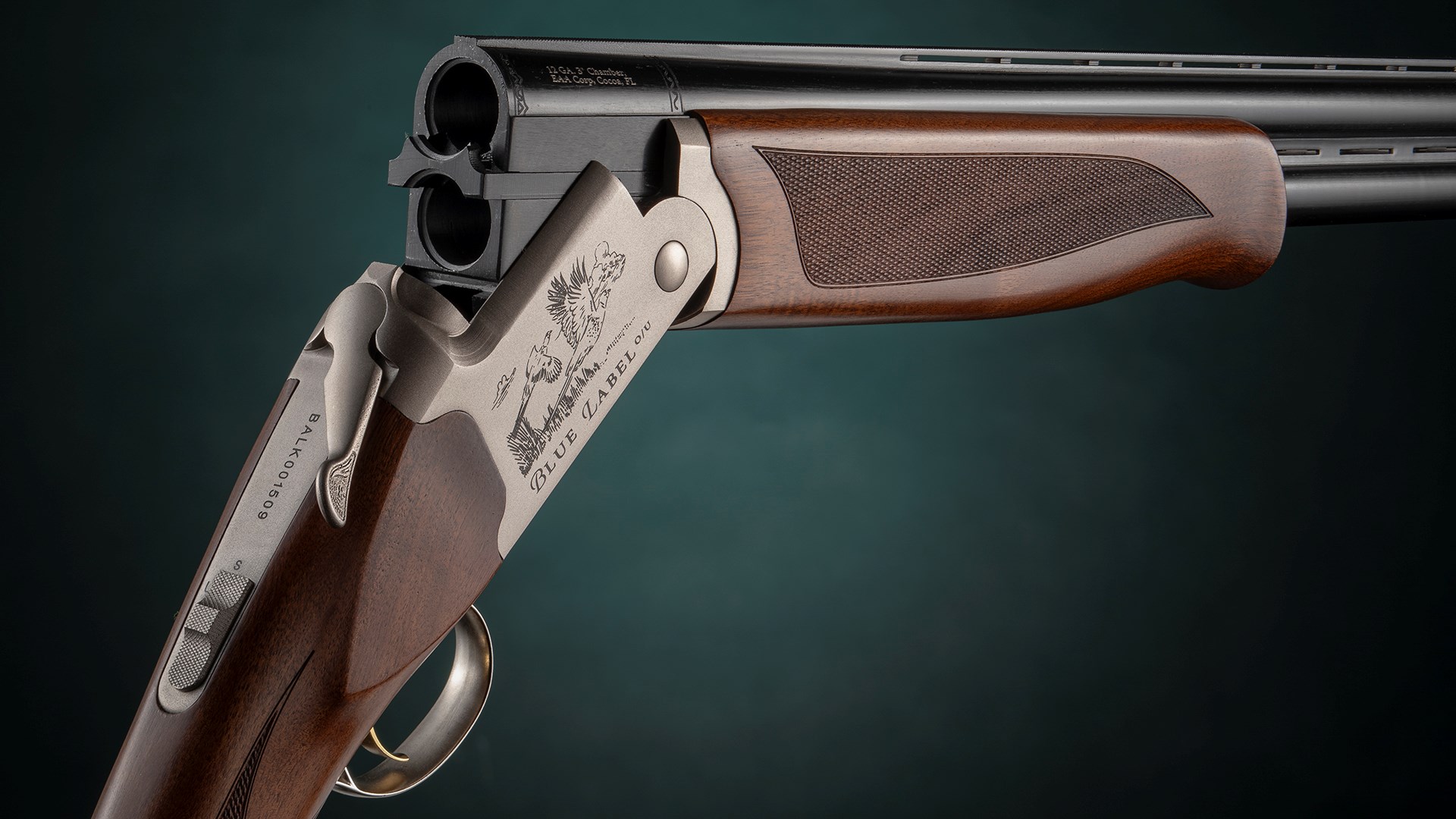
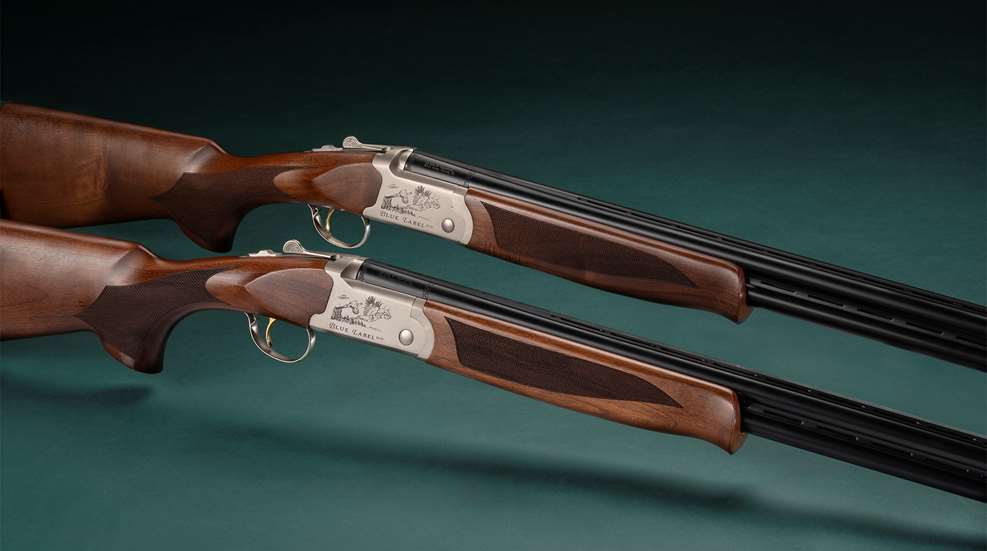
The idea behind Balikli Blue Label is not much different than what Browning envisioned for his original working-class gun: functional and affordable so that all could enjoy the great outdoors. It also follows the modern trend in over/under shotguns: reduced weight. Rather than a steel foundation, EAA’s Turkish maker Balikli Arms utilizes an aluminum receiver, complete with a steel insert in the rear of the action for durability, resulting in a lightweight upland hunting package.
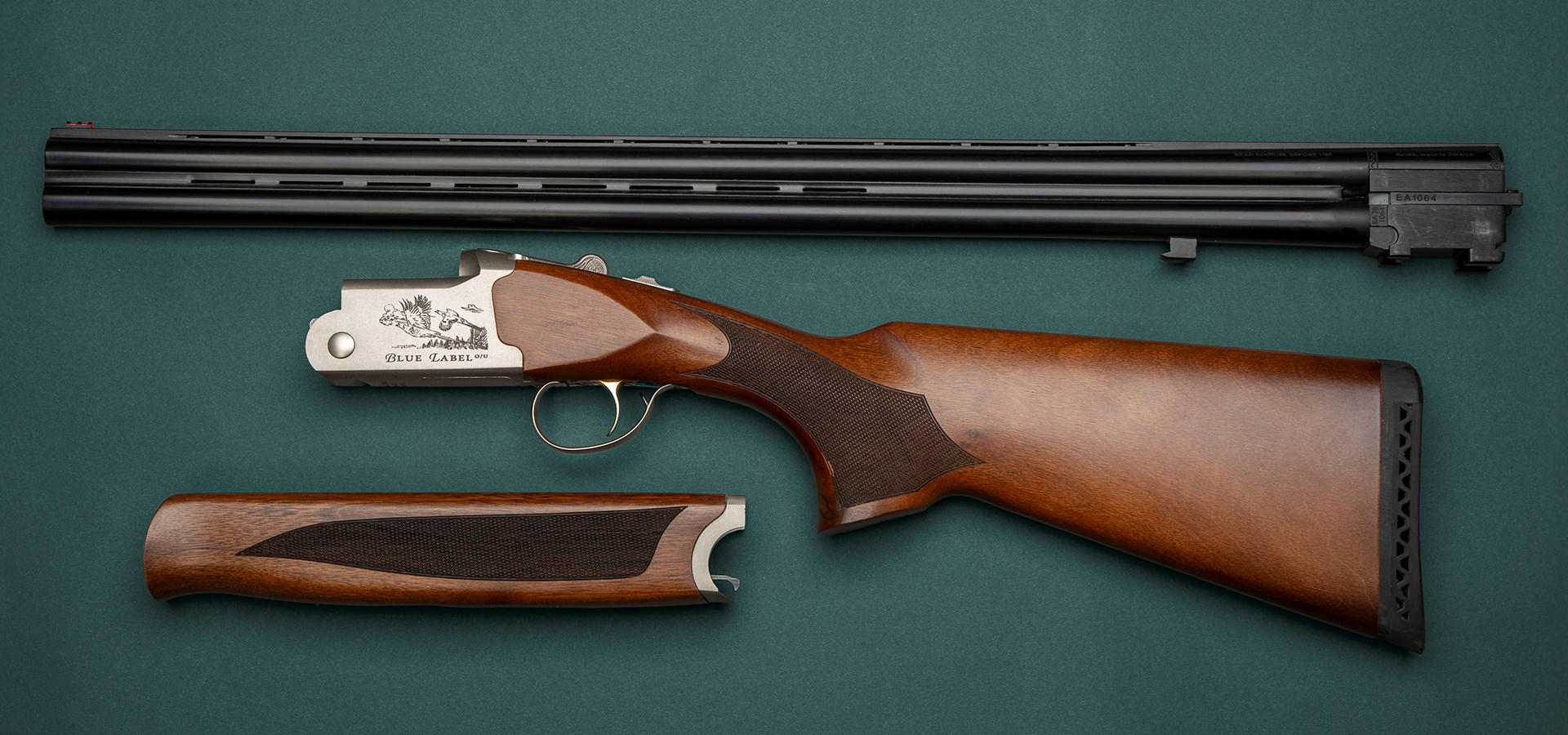
I was able to get my hands on the Blue Label in both 12- and 20-gauge, sporting 28-inch and 26-inch barrels respectively, both with 3-inch chambers. The shotgun is also available in 28-gauge and .410-bore, each with 26-inch barrels, and company reps have assured me that a youth version .410-bore with 18.5-inch barrels is on the way.
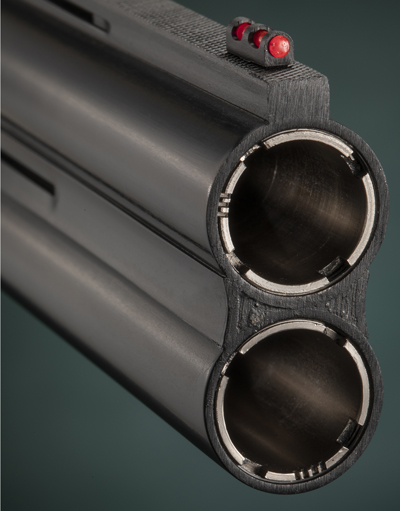
With the shotguns in tow, I headed out for an early February field test, and it was there, trudging through the ice and snow, that I truly came to realize the relevancy of the package. For starters, these guns are darn light! The 12-gauge weighs 6 pounds, 8 ounces and the 20-gauge model nudges the scale at only 5 pounds, 13 ounces. Breaking trail with the lightweight 20-gauge in hand didn’t add to the hardship of having to stomp through a layer of ice with each step, it’s just too bad no pheasants or huntable birds were nearby at the time.
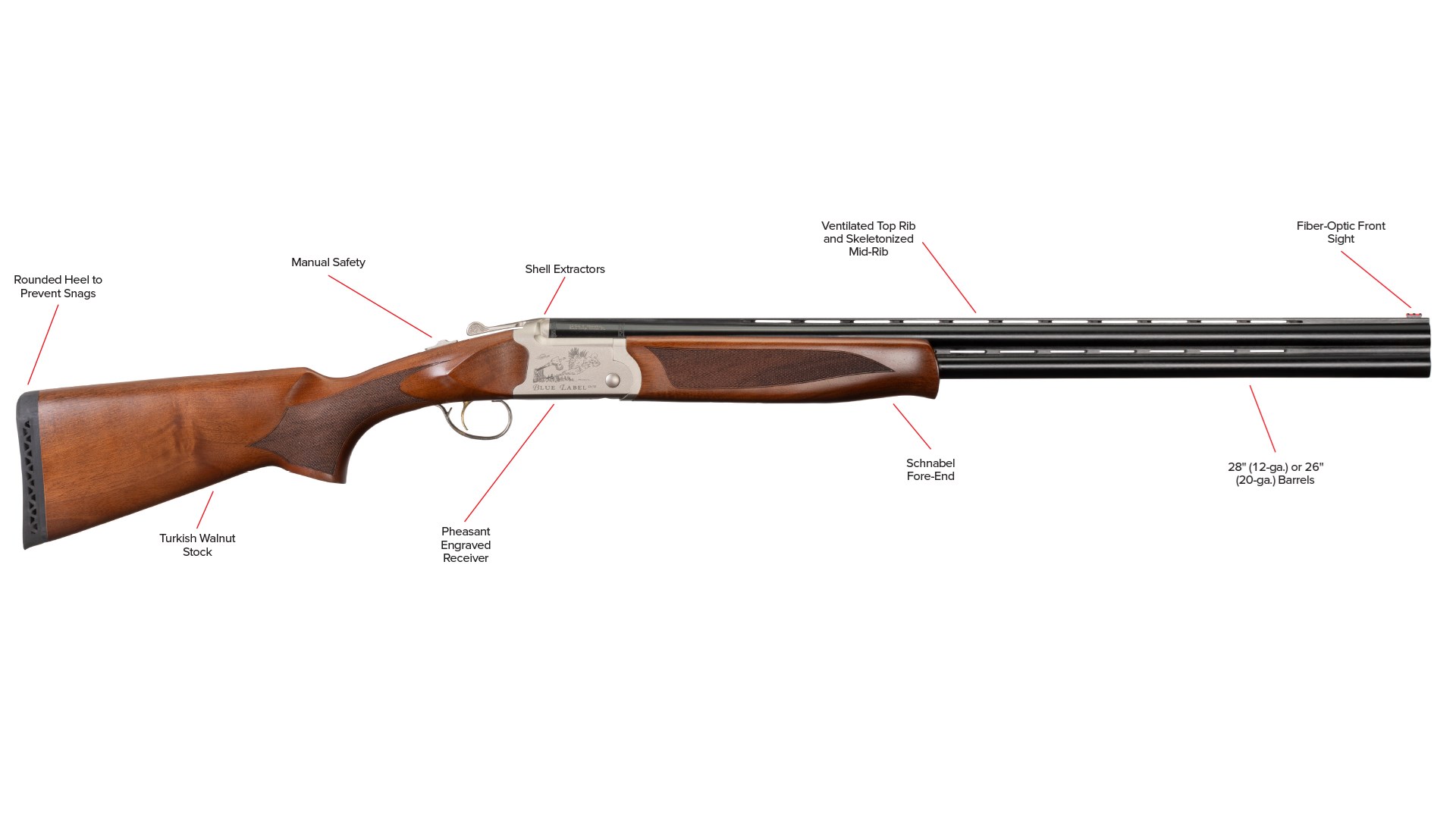
Left with only clay birds to shoot at, I can attest that the Balikli Blue Labels point well, however, I’d prefer more cast off due to my larger frame. But that’s being hyper critical and subjective. Objectively, the gun’s light weight moves the balance point forward a bit, pushing that between-the-hands balance forward an inch or two. But this is to be expected with an aluminum-receiver. The ventilated top rib and skeletonized mid-rib also keep the weight down while providing a good sight plane, and the red fiber-optic front sight and serrated rib are nice touches when swinging on fast-moving targets, no matter the amount of light. Though I wasn’t able to get to a pattern board, barrel regulation matches point of aim and I was able to hit everything I aimed at inside of 50 yards.
The Blue Label sports mechanical triggers as opposed to inertial triggers, meaning if for some reason the first shell doesn’t go off, say due to a bad cartridge primer, you can pull the trigger again with confidence that the second barrel will still fire, assuming the second cartridge is good. It also features shell extractors rather than shell ejectors, and while this is another cost-saving feature, I consider it a benefit in an over/under hunting shotgun. Although reloading requires me to perform the extra step of manually removing spent shells from the action, not having to bend over to police hulls during a hunt wins out.
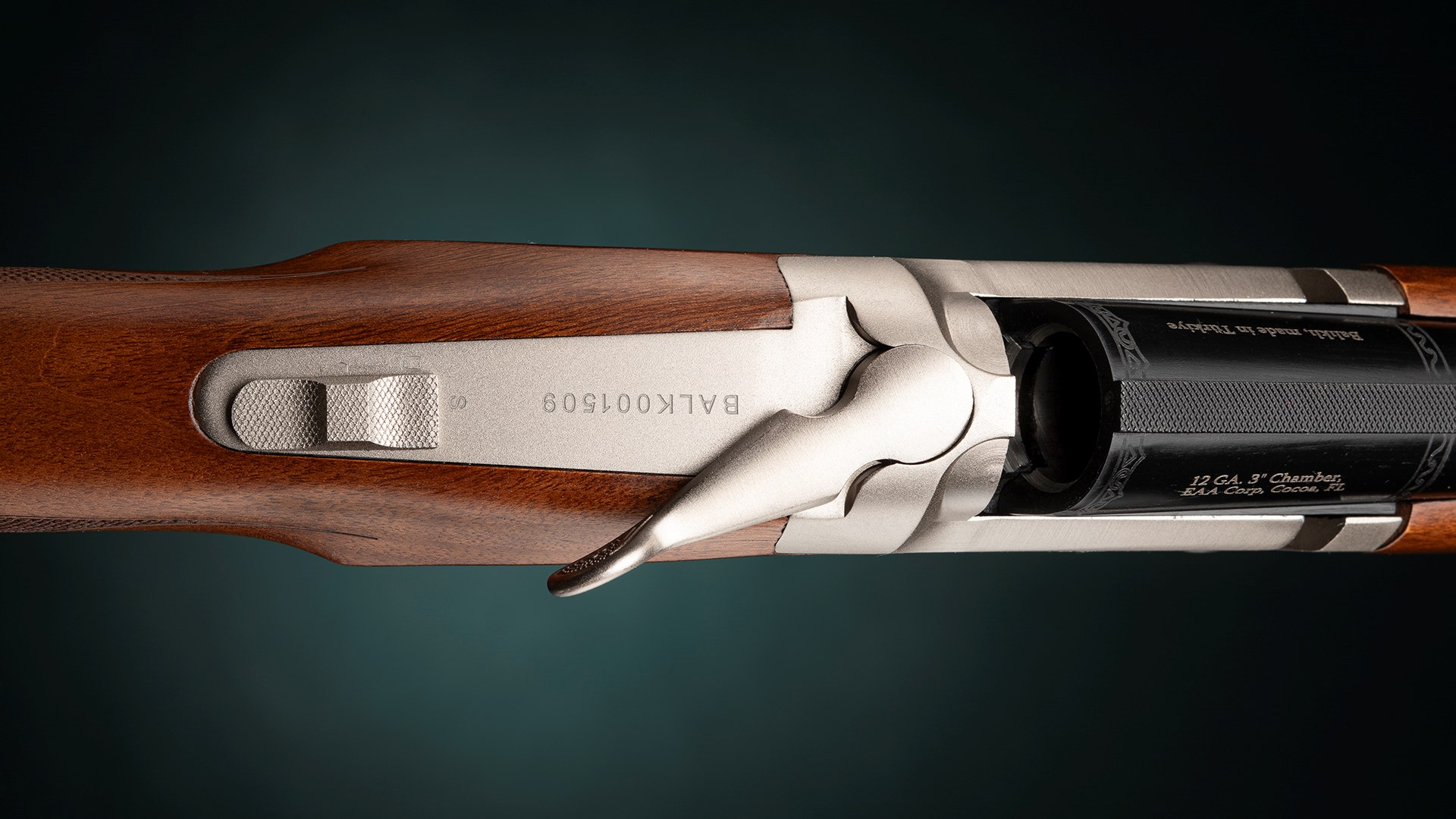
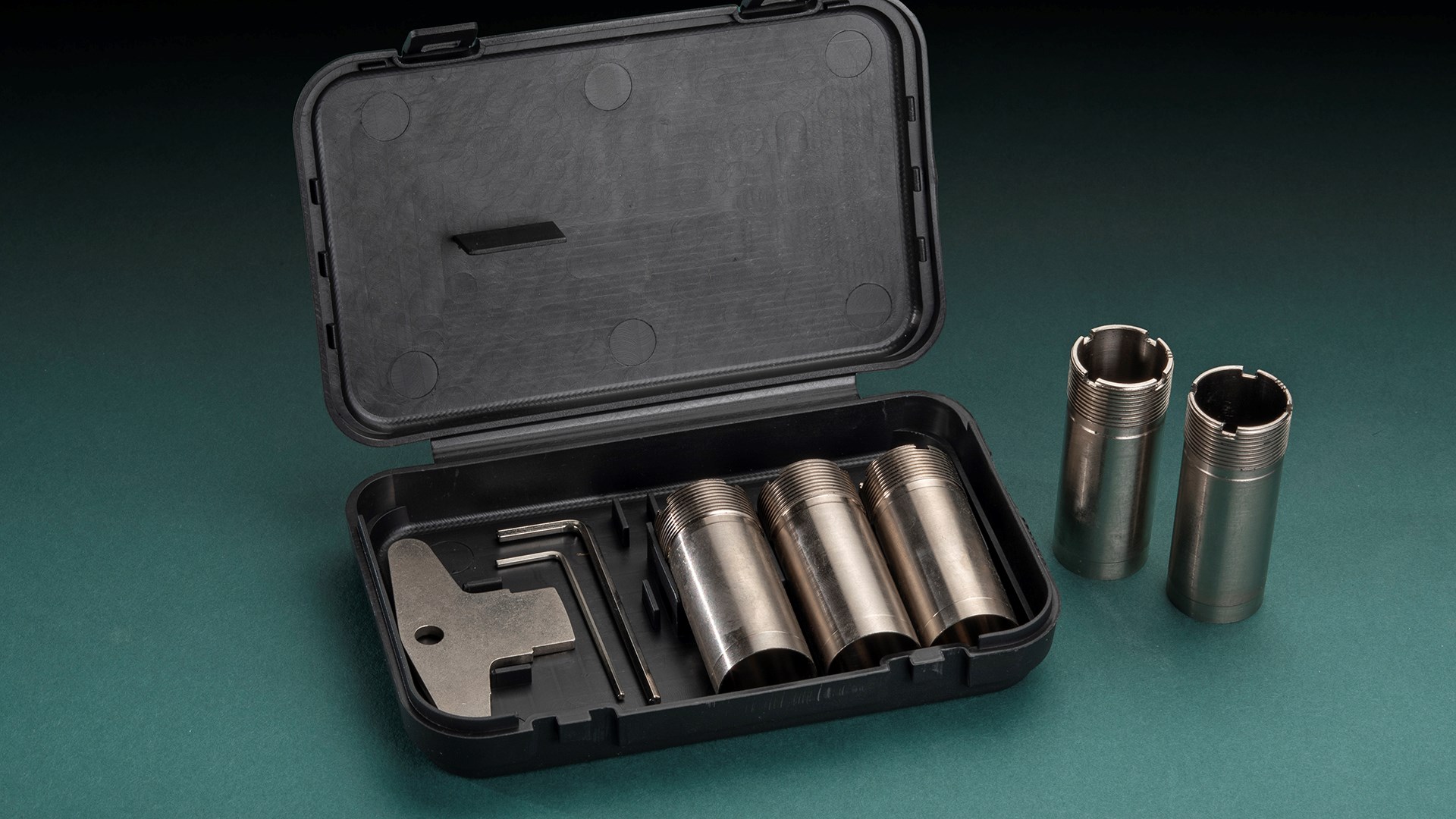
Another point to mention with the Blue Label shotguns are the controls. The Blue Label features a manual safety rather than an automatic safety. Call me old fashioned, but I like this feature as well. Just be sure every shooter is aware of this, and act accordingly. Like most over/under shotguns, the safety slide also serves to function as the gun’s barrel selector, determining which barrel will fire first. Pulling the slide rearward renders the gun “safe,” at which point you can swipe the selector leftward, exposing a “U” to indicate the upper barrel will fire first. Conversely, swipe the selector to the right to set the bottom barrel to go off first. With the full set of five Mobil-pattern choke tubes (skeet, improved cylinder, modified, improved modified and full) EAA supplies with the Blue Label, you can dedicate that lower-recoiling bottom barrel for your initial, wider-patterned shot for up-close flushes, while the top barrel can be reserved for a tighter patterned second shot after you miss the surprised flush and now have some distance to make up for. Trust me, I’ve had to rely on this technique more times than I can count, so it’s incredibly handy to have a full choke set out of the box, and it’s an incredible added value from EAA.
The more time I spent with the Blue Label, the more the added values continued to stack up. For instance, the recoil pad, while plenty soft, contains a hardened heel at the top to prevent clothing snags during the mounting process. This used to be a custom feature on shotguns not that long ago. The stock’s design comes from someone who’s paying attention to the needs of American hunters and shooters, as it exhibits a slight bit of cast off and a medium amount of drop, measuring 1½ inches at the comb with 2¼ inches of drop at its heel. You also get a schnabel terminating the fore-end, a pistol grip, and nice-looking panels of checkering that add both function and appeal to this gun. Length of pull comes to roughly 14¼ inches on both models, ideal for a universal fit.
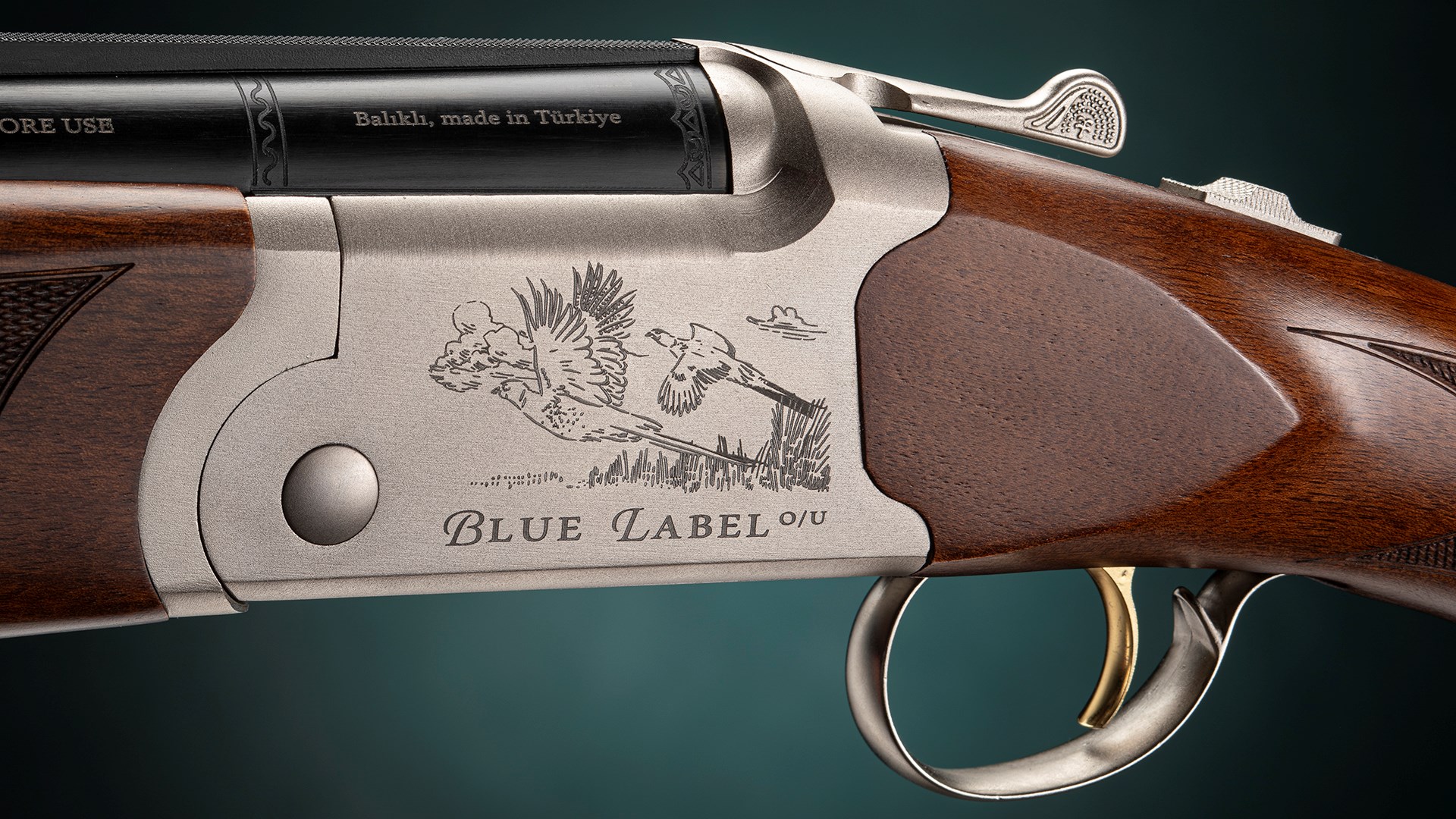
Bear in mind, in order to keep the price down on a gun like this, there’s going to be some sacrifices that must be made along the way—I’ve already mentioned the manual safety and shell extractors, but again, I like those features. To be fair, assembly and parts fitment within the Blue Label is better than I expected of a gun at this price, which doesn’t really surprise me as quality control is something EAA prides itself on. I had to find some complaints, however, and I did notice a few tooling marks and signs of a ham-handed assembler on one of the samples. That said, both guns functioned flawlessly. Also, I personally could do without the cock-bird etchings in the nickel-finished aluminum receivers. It’s not that they don’t add some flare, but on a working gun I’d prefer to trade that frill for even more cost savings.
My conclusion: the Balikli Blue Label shotguns from EAA are true working guns that hunters, knowing all too well the value in workable tools, should take note of. These guns are going to be great for both new and old hunters alike. They function well, and due to their lightweight aluminum box-lock receiver and the features mentioned above, they more importantly hunt well. Sure, they lack some of the refinement of their more expensive counterparts, but the fact that you can get a reliable and functional over/under for less than the cost of a new cell phone means EAA has successfully done it again.
EAA Balikli Blue Label O/U
- eaacorp.com
- Type: over/under shotgun
- Gauge/Chamber: 12/3" (tested), 20/3" (tested), 28/3", .410/3"
- Barrel: 28" (12-ga.), 26" (20-ga.); vent rib; interchangeable choke tubes
- Trigger: single; mechanical; 5 lbs.-7 lbs. pull weight
- Sights: fiber-optic front pipe
- Safety: tang mounted safety/selector
- Stock: walnut; satin finish; 14.25" LOP; 2.25" drop at heel; 1.5" drop at comb
- Metal Finish: black
- Overall Length: 45" (12-ga.); 43" (20-ga.)
- Weight: 6 lbs., 8 ozs. (12-ga.); 5 lbs., 13 ozs. (20-ga.)
- Accessories: choke tube set (SK, IC, M, IM, F)
- MSRP: $479