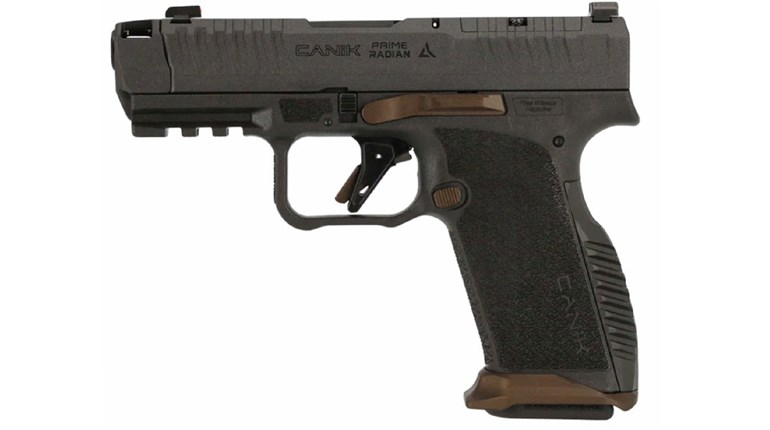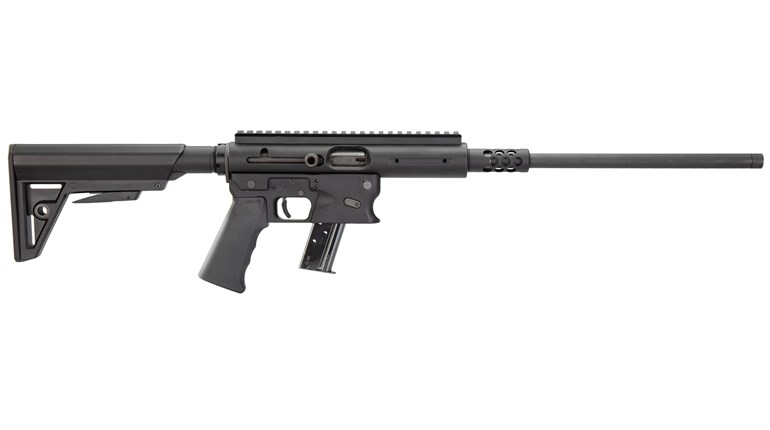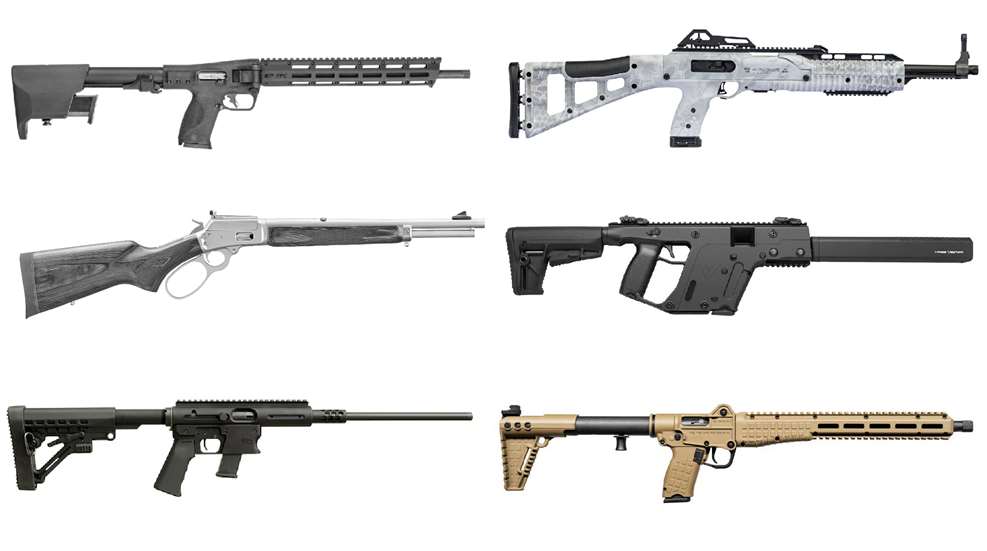
Last year we posed the question, "Is the 10mm Auto PCC the next great outdoor carbine?" while taking a look at a few of the models currently in production. Since then, the selection has continued to grow. That previous gun list did not include models like the Kriss USA Vector Gen 3 or the AR-15 pattern carbines that crop up from time to time. And just a few months after it was posted, Ruger took a step in a surprising direction with their release of the Marlin 1894 Trapper lever-action carbine chambered in 10 mm Auto.
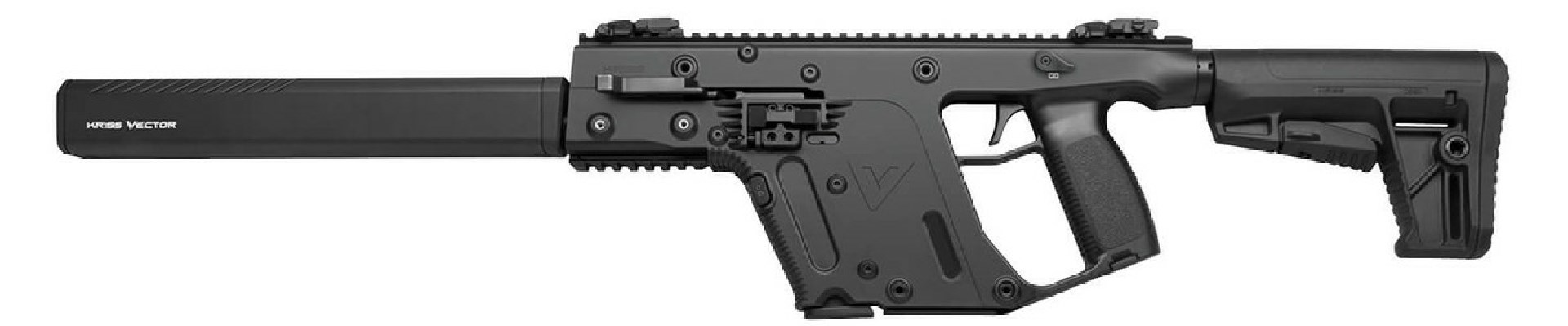 The more tactically minded Kriss Vector can be fitted with a folding stock for a more compact profile.
As a fan of the cartridge, I'm glad to see the 10mm Auto segment of the pistol-caliber carbine (PCC) market continue to grow. But it is interesting to see the chatter that develops around a burgeoning gun and ammunition combination. Fans will gather around to sing its praises and focus on the positives. At the same time, the unconverted will cry bah, humbug! These conversations are just par for the course. But sometimes the conversation wanders into claims that require a bit more investigation. This is especially true when statements like 'it's the best' or 'it's the most powerful' are bandied about.
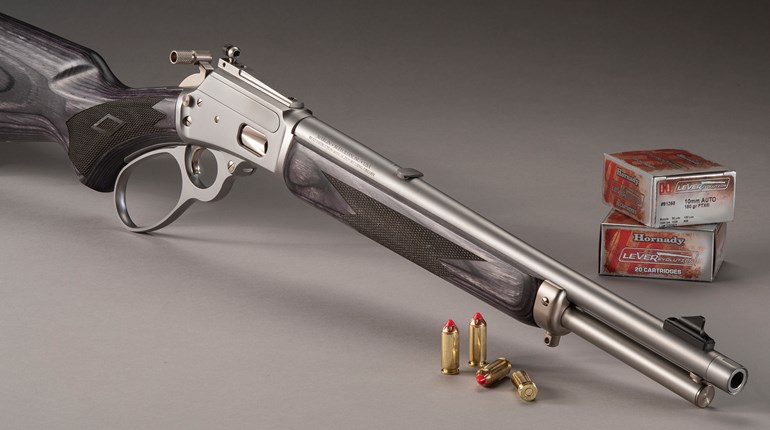
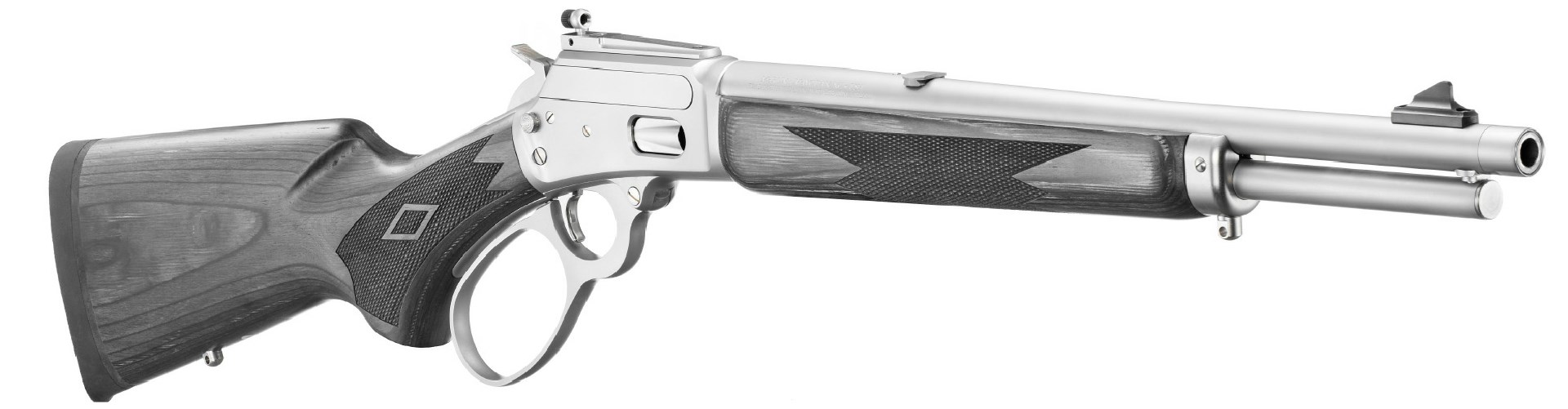 The handsome Marlin 1894 is now available chambered in 10mm Auto.
Are the PCCs chambered for 10mm Auto the most powerful options out there? The answer is yes, and no. It's a matter of context. Let's take a look at what these carbines have to offer compared to those chambered in other handgun calibers.
Ammunition Selection
It's always interesting to me to see how a given cartridge's performance potential changes when chambered in a gun other than its native platform. For example, the .223 Remington rifle round relies on a small, lightweight bullet traveling at high velocities to effectively impact an intended target. Shooting these rounds from pistol-length barrels notably reduces bullet velocity and thus impacts energy. The pattern of a lead birdshot load launched from a .410 Bore shotshell through a .45 Colt/.410 Bore rifled revolver barrel spreads much more quickly than when fired through a 28-inch-long smoothbore shotgun barrel fitted with a full choke. And let's not forget the .22 Long Rifle rimfire cartridge. It's commonly pressed into service as a semi-automatic pistol round resulting in higher degrees of ammunition sensitivity than occur with .22 LR carbines and rifles.
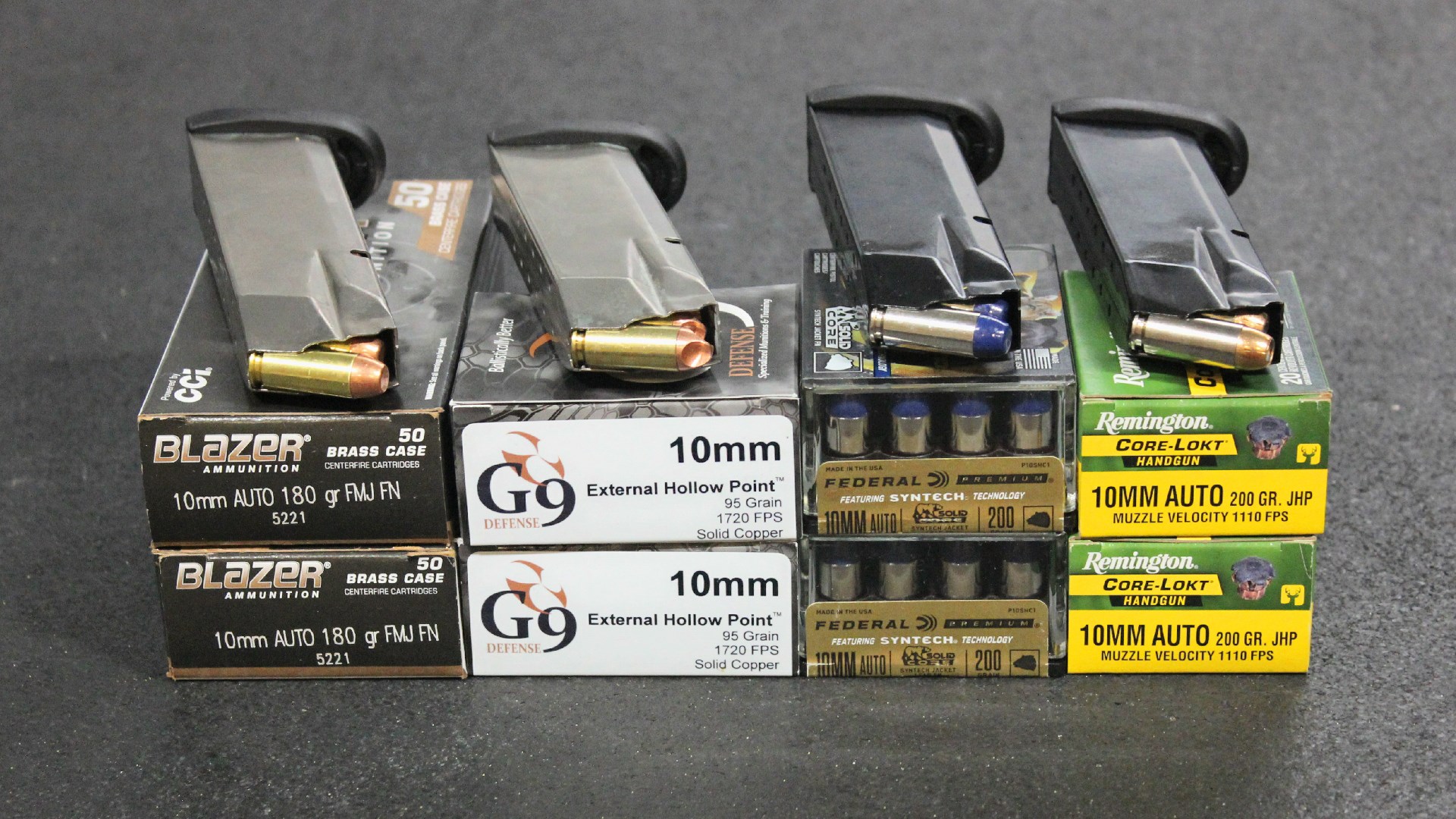 The key to 10mm Auto carbine performance is the ammunition selected.
Most folks in the know will agree that shooting pistol cartridges through carbine-length barrels will, generally, improve ammunition performance. Carbines are inherently easier to shoot accurately than handguns thanks to their shoulder stocks, reduced recoil and so on. The longer barrel provides more time for the powder to burn. This in turn increases pressure resulting in higher bullet velocities and greater impact energy.
But this PCC 'better performance' rule of thumb is wholly dependent on ammunition selection. This is because handgun cartridges contain powder charges that are, for the most part, tuned for use in handguns. Some powders burn more efficiently and do generate higher muzzle velocities while others do not. In my own range testing I've seen instances in which slower and subsonic 9mm and .22 LR loads have either maintained their lower velocities—despite longer barrels—or even lost velocity due to added barrel length. Again, ammunition selection is the key performance factor when it comes to PCCs used for either home defense or in the great outdoors.
Comparing Semi-Auto Pistol Caliber Performance
When gauging 10mm Auto carbine performance, it's helpful to compare it to other caliber options in its class. In this case, the 9mm PCCs are by far the most common and readily-available models currently in production. Let's take a look at these results garnered from a fairly typical 16-inch barrel GZP AR-15 and the utterly unique Trailblazer Pivot:
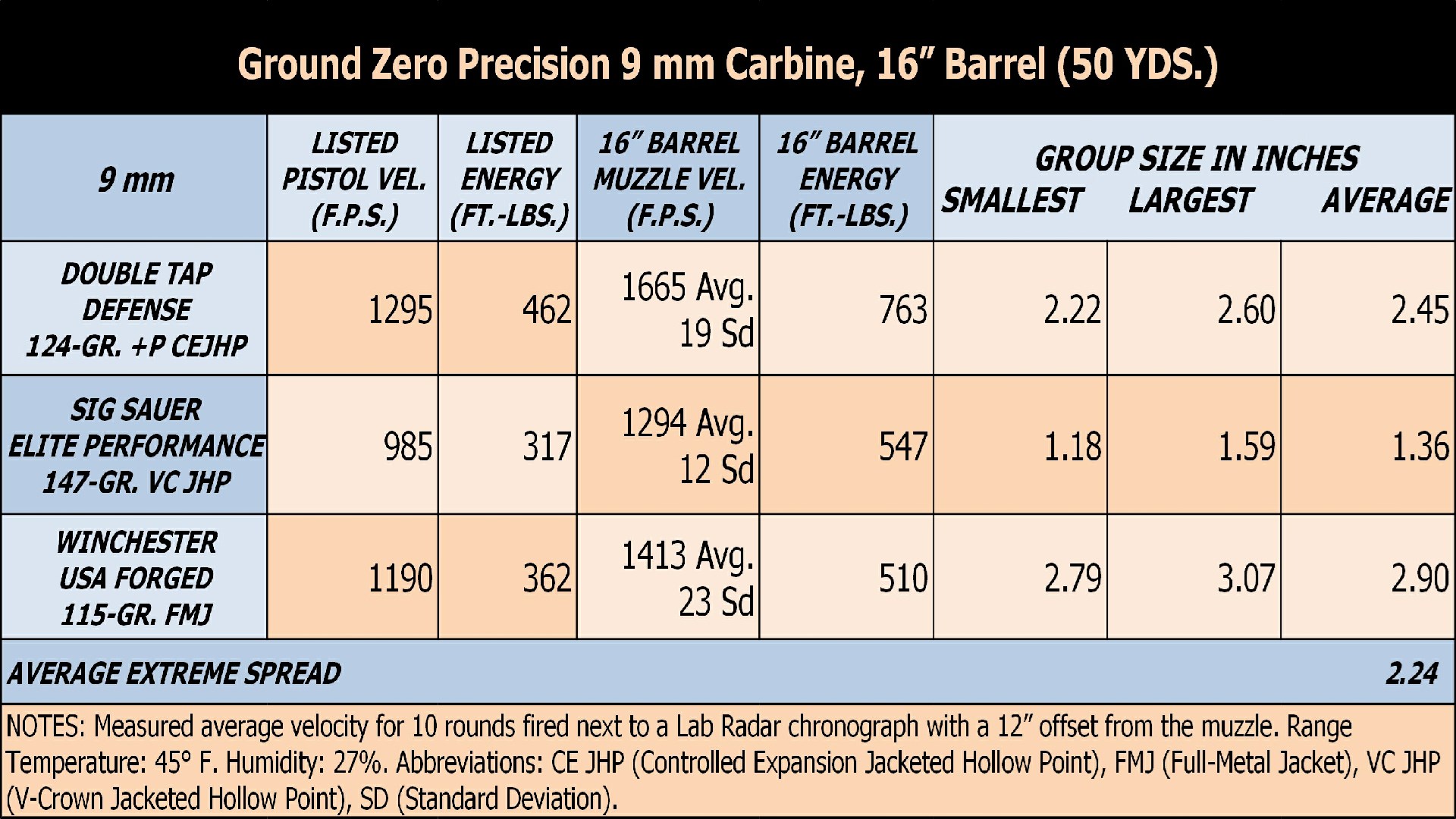
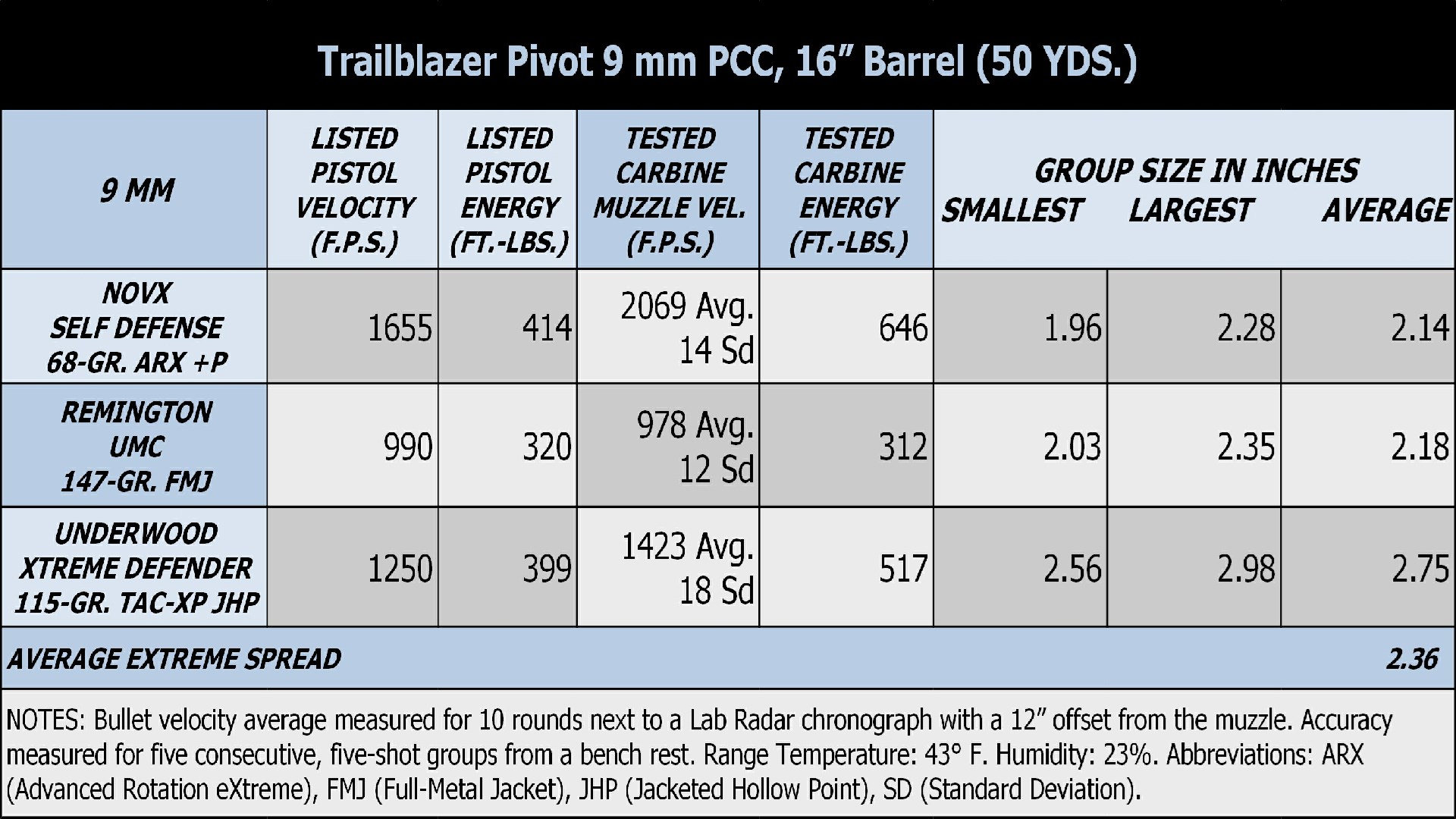
As shown here, some 9mm loads demonstrate performance comparable to the manufacturers’ listed velocities and muzzle energy levels. But others—the +P loads in particular—gained enough added velocity to move bullet energy levels up into the .357 Magnum revolver range. That's nothing to sneeze at. The .357 wheel guns have long been considered the acceptable minimum for defense against dangerous game. Add the quick handling characteristics of a carbine, a 15+ cartridge capacity with semi-automatic pistol magazine reloading speed and you've got a combination that can get the job done. Nevertheless, it's not the most powerful.
As for the .45 ACP carbines, my experiences and data for them are limited. I just haven't had many opportunities to evaluate them over the years. But I do have an older performance table from an unusual Iver Johnson 1911A1 Carbine. This gun is literally a 1911A1 pistol action with a 16 inch barrel and a stock attached. With 11 inches of the extended barrel unsupported, this carbine yielded accuracy levels on par with a G.I. grade 5-inch barrel pistol. But take a look at the bullet energy levels:
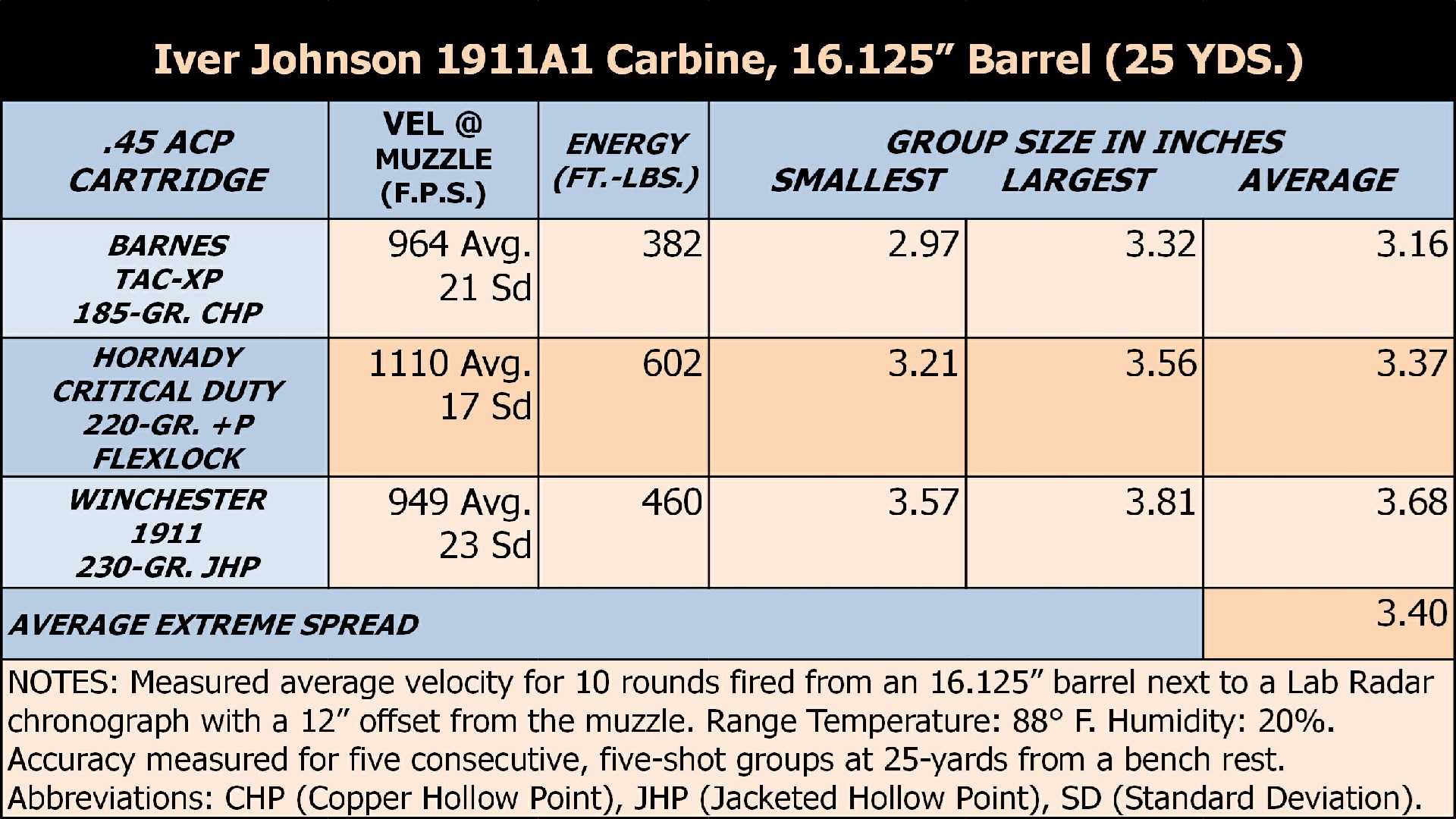
Once again, the use of a +P load shifted the muzzle energy up into the .357 Mag. range. A 220-grain, .45-caliber bullet landing with 600-ft.-lbs. of energy is going to leave a lasting impression. Properly loaded, a .45 ACP carbine can be a solid choice for use on the trail, but the 10mm Auto carbines can hit harder.
The 10mm Auto was born out of Jeff Cooper's efforts to outfit the venerated 1911 pistol with a cartridge that was faster and flatter shooting than the .45 ACP. Initial loads were topped with 200 grain bullets which launched at an average velocity of 1,200-fps. from handguns for 640 ft-lbs. of muzzle energy. This was a significant performance boost when compared to 9mm or .45 ACP. And, much like magnum revolver cartridges, it lends itself quite nicely to carbine-length barrels.
When testing 10mm Auto carbines, I expected to see respectable levels of bullet energy. But I was surprised by this platform's velocity potential. When evaluating the TNW ASR, I happened to have a light-for-caliber load from Liberty Ammunition on hand. It was their Civil Defense 60-grain nickel-plated hollow point. It promised to be quick, but just how fast or accurate could it be? Take a look:
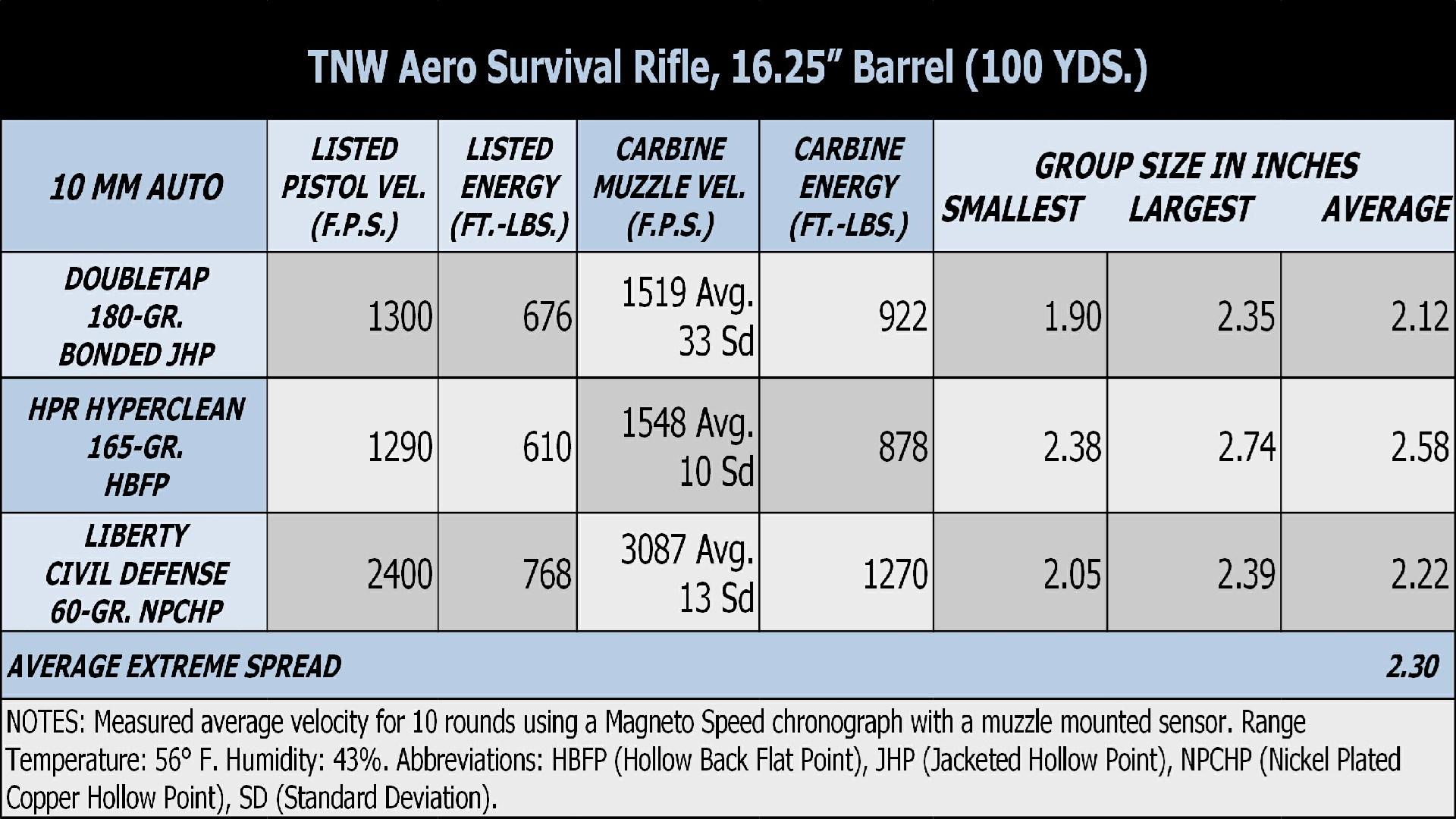
As you can see, it generated nearly double the muzzle velocity of the more typical bullet weights for a notable boost in muzzle energy. And in this instance, the accuracy was on par with the standard loads. It is still the fastest PCC load I've tested so far!
Since this evaluation, I've made an effort to include at least one light-weight 10mm Auto load for formal testing with other carbines. In the case of the KelTec Sub2000 and the Smith & Wesson M&P FPC, that load was the G9 Defense 95-grain all-copper external hollow point (fluted copper solid). Although it was not as speedy as the lighter Liberty load, it flew right along at over 2,000-fps from both guns:
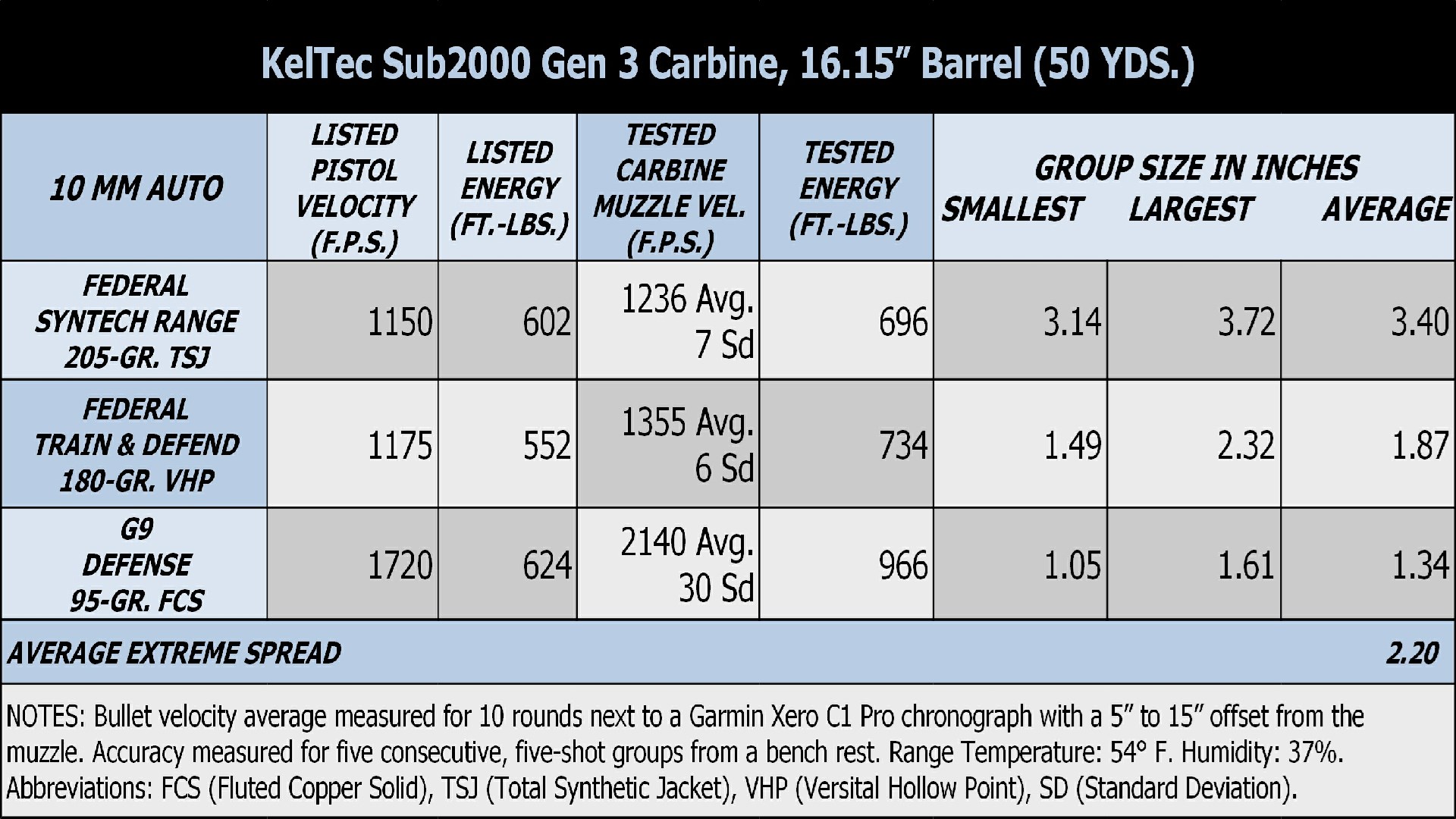
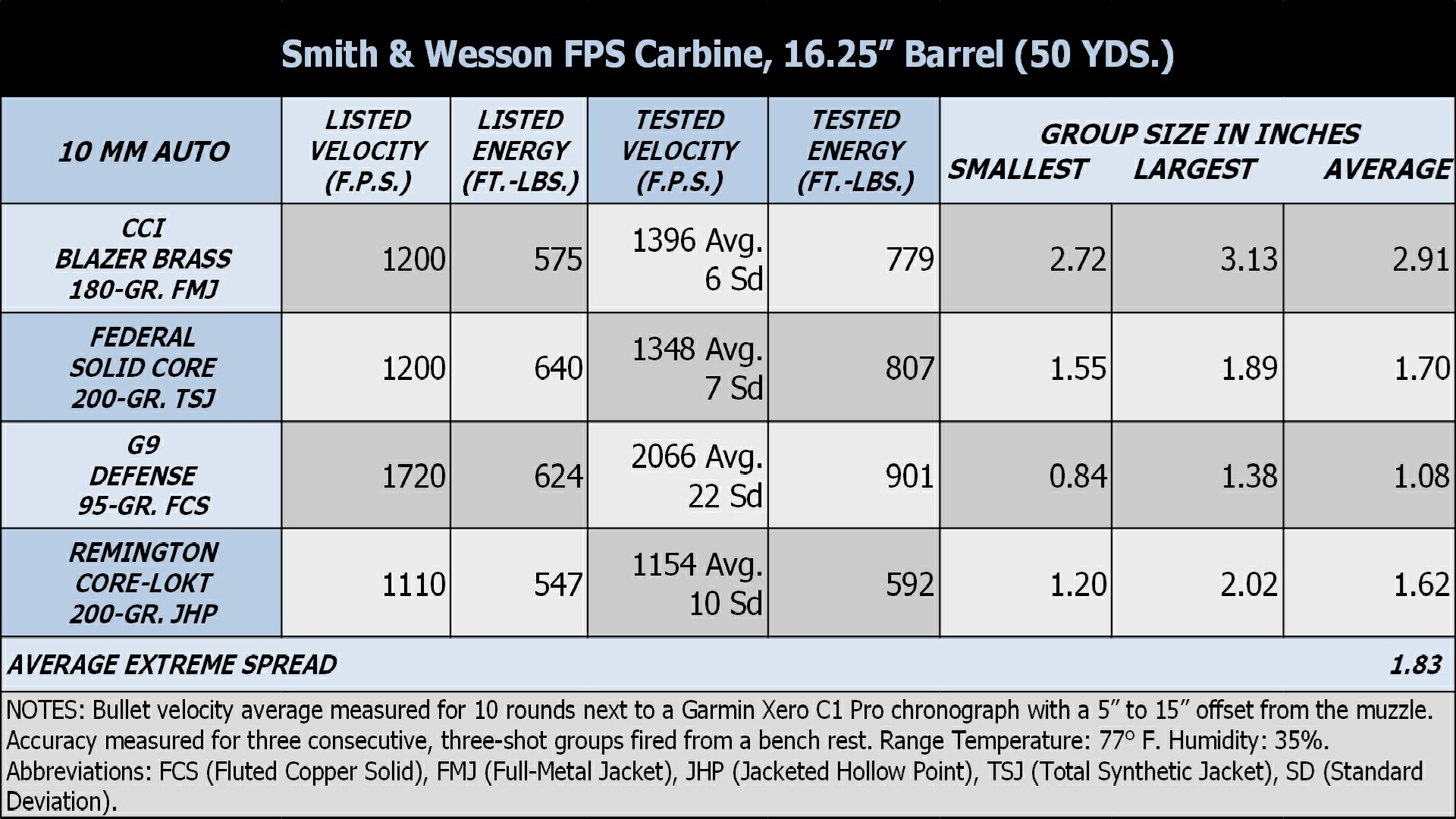
In short, the 10mm Auto can hit harder and potentially faster than 9mm or .45 ACP when fired from either a pistol or a long gun, depending on the ammunition used. This makes it the most powerful of the semi-automatic pistol cartridge carbine class. However, this does not mean it is the most powerful PCC available.
Revolver Cartridge Carbines
Some folks may think I'm bending the rules a bit by including carbines that shoot revolver cartridges in this conversation. However, big-bore revolvers paired with lever-action carbines chambered in the same caliber were traveling, trail gun and hunting staples for about a century before semi-automatic combos were developed. They are still in common use today and, more importantly, they can outperform the 10mm Autos, short barreled or long.
I've made performance comparisons to the .357 Mag. along the way in this conversation. But remember, those numbers were for revolvers with typical barrel lengths, not carbines. Here are the results of firing two hot mid-weight .357 Mag. loads, along with one practice-grade load, from the Henry Big Boy X Model with a 17.4-inch barrel:
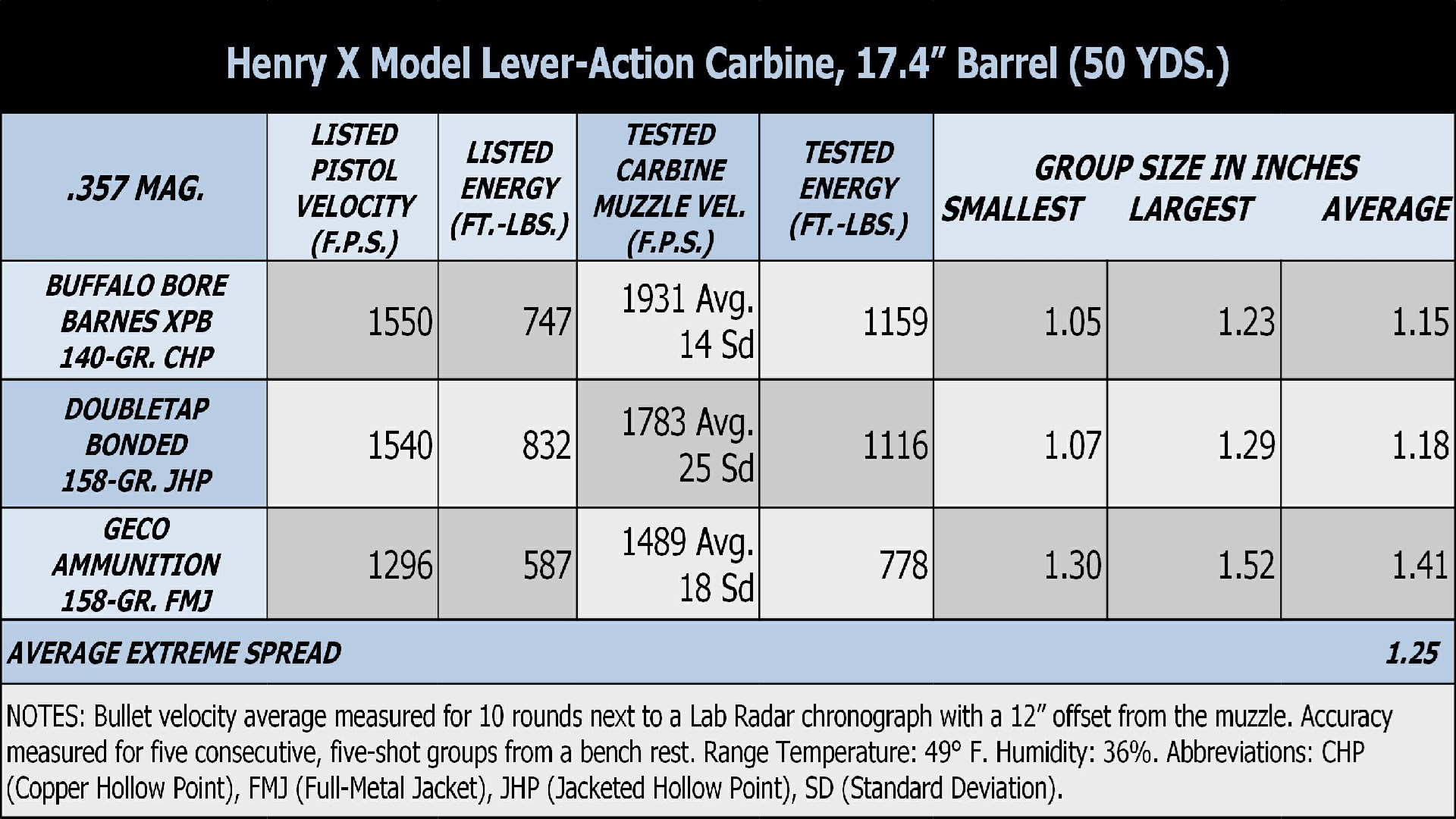
The column with the manufacturers’ listed revolver muzzle energy numbers should look familiar. They are comparable to those of the 10mm carbines. But note the muzzle energy levels for the .357 carbine using full-power loads are in the 1,100 ft.-lbs. range while the typical bullet weights for the 10mm Auto tend to top out in the 900 ft.-lbs. range.
What if we step things up a notch and go with a .44 Magnum carbine. Here are the numbers for a 20-inch barrel Henry All-Weather Big Boy:
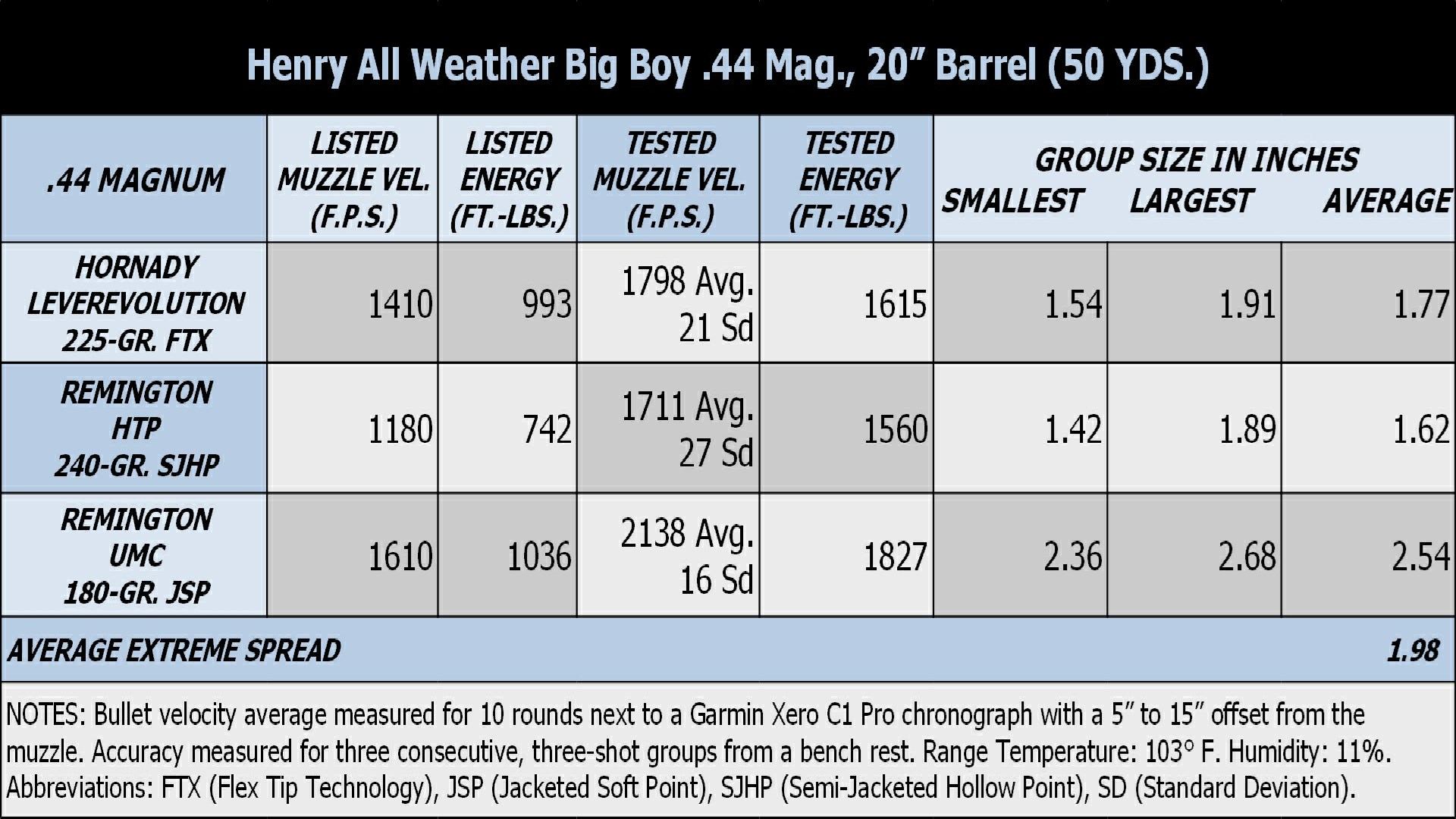
Now we see muzzle energy levels that move up from the 1,100 ft.-lb. neighborhood into the 1,500 ft.-lbs. to 1,800 ft.-lb. ranges, which can be about double those of the 10mm Autos. And these are the numbers for the big-bore revolvers’ minimum and medium calibers. Carbines are available for more potent revolver rounds including the .454 Casull, .460 S&W and .500 S&W.
Parting Shots
The expansion and diversification of 10mm Auto carbines in the shooting sports marketplace is a good thing. They work to further cement this effective and flexible pistol cartridge as an outdoor caliber. Being able to feed a carbine and a defensive pistol from the same magazines and boxes of ammunition is mighty convenient on the trail. If a 10mm Auto carbine is the best fit for your needs, go for it! There are now several top-notch models to choose from.
While the 10mm Auto PCC's bring a host of laudable features to the table, it's important to keep their limitations in mind. They are more powerful than the 9mm and .45 ACP carbines when loaded properly. This does make them a better option for defense against dangerous game and for hunting medium game within distances of 100 to 150 yards. But the 10mms are not the top of the wilderness carbine food chain. If more bullet energy is required, the revolver cartridge long guns in .357 Mag., .44 Mag., etc., can hit harder within the same distances. Just make sure to do your homework so as to select the optimal gun and ammunition combination for your region and activities.