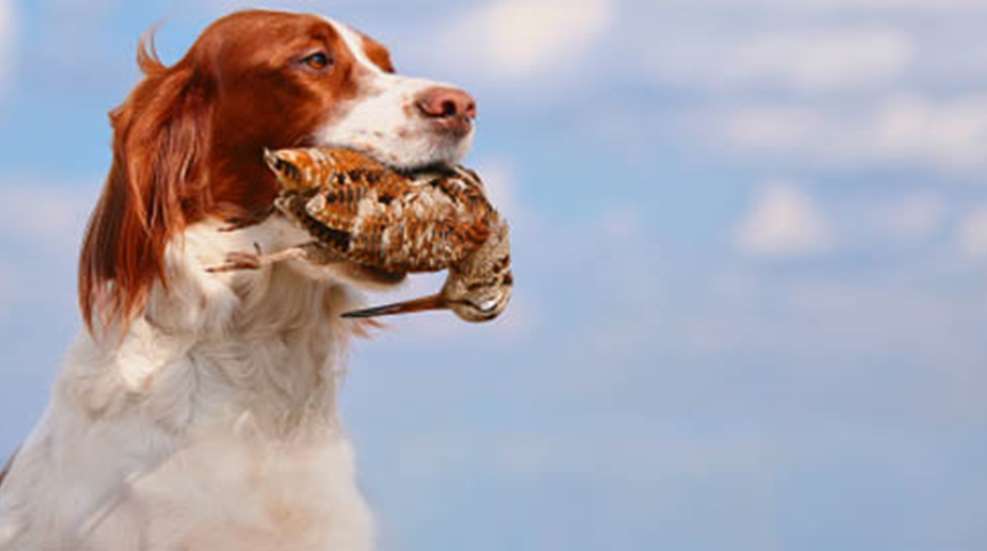
Autumn was a great hunting dog. She never met a bird she didn’t like, and proved it by delivering them half-eaten. Sadly, Autumn is no Lone Ranger among American hunting dogs. Retrievers, flushers, pointers, setters—the canine world is full of equal-opportunity bird munchers. Some of this is due to poor breeding, most to poor training.
Many American hunting dogs are great retrievers. They hunt energetically and persistently for downed birds. Some will scour the landscape again and again when you command, “fetch,” “find ’em” or “bird in here.” Many will follow hand signals from hundreds of yards away to salvage a bird you thought was lost forever.
Did I just write salvage? Unfortunately that’s an accurate description of some of the bedraggled, crumpled, crunched-and-oozing carcasses our hard-mouthed dogs bring in. We sort of wish they hadn’t.
Hard-mouth: It’s an ancient curse that never seems to end. Yet it should and it can, according to most professionals.
For starters, it pays to check your sources before buying a pup. Try to buy from a line with a strong history of soft-mouth. This may resolve all your hard-mouth problems. But sometimes you may need to train the bite out of pup’s retrieve. There are several ways to do this, including a remarkably simple one. But before examining it, let’s review traditional methods and a few things you should never do.
Before beginning hard-mouth training, teach the pup to “come” reliably. The idea is to command “come” the instant he secures the dummy. He should then engage his brain in obeying your return command instead of chewing the dummy. If he doesn’t, try these methods:
One old-school approach is to say “hold,” insert your gloved hand into a young (3-4 month) pup’s mouth and make him hold it without biting. Praise and stroke pup while he holds gently. Say ”no” and push your hand uncomfortably toward his throat if he bites. Soothe the pup with words. Do this several times a day until pup always allows your hand to rest gently in his mouth. Eventually remove your hand, just leaving the glove. Watch for any signs of chewing or biting and stop such behavior. Eventually pup will be carrying the glove around lightly. He’s learning to carry, not mangle. Later, switch to a dummy, bird wings, frozen birds or a raw egg if you want.
Another old method is to make your training dummy “bristle.” Some trainers pound nails through frozen birds. A better option is a cylindrical, stiff, bristly hair brush or a pair of one-sided scrub brushes tied back to back. Pup has to grab and carry gently to avoid poking his mouth. When he brings it back, don’t step or lean toward him. Command “drop” or “give” and allow pup to release it. Then reward.
Never play tug-of-war. Letting the grandkids tease a pup with a toy can ruin months of careful training in minutes. It’s possible for a smart dog to distinguish between “hold” and play, but it’s not easy.
Never let two dogs fight over a retrieve. That’s competition guaranteed to develop hard-mouth as each hangs on to prevent the other from stealing the bird. Train pup to fetch on command (usually his name) only. And make it stick.
Lastly, never chase your pup in order to get the dummy from him.
Virtually every pro trainer agrees that “force-training retrieve” or “force-fetching” is the route for a surefire retriever that doesn’t chomp birds. Fetching becomes a task, not an option, and pup understands. His job is to find the object, bring it back, hold it lightly and release it on command. But some trainers believe there is an easier way. It’s called the “hands off” method.
Retired trainer Fred Kewell of Arizona claims that people train dogs to chew birds “by trying to take something from them at the beginning of their lives.” So he permits no playing fetch with a ball and no tugging games. Fred gently guides a young pup on a check cord to his first bird retrieve then lets him carry the bird as a reward. “Don’t take it away,” he told me. “It’s his reward for being with you. Make him think you are his tool for finding birds. Let him carry that bird at the heel position for some time.”
“And he won’t eat it?” I asked.
“None of my dogs ever did. We can train a dog in one month, make it stick to the program the next two months and it will remain that way until someone teaches it to make mistakes. Over all the years, I’ve worked with only one dog that was seriously hard-mouthed.”
I wonder if its name was Autumn.